Veery or Gray-Cheeked Thrush?
Here's how to tell the difference
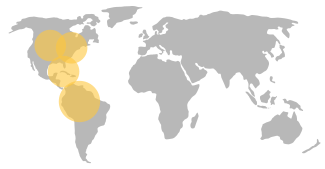


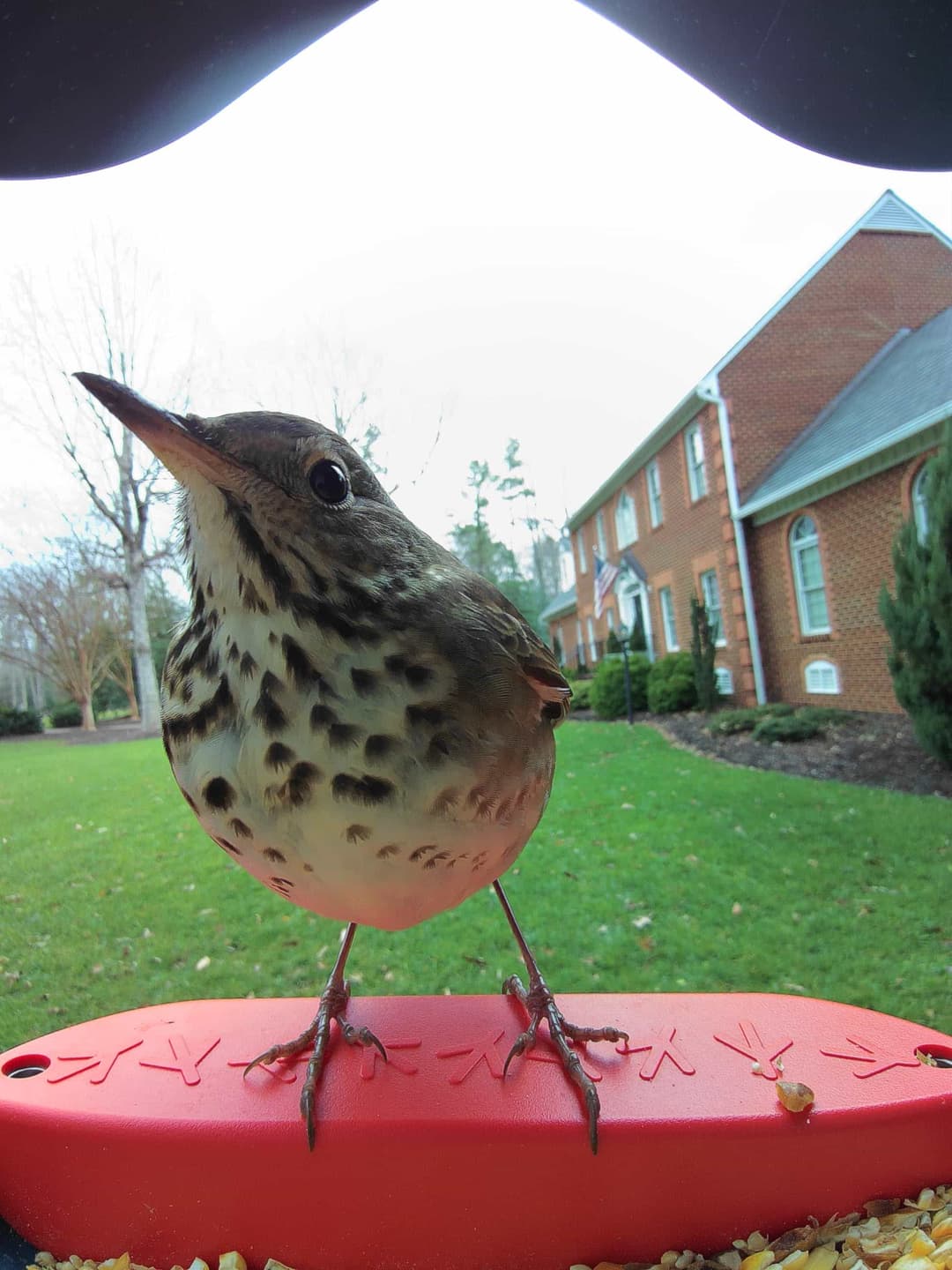
Veery

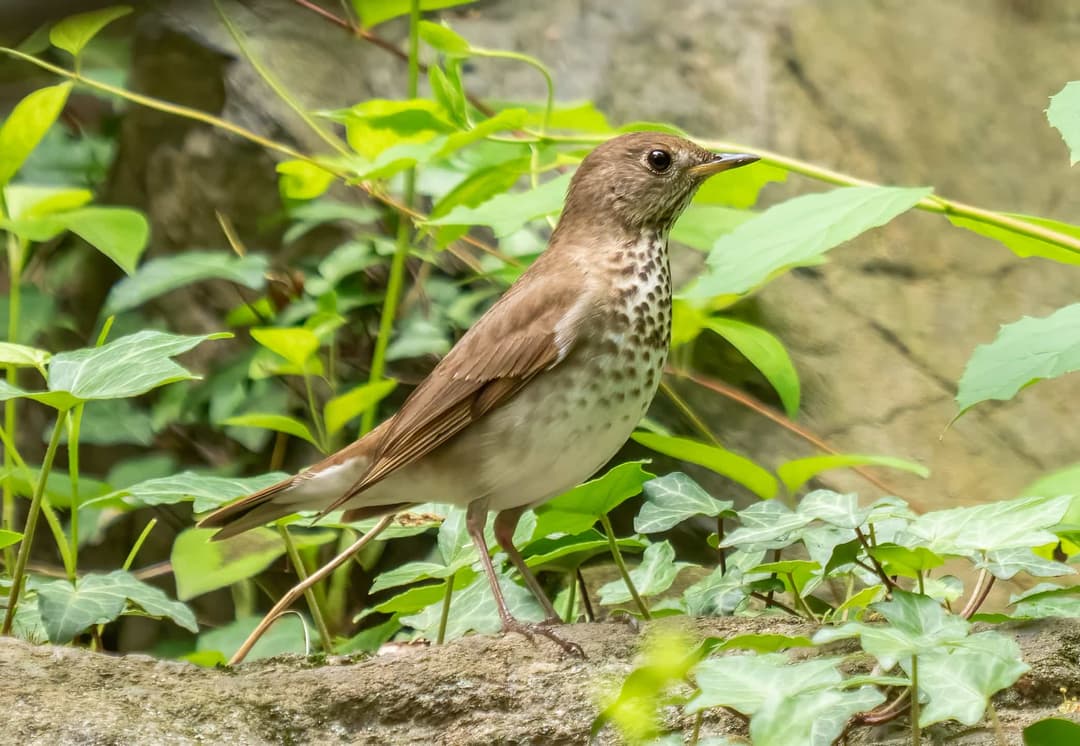
Gray-Cheeked Thrush
Veery
Catharus fuscescens
Also known as: Wilson's Thrush, Tawny Thrush
General appearance
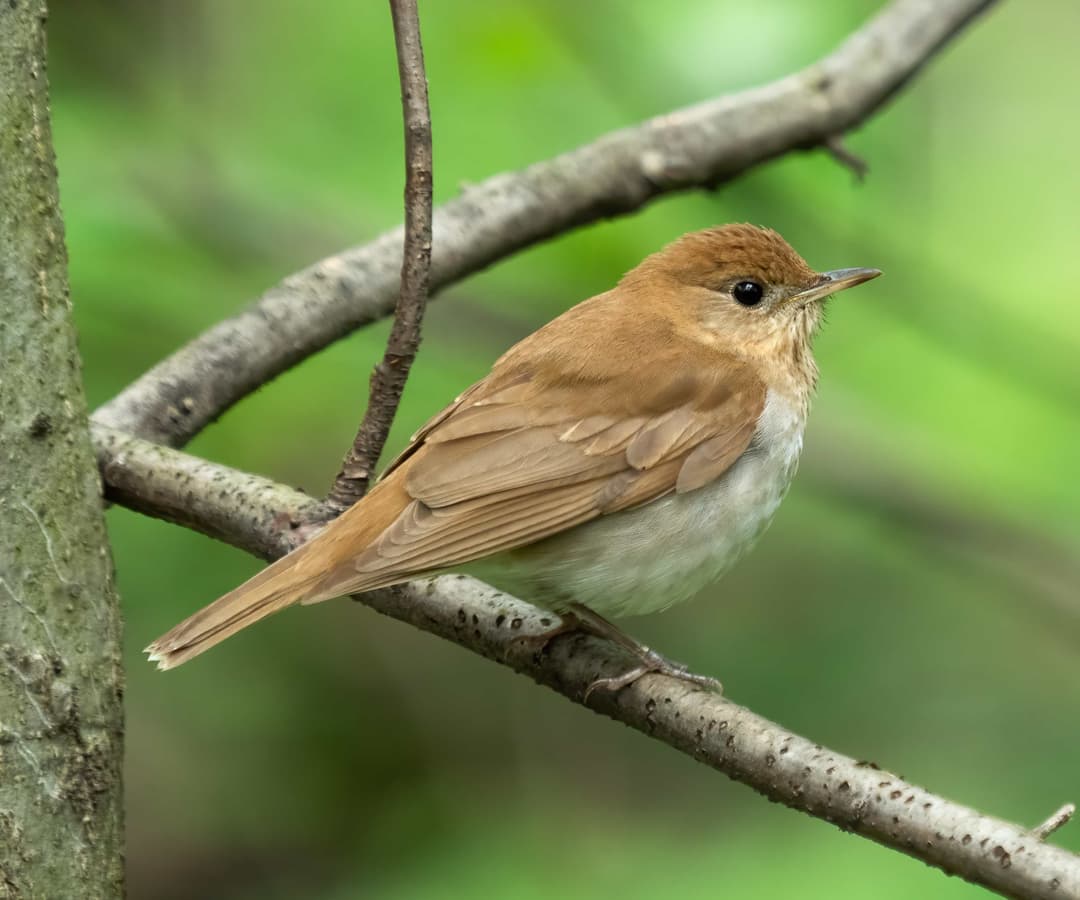
The veery (Catharus fuscescens) is a medium-sized thrush with warm, cinnamon-brown upperparts and a subtly spotted pale tawny breast. It has a white underbelly and distinct buffy eye-ring. Its song is a spiraling, fluty series of notes, distinctive during its breeding season.
Male vs female
The veery shows minimal sexual dimorphism, meaning males and females have very similar appearances. Both sexes share the same coloration and size, usually around 16-18 cm long with a wingspan of about 28 cm. Behavioral cues and song patterns, notable in males, are often used for differentiation.
Juvenile
Juvenile veeries resemble adults but typically exhibit more pronounced spotting on the chest. Their plumage is generally duller, aiding in camouflage. As they mature, they attain smoother, more uniform coloration. They take up the adult's distinctive appearance as they prepare for migration and the upcoming breeding seasons.
Size
6.7 - 7.1 in/0.9 - 1.4 oz
There's more to learn about Veery
View full detailsGray-Cheeked Thrush
Catharus minimus
General appearance
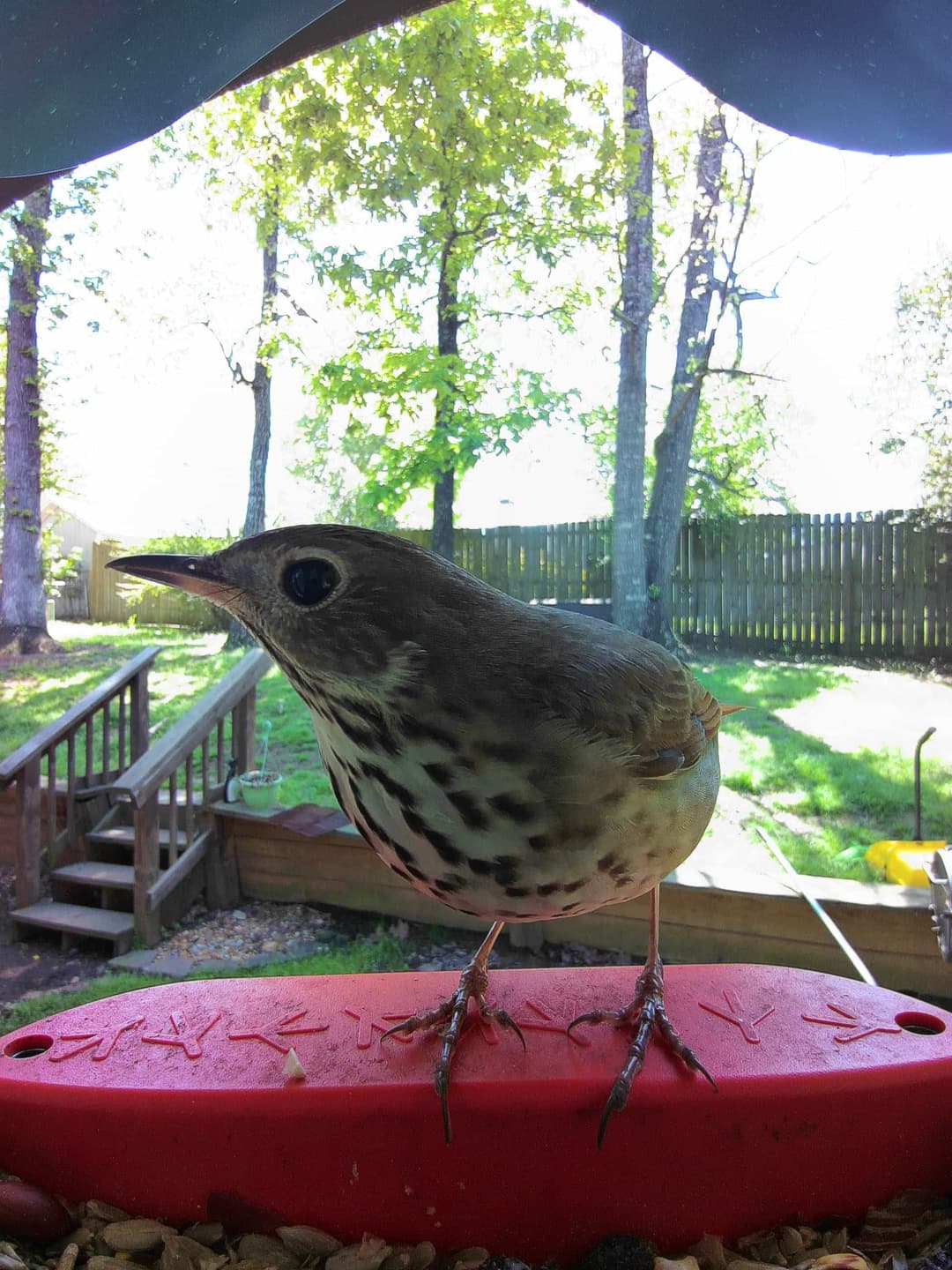
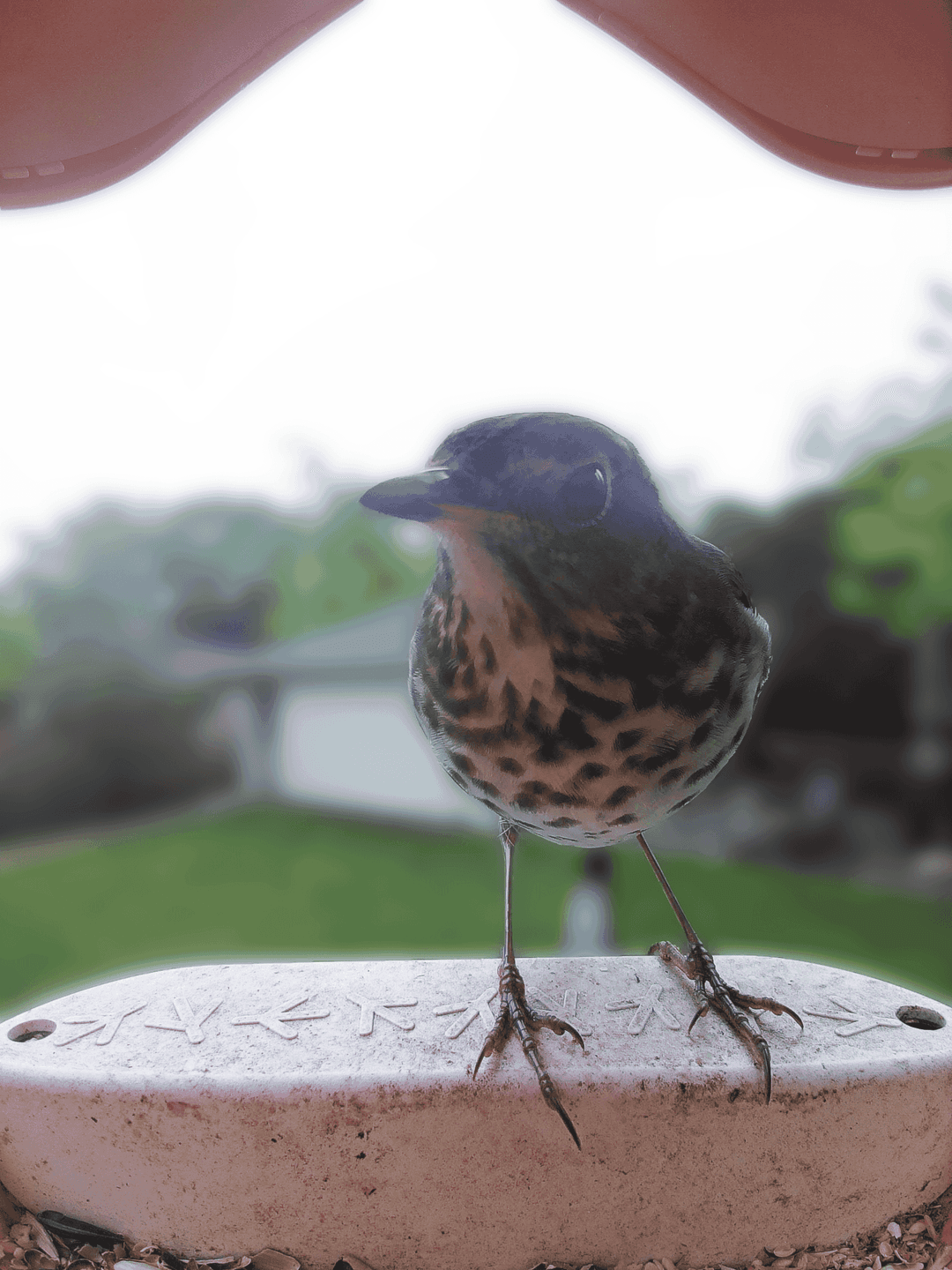
The gray-cheeked thrush is approximately 6 1/2 -8 inches (17-20 cm) in size, comparable to a robin or sparrow. The creature has a dull brown back with a spotted chest, and facial tones that are predominantly grayish. It exhibits a paler hue around the eye, especially behind it, lacking a well-defined eye-ring. The bird's wings are pointed and its tail can be notched, rounded, or square-tipped.
Male vs female
External physical differences between the male and female gray-cheeked thrush are minimal, making it challenging to differentiate between the sexes based on appearance alone. Both possess similar coloration of black, brown, gray, and white, and share the distinctive lack of strong buff tones on the face and neck.
Juvenile
Juvenile gray-cheeked thrushes resemble adults, but their markings are typically less distinctive. They also may exhibit seasonal variations in appearance, with their plumage changing throughout their early development stages. As with the adults, the juvenile birds have a characteristic paler ring around their eyes, and lack any strong buff tones on their face and neck.
Size
6.3 - 6.7 in/0.9 - 1.1 oz
There's more to learn about Gray-Cheeked Thrush
View full detailsHow to tell the Veery from the Gray-Cheeked Thrush
Visual differences
Key differences and behavior
Still not sure? Here are more lookalikes!
Veery vs [Select a bird]

[Select a bird]
Pick a bird to compare
Gray-Cheeked Thrush vs [Select a bird]
[Select a bird]
Pick a bird to compare