Hermit Thrush or Veery?
Here's how to tell the difference


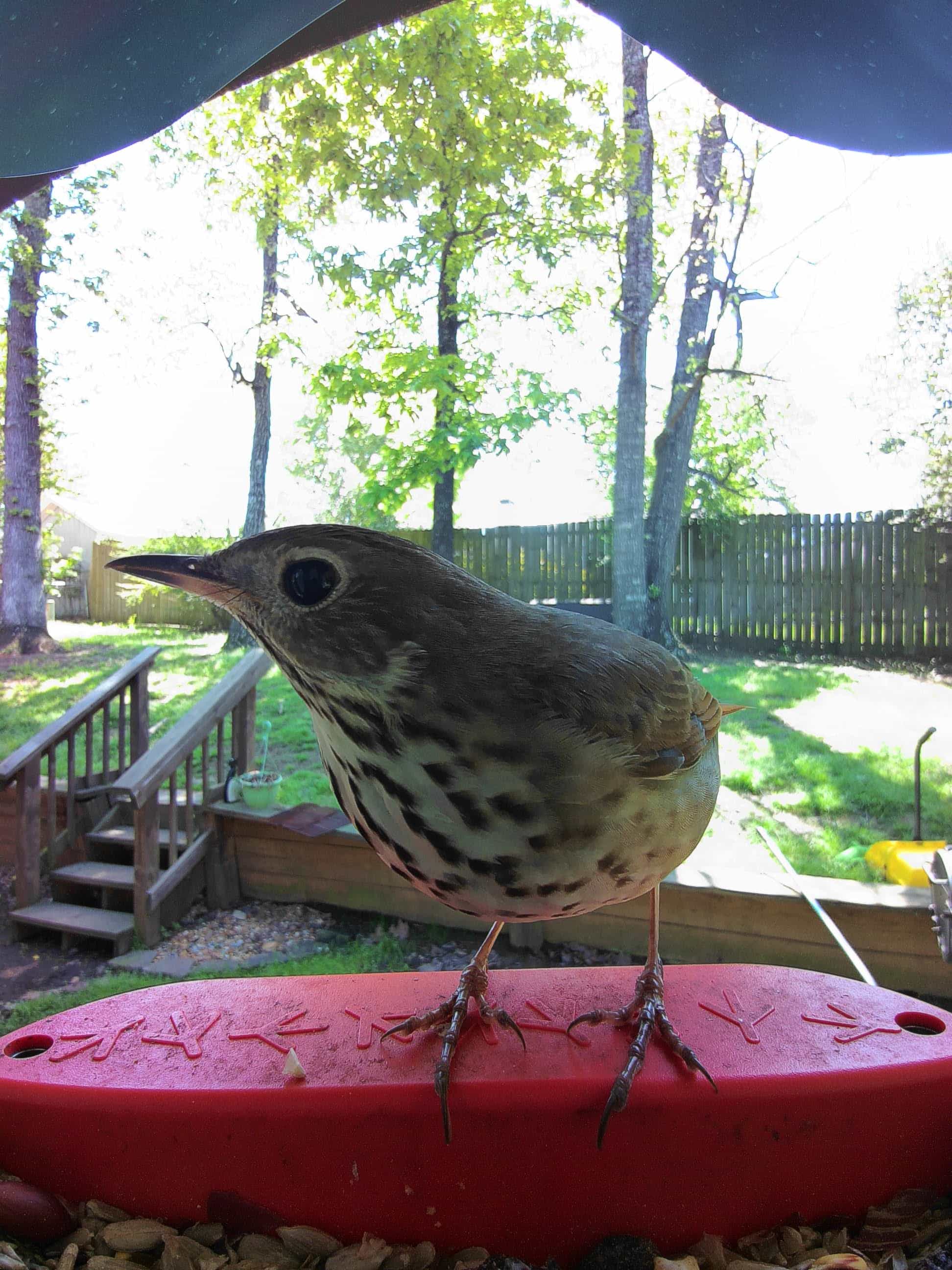


Hermit Thrush

Veery
Hermit Thrush
Catharus guttatus
General appearance
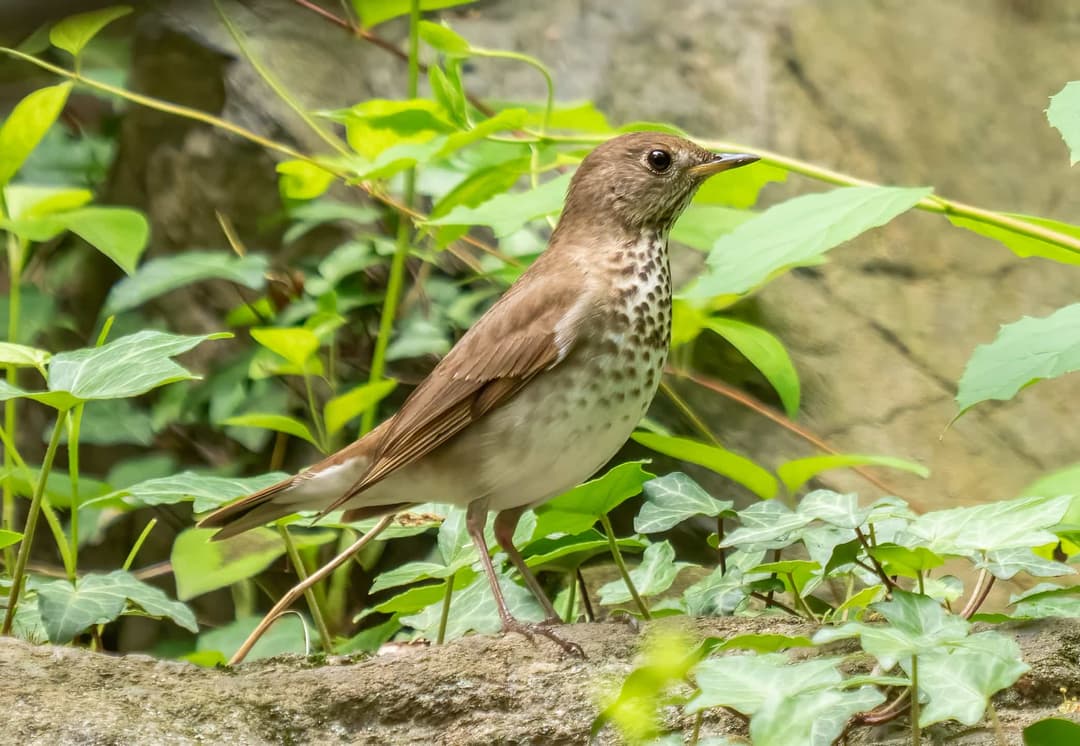
The hermit thrush is a medium-sized sparrow-like bird, measuring about 6-7 inches in length. Its plumage is mainly brown with a reddish-brown tail, distinct mottled spots on the breast, and a creamy underbelly. The throat area is white with dark spots. It has a pale eye ring and relatively long legs. Its pleasant, flute-like song makes it easier to identify during its singing season.
Male vs female
Males and females of the hermit thrush species are similar in appearance, with almost indistinguishable plumage. Both sexes share the same pattern and coloration, making it challenging to differentiate between them in the wild based solely on visual appearance.
Juvenile
Juvenile hermit thrushes resemble adults but with some differences. They generally have more pronounced streaking or spotting on their underparts, and their overall plumage may appear less crisp than that of mature birds. These birds gradually take on the adult coloration as they mature. During the transition from juvenile to adult, they can be identified by their less defined spots and slightly fluffier appearance.
Size
5.5 - 7.1 in/0.8 - 1.3 oz
There's more to learn about Hermit Thrush
View full detailsVeery
Catharus fuscescens
Also known as: Wilson's Thrush, Tawny Thrush
General appearance
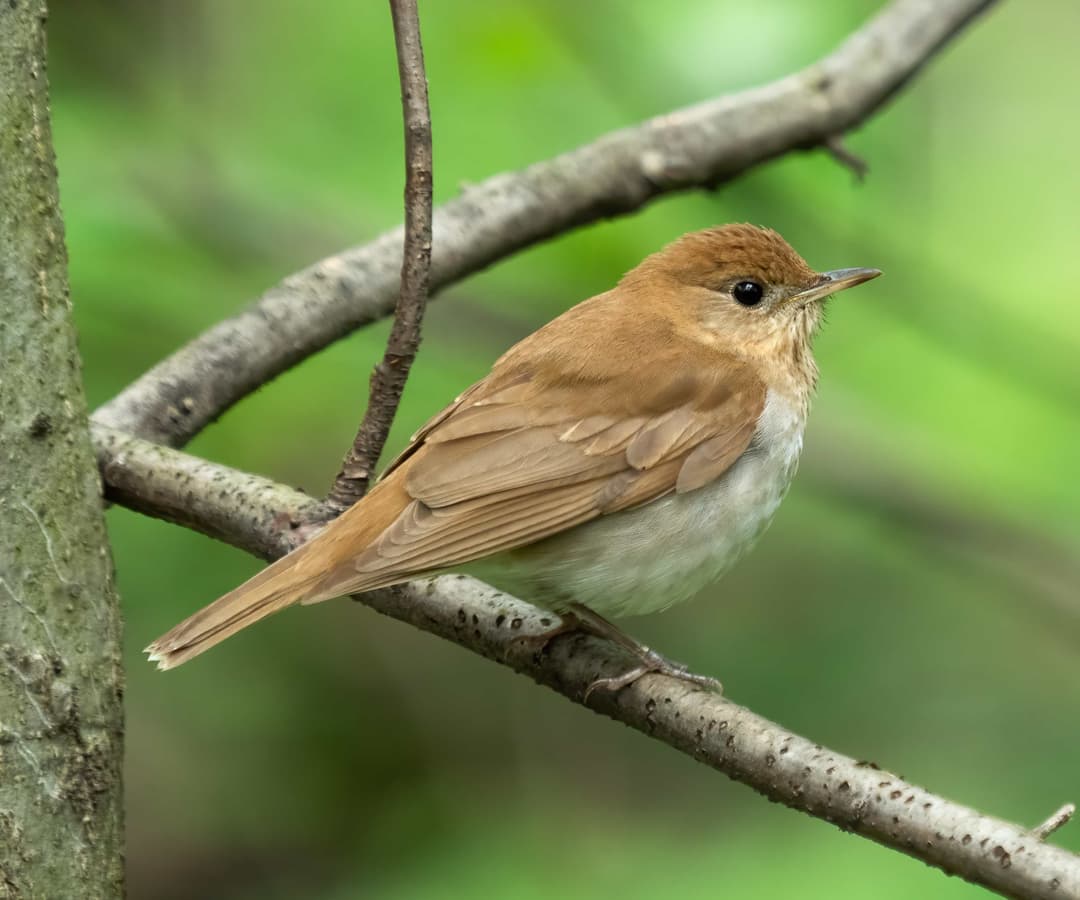
The veery (Catharus fuscescens) is a medium-sized thrush with warm, cinnamon-brown upperparts and a subtly spotted pale tawny breast. It has a white underbelly and distinct buffy eye-ring. Its song is a spiraling, fluty series of notes, distinctive during its breeding season.
Male vs female
The veery shows minimal sexual dimorphism, meaning males and females have very similar appearances. Both sexes share the same coloration and size, usually around 16-18 cm long with a wingspan of about 28 cm. Behavioral cues and song patterns, notable in males, are often used for differentiation.
Juvenile
Juvenile veeries resemble adults but typically exhibit more pronounced spotting on the chest. Their plumage is generally duller, aiding in camouflage. As they mature, they attain smoother, more uniform coloration. They take up the adult's distinctive appearance as they prepare for migration and the upcoming breeding seasons.
Size
6.7 - 7.1 in/0.9 - 1.4 oz
There's more to learn about Veery
View full detailsHow to tell the Hermit Thrush from the Veery
Visual differences
The Hermit Thrush and Veery differ visually as follows: The Hermit Thrush has a reddish-brown tail, distinct mottled spots on its creamy underbelly, and a pale eye ring. It has a brownish upper body and is 6-7 inches long. In contrast, the Veery showcases warm, cinnamon-brown upperparts, a subtly spotted pale tawny breast, and a buffy eye ring. It measures approximately 6.5-7 inches long. Both species have a white underbelly and similar size, with the Hermit Thrush showing more distinctive breast markings compared to the Veery's subtle spotting.
Key differences and behavior
Hermit Thrush and Veery, both medium-sized thrushes, exhibit distinct behavioral differences. Hermit Thrushes employ "foot quivering" to forage insects and are primarily ground feeders, favoring coniferous and mixed forests. In contrast, the Veery, often found in damp deciduous woods, relies on vocal communication during nocturnal migrations and courtship, including duets between males and females. Both species build low cup-shaped nests, but Hermit Thrushes favor thick undergrowth while Veerys prefer near-water locations. While their diets overlap, Hermit Thrushes consume small salamanders more frequently, while Veerys occasionally eat small frogs. Hermit Thrushes sing prominently at dawn and dusk, while Veery songs feature a spiraling tune. These behavioral traits help distinguish them in the field beyond visual cues.
Still not sure? Here are more lookalikes!
Hermit Thrush vs [Select a bird]

[Select a bird]
Pick a bird to compare
Veery vs [Select a bird]
[Select a bird]
Pick a bird to compare