Varied Bunting or Indigo Bunting?
Here's how to tell the difference
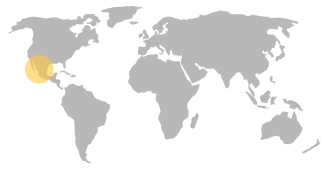
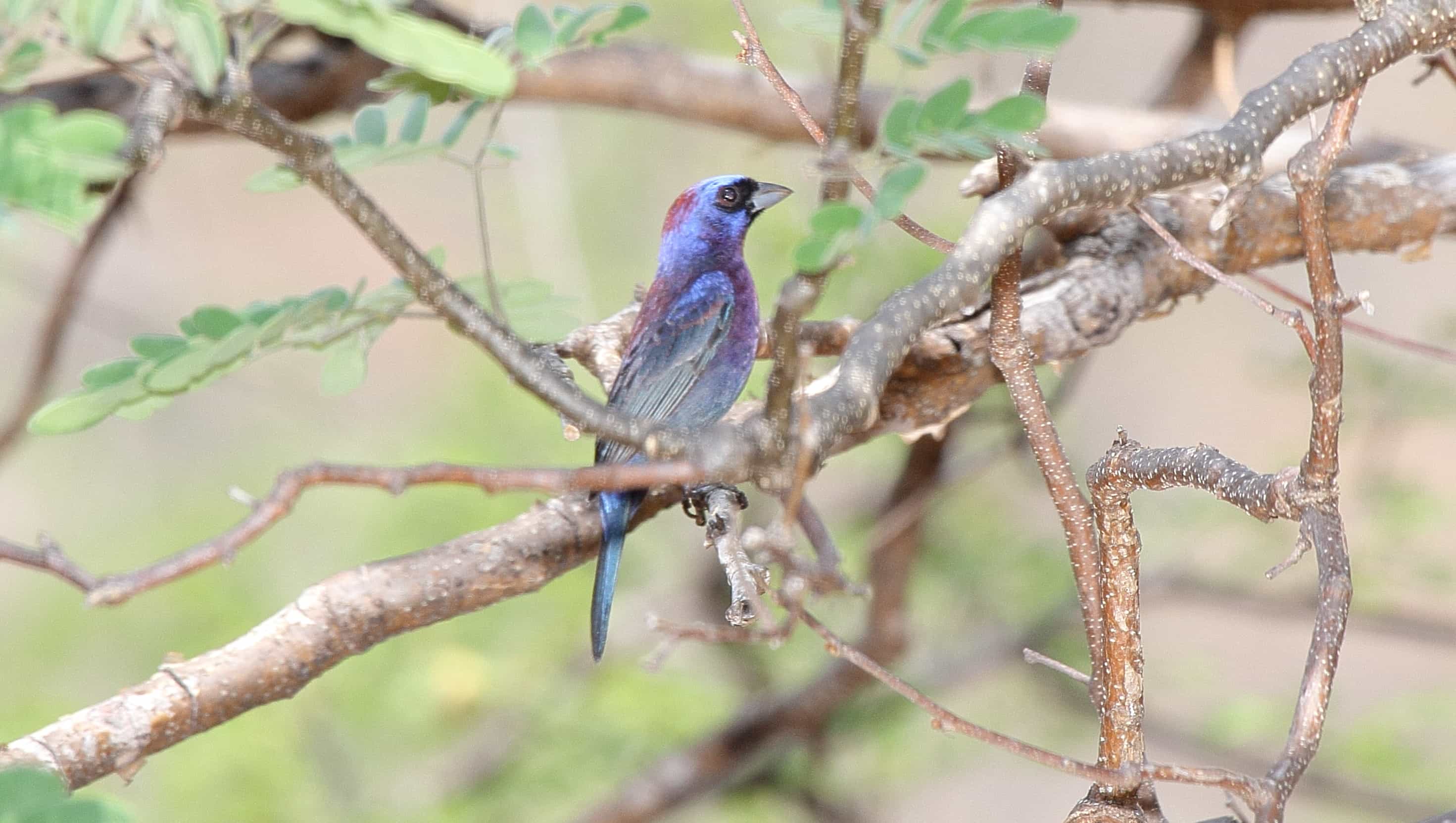
Varied Bunting


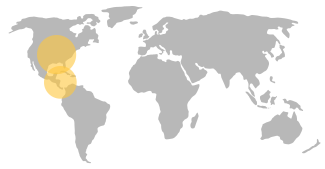
Indigo Bunting
Varied Bunting
Passerina versicolor
General appearance
The Varied Bunting is a small bird measuring 4 1/2-5 1/2 inches (11-14 cm), about the size of a Sparrow. Its distinctive coloration includes hues of black, blue, brown, and red. The bird's wing shape tends to be rounded, and the tail shape can range from notched, rounded to square-tipped.
Male vs female
Males are distinguishable by their darker appearance from a distance, appearing almost black. In good light, their plumage consists of dull purple coupled with a red nape and blue forehead. Their colors are obscurely hidden by brown edging in the fall. Females, on the other hand, are a plain brown and lack any wing-bars or chest streaks, making them relatively less colorful than their male counterparts.
Juvenile
The description does not provide specific details on the juvenile Varied Bunting. However, similar bird species often look like the females until their adult plumage develops, associating them with a duller, brown coloration.
Size
4.3 - 5.5 in/0.4 - 0.5 oz
There's more to learn about Varied Bunting
View full detailsIndigo Bunting
Passerina cyanea
General appearance
The Indigo Bunting is characterized by a size comparable to a Sparrow, around 5 1/2 inches or 14 cm. Its main features include a rounded wing shape and a tail which can be notched, squared or rounded. Some seasonal variations can influence its coloration.
Male vs female
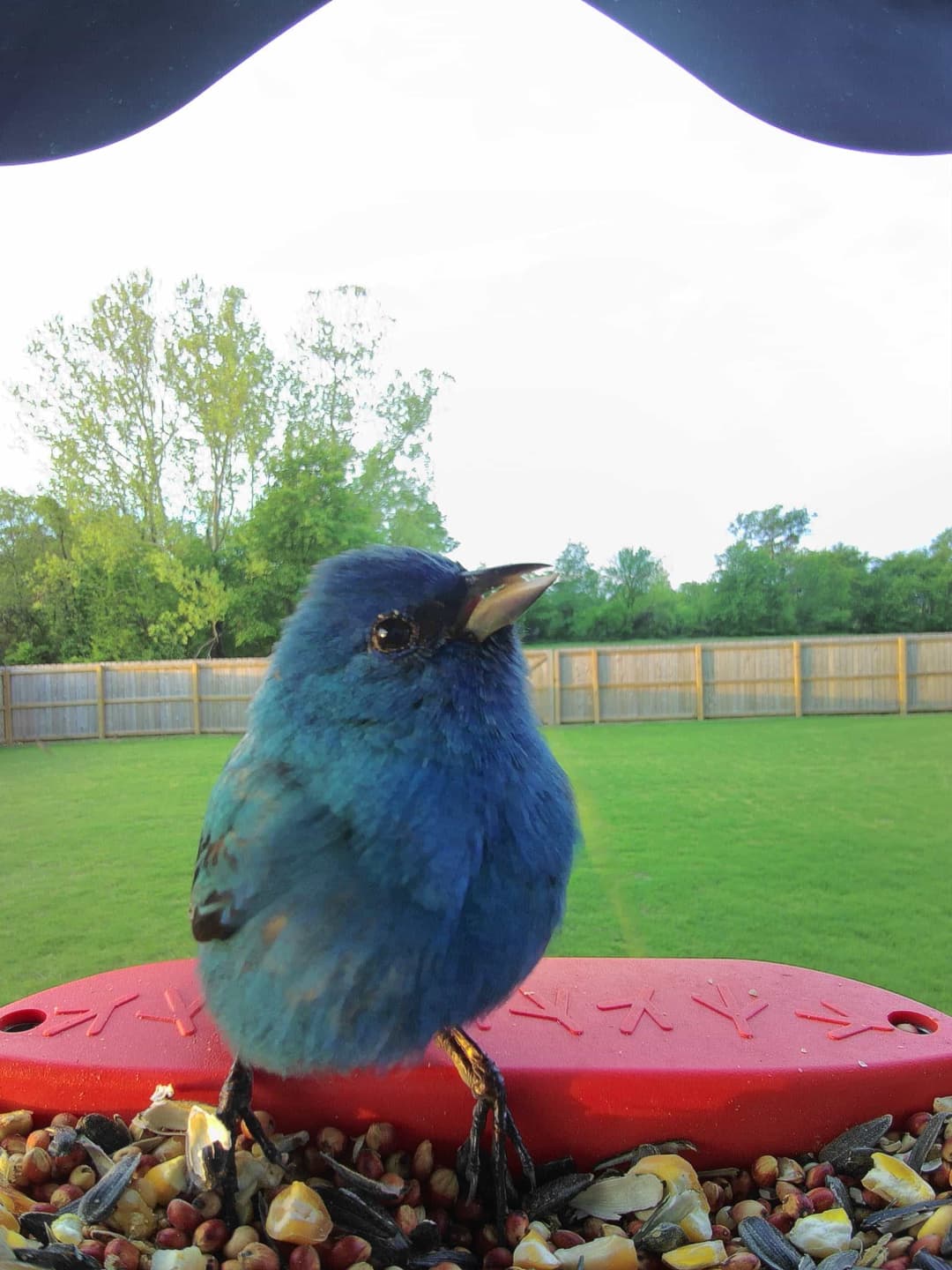
Adult males stand out with a dark blue color in spring/summer. However, during autumn, males along with females transition to a brown tone. They normally exhibit fine streaks on their chest and a blue tinge on their tail.
Juvenile
One-year-old males during summer could exhibit a distinctive marking, taking on a blue shade interspersed with a white belly. This can make them unique compared to their adult counterparts.
Size
4.7 - 5.1 in/0.4 - 0.6 oz
There's more to learn about Indigo Bunting
View full detailsHow to tell the Varied Bunting from the Indigo Bunting
Visual differences
Visually, the Varied Bunting (4.5-5.5 inches) is slightly smaller than the Indigo Bunting (around 5.5 inches). Male Varied Buntings appear darker with a blend of purple, red, and blue, while male Indigo Buntings are vivid blue in spring/summer. Varied Bunting females are plain brown without streaks, whereas Indigo Bunting females are brown with fine chest streaks. Both species have rounded wings and variable tail shapes, but Indigo Buntings have a notable blue tinge on the tail. The beak shape is not distinctly noted as a differentiating feature between them.
Key differences and behavior
Varied and Indigo Buntings have distinct behavioral and ecological differences. Varied Buntings prefer secluded, dense habitats, avoiding human dwellings and feeders, while Indigo Buntings thrive near human activity, often visiting feeders and adapting to more open, brushy areas. In terms of breeding, Varied Buntings exhibit a role reversal during nest building, whereas Indigo Buntings have males guarding territories while females build nests independently, sometimes supporting polygamy. Both species feed mainly on seeds and insects, but Varied Buntings are less likely to be seen at feeders than Indigo Buntings. For navigation, Indigo Buntings uniquely migrate at night using stars, unlike their counterparts. These behaviors, coupled with their preferred environments and social structures, distinctively separate the two species in the field.
Still not sure? Here are more lookalikes!
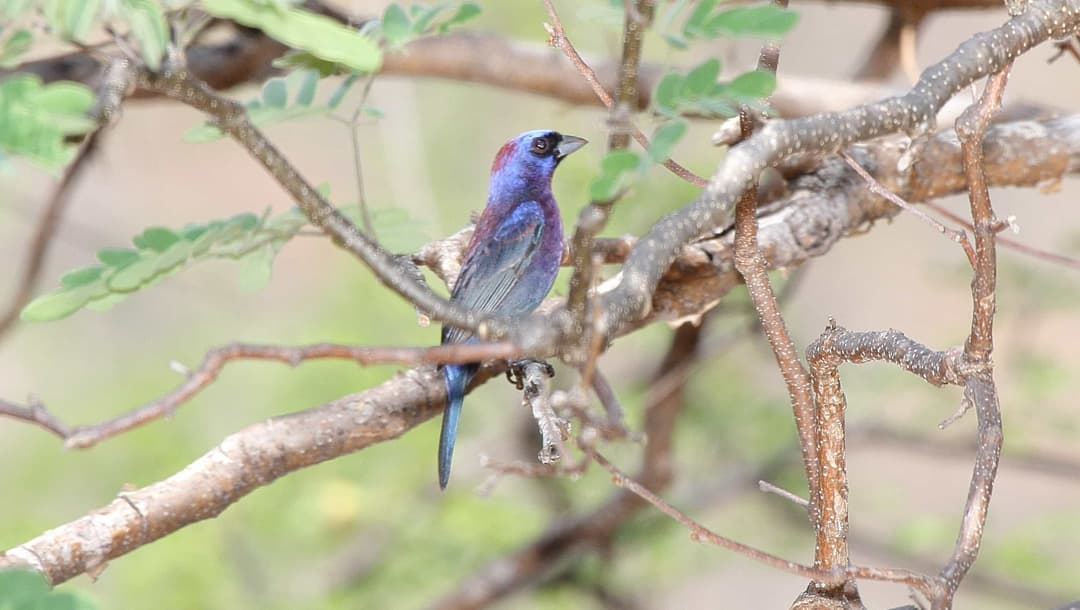
Varied Bunting vs Painted Bunting
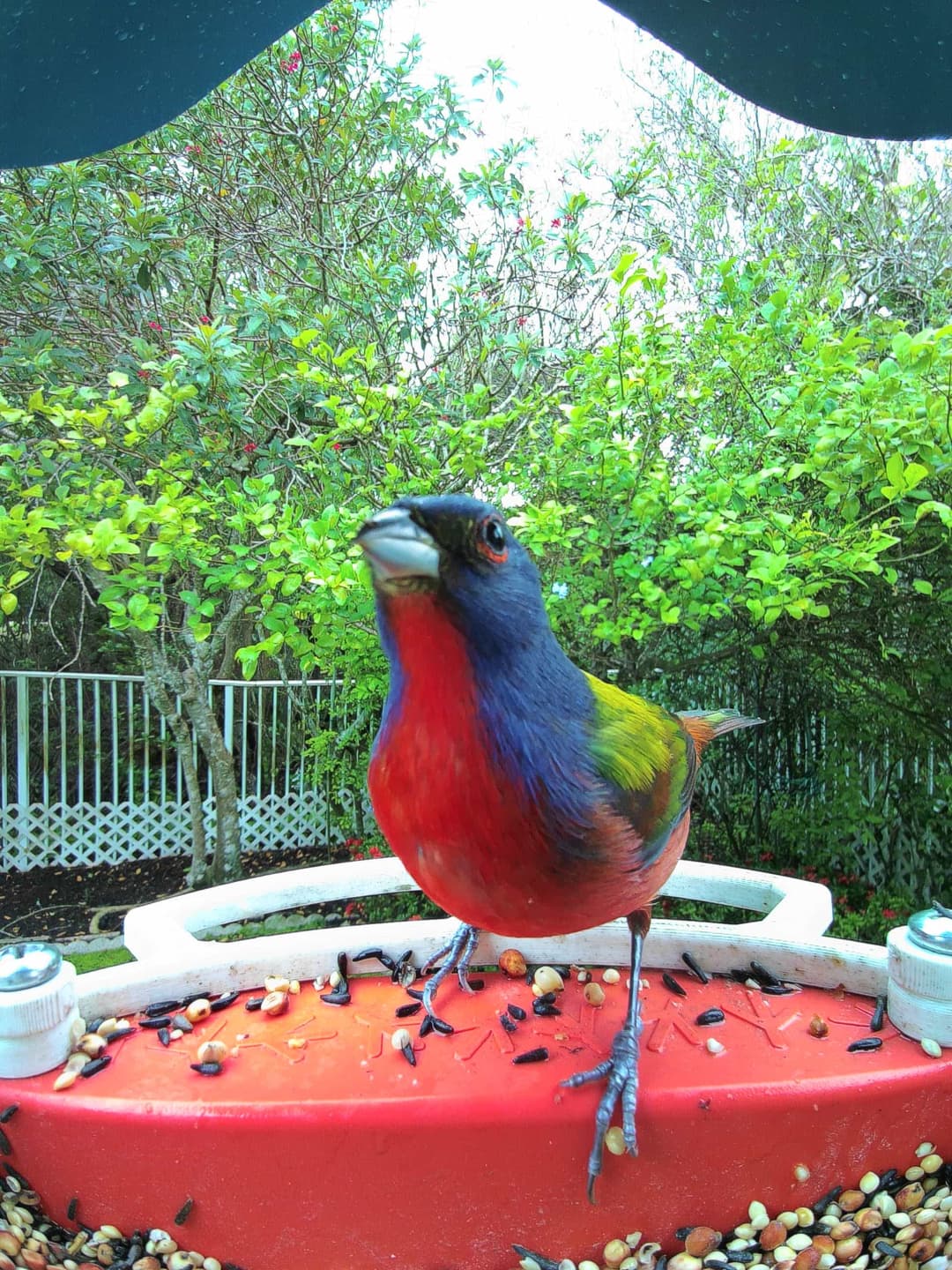
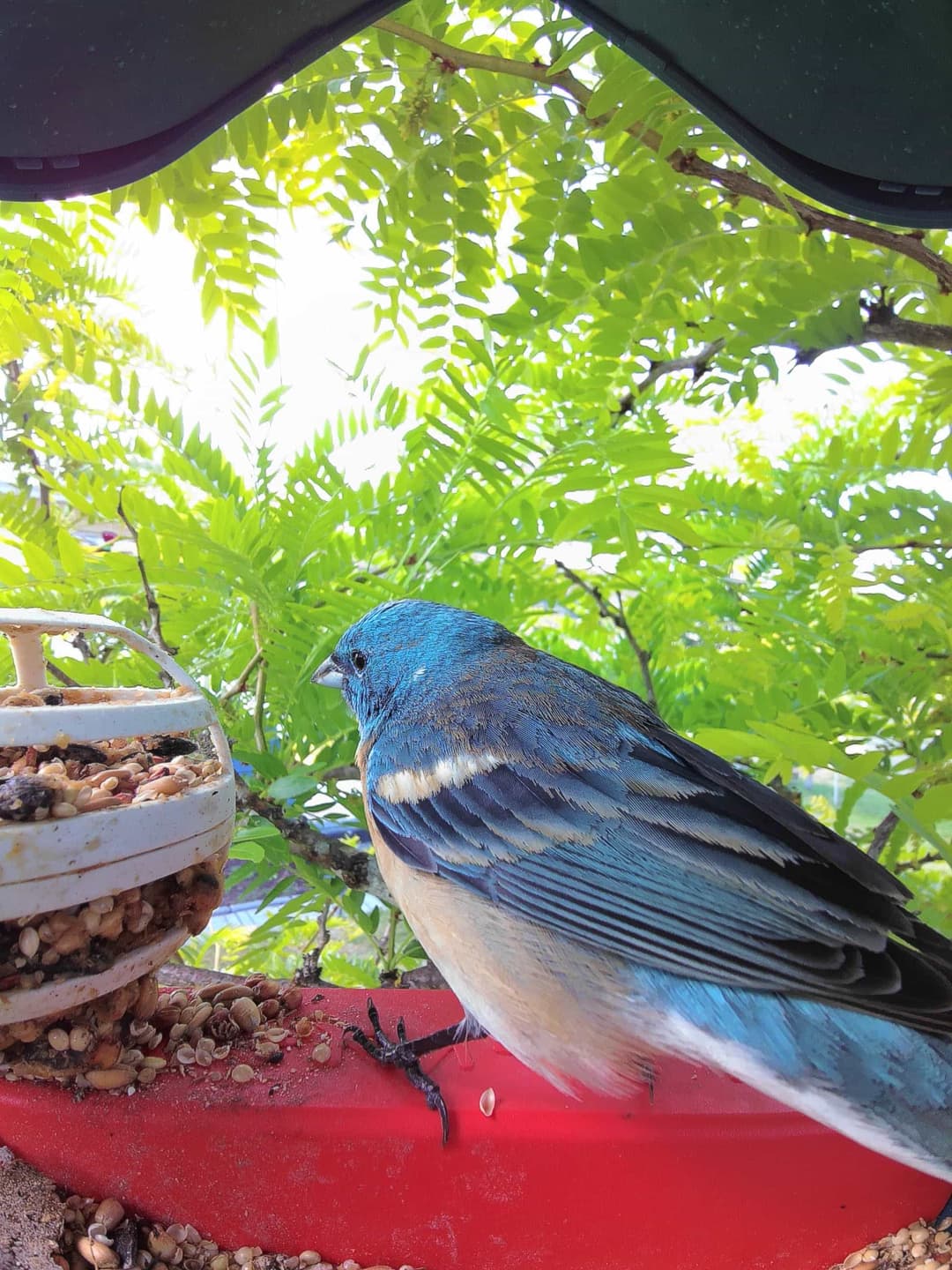
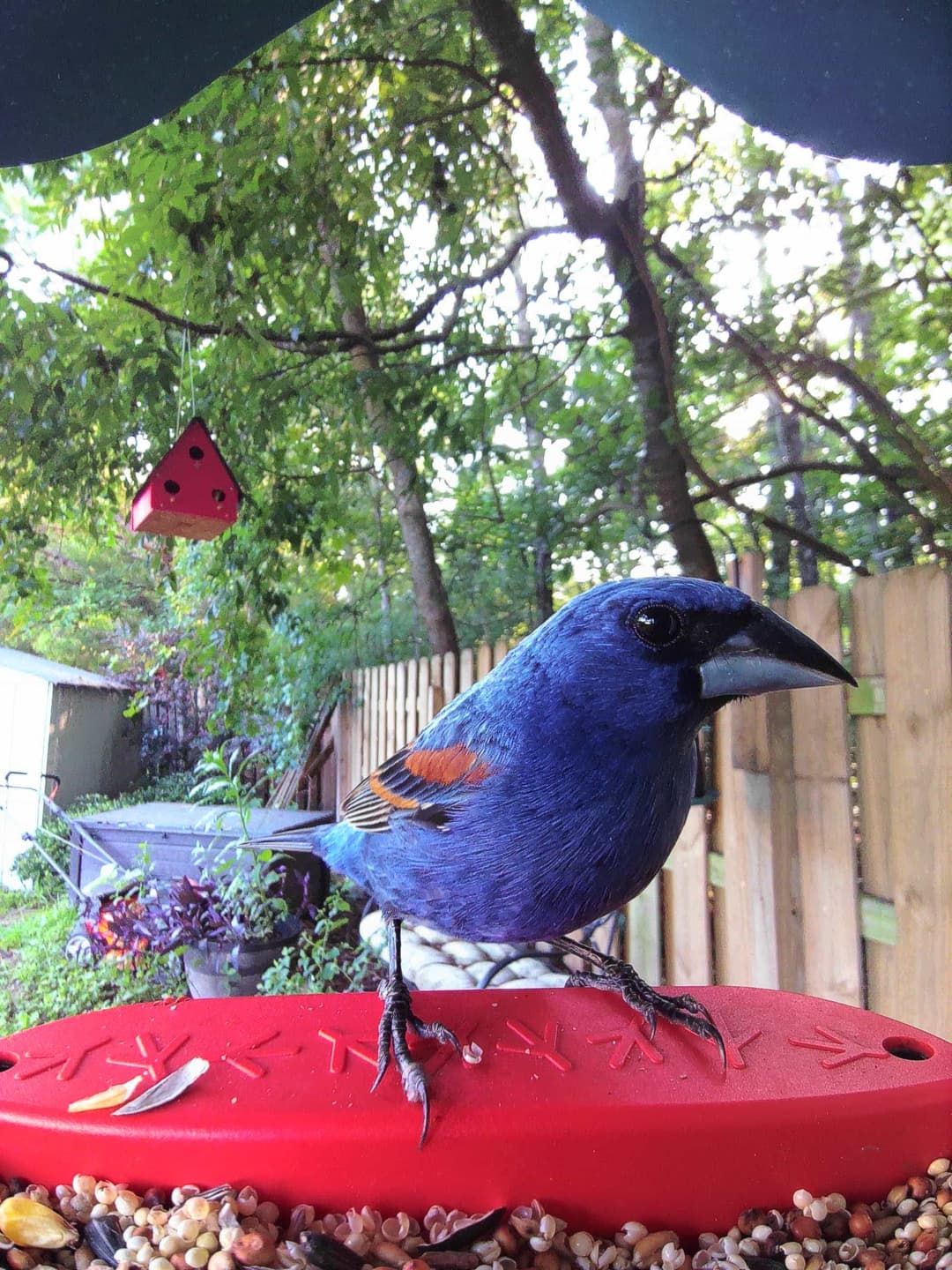
Indigo Bunting vs Painted Bunting
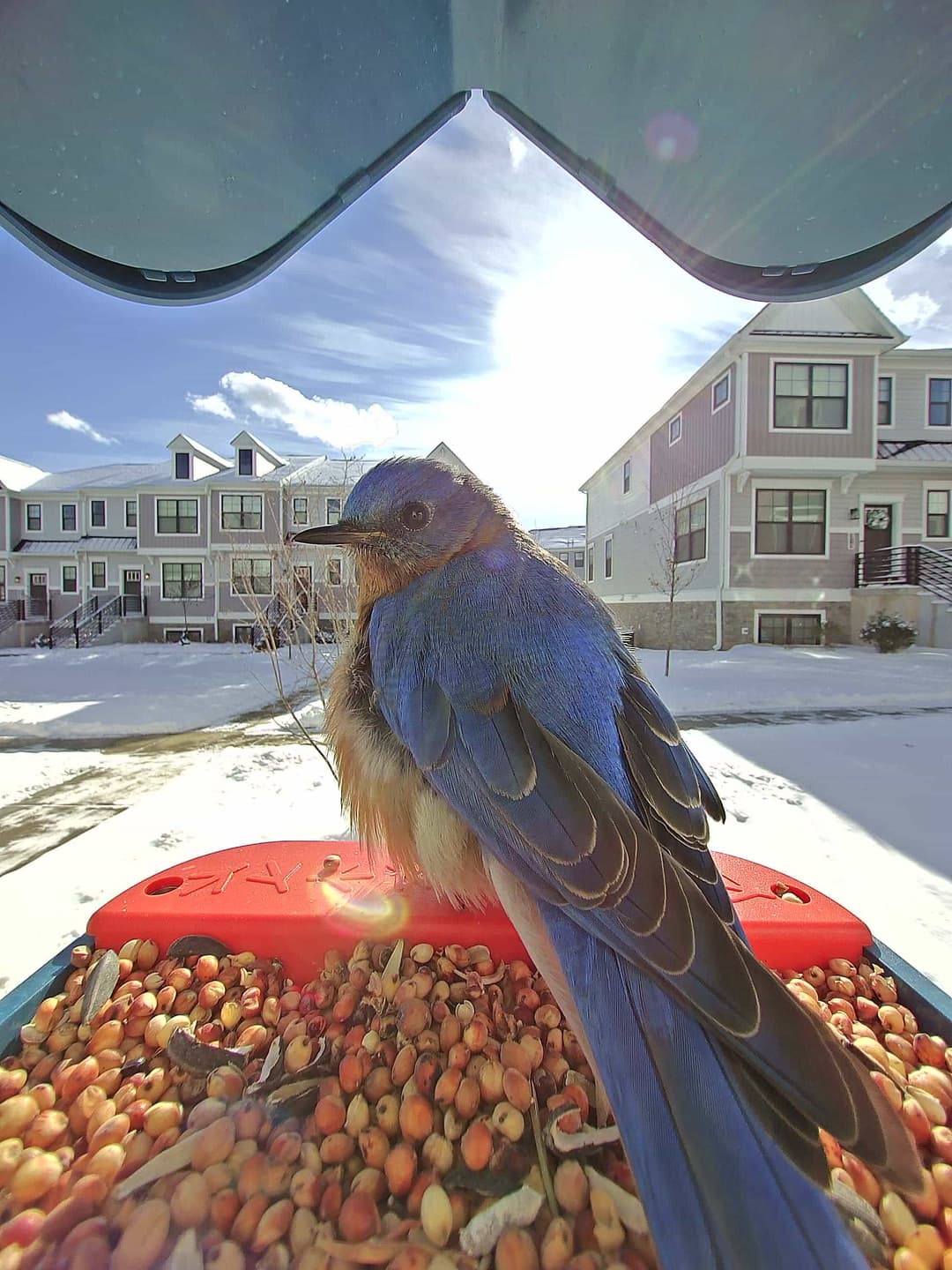
Indigo Bunting vs Eastern Bluebird
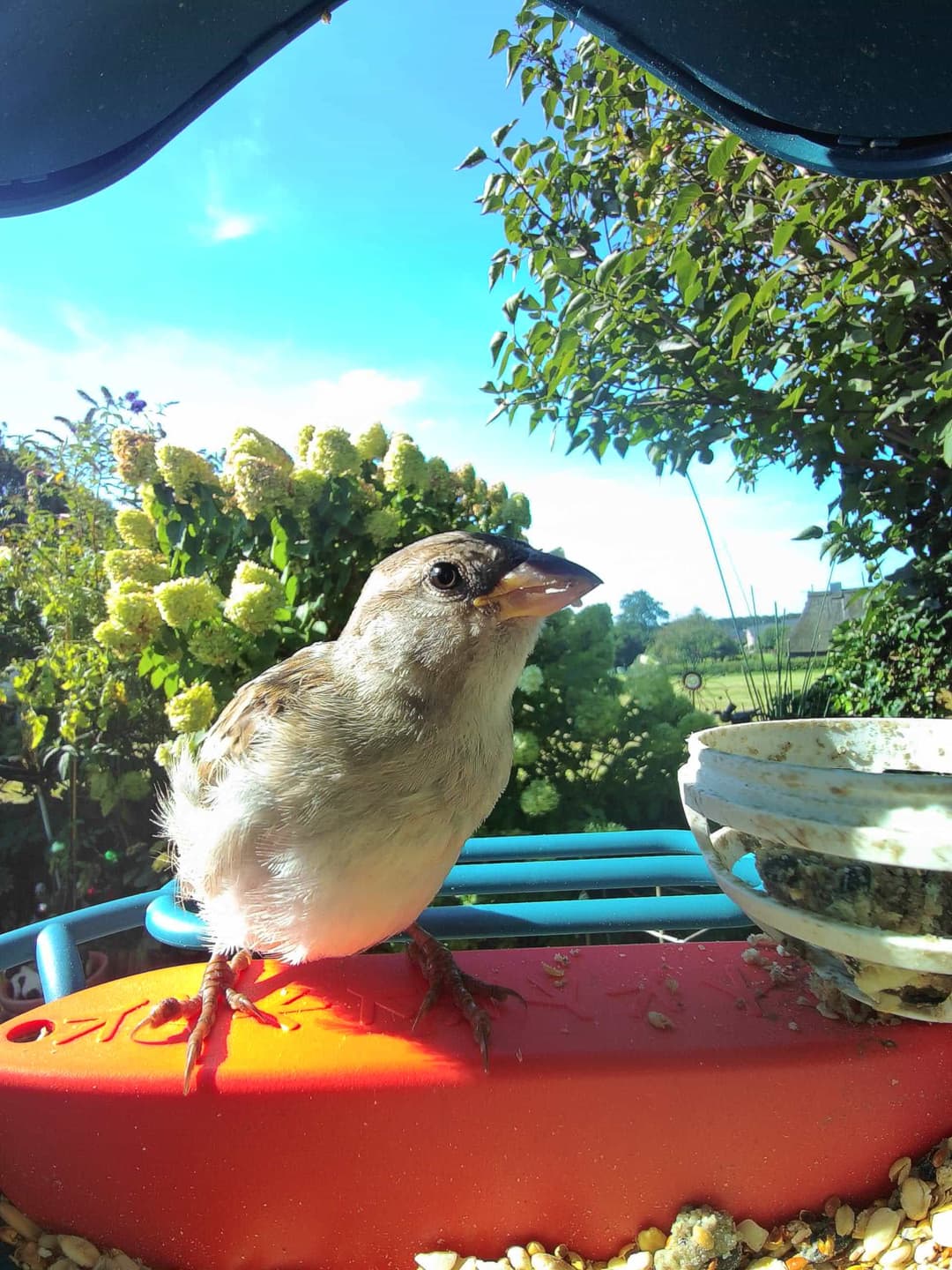
Indigo Bunting vs House Sparrow
Varied Bunting vs [Select a bird]

[Select a bird]
Pick a bird to compare
Indigo Bunting vs [Select a bird]
[Select a bird]
Pick a bird to compare