Painted Bunting or Varied Bunting?
Here's how to tell the difference
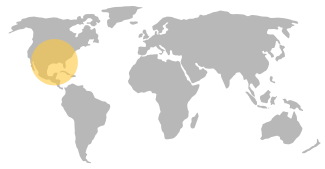
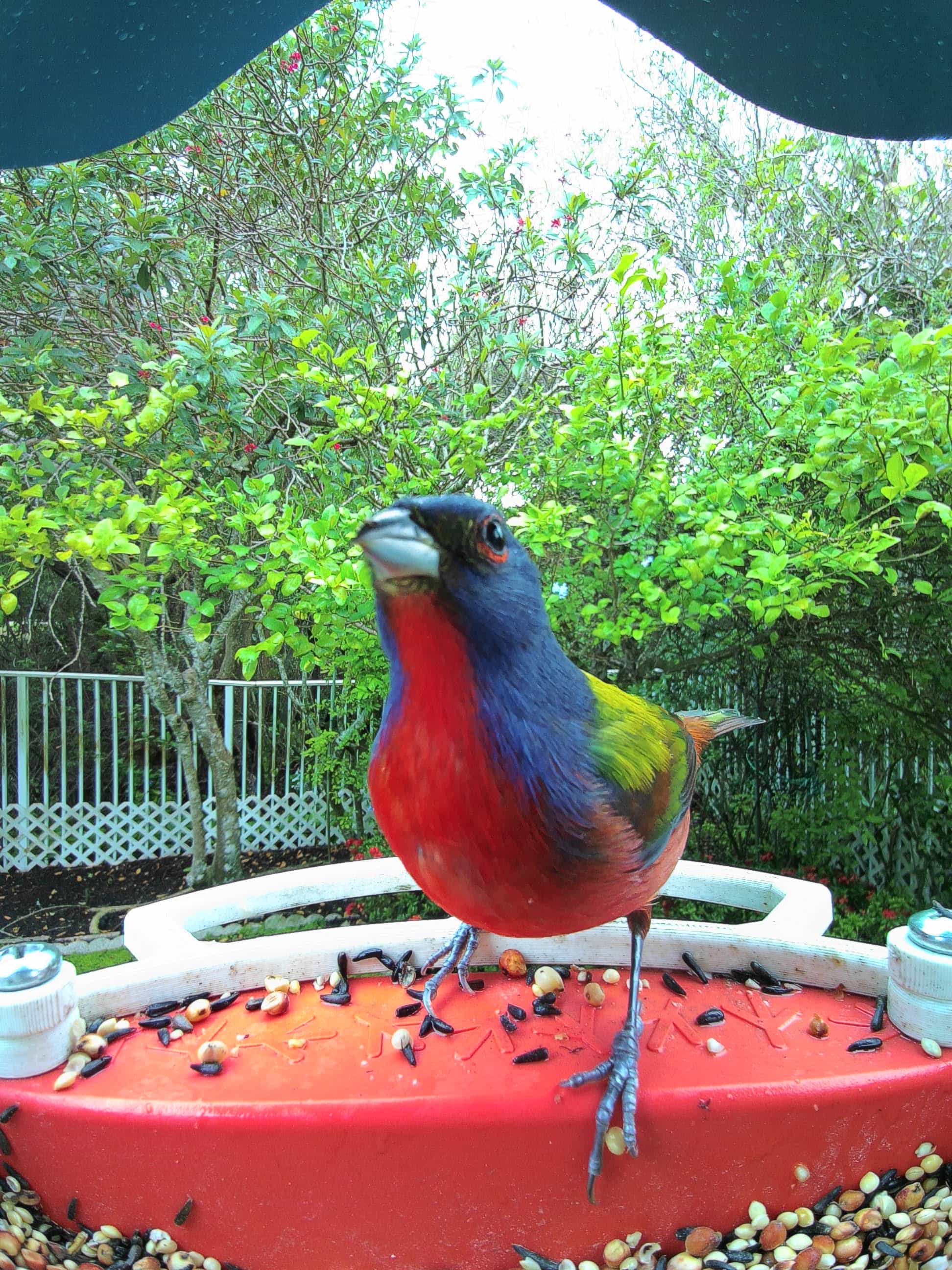


Painted Bunting
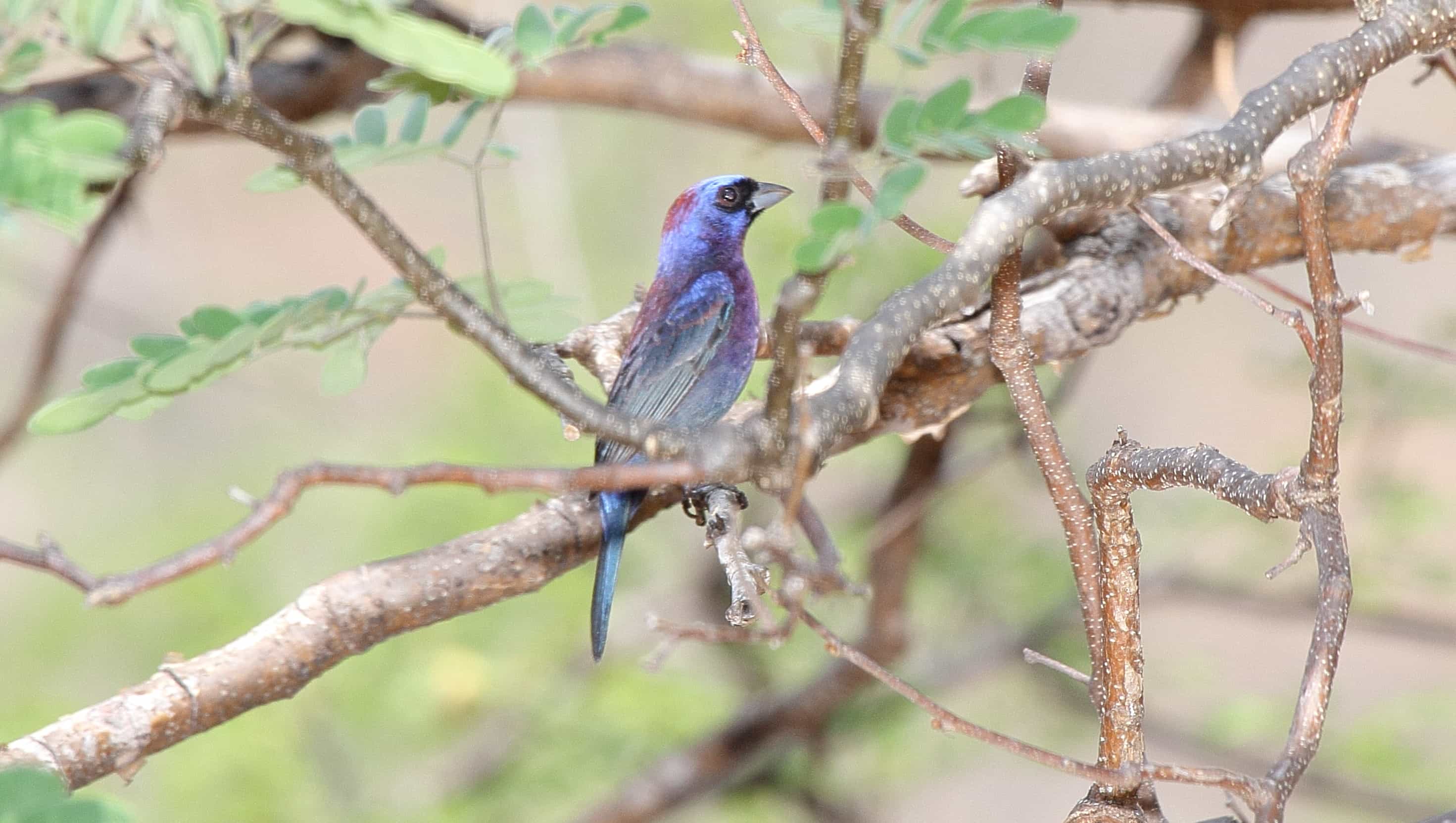
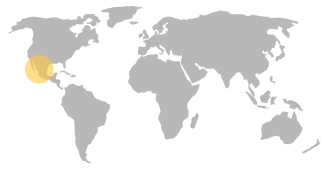
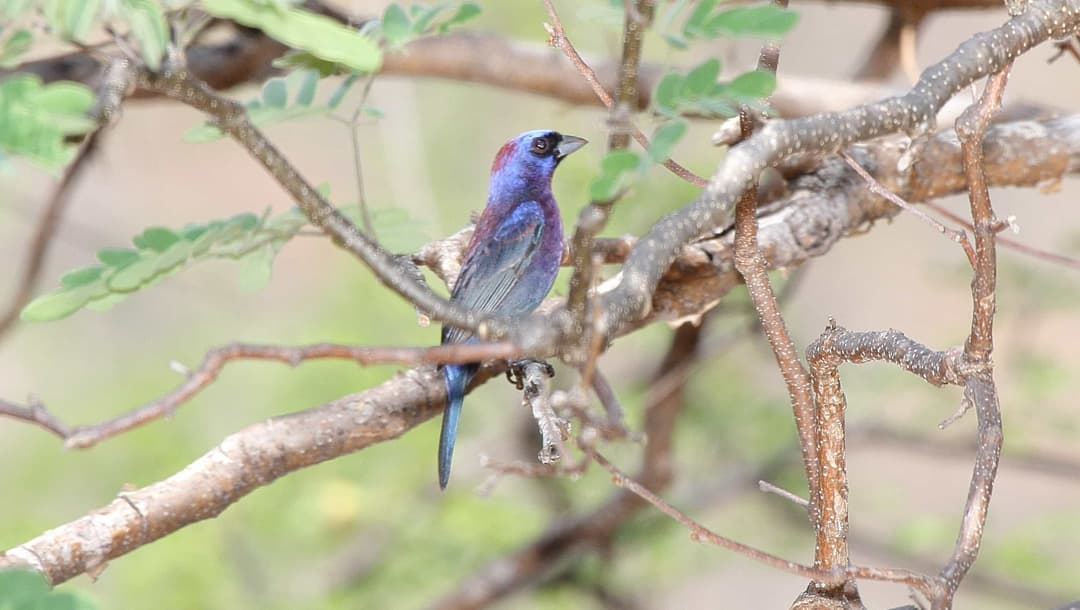
Varied Bunting
Painted Bunting
Passerina ciris
General appearance
The painted bunting is a uniquely colored bird about the size of a sparrow, with a size of 5 1/2" (14 cm). Its distinguishing physical traits include its bright, vibrant colors and its bill, which is thicker than those seen on other small greenish birds. Its wing shape is rounded and its tail can be notched, rounded or square-tipped.
Male vs female
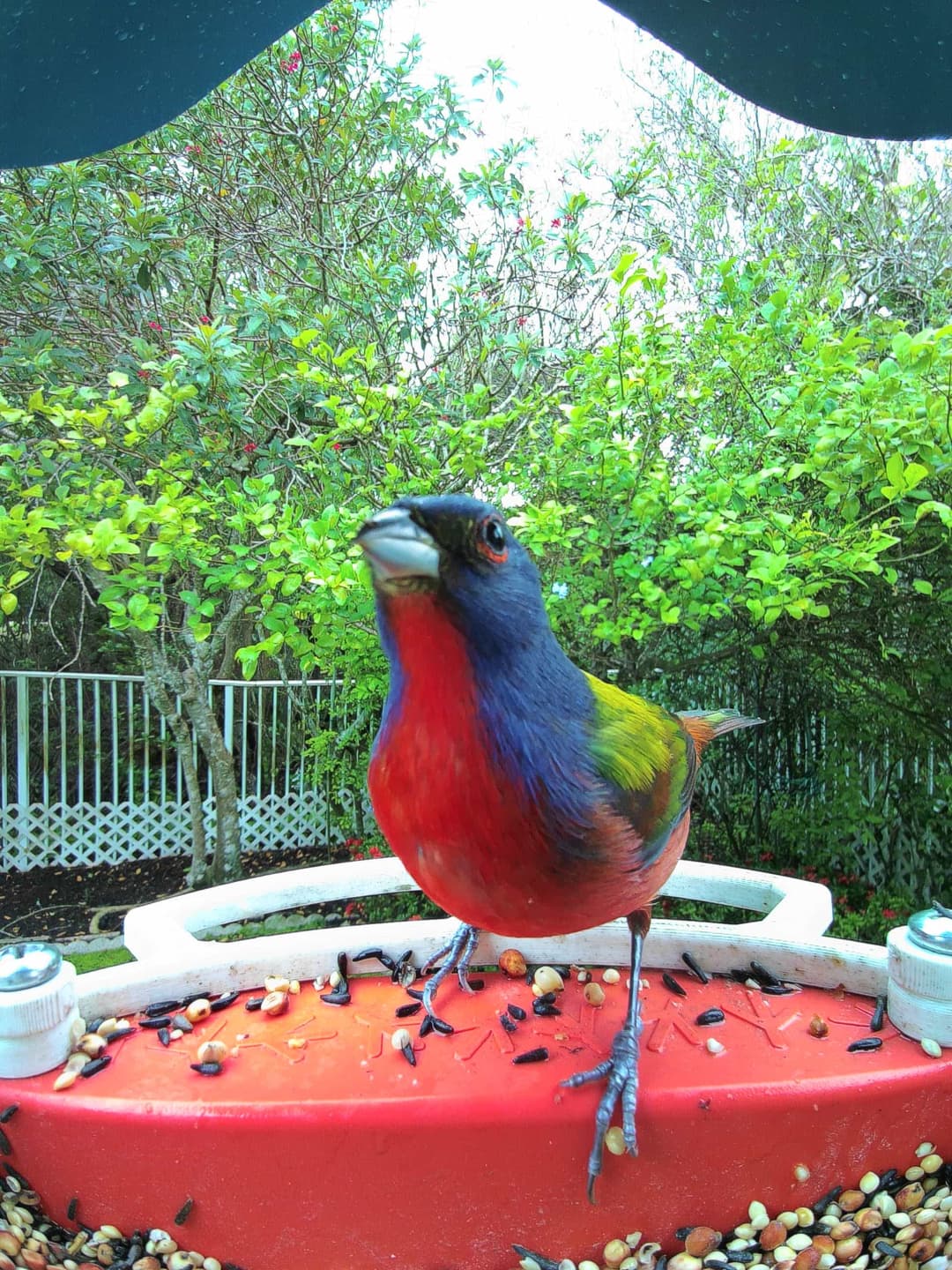
There is a substantial difference in coloration between the male and female painted buntings. The adult male is unmistakable with a blue head, red throat and chest, and bright green back. These bold colors make the male easy to identify in the wild. The female, on the other hand, is plain green with no markings, making her more difficult to identify among other green birds.
Juvenile
Juvenile painted buntings are much grayer than adult females at first, which distinguishes them from the adults. As they mature, their coloring gradually develops into either the striking colors of the adult male or the more discreet green of the female.
Size
4.7 - 5.1 in/0.5 - 0.7 oz
There's more to learn about Painted Bunting
View full detailsVaried Bunting
Passerina versicolor
General appearance
The Varied Bunting is a small bird measuring 4 1/2-5 1/2 inches (11-14 cm), about the size of a Sparrow. Its distinctive coloration includes hues of black, blue, brown, and red. The bird's wing shape tends to be rounded, and the tail shape can range from notched, rounded to square-tipped.
Male vs female
Males are distinguishable by their darker appearance from a distance, appearing almost black. In good light, their plumage consists of dull purple coupled with a red nape and blue forehead. Their colors are obscurely hidden by brown edging in the fall. Females, on the other hand, are a plain brown and lack any wing-bars or chest streaks, making them relatively less colorful than their male counterparts.
Juvenile
The description does not provide specific details on the juvenile Varied Bunting. However, similar bird species often look like the females until their adult plumage develops, associating them with a duller, brown coloration.
Size
4.3 - 5.5 in/0.4 - 0.5 oz
There's more to learn about Varied Bunting
View full detailsHow to tell the Painted Bunting from the Varied Bunting
Visual differences
The Painted Bunting and Varied Bunting differ mainly in the male's plumage. Male Painted Buntings are vibrant with a blue head, red chest, and green back, while male Varied Buntings appear darker, with dull purple, red nape, and blue forehead. Painted Buntings weigh 0.46-0.67 oz and are 4.7-5.1 inches long, while Varied Buntings are slightly lighter, weighing 0.39-0.46 oz. Females of both species are less colorful; Painted Buntings are green, and Varied Buntings are brown. Both species have rounded wings and variable tail shapes.
Key differences and behavior
Painted and Varied Buntings, both vibrant members of the Passerina genus, exhibit distinct behaviors in habitat and breeding. Painted Buntings favor semi-open areas with dense low growth and are often seen in populated places where they might visit feeders for white millet seeds. They practice polygynous nesting, with males defending territories through singing and fights. In contrast, Varied Buntings prefer remote dense, thorny brush and deserts, rarely visiting feeders. They engage in elaborate courtship displays where males prominently showcase plumage. Painted Buntings' diet leans towards seeds and insects in summer, while Varied Buntings consume more insects during the breeding season, switching to seeds in winter. The Painted Bunting female independently builds nests, whereas in Varied Buntings, both sexes participate in nest construction.
Still not sure? Here are more lookalikes!
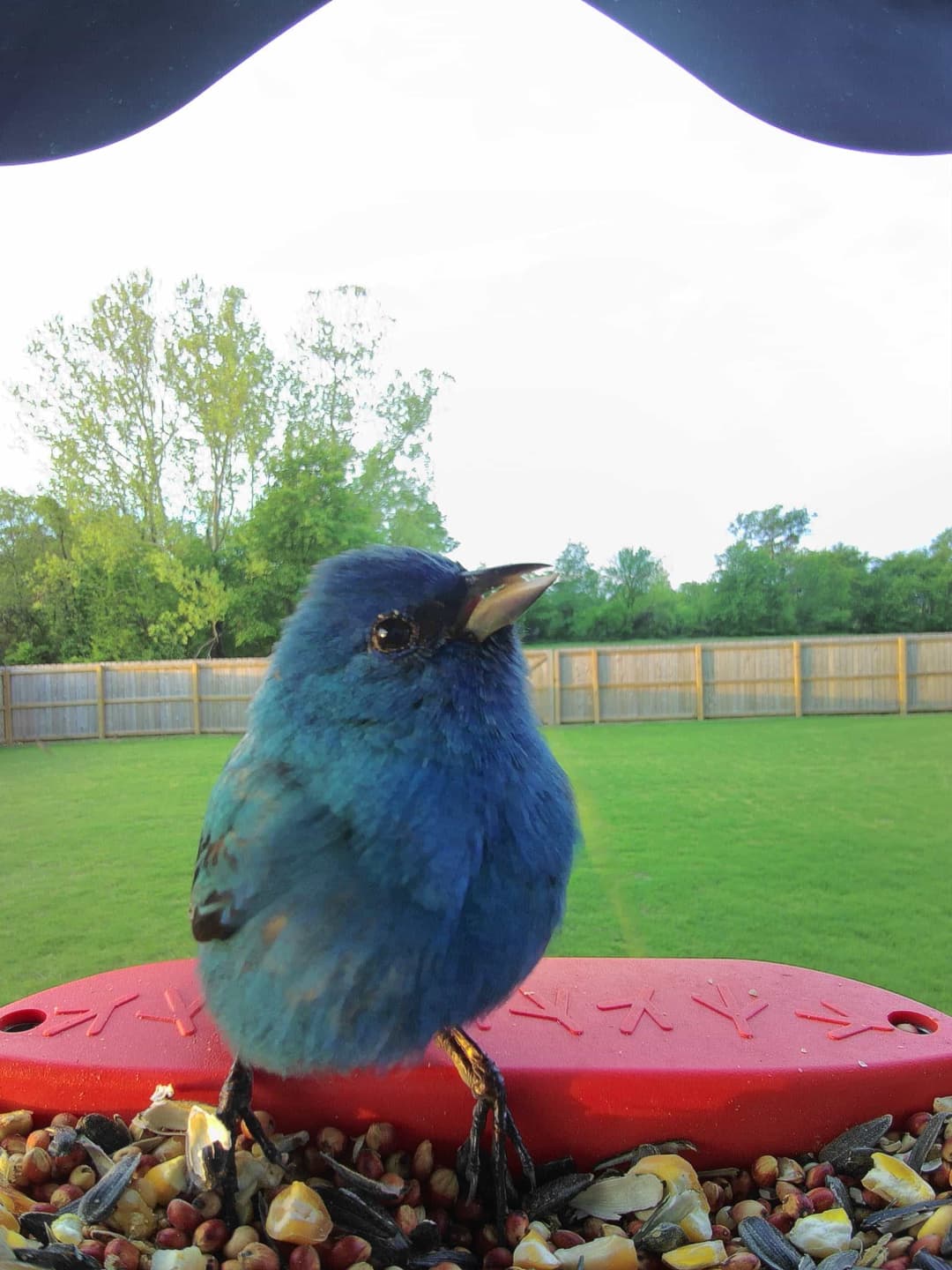
Painted Bunting vs Indigo Bunting
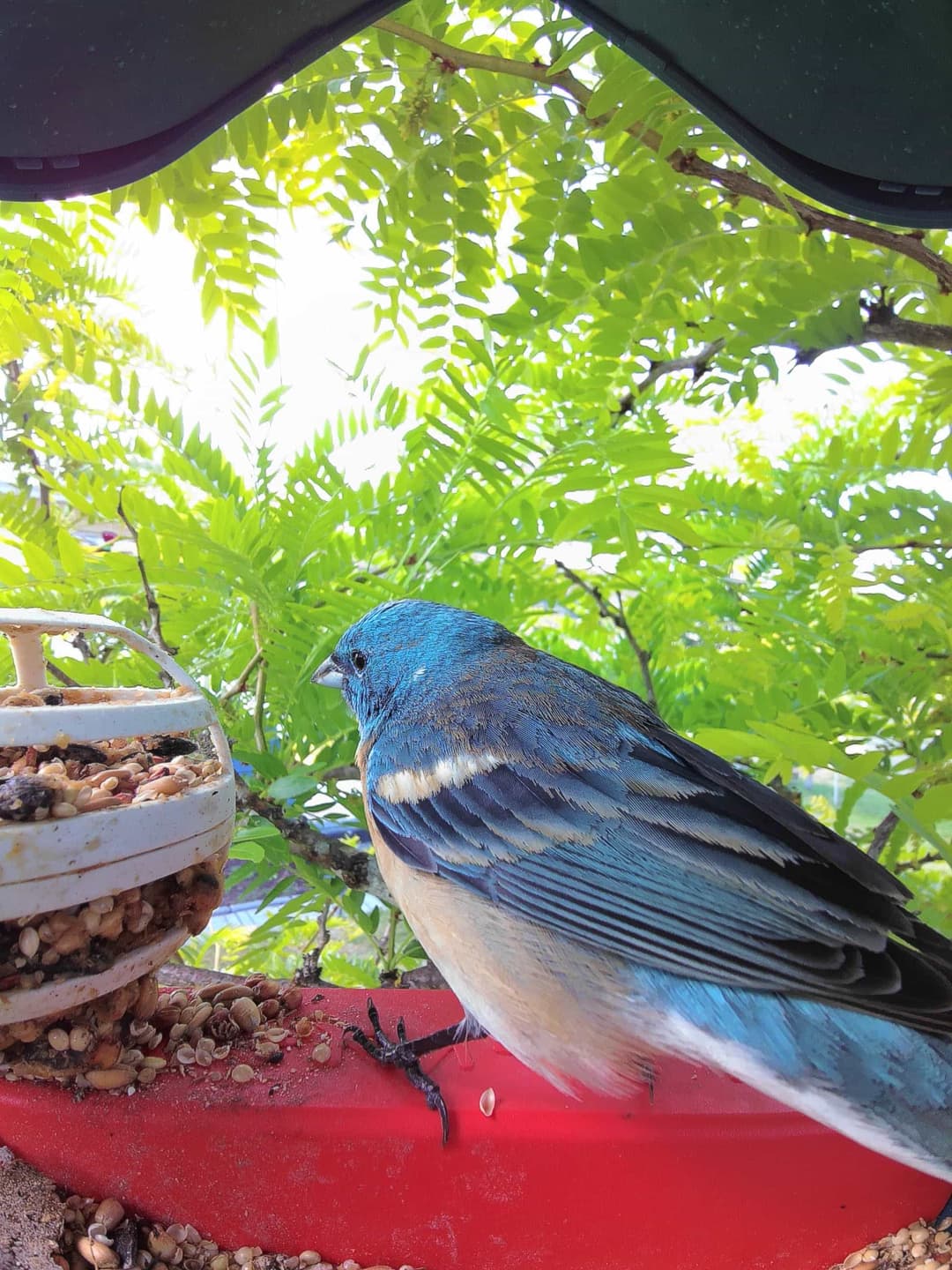
Painted Bunting vs Lazuli Bunting
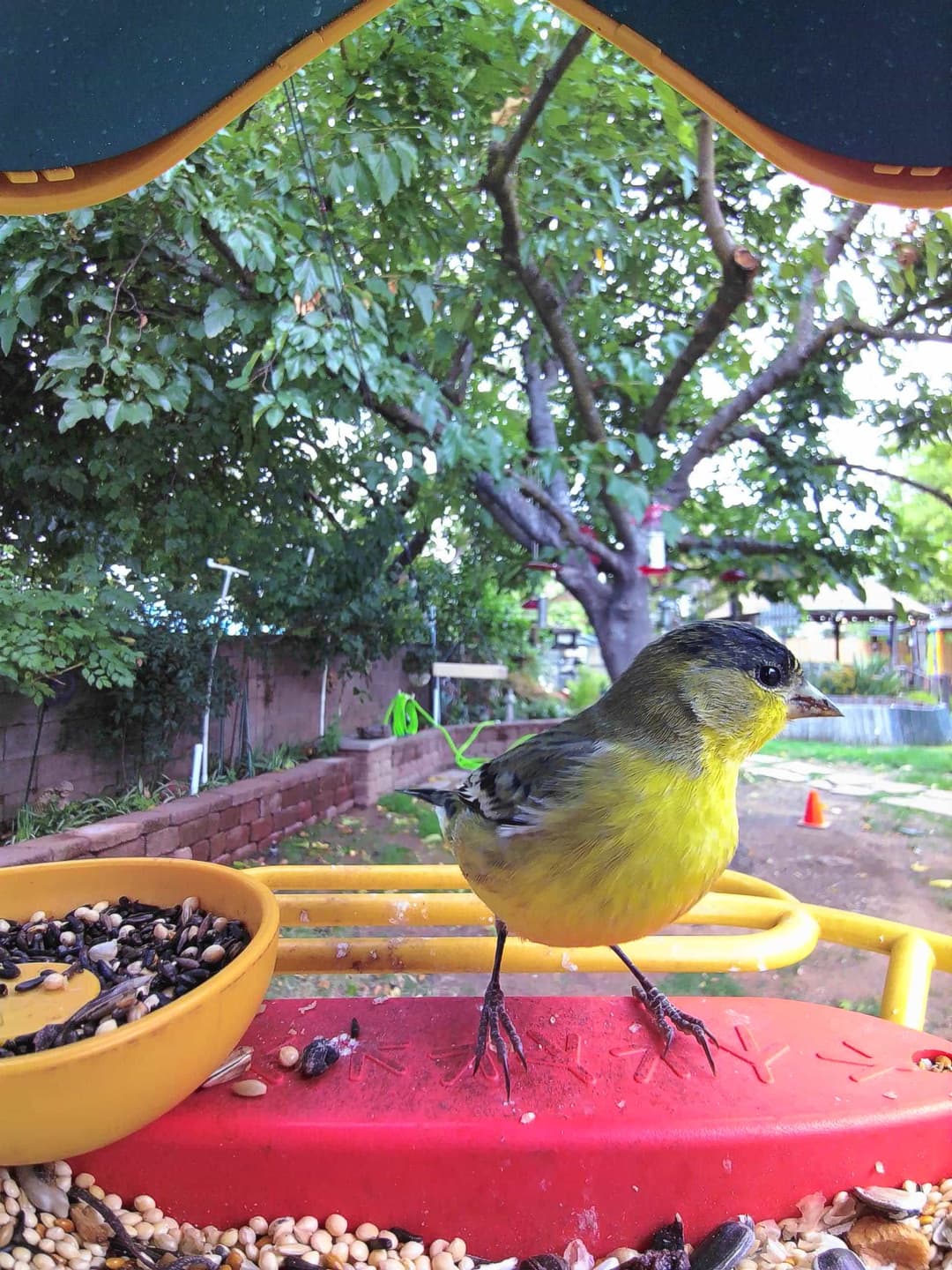
Painted Bunting vs Lesser Goldfinch
Painted Bunting vs [Select a bird]

[Select a bird]
Pick a bird to compare
Varied Bunting vs [Select a bird]
[Select a bird]
Pick a bird to compare