Painted Bunting or Lazuli Bunting?
Here's how to tell the difference
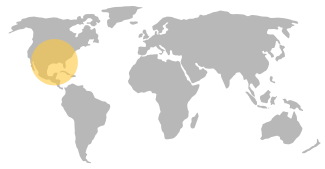
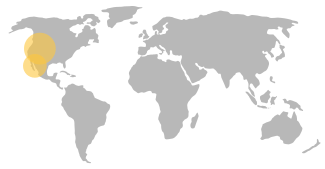
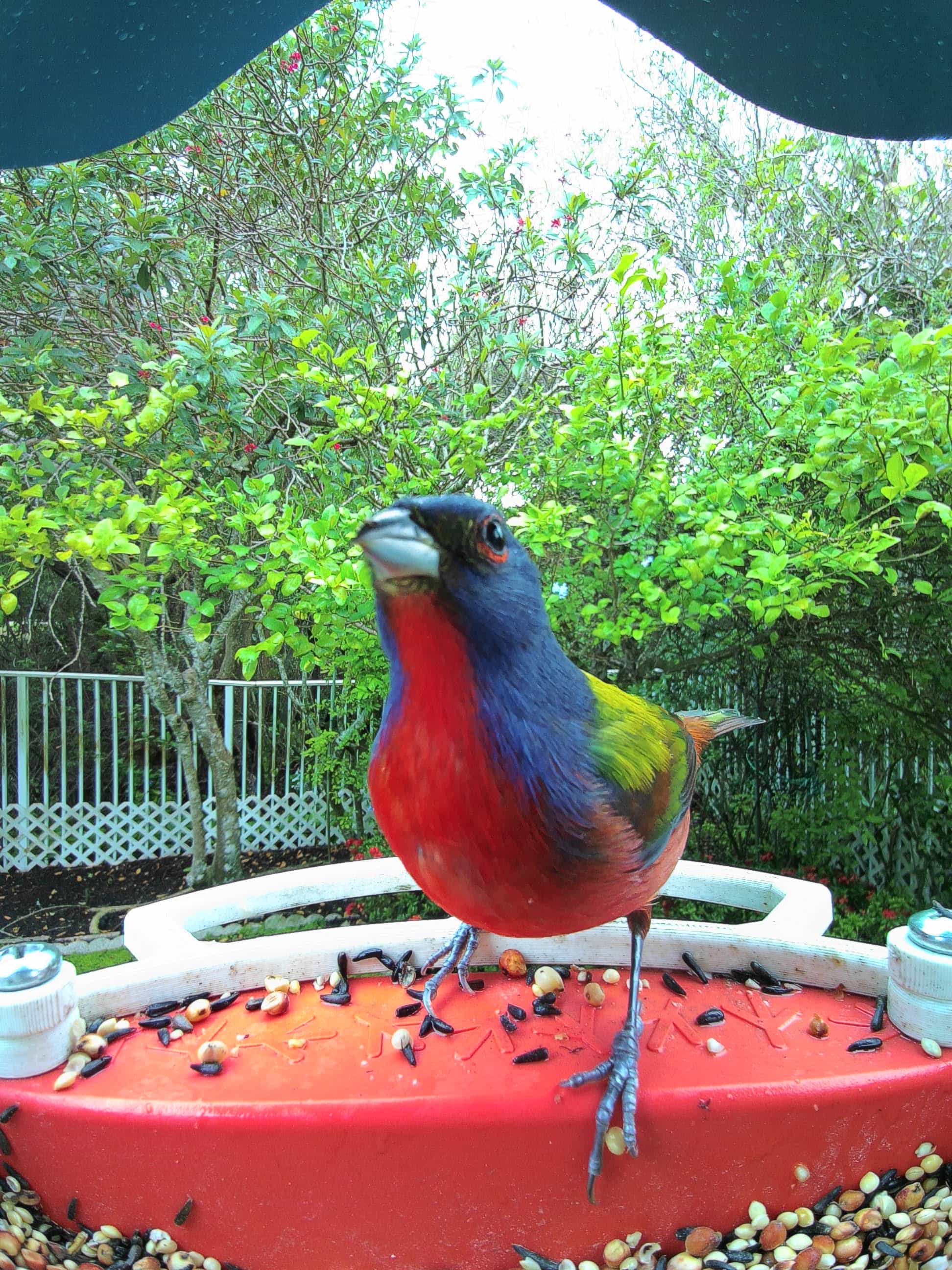


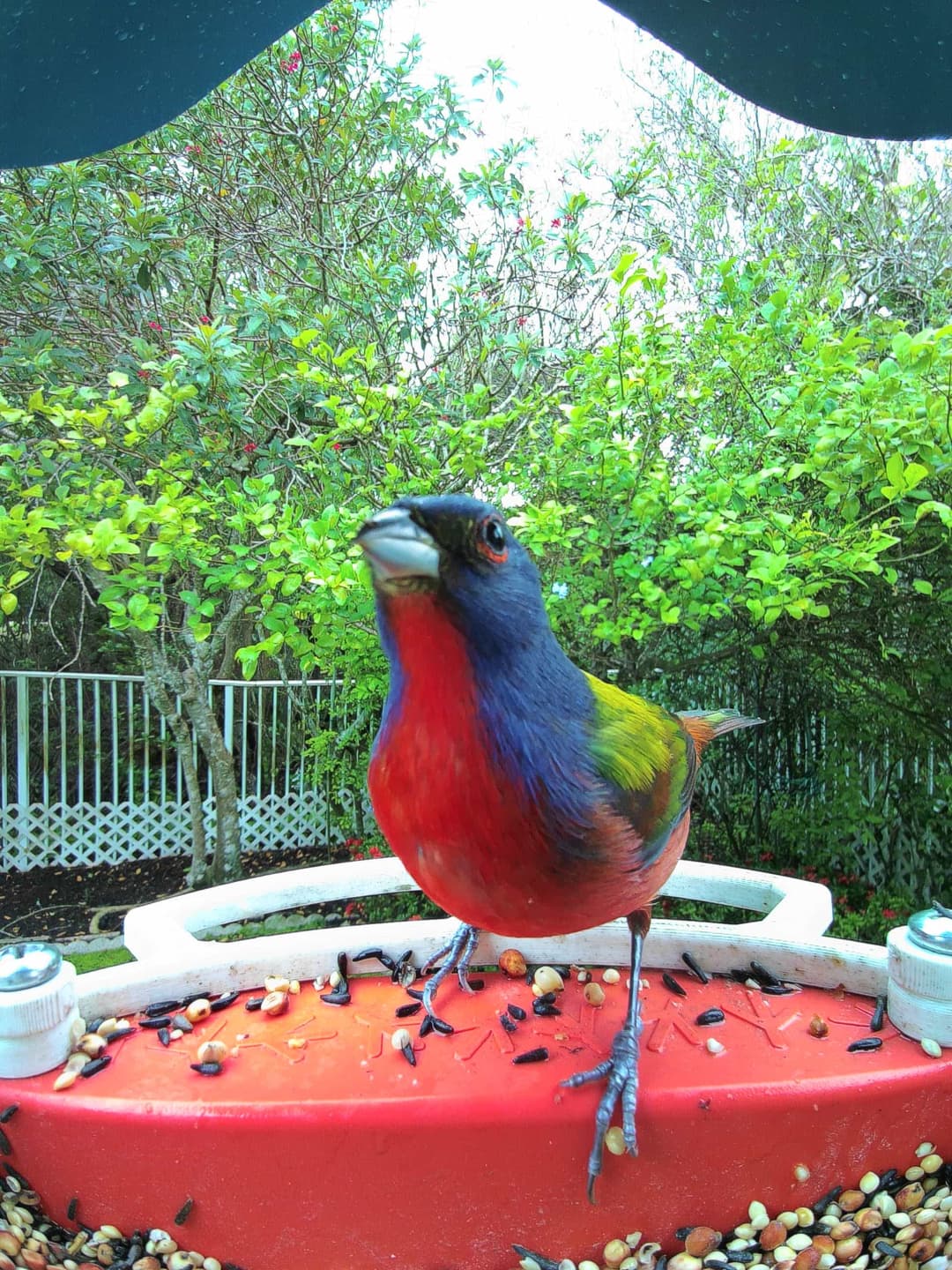
Painted Bunting
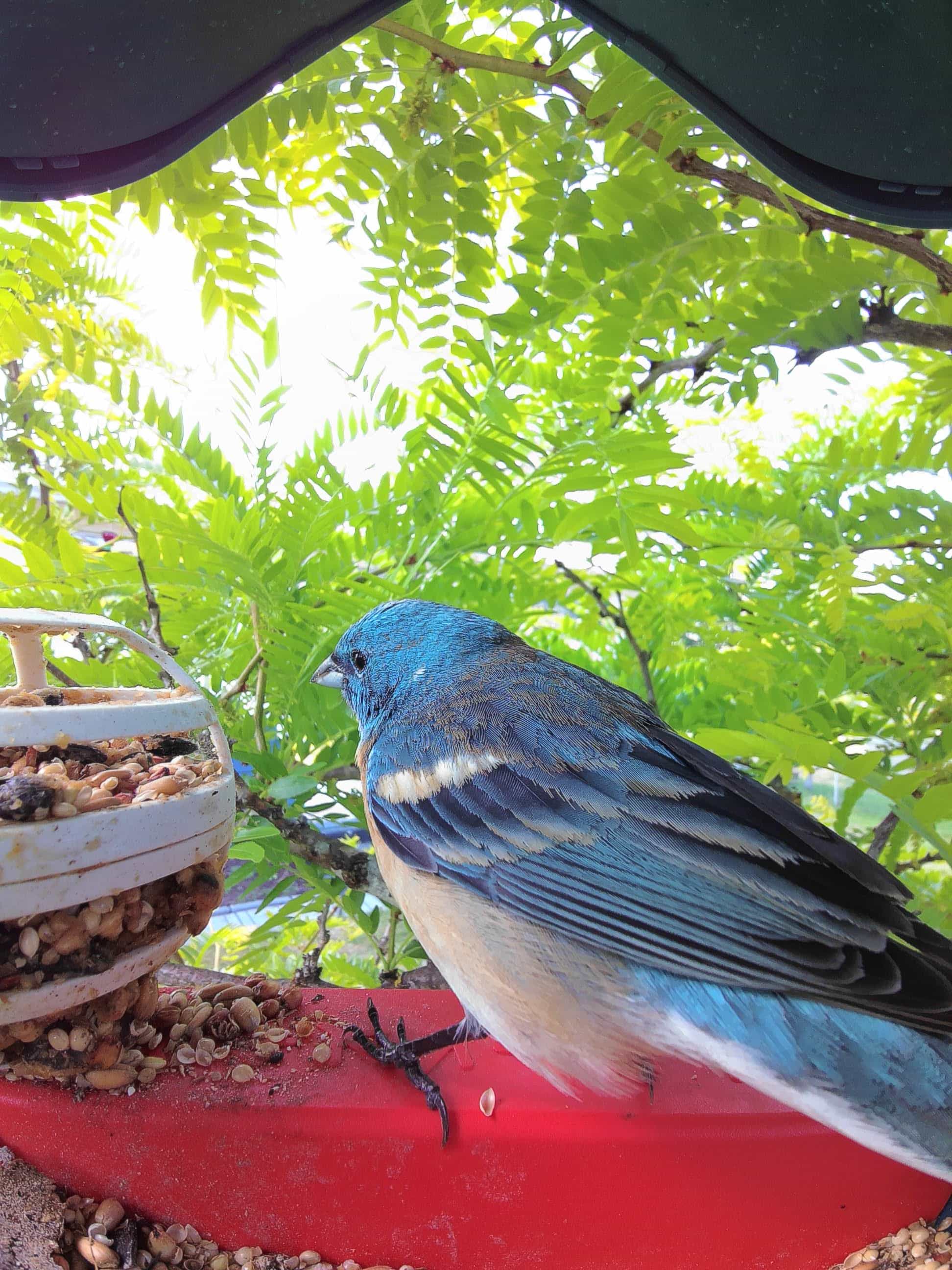


Lazuli Bunting
Painted Bunting
Passerina ciris
General appearance
The painted bunting is a uniquely colored bird about the size of a sparrow, with a size of 5 1/2" (14 cm). Its distinguishing physical traits include its bright, vibrant colors and its bill, which is thicker than those seen on other small greenish birds. Its wing shape is rounded and its tail can be notched, rounded or square-tipped.
Male vs female
There is a substantial difference in coloration between the male and female painted buntings. The adult male is unmistakable with a blue head, red throat and chest, and bright green back. These bold colors make the male easy to identify in the wild. The female, on the other hand, is plain green with no markings, making her more difficult to identify among other green birds.
Juvenile
Juvenile painted buntings are much grayer than adult females at first, which distinguishes them from the adults. As they mature, their coloring gradually develops into either the striking colors of the adult male or the more discreet green of the female.
Size
4.7 - 5.1 in/0.5 - 0.7 oz
There's more to learn about Painted Bunting
View full detailsLazuli Bunting
Passerina amoena
General appearance
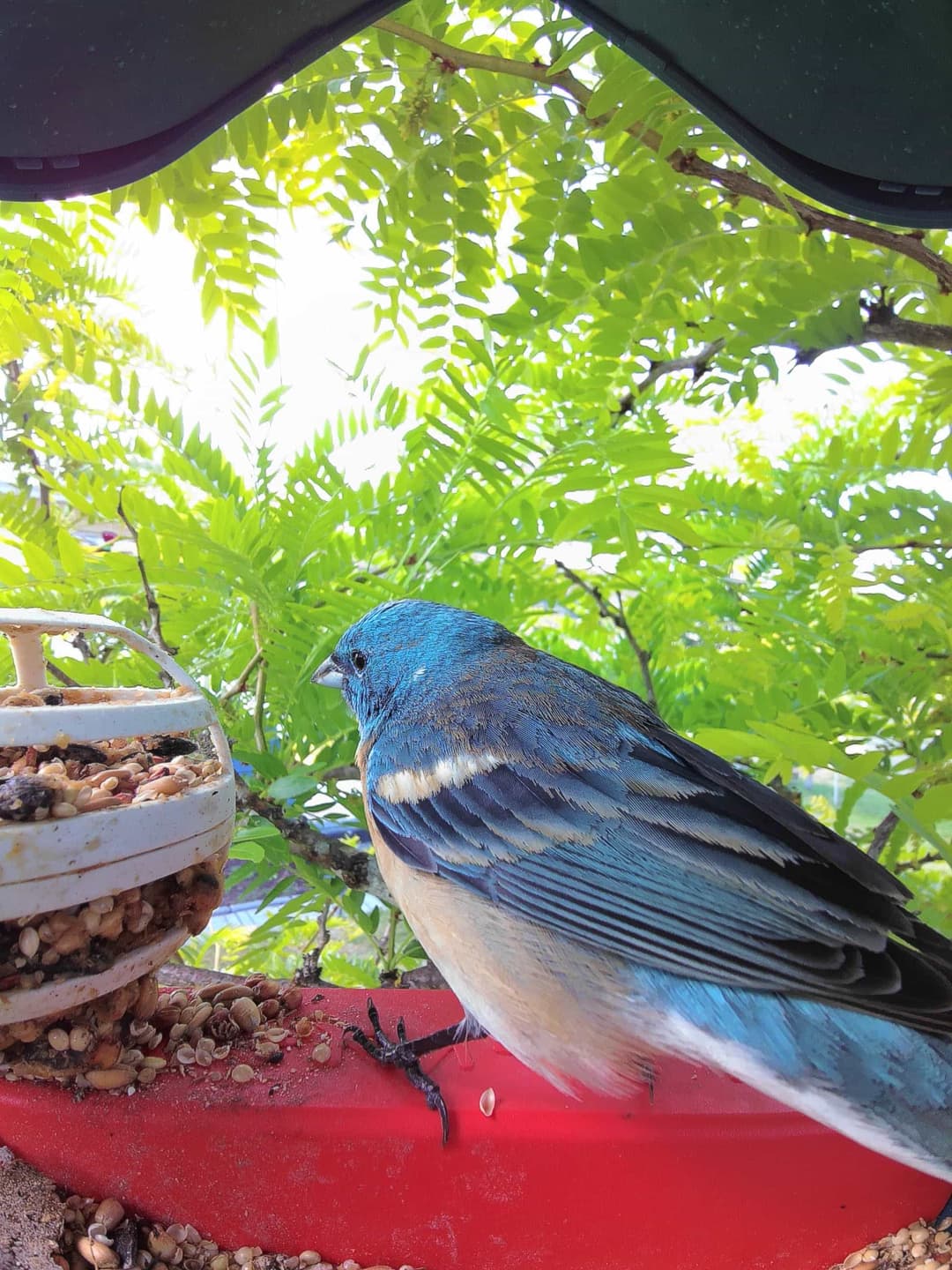
The lazuli bunting is a small passerine bird with a compact body and a distinctive blue and orange coloration. Its short, conical bill is well-suited for seed-eating. The bird's wings and tail feathers are dark with bluish edges, offering a striking contrast to its vibrant body colors.
Male vs female
Males are renowned for their bright blue plumage on the head and back, contrasting with a vivid orange breast and white belly. Females, however, are more subdued with brownish tones overall, tinges of blue on the wings and tail, and paler underparts. This sexual dimorphism helps in easy identification.
Juvenile
Juvenile lazuli buntings resemble females in their coloration with predominantly brown feathers. As they mature, young males gradually develop the characteristic blue and orange plumage seen in adults. During this transition, they may exhibit a patchy mix of brown and emerging blue feathers.
Size
5.1 - 5.9 in/0.5 - 0.6 oz
There's more to learn about Lazuli Bunting
View full detailsHow to tell the Painted Bunting from the Lazuli Bunting
Visual differences
The Painted Bunting is a sparrow-sized, 5.5" bird known for the male's striking blue head, red chest, and green back. Females are bright green. The Lazuli Bunting is slightly larger at 5-6", with males sporting a bright blue head and back, an orange breast, and a white belly. Females exhibit brown tones with blue-tinged wings. Both species have short, conical bills, but the Painted Bunting's is thicker. These color differences between males make them unique, with females being more subdued but distinct in green versus brown tones.
Key differences and behavior
Painted Buntings and Lazuli Buntings share similar habitats, favoring brushy areas, but Painted Buntings also adapt to more urban environments like gardens. Both species engage in territorial singing, though Lazuli Buntings form song neighborhoods and react to "foreign" accents. While both build nests low in vegetation, Painted Buntings use denser foliage. In terms of diet, both buntings consume seeds and insects, with a preference for insects when feeding young. However, Lazuli Buntings adjust their winter diet to include more seeds, while Painted Buntings prefer small seeds like millet year-round. Socially, Painted Buntings may practice polygyny, whereas Lazuli Buntings do not. Despite similar sizes (5-6 inches, 0.5-0.6 ounces), these subtle behavioral and dietary distinctions aid in distinguishing these vibrant buntings in the field.
Still not sure? Here are more lookalikes!
Painted Bunting vs Varied Bunting
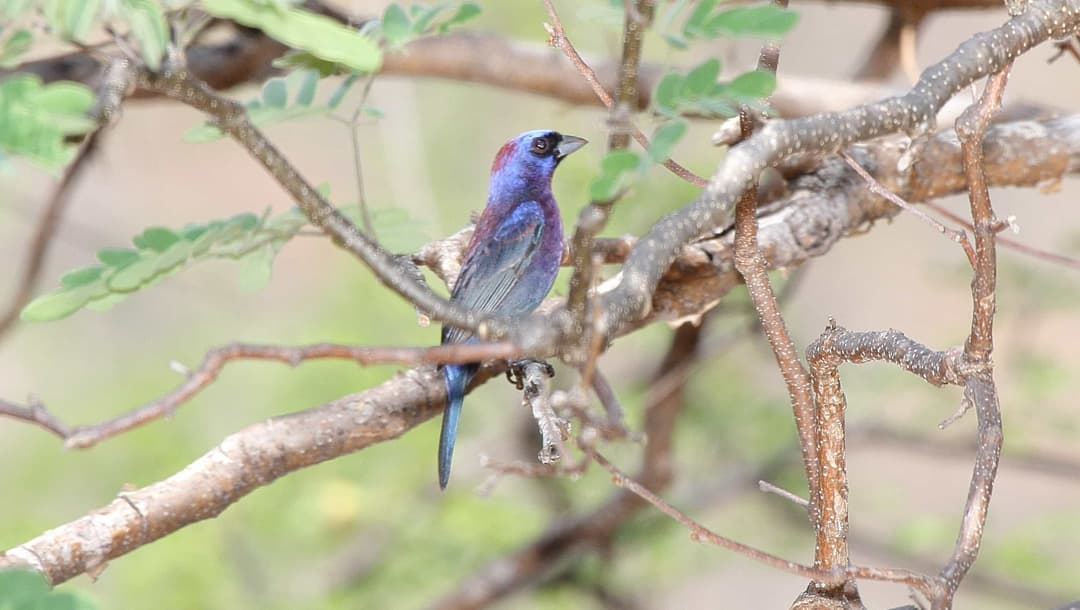
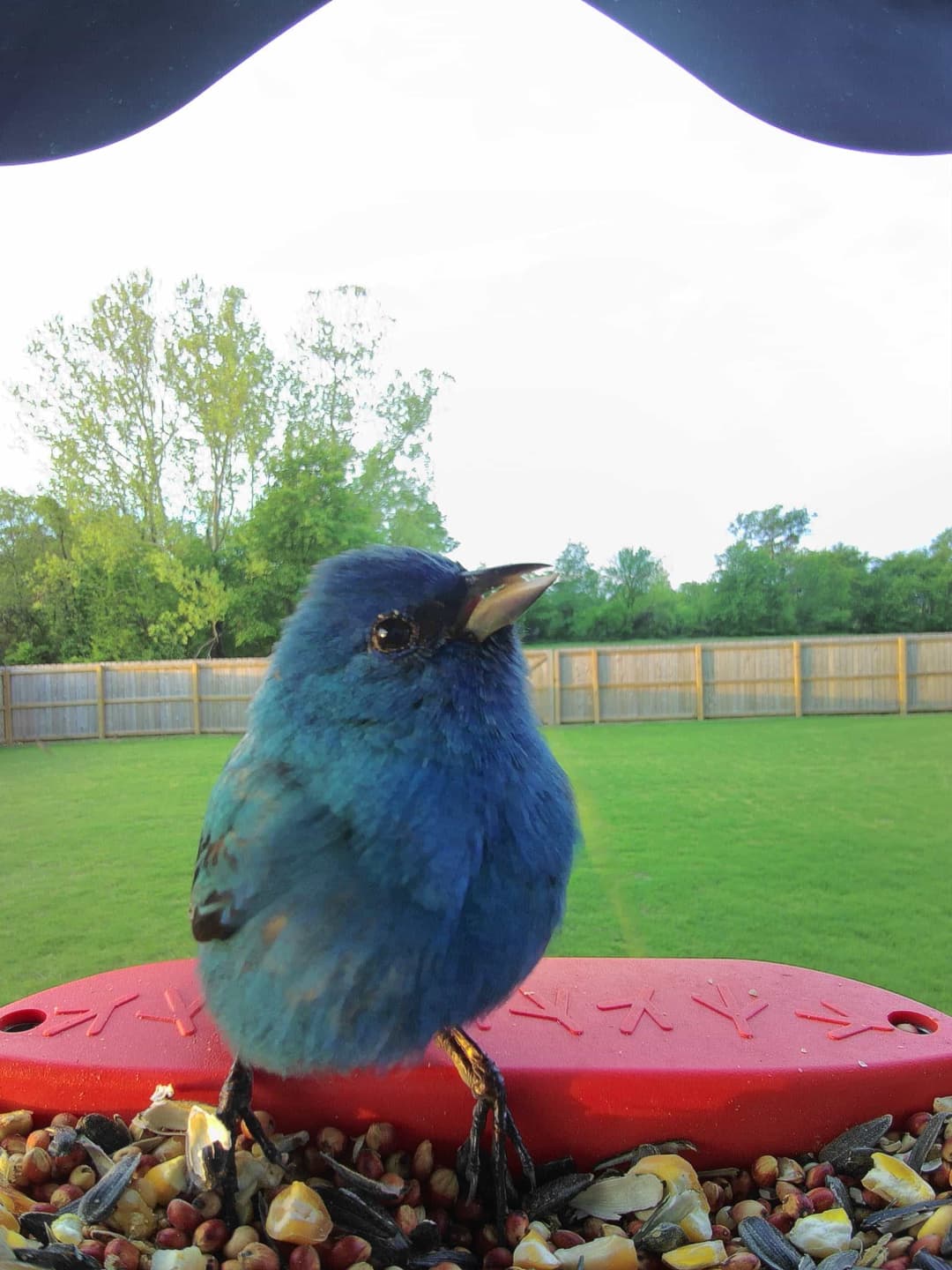
Painted Bunting vs Indigo Bunting
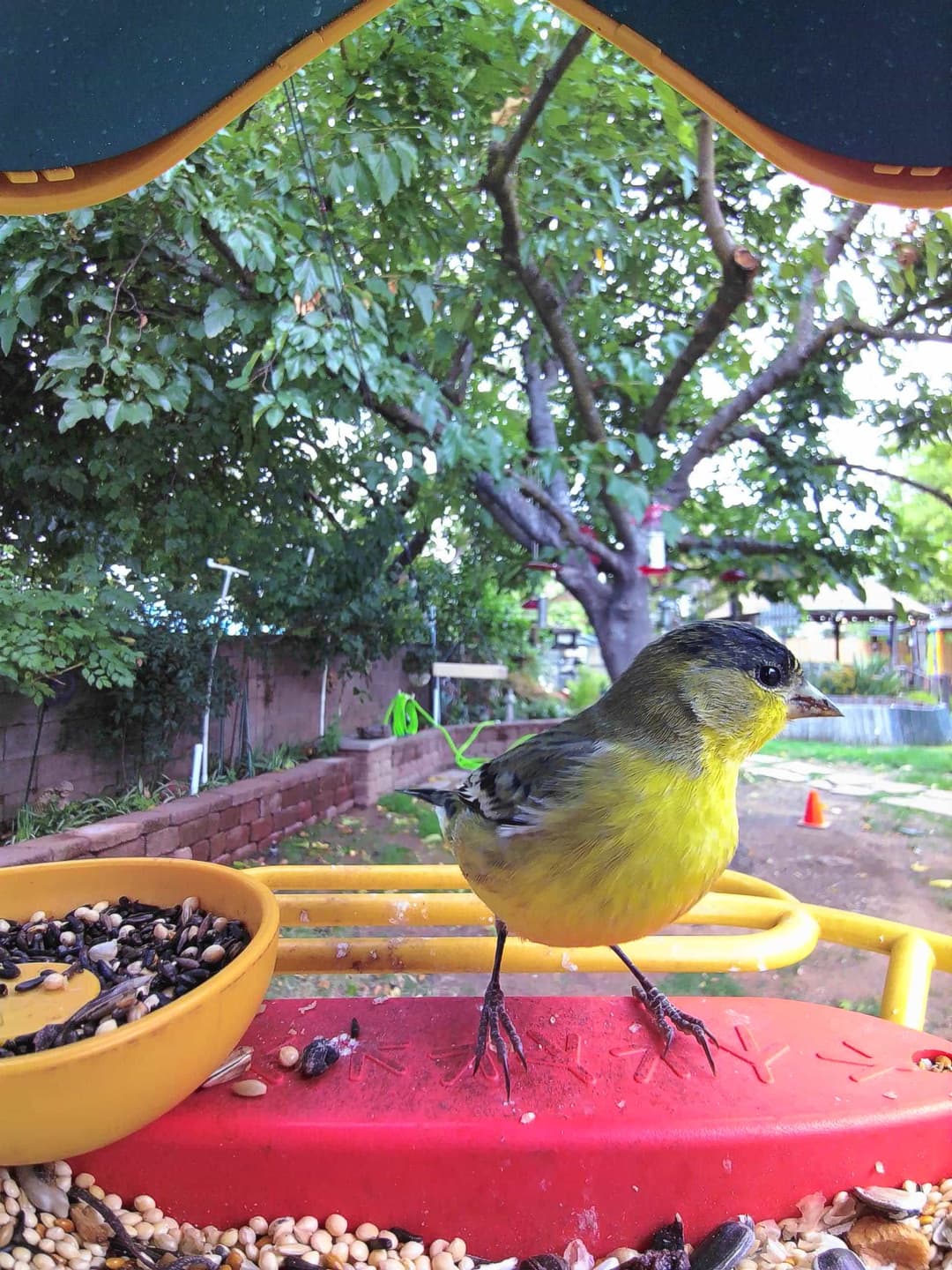
Painted Bunting vs Lesser Goldfinch
Lazuli Bunting vs Brown-Headed Cowbird
Painted Bunting vs [Select a bird]

[Select a bird]
Pick a bird to compare
Lazuli Bunting vs [Select a bird]
[Select a bird]
Pick a bird to compare