Orchard Oriole or Western Tanager?
Here's how to tell the difference
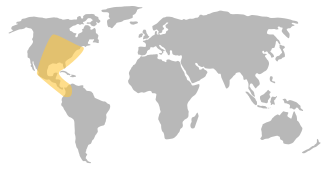
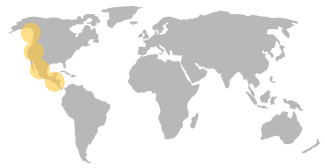
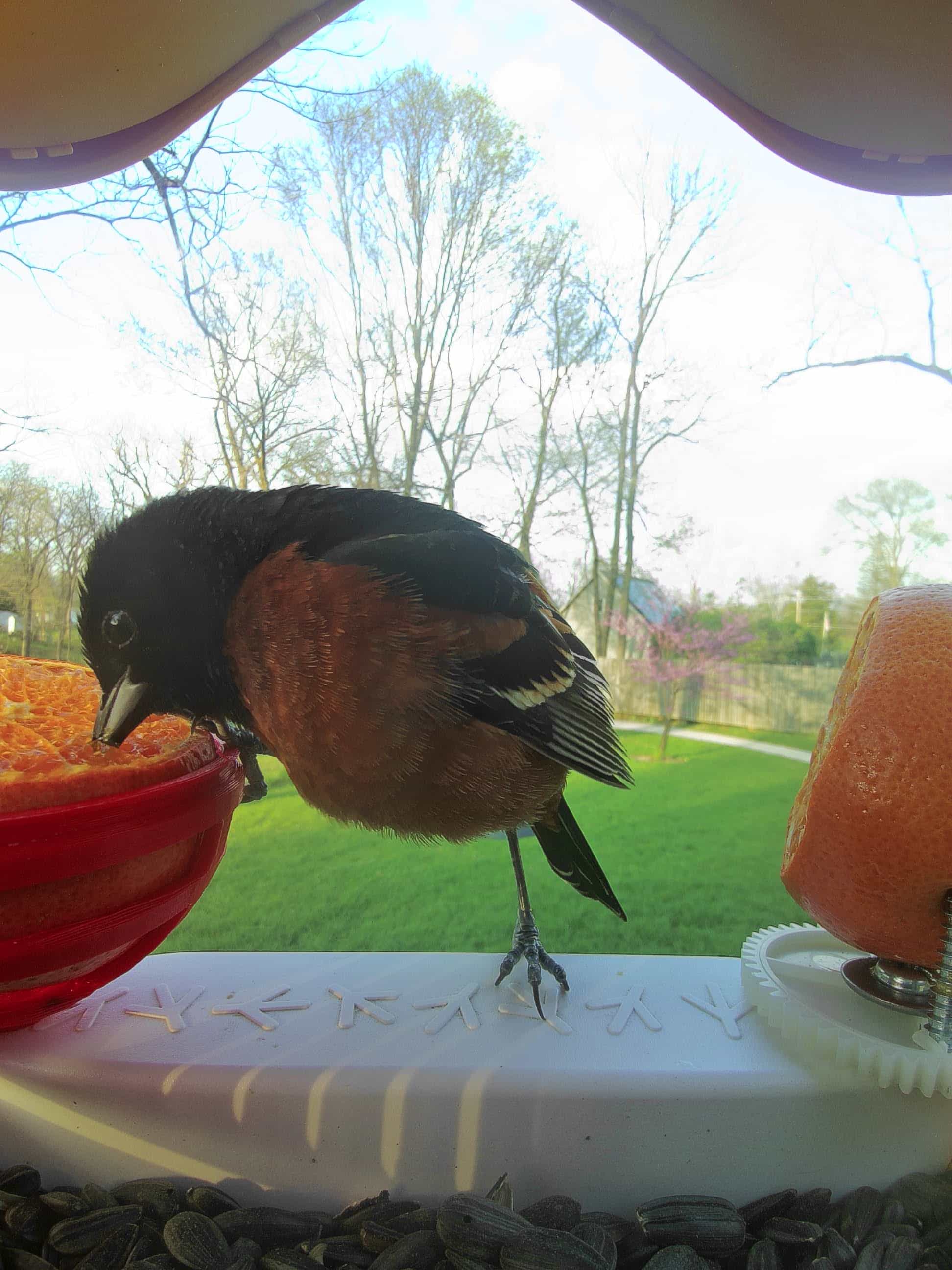


Orchard Oriole
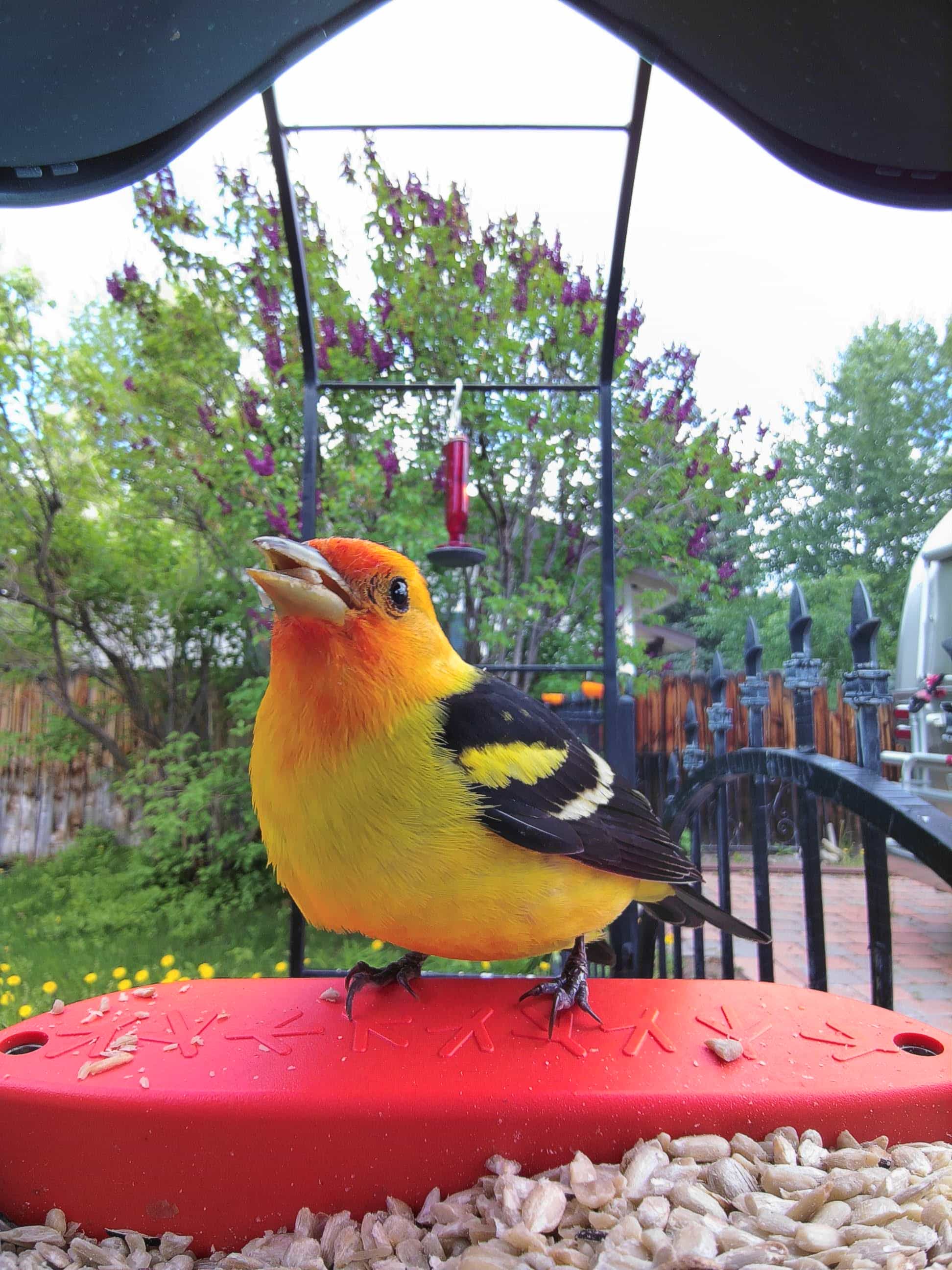


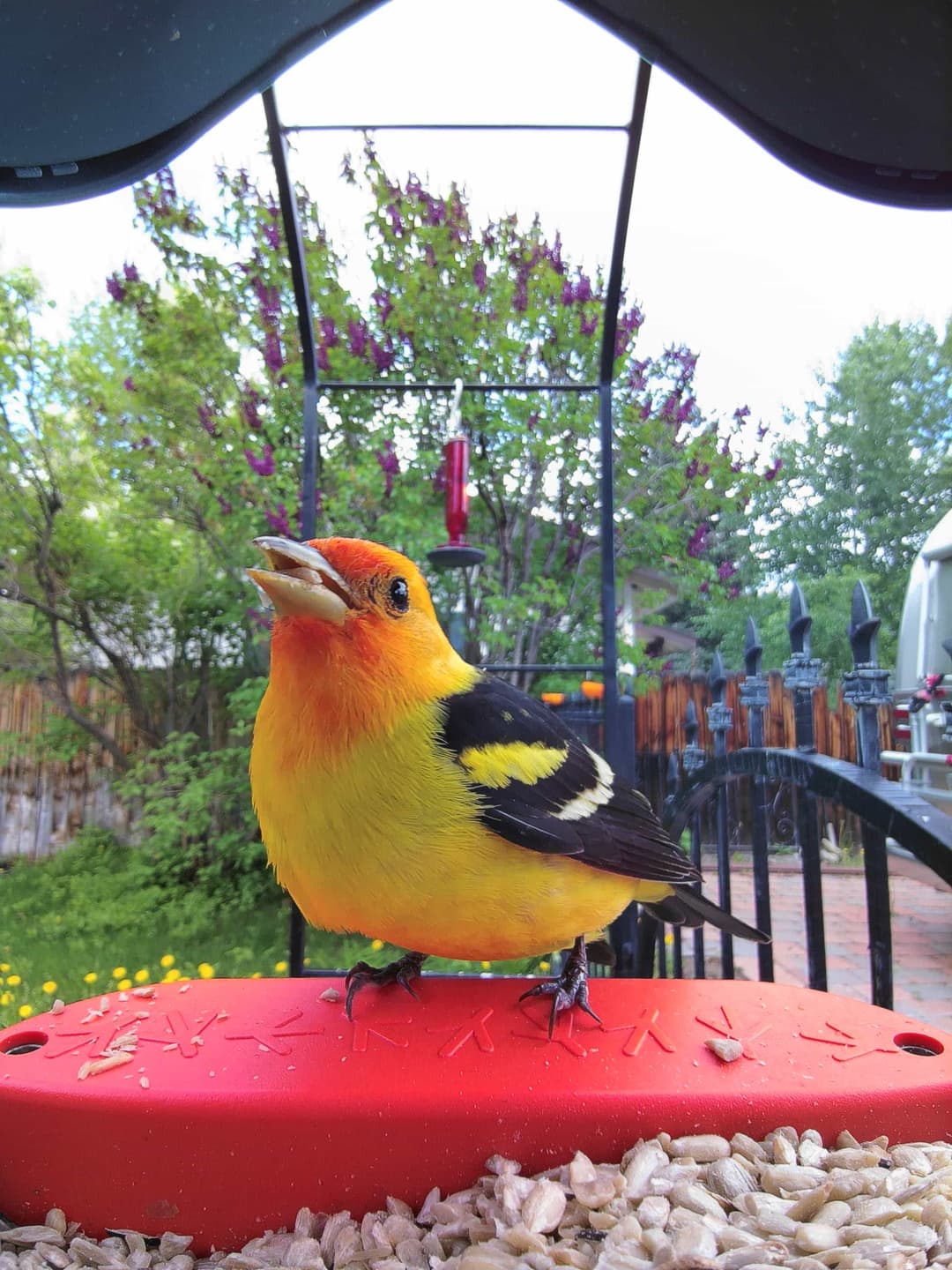
Western Tanager
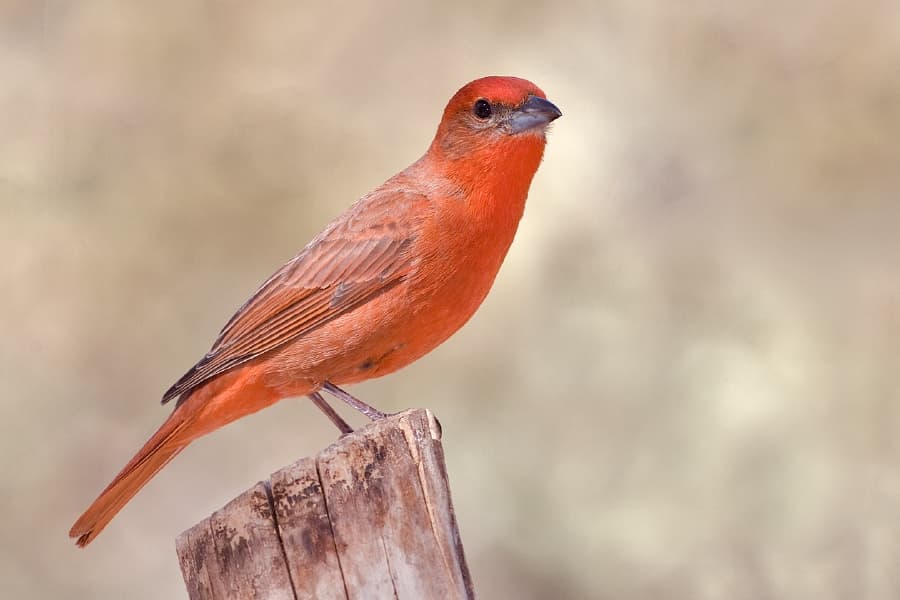
Orchard Oriole
Icterus spurius
General appearance
The orchard oriole is a small bird about the size of a robin. It is smaller than the Baltimore Oriole, with a unique rounded wing shape and rounded, square-tipped tail shape. The bird's size is characterized as 7, measured in 18cm. The oriole’s colour palette consists of black, green, orange, red, white, and yellow.
Male vs female
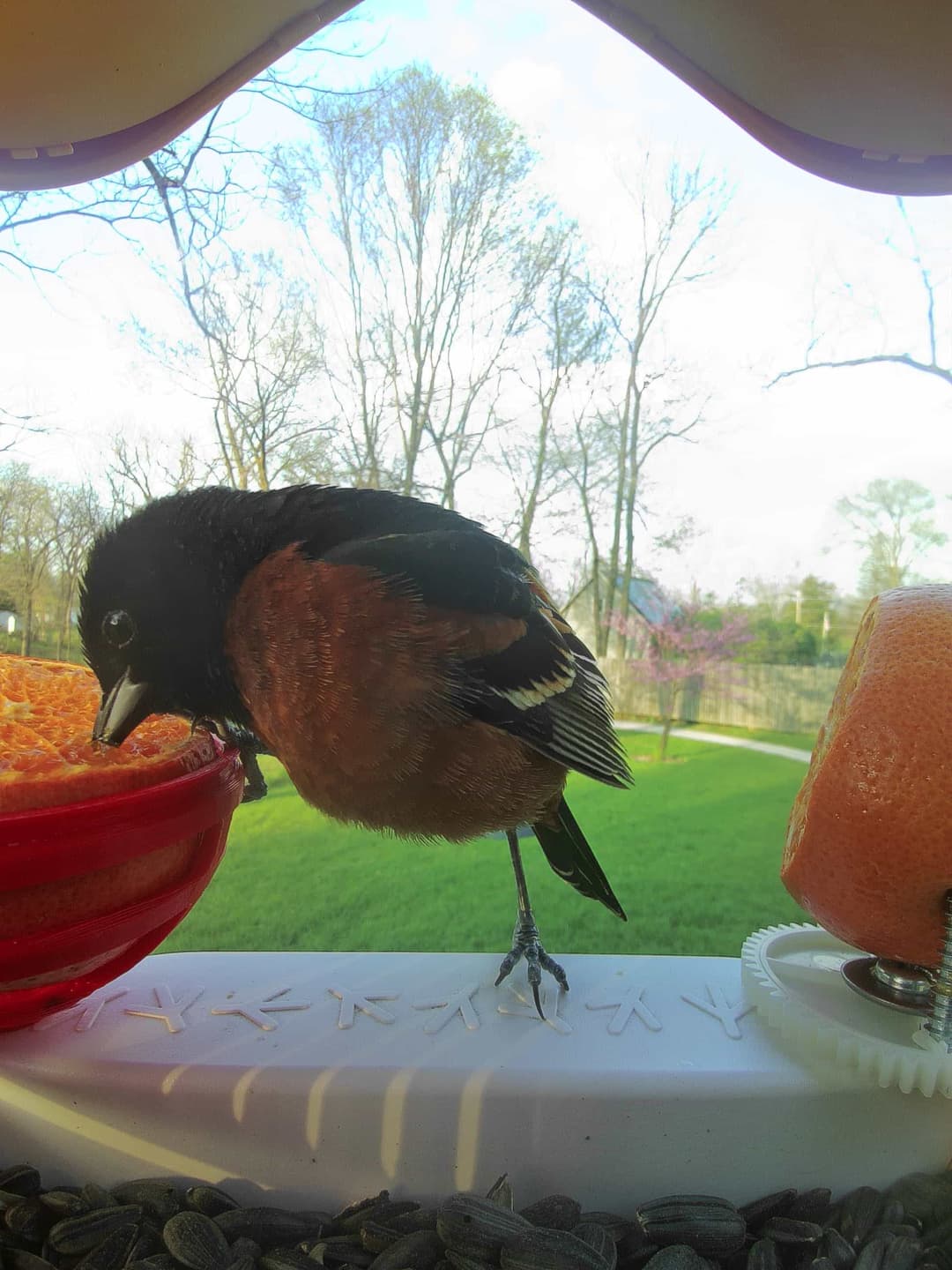
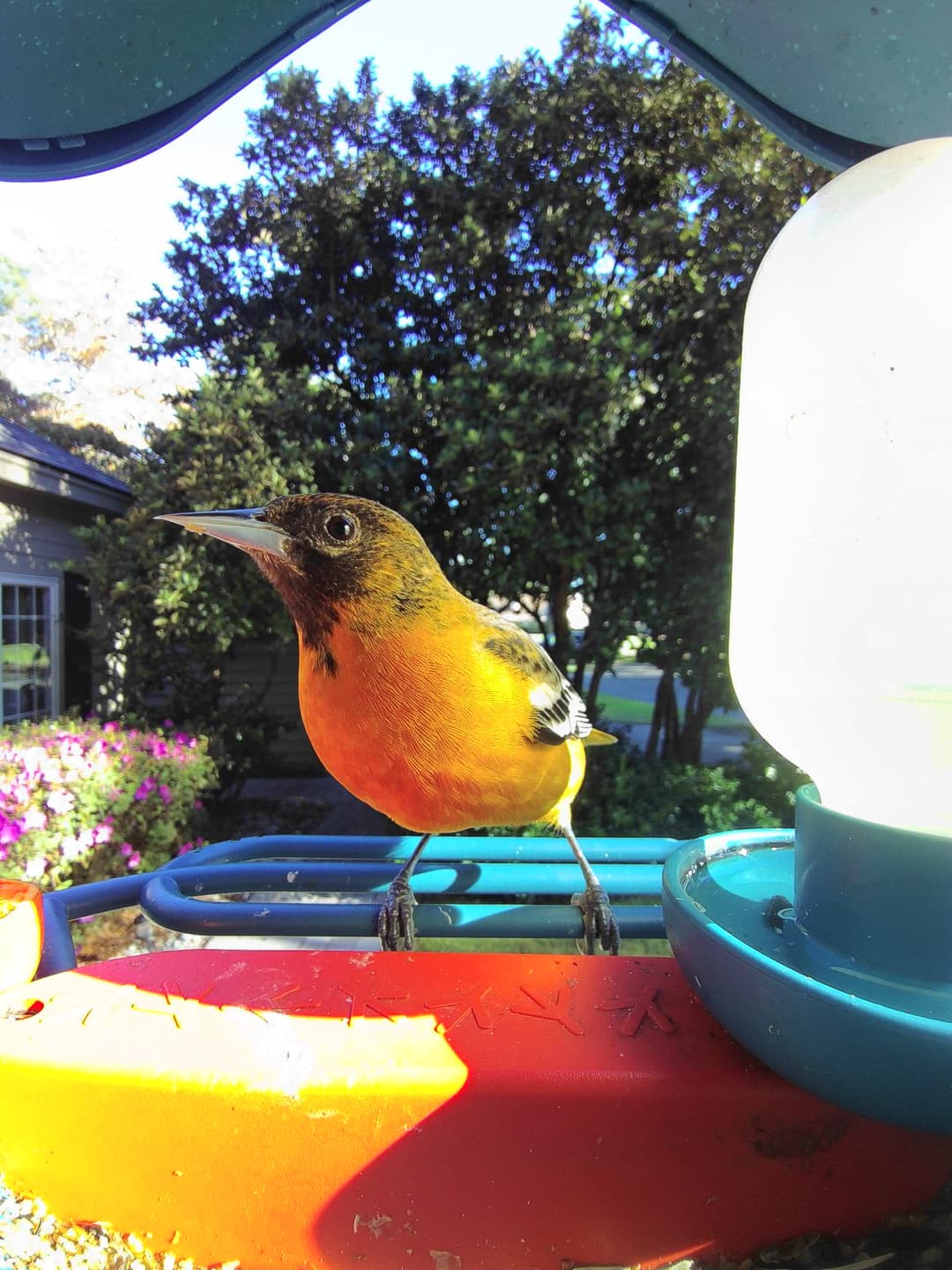
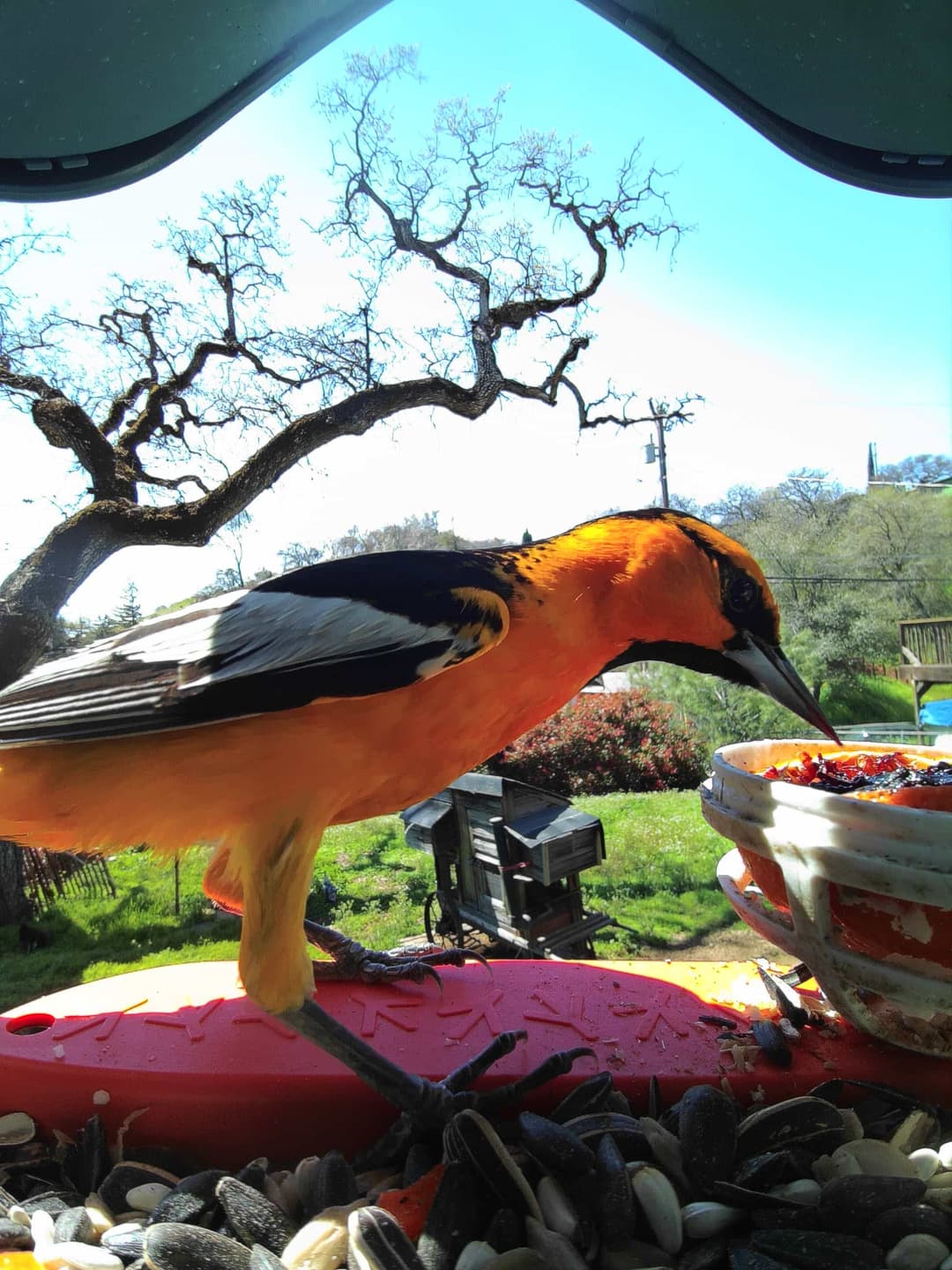
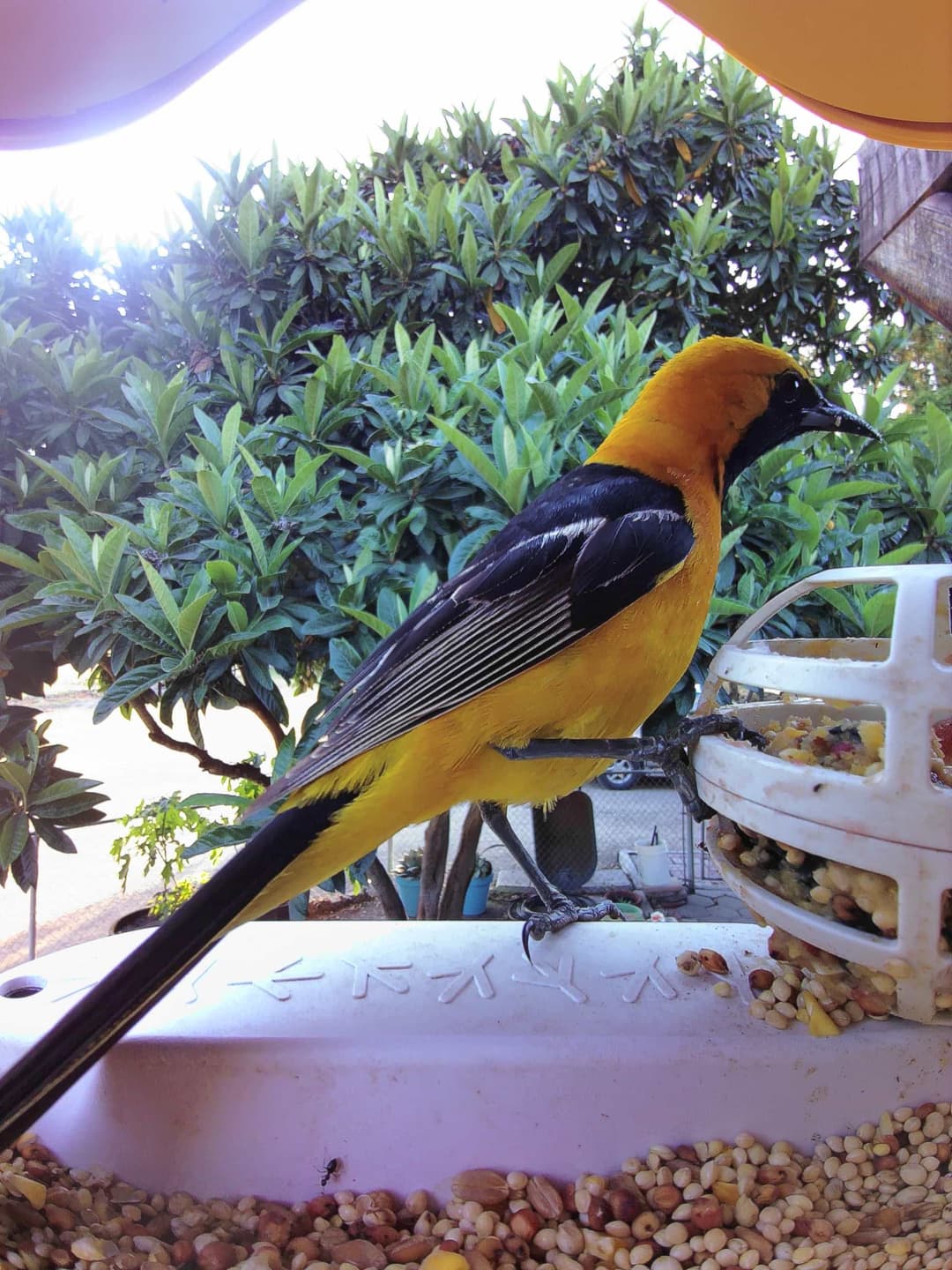
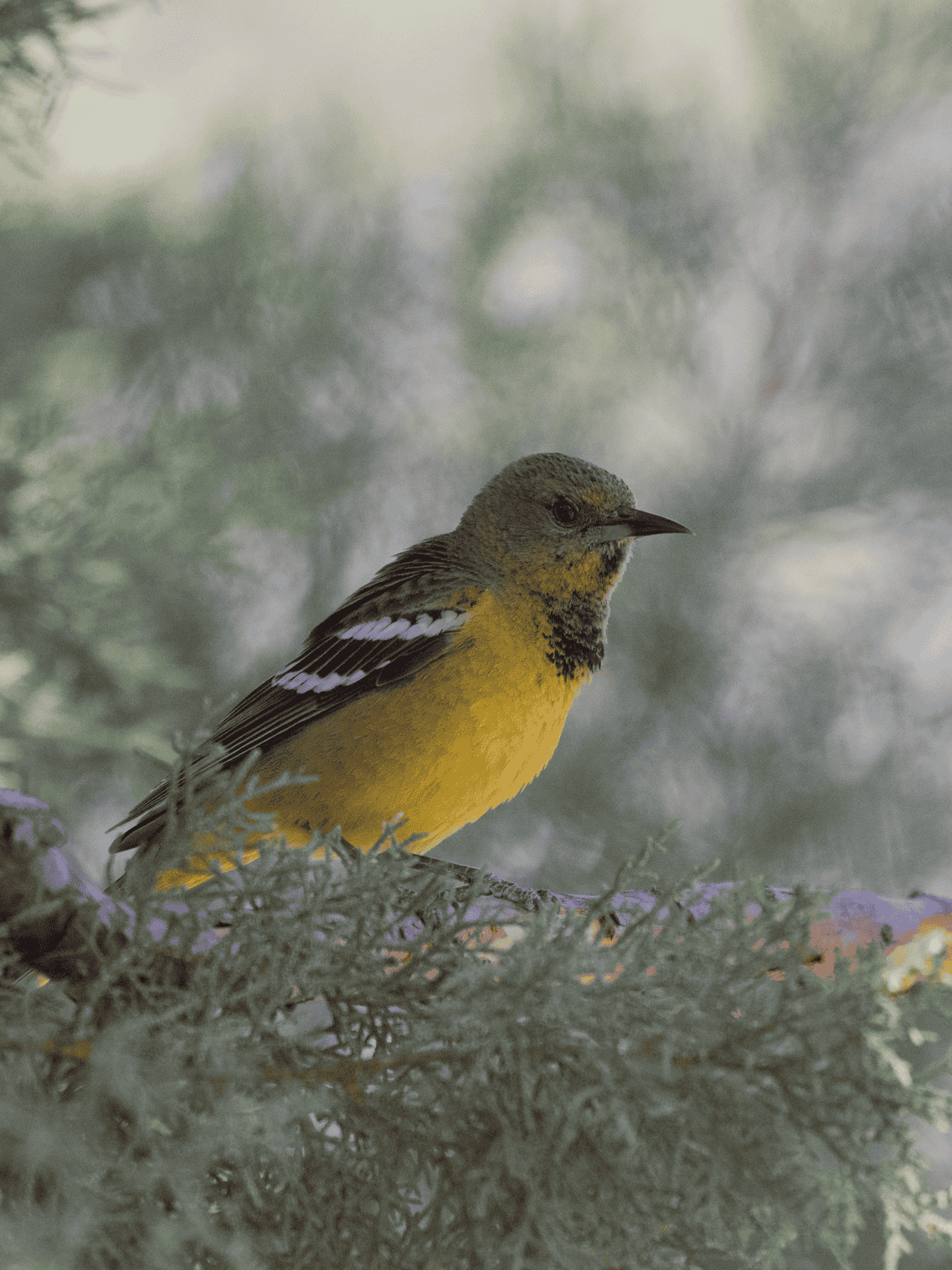
There are noticeable differences between males and females. The adult male orchard oriole is unmistakable with its striking black and chestnut coloration. On the other hand, the female is smaller and flaunts an all yellow-green appearance. They lack the orange tone seen in the female Baltimore and Bullock's Orioles and have a shorter bill compared to Hooded Oriole.
Juvenile
One-year-old males, or juveniles, resemble the females but have a distinguishing black throat. This characteristic is one of the earliest signs to distinguish between young males and females.
Size
5.9 - 7.1 in/0.6 - 0.9 oz
There's more to learn about Orchard Oriole
View full detailsWestern Tanager
Piranga ludoviciana
General appearance
The Western Tanager is a medium-sized bird, roughly the size of a Robin or Sparrow, measuring 6-7.5 inches (15-19 cm). Typically, the bird features a notched, rounded, or square-tipped tail. Its wings are pointed in shape and its bill is thicker than that of female orioles, making it strong and distinctive.
Male vs female
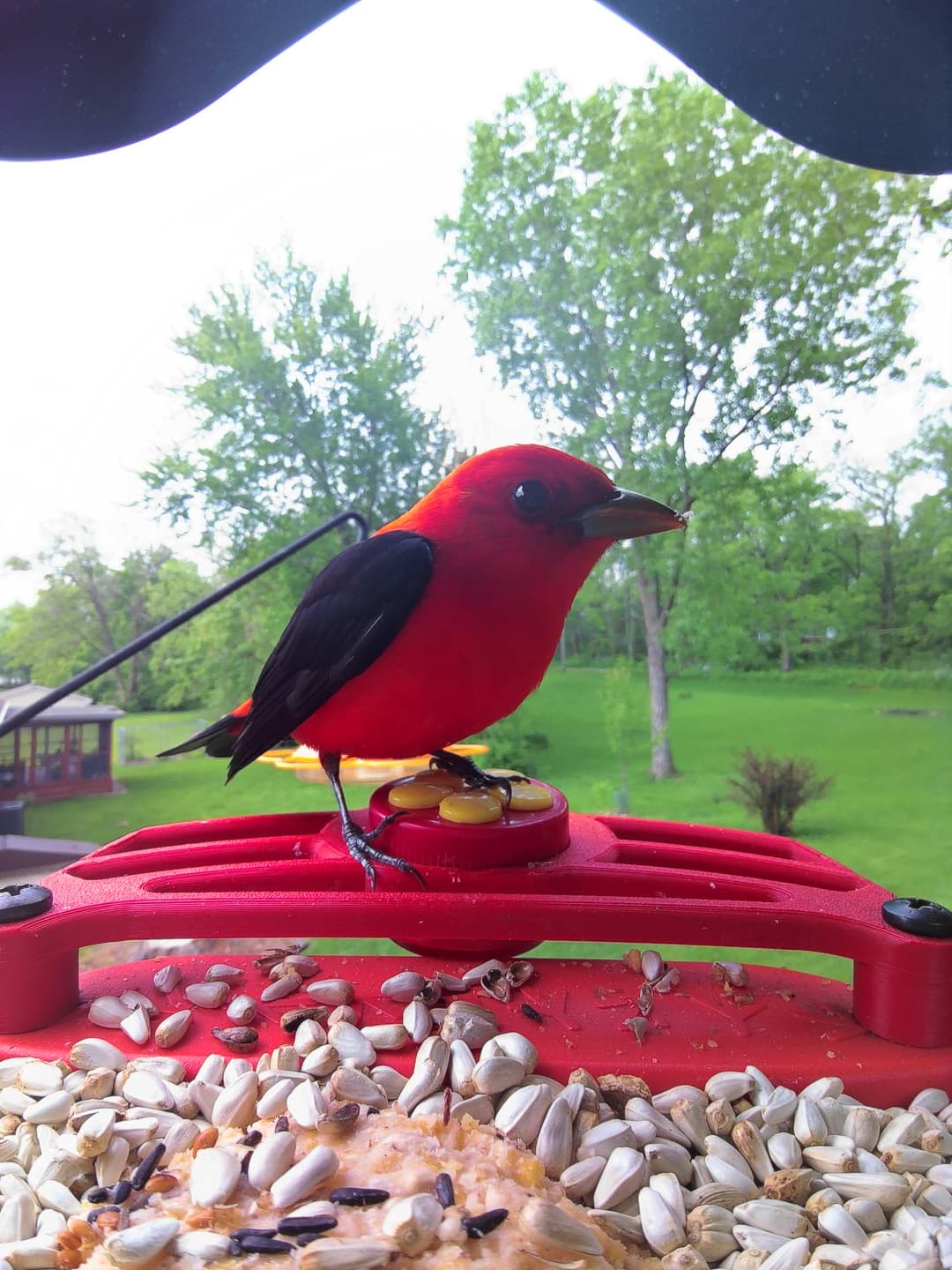
There exists a noticeable difference in physical traits between males and females. Male Western Tanagers boast brilliant colors, with a primarily yellow body, a black back and wings, and a unique red face. On the other hand, females are less vibrant. They display a duller yellow body with a grayish tone on their back and wings, but they do show two wing bars just like the males.
Juvenile
Juvenile Western Tanagers, similar to adult females, sport a dull yellow color. Their wings and back take on a gray shade, giving them a more subdued appearance than the brightly colored adult males. As they mature, their colors adjust to match their respective gender distinctions.
Size
6.5 - 7.5 in/0.8 - 1.3 oz
There's more to learn about Western Tanager
View full detailsHow to tell the Orchard Oriole from the Western Tanager
Visual differences
The Orchard Oriole, at 6-7 inches, is slightly smaller than the Western Tanager, which spans 6-7.5 inches. Male Orchard Orioles display black and chestnut colors, while male Western Tanagers have a vibrant yellow body, black wings, and red face. Female Orchard Orioles are yellow-green, contrasting with the dull yellow and grayish females of Western Tanagers. The Orchard Oriole has a more pointed beak compared to the thicker beak of the Western Tanager. Juveniles of both species resemble their respective females. The Orchard Oriole's tail is rounded, while the Western Tanager's is more notched or square-tipped.
Key differences and behavior
The Orchard Oriole and Western Tanager show distinct behavioral differences. Orchard Orioles prefer semi-open deciduous habitats and migrate to tropical areas in winter, while Western Tanagers inhabit coniferous forests, breeding in high mountains or northern regions. Orchard Oriole males sing to attract mates in spring and may nest non-territorially, often close to other bird species. Conversely, Western Tanagers are territorial, with males chasing females during courtship. Orchard Orioles have a diet dominated by insects, with a preference for caterpillars, beetles, and grasshoppers, increasing fruit consumption in winter. Western Tanagers eat various insects and berries, sometimes consuming cultivated fruits. At feeders, Orchard Orioles are attracted to fruit and nectar, whereas Western Tanagers favor fruits and berries.
Still not sure? Here are more lookalikes!
Orchard Oriole vs Baltimore Oriole
Orchard Oriole vs Pine Warbler
Orchard Oriole vs American Goldfinch
Western Tanager vs American Goldfinch
Orchard Oriole vs [Select a bird]

[Select a bird]
Pick a bird to compare
Western Tanager vs [Select a bird]
[Select a bird]
Pick a bird to compare