Orchard Oriole or Scott’s Oriole?
Here's how to tell the difference
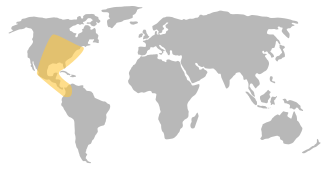


Orchard Oriole

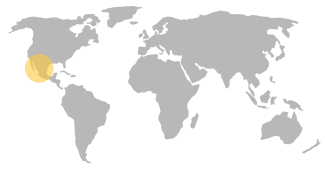
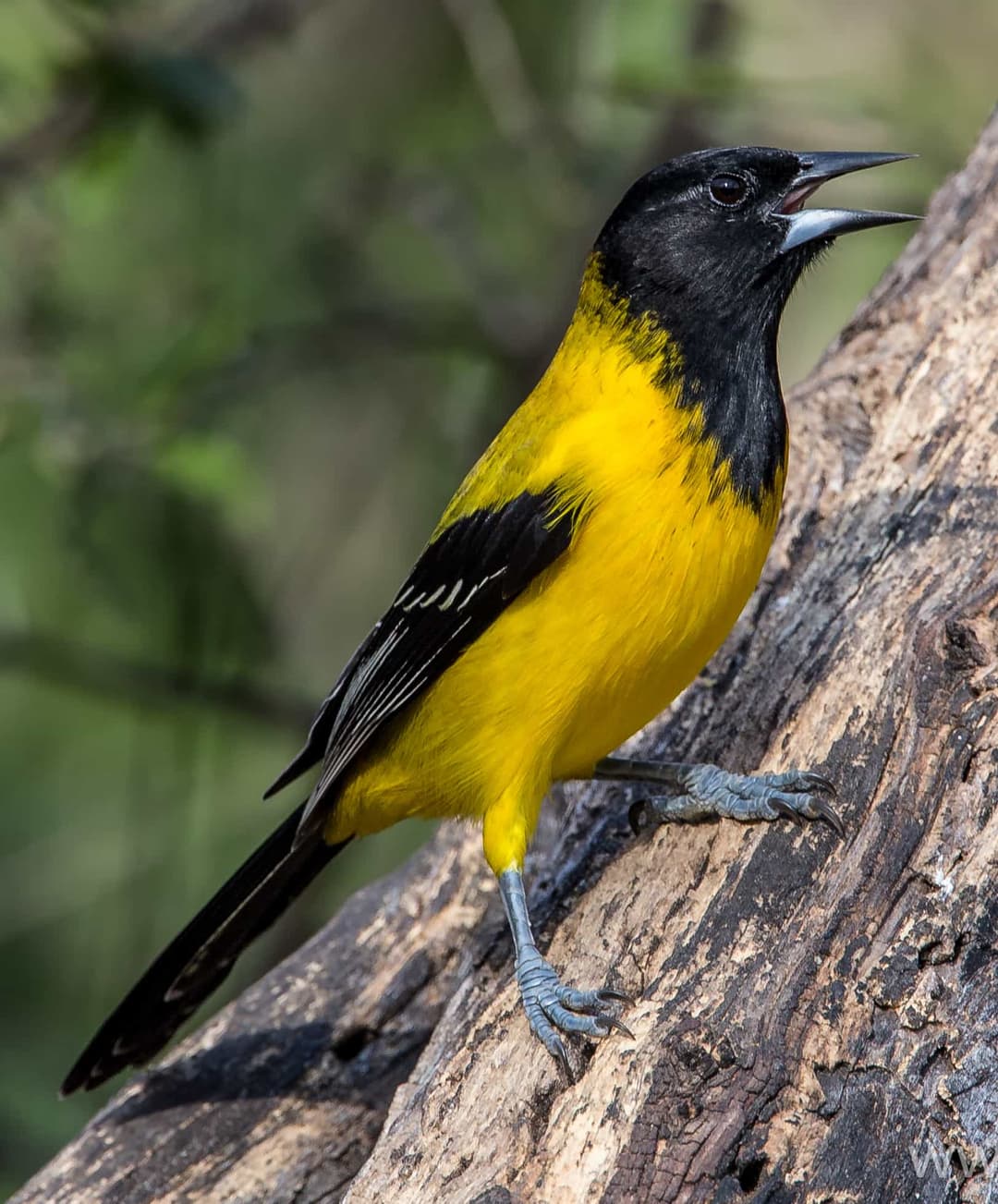
Scott’s Oriole
Orchard Oriole
Icterus spurius
General appearance
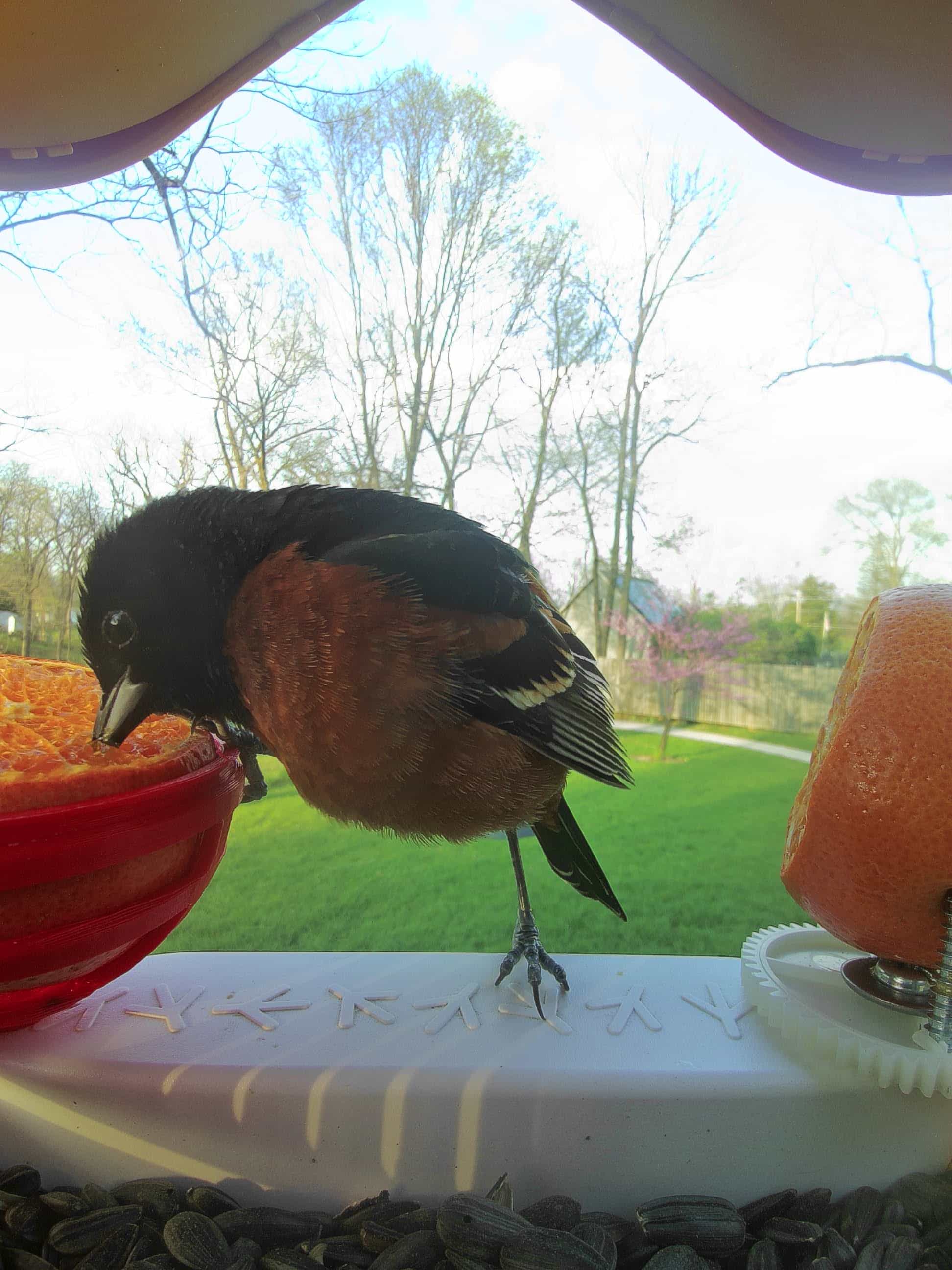
The orchard oriole is a small bird about the size of a robin. It is smaller than the Baltimore Oriole, with a unique rounded wing shape and rounded, square-tipped tail shape. The bird's size is characterized as 7, measured in 18cm. The oriole’s colour palette consists of black, green, orange, red, white, and yellow.
Male vs female
There are noticeable differences between males and females. The adult male orchard oriole is unmistakable with its striking black and chestnut coloration. On the other hand, the female is smaller and flaunts an all yellow-green appearance. They lack the orange tone seen in the female Baltimore and Bullock's Orioles and have a shorter bill compared to Hooded Oriole.
Juvenile
One-year-old males, or juveniles, resemble the females but have a distinguishing black throat. This characteristic is one of the earliest signs to distinguish between young males and females.
Size
5.9 - 7.1 in/0.6 - 0.9 oz
There's more to learn about Orchard Oriole
View full detailsScott’s Oriole
Icterus parisorum
General appearance
The Scott's oriole is a medium-sized bird, around 19-21 cm in length, comparable in size to a robin or sparrow. Its wings are rounded in shape, with a square-tipped tail. The bird has a striking black and yellow coloration, along with green and white shades.
Male vs female
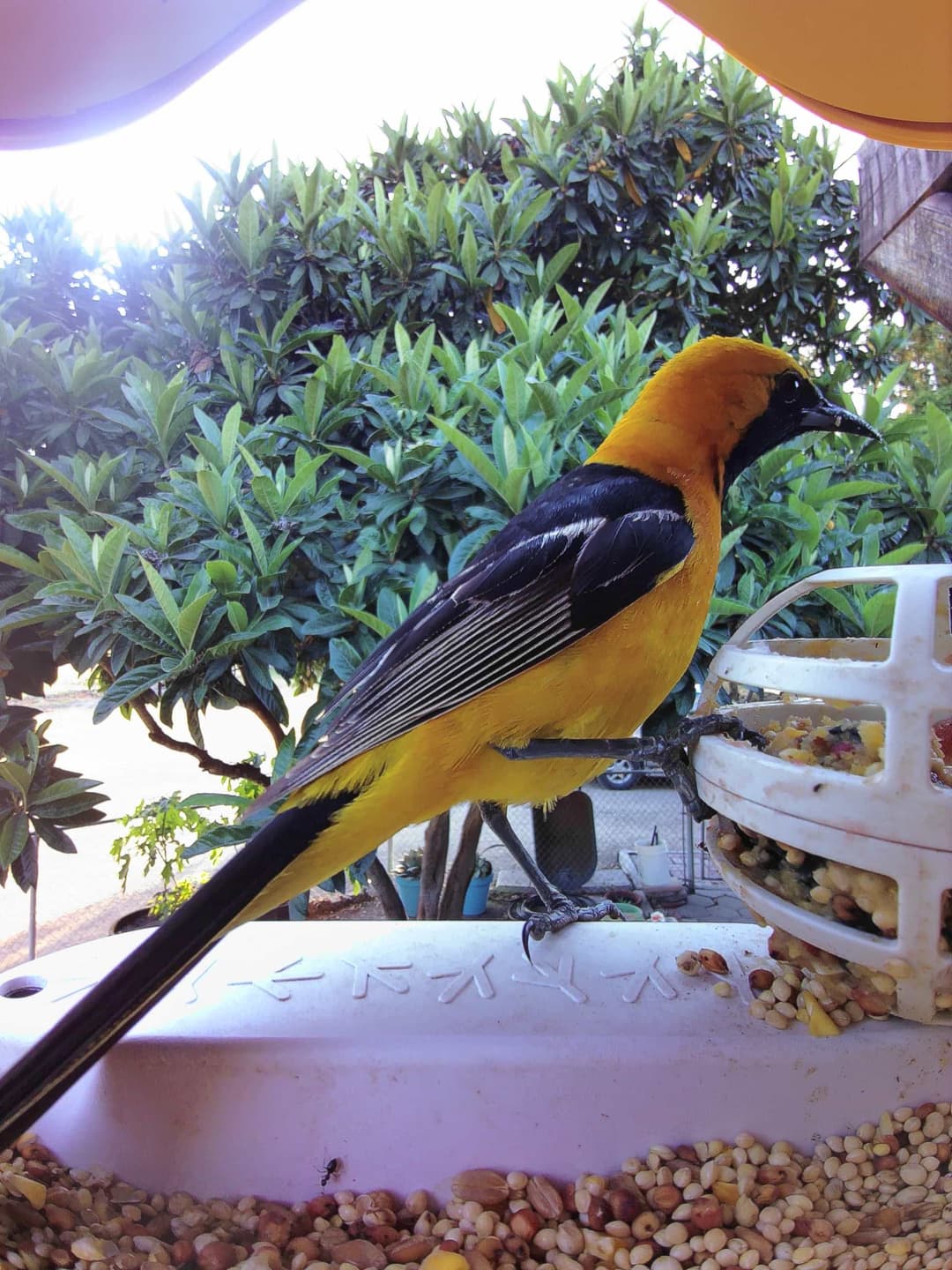
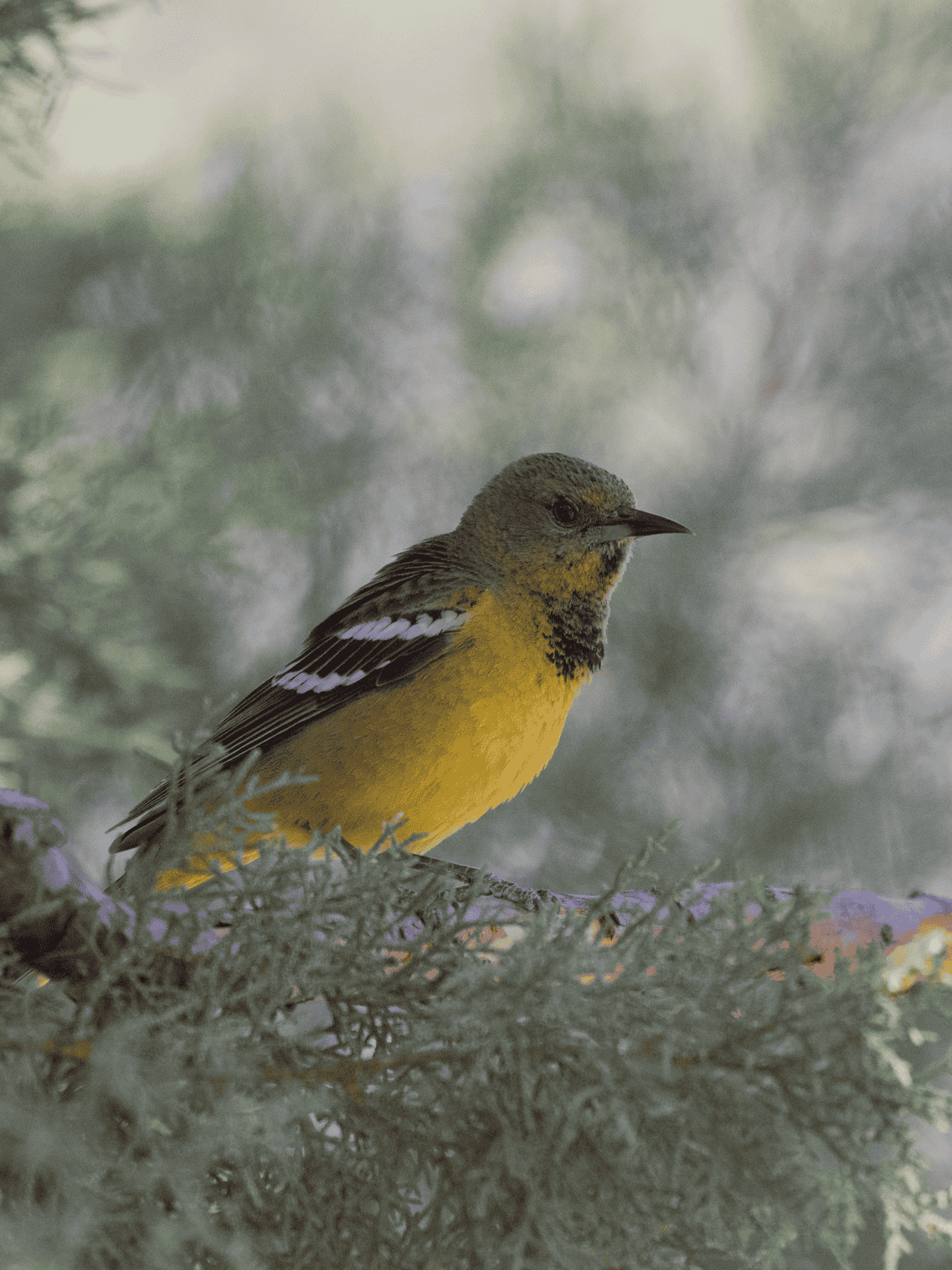
Sexual dimorphism is apparent in this species. The male Scott's oriole is unmistakable for its brilliant black-and-yellow plumage, featuring a black upper back with yellow on the rump and base of the tail. The female, on the other hand, is more of a dusky yellow-green color. She's darker and larger than the females of the Hooded or Orchard Oriole species.
Juvenile
Juvenile Scott’s Orioles and older females may have much black on their heads. This could potentially make it difficult to distinguish them from adult males in the wild without close inspection. The extent of the black on the head may also be representative of the bird's age.
Size
7.5 - 9.4 in/1.1 - 1.4 oz
There's more to learn about Scott’s Oriole
View full detailsHow to tell the Orchard Oriole from the Scott’s Oriole
Visual differences
Orchard Orioles are smaller (6-7 inches) than Scott's Orioles (7.5-8.5 inches). Male Orchard Orioles are black and chestnut, while Scott's males are black and yellow. Female Orchard Orioles are yellow-green and smaller, contrasting with the larger, dusky yellow-green female Scott's. Both species feature rounded wings and square-tipped tails. However, Scott's Orioles are more robust, with a longer length and more substantial build. The Orchard Oriole additionally has a shorter bill compared to Scott's Oriole.
Key differences and behavior
Orchard Orioles and Scott's Orioles both exhibit migratory behaviors but prefer different habitats: Orchard Orioles favor humid deciduous environments like orchards and forest edges, while Scott’s Orioles thrive in the semi-arid Southwest, often in yucca and Joshua-tree settings. Although both species are insectivorous and consume berries and nectar, Orchard Orioles have a preference for predominantly caterpillars and also frequent bird feeders less often. In contrast, Scott’s Orioles also consume cactus fruit and are more likely to visit feeders for sugar-water. Breeding behaviors differ as Scott's Orioles are territorial, with males singing to establish territories before females arrive, while Orchard Orioles are less territorial, allowing multiple pairs in close proximity. Both species craft hanging nests, but Scott’s favor yuccas for construction, whereas Orchard's use deciduous trees or tall shrubs. Each species exhibits sexual dimorphism, though distinguishing juvenile Scott’s can be challenging due to overlapping plumage characteristics.
Still not sure? Here are more lookalikes!
Orchard Oriole vs Baltimore Oriole
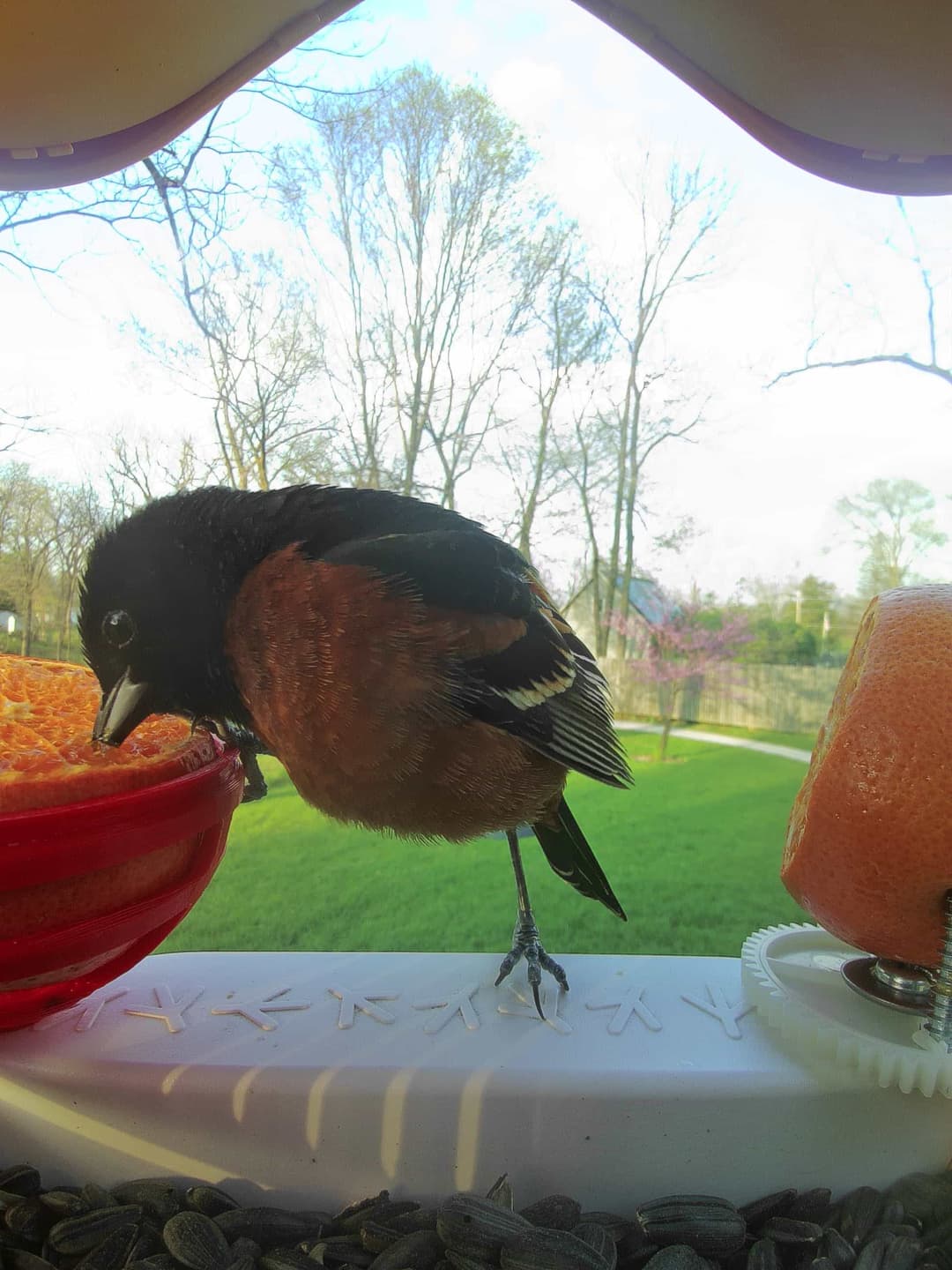
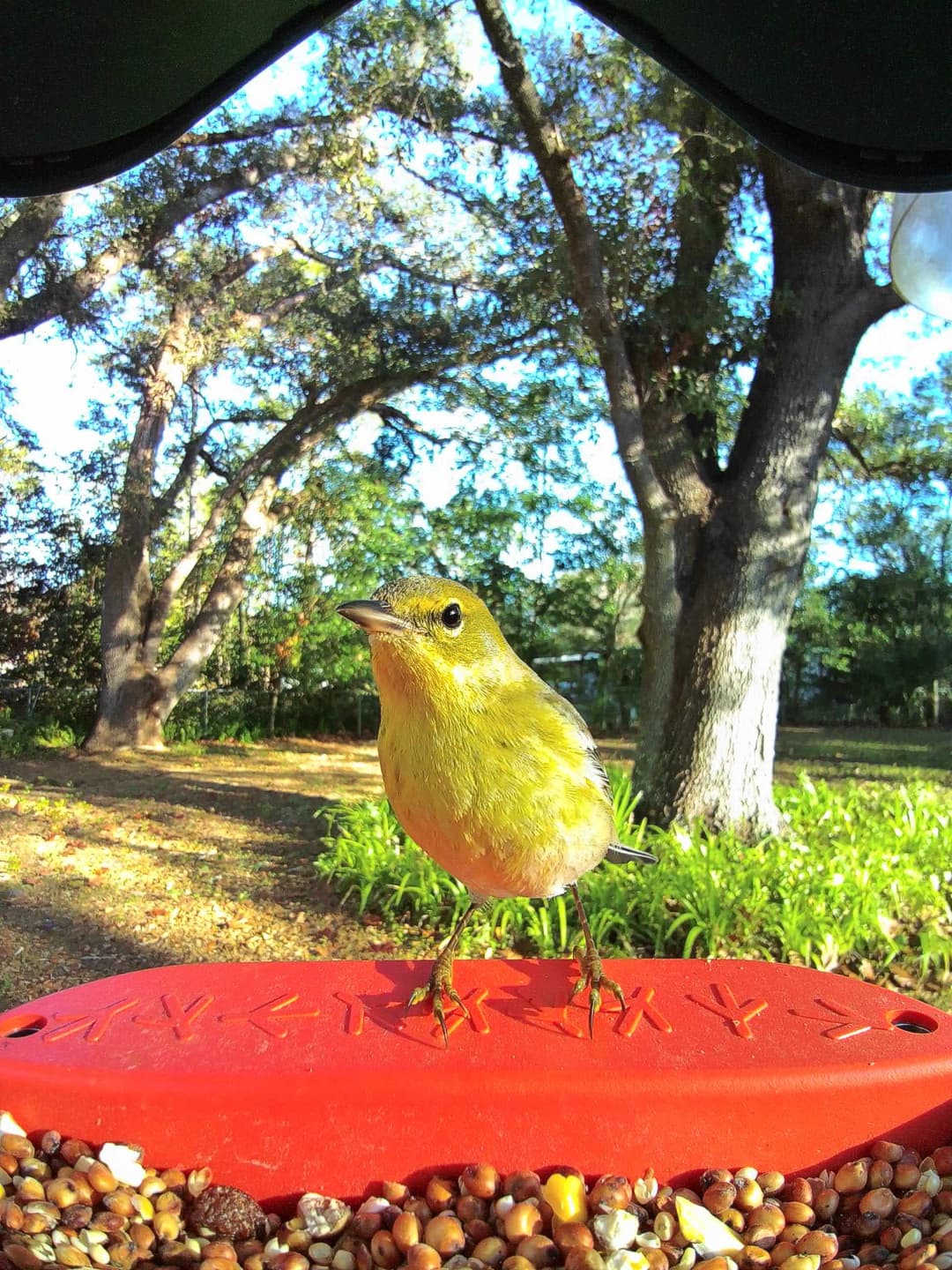
Orchard Oriole vs Pine Warbler
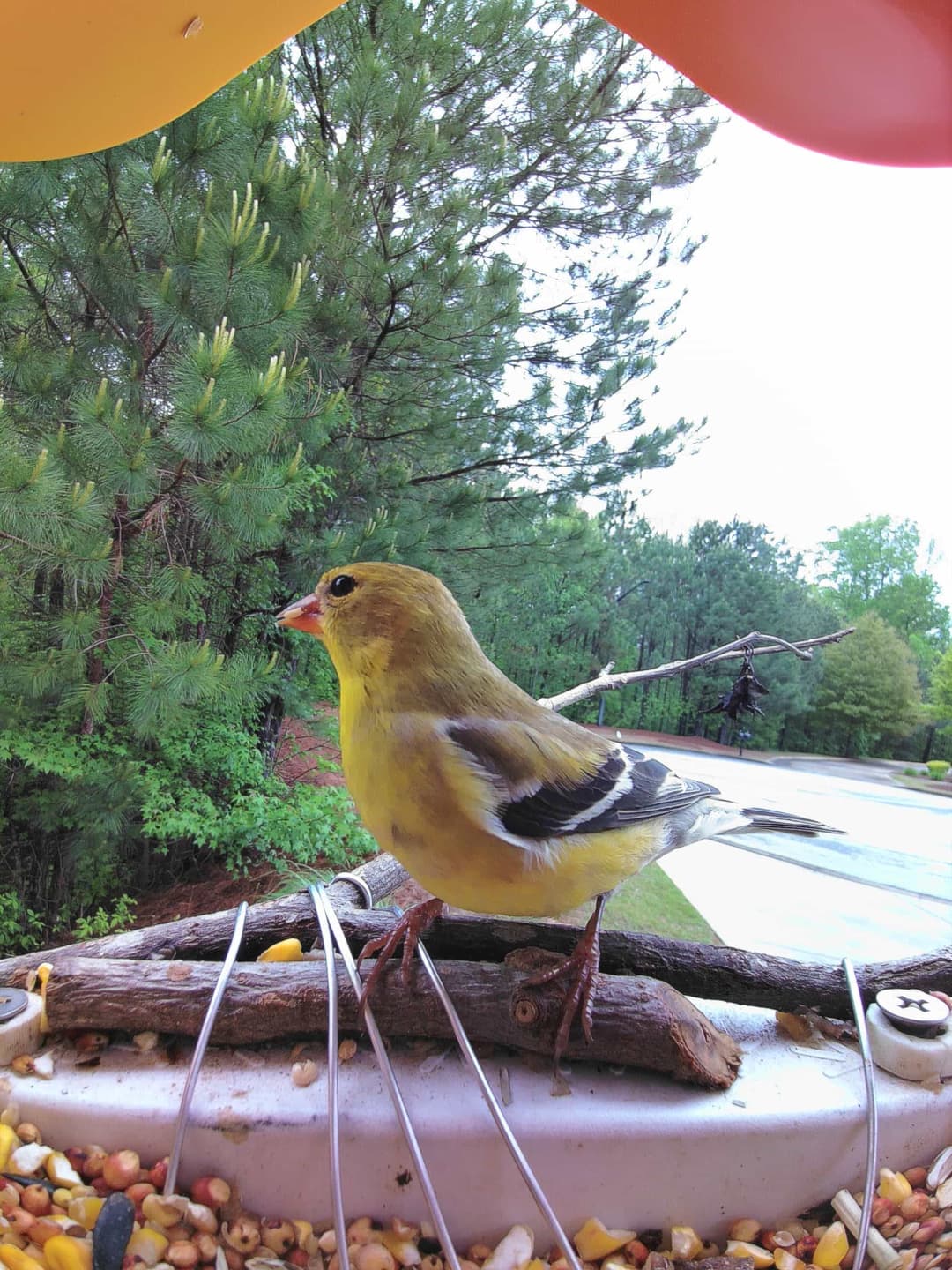
Orchard Oriole vs American Goldfinch
Orchard Oriole vs [Select a bird]

[Select a bird]
Pick a bird to compare
Scott’s Oriole vs [Select a bird]
[Select a bird]
Pick a bird to compare