
Canada Jay
Canada Jay
Also known as: Gray Jay, Grey Jay, Camp Robber, Whisky Jack
Perisoreus canadensis


Quick Identification guide
Quick Identification guide
- •
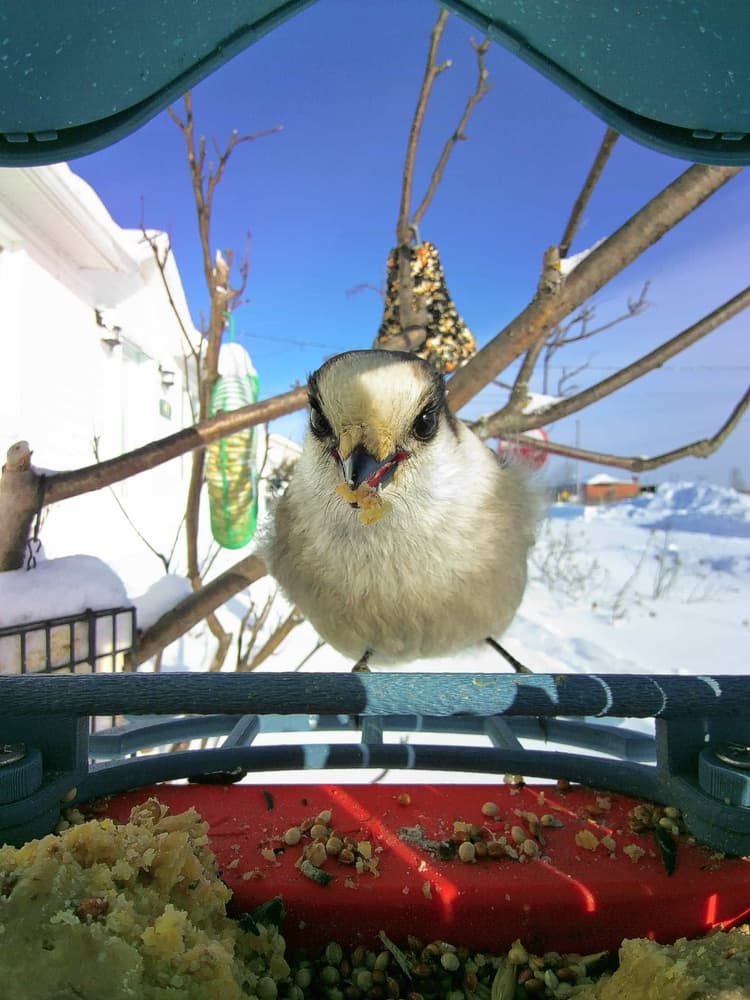
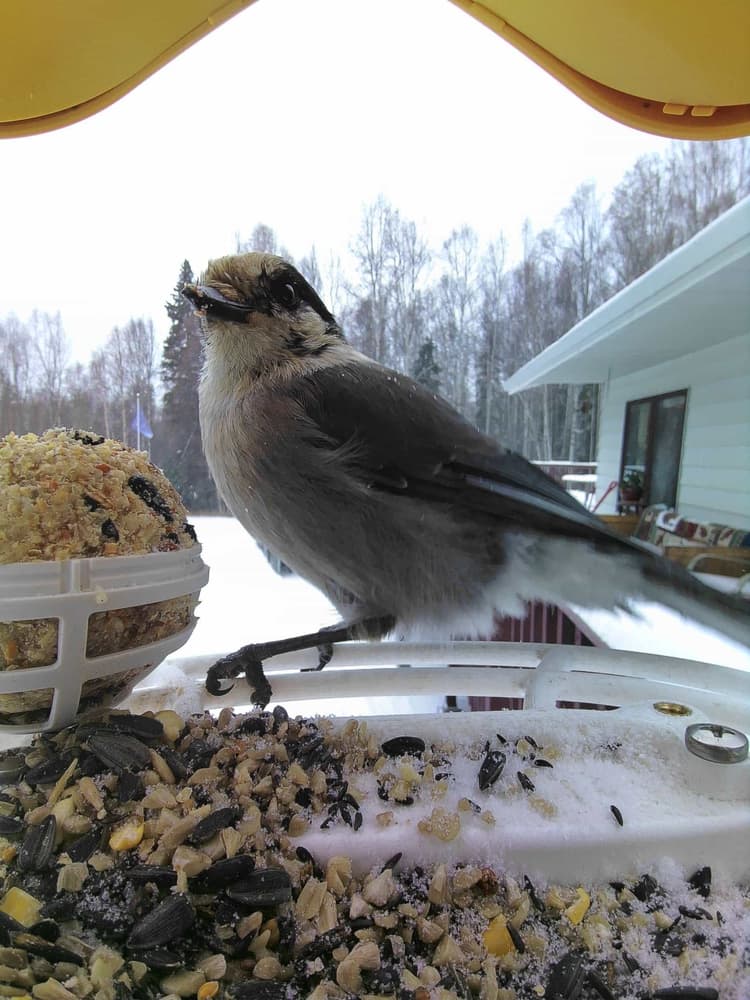
The plump, gray body and pale face contrast with its charcoal gray nape and crown
- •
Features a short, stout black beak that is useful for foraging
- •
Displays soft, pale gray to off-white underparts and often showcases a fluffy appearance
What does a Canada jay sound like?
The Canada jay is known for its diverse vocalizations, consisting of scolding screams, whistles, and a call pattern that falls flat. Its calls encompass various types such as chirps or chips, rattles, screams, trills, and whistles. It typically communicates using a "Whee-ah, chuck-chuck" call but also resorts to a series of sounds for different contexts.


Description
Did you know that grey jays can carry food with their feet? That's pretty cool, considering other songbirds can't! They have quite a number of folk names, including lumberjack, camp robber and venison-hawk. You'll find these social birds in small family groups of two to four, and if the weather's nice, you can catch them sunbathing! They communicate with each other using a series of clicks and whirrs and are also excellent mimics.
The Canada jay can weigh between 62to82grams and be from27to31centimeters tall.
On average, the Canada jay lives for 9-13 years in the wild, although some individuals have been documented living up to 17 years. Compared to related species, this is relatively long; for example, the similar-sized Eurasian jay typically lives for 5-7 years. Longevity in Canada jays is likely due to low predation and harsh environments reducing competition.
Did you know?
Most popular questions about Canada jay
How to recognise a Canada jay?
General appearance
The Canada Jay is a medium-sized bird, standing at approximately 10-13 inches (25-33 cm) tall, similar in size to a crow or a robin. Their plumage is fluffy and primarily gray, though with a paler shade below. The Jay is also marked by its wing and tail shapes, which are broad, fingered, rounded, and occasionally, wedge-shaped.
Male vs female
There are no marked differences in physical appearance between male and female Canada Jays. Both share the same coloration and physical features, including the distinctive blackish patch on the nape that may extend to the top of the head, which varies by geographic region. More distinctions may be noticed in behavior rather than appearance.
Juvenile
Juvenile Canada Jays have a darker hue than their adult counterparts. Initially, their plumage is mostly dark charcoal gray. As they mature, the darker color recedes, replaced by the lighter gray and white colors of adult jays. Juveniles also have a noticeable paler whisker mark.
Often mistaken for
Clark’s Nutcracker vs Canada Jay
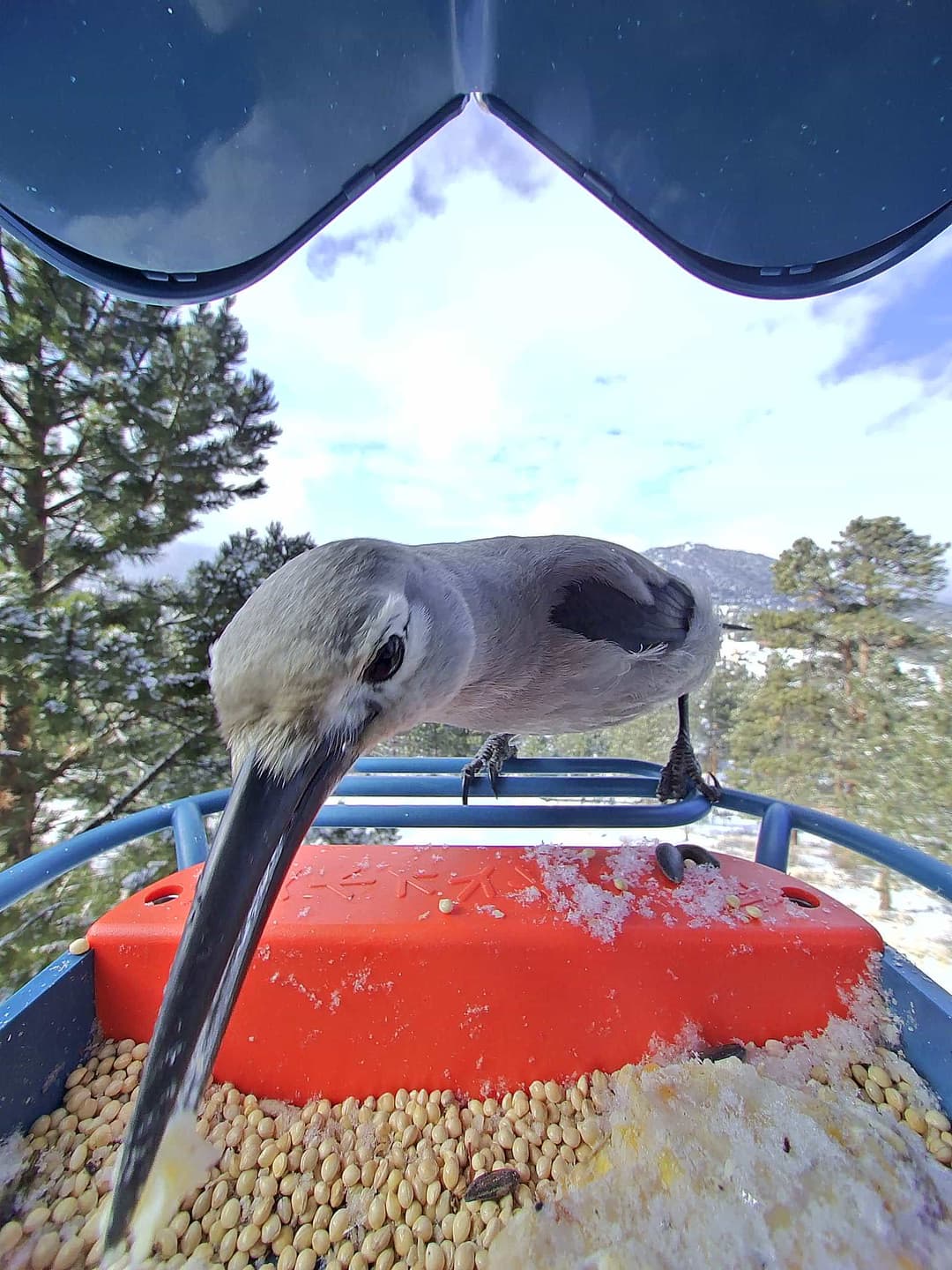
The Canada Jay is smaller, with a more compact body and shorter tail than the Clark's Nutcracker. It has a distinctive white face and throat contrasted with dark cap and gray back, whereas the Nutcracker is larger, with a long bill and consistent gray and black plumage. Listen for the Jay's soft, melodious calls compared to the Nutcracker’s harsh, nasal sounds.
Pine Grosbeak vs Canada Jay
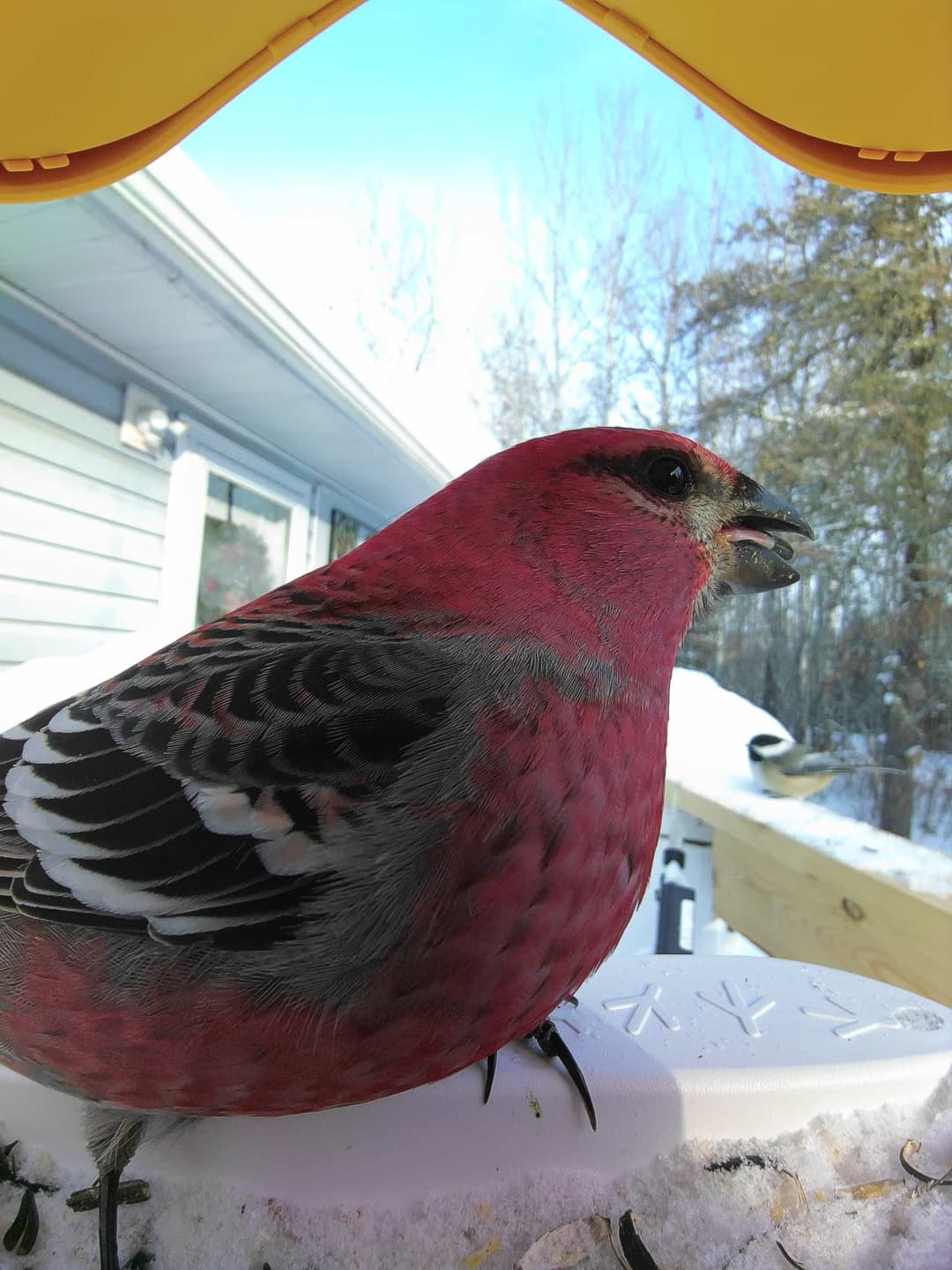
Canada Jays differ from Pine Grosbeaks by having a smaller, more agile build and a distinct mix of gray, white, and black colors. Grosbeaks are bulkier with a rosy-red plumage in males and a striking yellowish hue in females. Canada Jays have a shorter, more rounded beak compared to the thick, conical bill of the Grosbeak. Listen for the Jay's soft calls versus the Grosbeak's melodious song.
Breeding and nesting habits of the Canada jay
Mating behaviors
Mated pairs of Canada jays remain together throughout the year, maintaining and defending their permanent territories. During the early breeding season, the male may engage in courtship behaviors such as feeding the female.
Nesting details
Canada jays begin nesting early in the season, even while the breeding grounds are snow-covered. Nests are located in dense conifers, near the trunk at the base of a branch, typically around 15 feet above the ground. Both sexes contribute to building a nest, which is a bulky, flat cup composed of twigs, lichens, strips of bark, and caterpillar webs, lined with softer materials like animal hair and feathers.
Eggs and chick-rearing
Details specific to Canada jay eggs and chick-rearing practices were not provided. However, generally, birds incubate eggs and both parents can be involved in feeding and caring for the chicks after hatching.
What does a Canada jay like to eat?
Aquatic animals
Berries
Bird eggs
Carrion
Fruits
Fungi
Insects
Scraps
Seeds
Small animals
Spiders
Natural diet
The Canada jay is an omnivorous bird with a highly varied diet. In its natural habitat, it consumes a wide array of foods including insects, spiders, berries, seeds, fungi, small rodents, birds' eggs, and carrion. This adaptability allows the Canada jay to thrive in diverse environments, taking advantage of seasonal food availability and ensuring a robust nutrient intake.
Bird feeders
At bird feeders, Canada jays are known to enjoy a variety of common offerings. They are particularly fond of suet, peanuts, sunflower seeds, and other nuts. Their willingness to eat a broad range of foods at bird feeders mirrors their opportunistic natural diet, making them frequent and adaptable visitors in areas where feeders are present.
Set up the right environment
Canada Jays are found in coniferous forests, so mimic this environment with plenty of trees in your yard if possible. Keep feeders in a quiet and safe area, away from areas of high activity. Your yard should also have some cover for the Jays, so they feel safe while snacking.
Use the best bird seeds
Choose the Bird Buddy seeds known for attracting the Canada Jays. These seeds are selected by experts for the season, making them irresistible to the birds.
Preferred canada jay snacks
Canada Jays are not picky eaters and will eat just about anything. However, they do have a liking for peanuts, pieces of bread, veggie scraps, and suet. These food items will surely attract them to your yard or feeder.
Type of bird feeder
Platform bird feeders work best for these birds. Canada Jays are curious and intelligent; they enjoy the task of finding food on a flat surface, providing them with a fun and challenging breakfast!
Encourage them to stay
To encourage the Canada Jay to stay longer, ensure your feeder is always stocked, especially during winter months. Bird baths or any source of water will also attract them, and a designated nesting area could encourage them to make your yard their permanent residence!
Fun tricks to attract them
Canada Jays are known for their curiosity and may respond to mimic calls! So, feel free to try impersonating a Canada Jay, and maybe they'll stay for a sing-along.
Where can you find Canada jays?

Primary habitat
The Canada jay dwells primarily in spruce and fir forests, including black spruce bogs in eastern Canada, forests of aspen and Engelmann spruce in the Rockies.
Additional range
Additional habitats include mixed coniferous forests, and zones with Sitka spruce and Douglas-fir on the northwest coast. The jay rarely occurs where there are no spruce trees.
Do they migrate?
The Canada Jay primarily stays in one place throughout the year, as it does not engage in regular migration. These birds are typically found in the boreal forests of North America, where they are well-adapted to the cold conditions. Occasionally, small invasions of Canada Jays may occur during the winter months, leading them to move short distances out of the boreal forest. This is not considered a regular migration but rather an irregular movement possibly driven by food availability or environmental conditions. During these rare instances, some Canada Jays may temporarily inhabit areas slightly south of their typical range, but the movement is neither extensive nor consistent enough to classify as migration. Overall, Canada Jays are largely sedentary, remaining within or close to their home territories all year round. This behavior is typical of birds residing in the high mountains of the west or within the vast stretches of boreal forests, where they are able to find sufficient resources to survive year-round.
What is the role of Canada jays in nature and how to protect them?
Conservation status
The Canada jay is generally common, as most of its breeding range remains free from human disturbance. However, it has experienced declines in areas where clearcutting of forests has occurred, indicating habitat loss as a significant threat. Conservation efforts focus on monitoring forest management practices to ensure the preservation of their habitats. Overall, the Canada jay is not considered vulnerable or endangered, but attention to land use changes is crucial for maintaining stable populations.
Ecological role of Canada jays
Its role in the ecosystem
The Canada jay, also known as the gray jay, plays a significant role in the ecosystem due to its omnivorous dietary habits. Its diet includes insects and small rodents, which makes it an important player in pest control. It helps keep the population of these potential pests in check, contributing to the balance of the ecosystem. Additionally, the bird consumes and disperses seeds through its droppings, aiding in the propagation of various plant species in its territory. Its behavior of storing food items in bark crevices and other places not only aids its survival in severe winter weather but could also result in accidental seed dispersal. Furthermore, it scavenges on carrion, especially during winter, providing a valuable ecological service of cleaning up the environment. Lastly, its nesting pattern, which involves using twigs, lichens, and other materials, helps to relocate and redistribute resources within the forest ecosystem.
How to help protect Canada jays
Preservation tips
Habitat preservation strategies
Start by strictly limiting logging and development in areas known for Canada Jay populations, as these practices destroy their habitat. Ensure any necessary practices are executed with minimal disruption. Regions with mature, spruce-fir forests should be particularly conserved, as these are ideal for the birds. Partner with local governments to pass laws protecting these habitats.
Community science initiatives
Encourage local communities to engage in citizen science projects, monitoring and reporting jay sightings to help track populations and understand their behaviour. A platform could be built where people can report sightings and share images. Organize educational workshops and bird walks to raise awareness about the importance of conserving their habitat and alluring them with proper feeding. Participation in bird feeder-based research like Project FeederWatch can also be encouraged.