Canada Jay or Pine Grosbeak?
Here's how to tell the difference
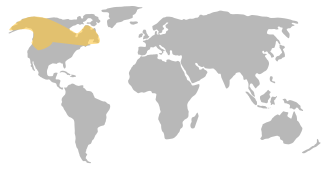
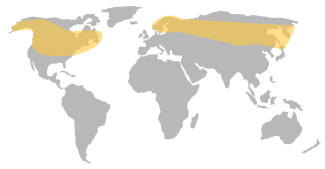
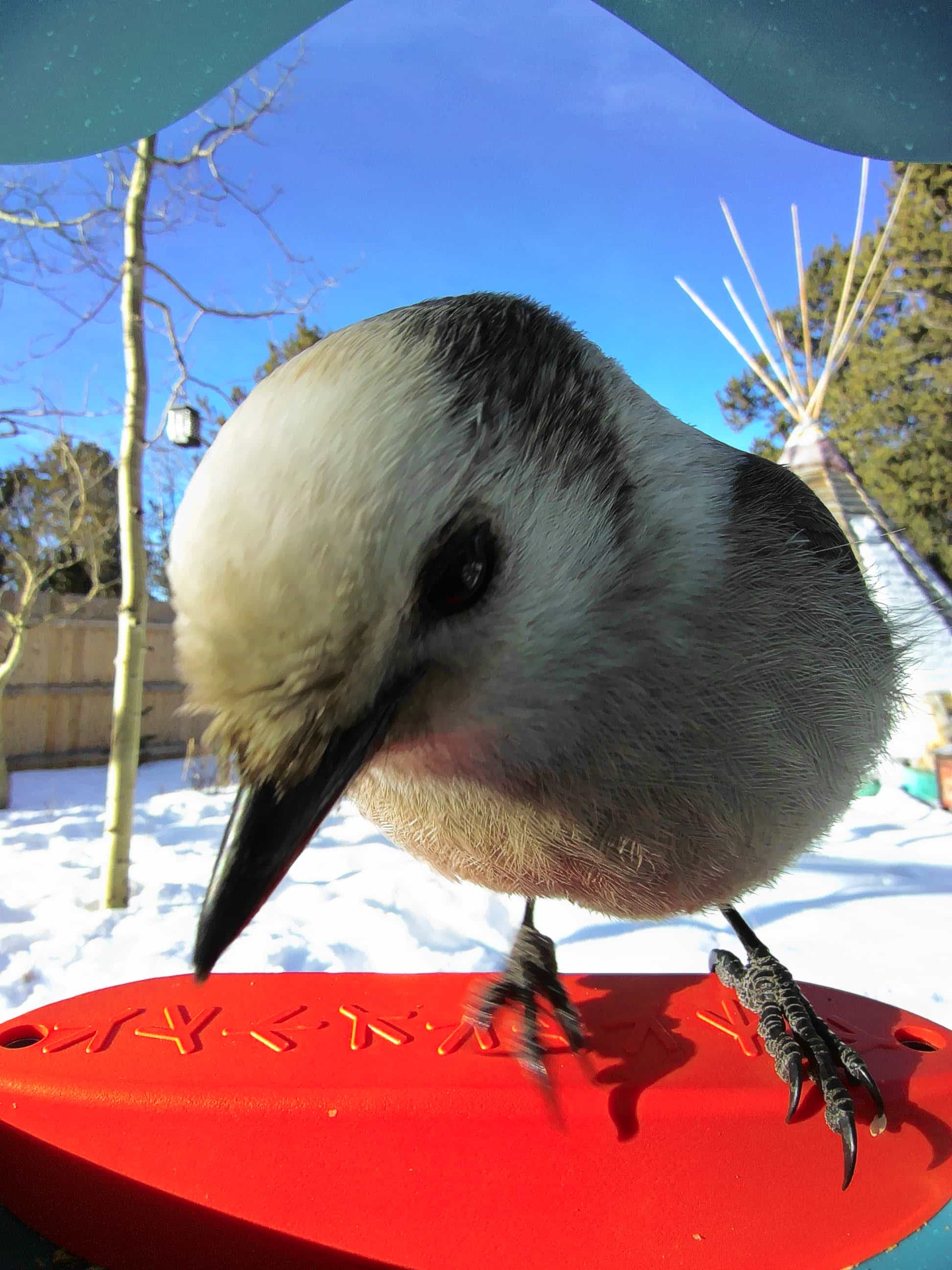


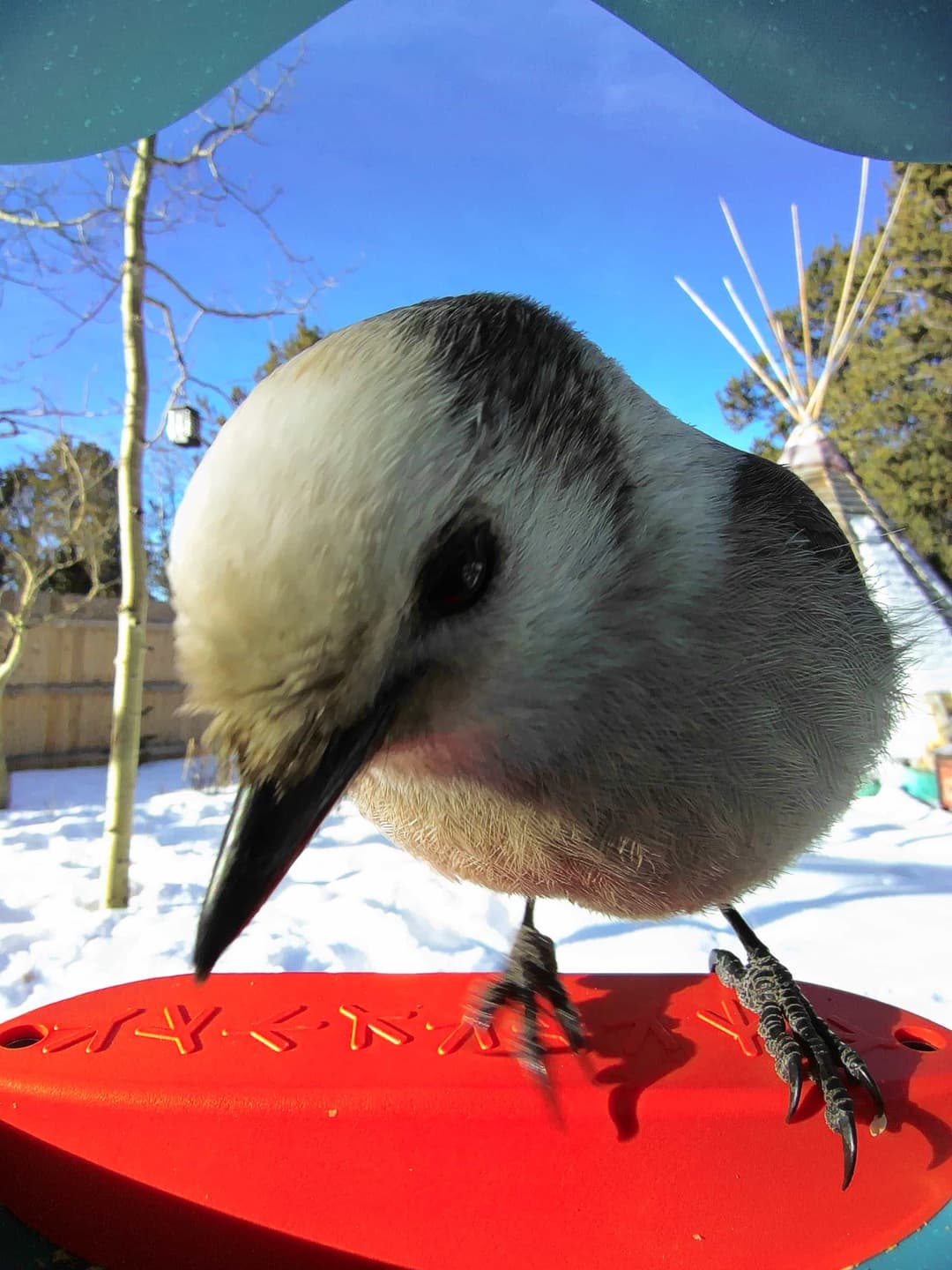
Canada Jay
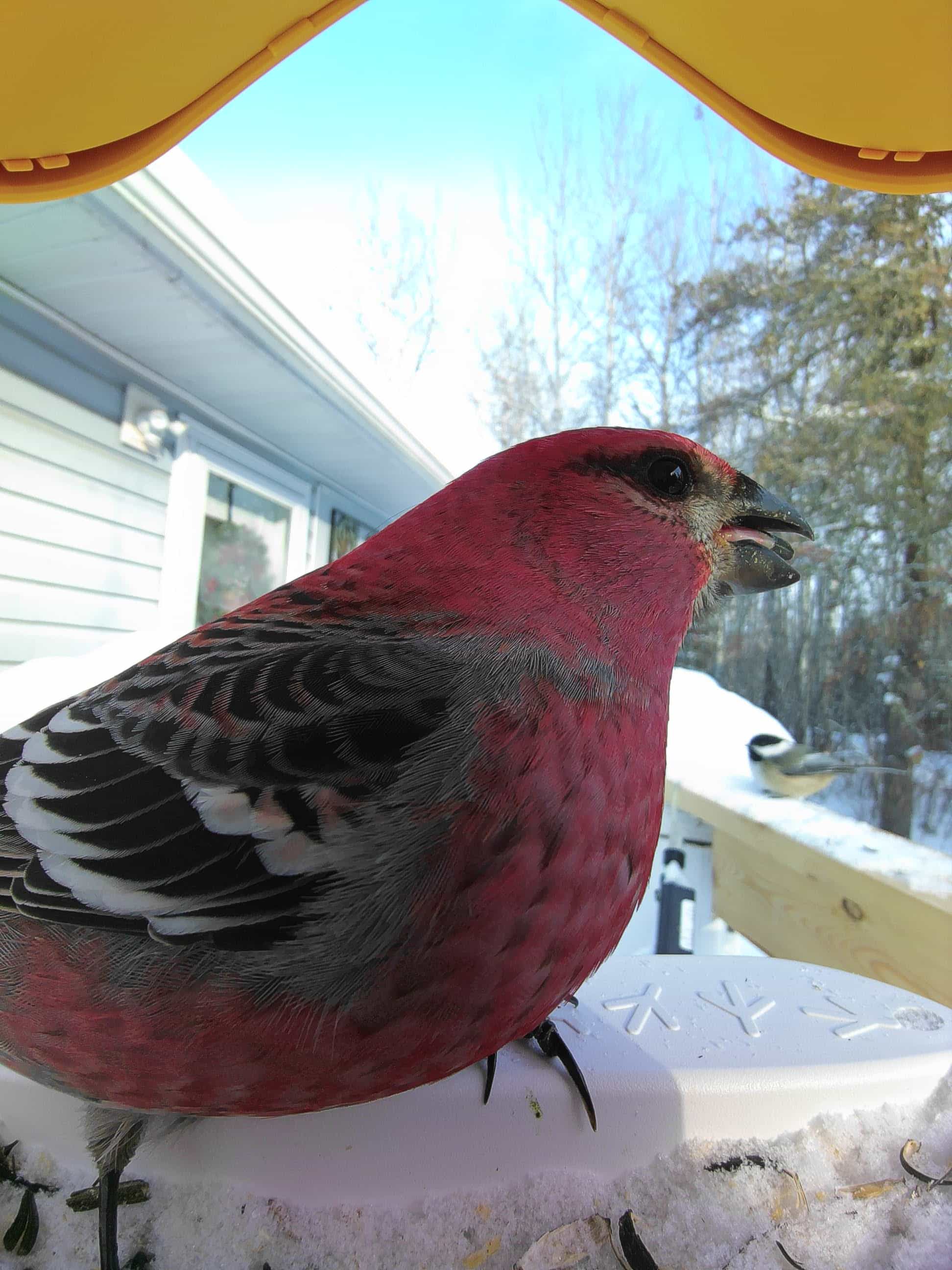


Pine Grosbeak
Canada Jay
Perisoreus canadensis
Also known as: Gray Jay, Grey Jay, Camp Robber, Whisky Jack
General appearance
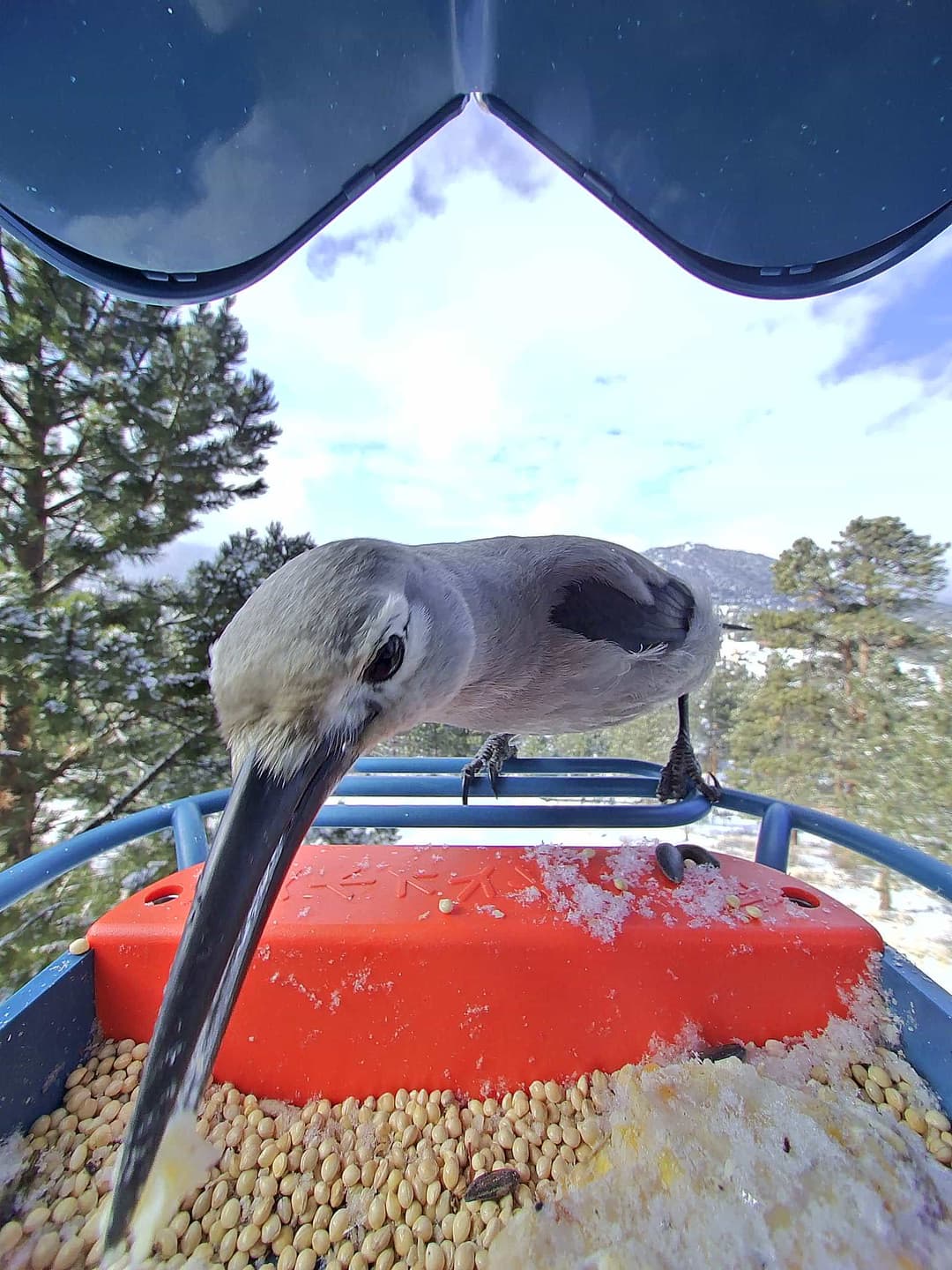
The Canada Jay is a medium-sized bird, standing at approximately 10-13 inches (25-33 cm) tall, similar in size to a crow or a robin. Their plumage is fluffy and primarily gray, though with a paler shade below. The Jay is also marked by its wing and tail shapes, which are broad, fingered, rounded, and occasionally, wedge-shaped.
Male vs female
There are no marked differences in physical appearance between male and female Canada Jays. Both share the same coloration and physical features, including the distinctive blackish patch on the nape that may extend to the top of the head, which varies by geographic region. More distinctions may be noticed in behavior rather than appearance.
Juvenile
Juvenile Canada Jays have a darker hue than their adult counterparts. Initially, their plumage is mostly dark charcoal gray. As they mature, the darker color recedes, replaced by the lighter gray and white colors of adult jays. Juveniles also have a noticeable paler whisker mark.
Size
10.6 - 12.2 in/2.2 - 2.9 oz
There's more to learn about Canada Jay
View full detailsPine Grosbeak
Pinicola enucleator
General appearance
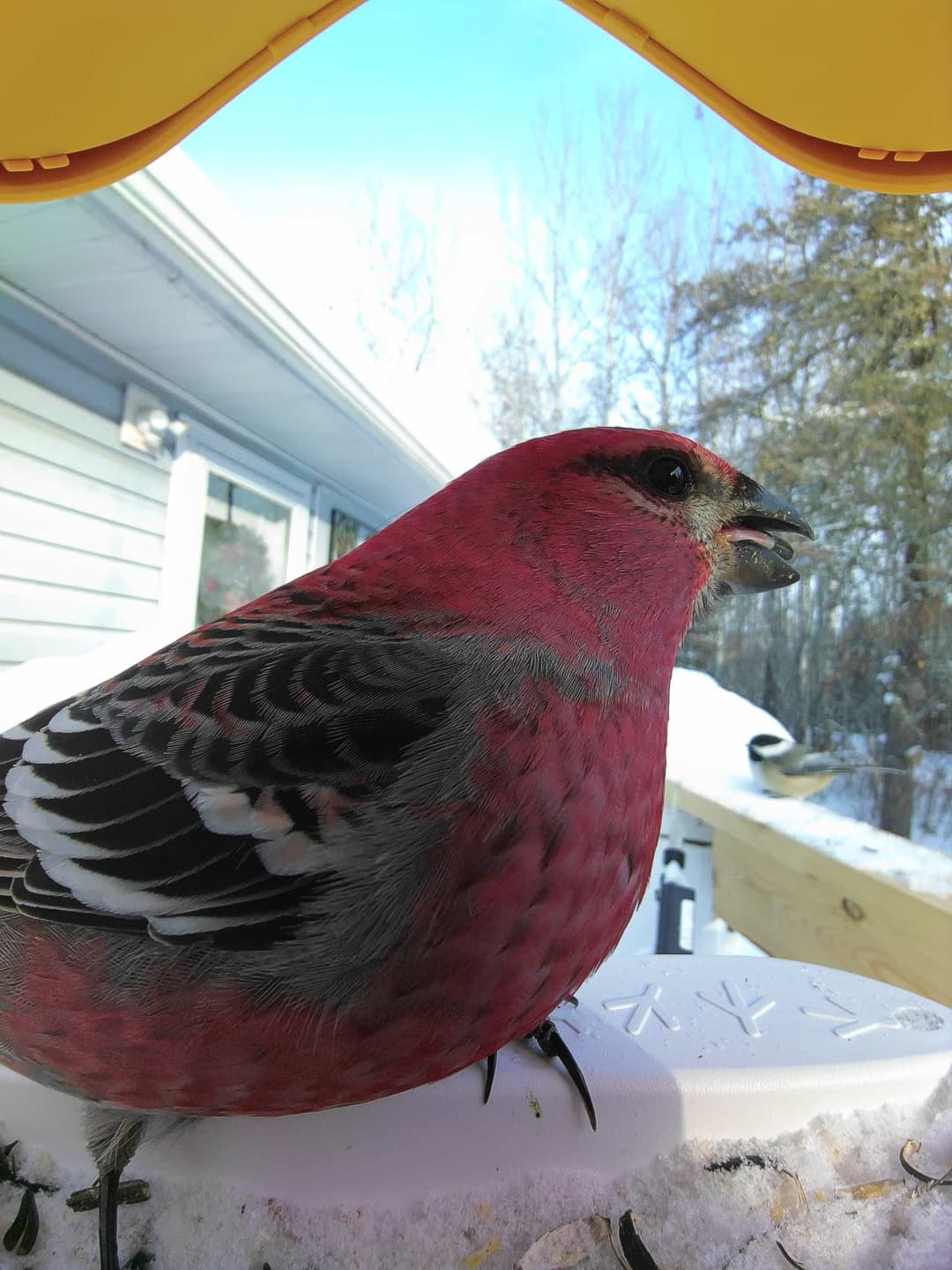
The pine grosbeak is a large finch, about the size of a robin, measuring between 8-10 inches (20-25 cm). The bird has several distinctive features including a long tail, a stubby black bill, two wing-bars, and various colors. The wing shape is pointed and the tail shape varies from notched, rounded to a square tip.
Male vs female
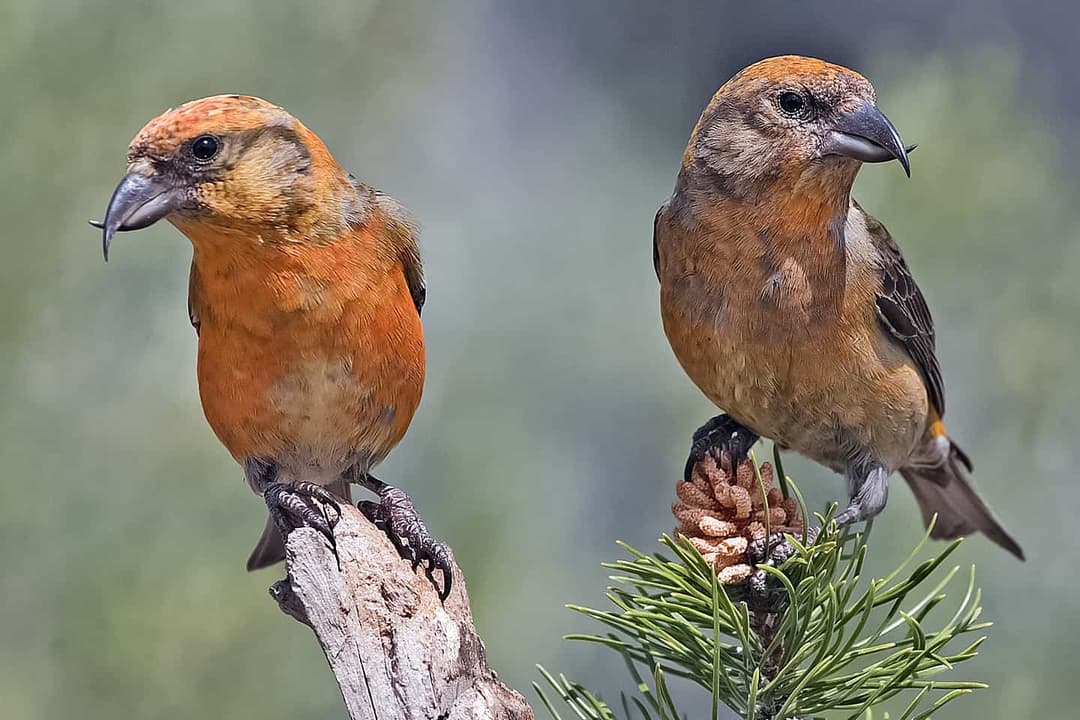
Adult males and females display different colorations. While the adult male pine grosbeak is mostly pink and gray, the female is predominantly gray, with yellow or orange on her head. This differentiation helps in spotting and identifying the species in the wild.
Juvenile
Similar to adult females, juveniles are gray in color. However, they are distinguishable by the yellow or orange coloration on their heads. There may be a seasonal variation in appearance as these birds often change their plumage.
Size
7.9 - 10.0 in/1.8 - 2.8 oz
There's more to learn about Pine Grosbeak
View full detailsHow to tell the Canada Jay from the Pine Grosbeak
Visual differences
The Canada Jay (10-13 inches) appears larger than the Pine Grosbeak (8-10 inches). Canada Jays are primarily gray with fluffy plumage and a distinctive blackish nape patch, whereas Pine Grosbeaks have long tails and stubby black bills with males showcasing pink and gray plumage and females gray with yellow/orange heads. Grosbeaks feature pointed wings with double wing-bars, contrasting with the Jay's broad, rounded wings. The male and female Canada Jays are visually similar, unlike the dimorphic Pine Grosbeaks.
Key differences and behavior
The Canada Jay and Pine Grosbeak exhibit distinct behavioral and ecological traits. Canada Jays are social and opportunistic foragers, known for caching various foods like peanuts and carrion. They thrive in spruce forests and maintain year-round territories, using clicks and mimicry to communicate. Males feed females during early breeding, with nests located in dense conifers. In contrast, Pine Grosbeaks form winter flocks, often lingering at fruit sources, and exhibit leisurely behaviors, earning them the nickname "mopes." They breed in coniferous forests yet nest in spruce and firs, with males serenading mates via song. Their winter diet focuses on seeds and berries, and they sporadically visit feeders. While both species share evergreen habitats and nest construction, their social structures, foraging flexibility, and migration patterns differ, aiding field identification.
Still not sure? Here are more lookalikes!
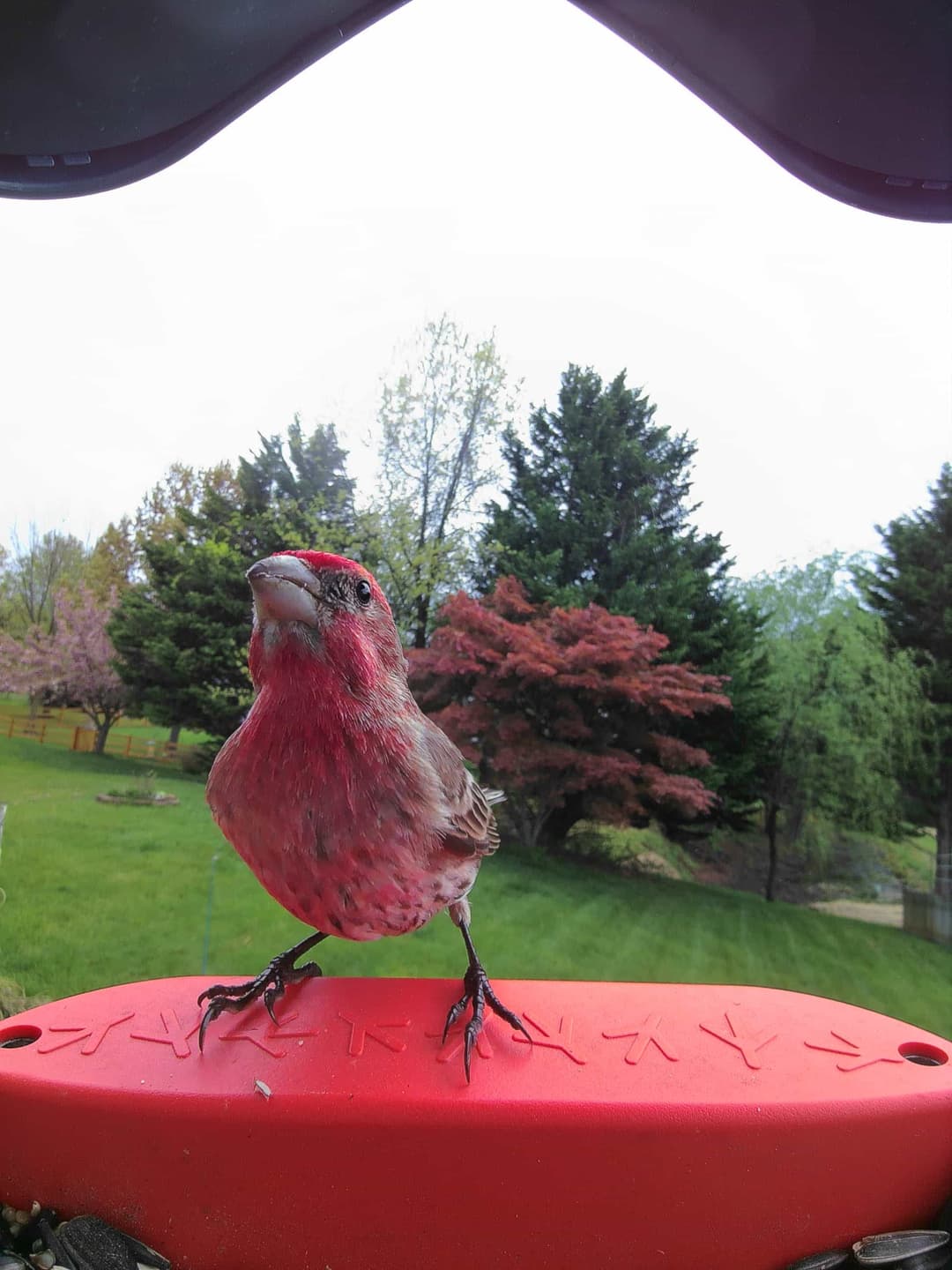
Pine Grosbeak vs House Finch
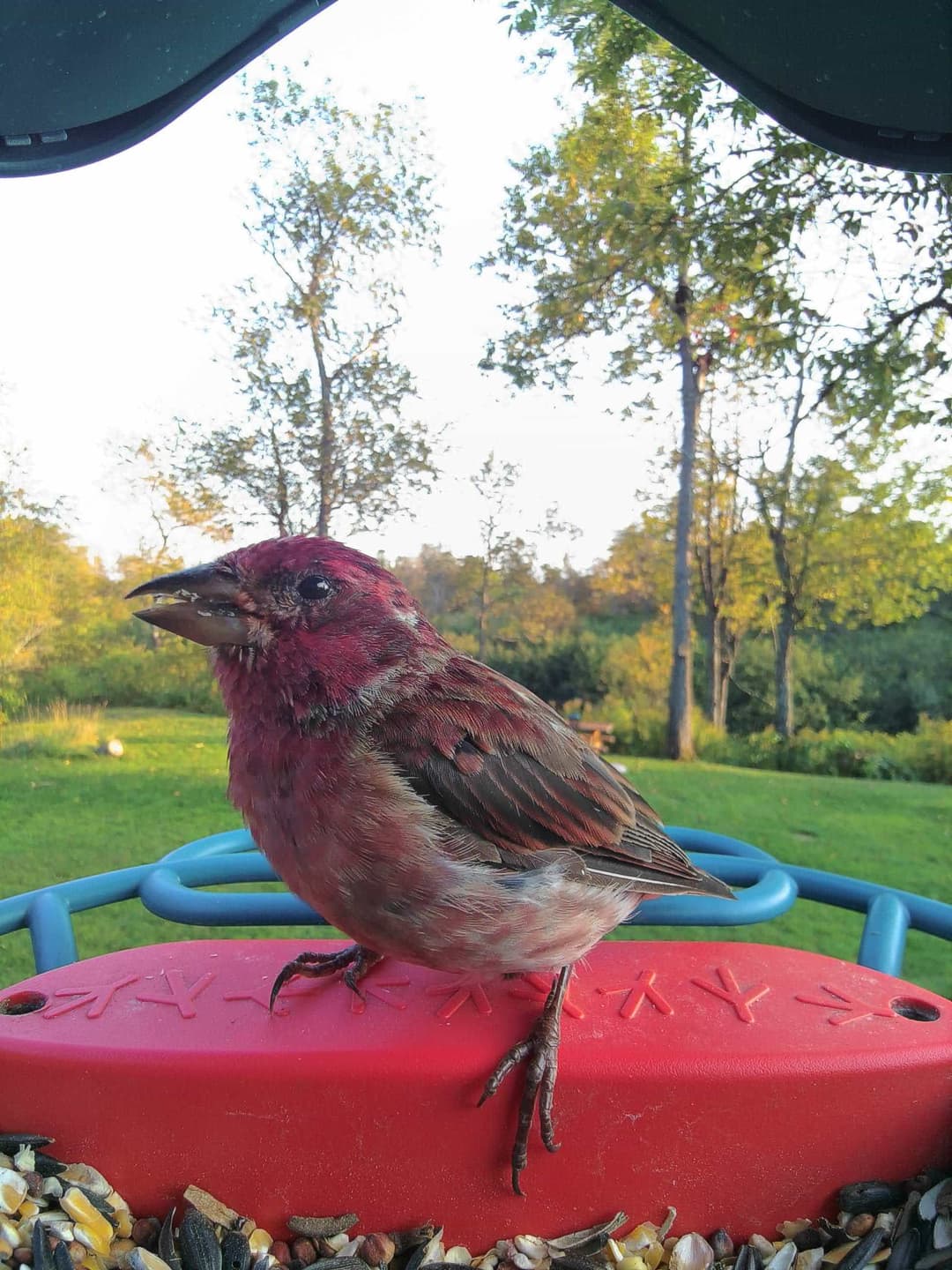
Pine Grosbeak vs Purple Finch
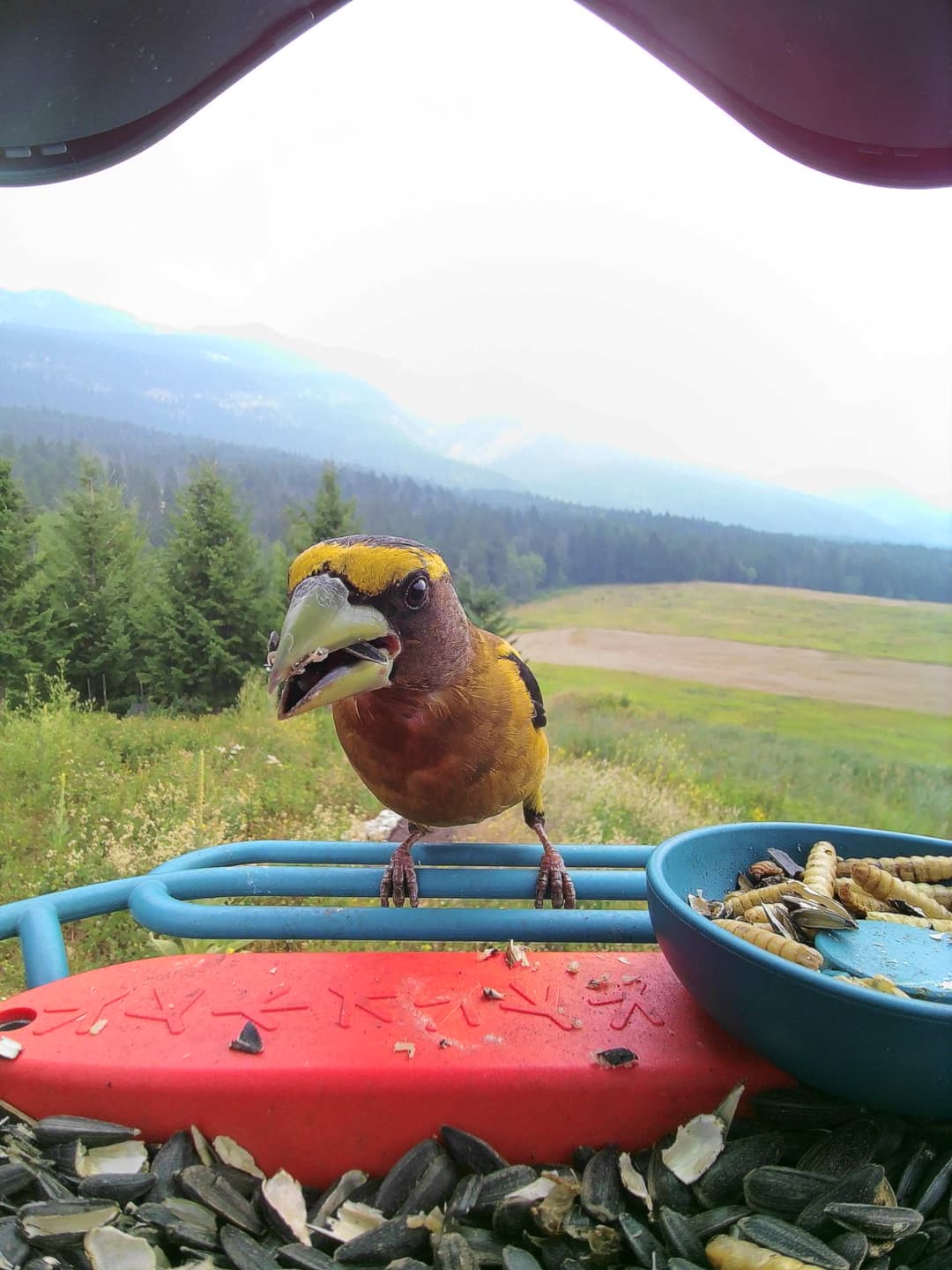
Pine Grosbeak vs Evening Grosbeak
Canada Jay vs [Select a bird]

[Select a bird]
Pick a bird to compare
Pine Grosbeak vs [Select a bird]
[Select a bird]
Pick a bird to compare