Canada Jay or Clark’s Nutcracker?
Here's how to tell the difference


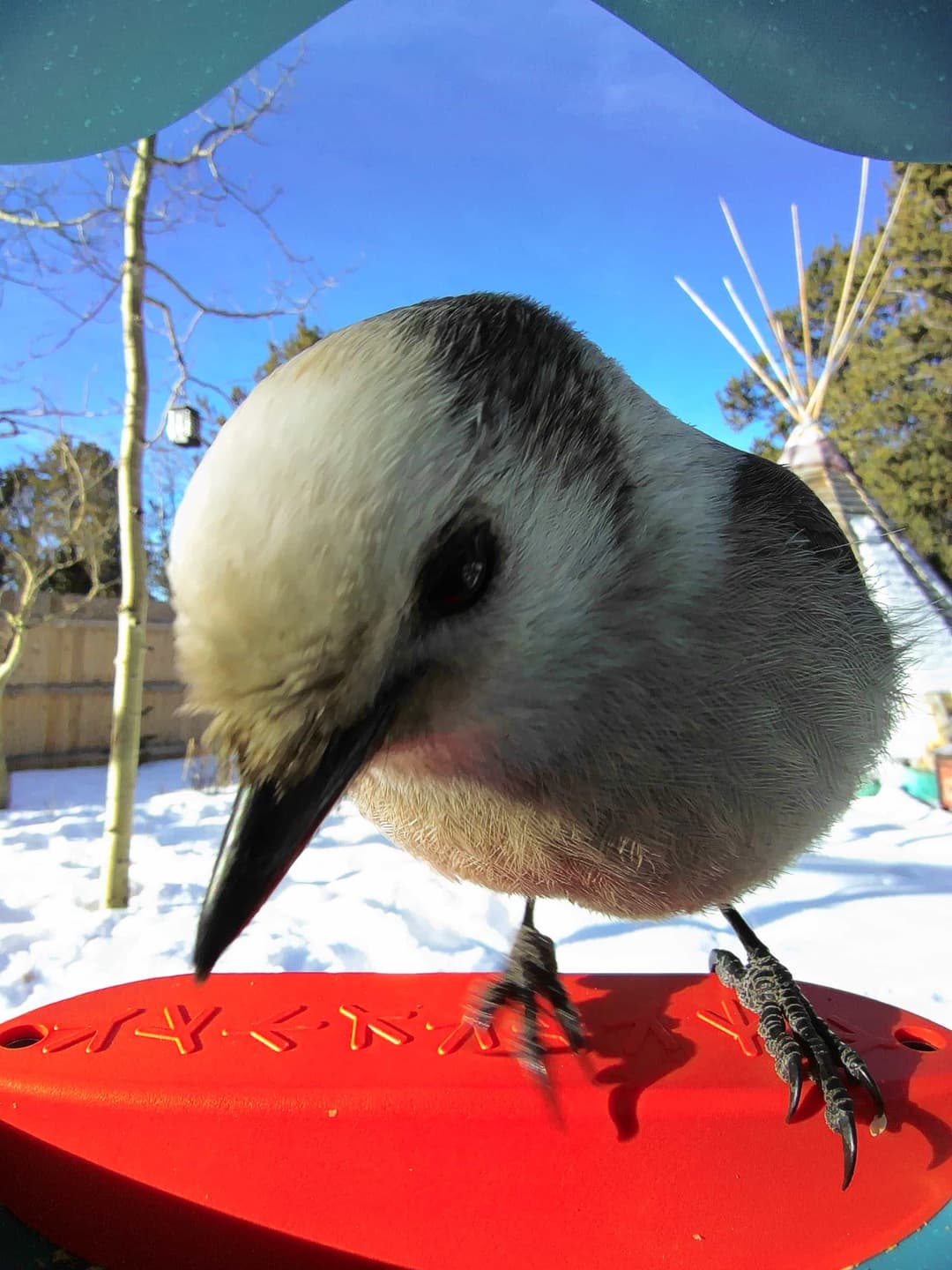
Canada Jay


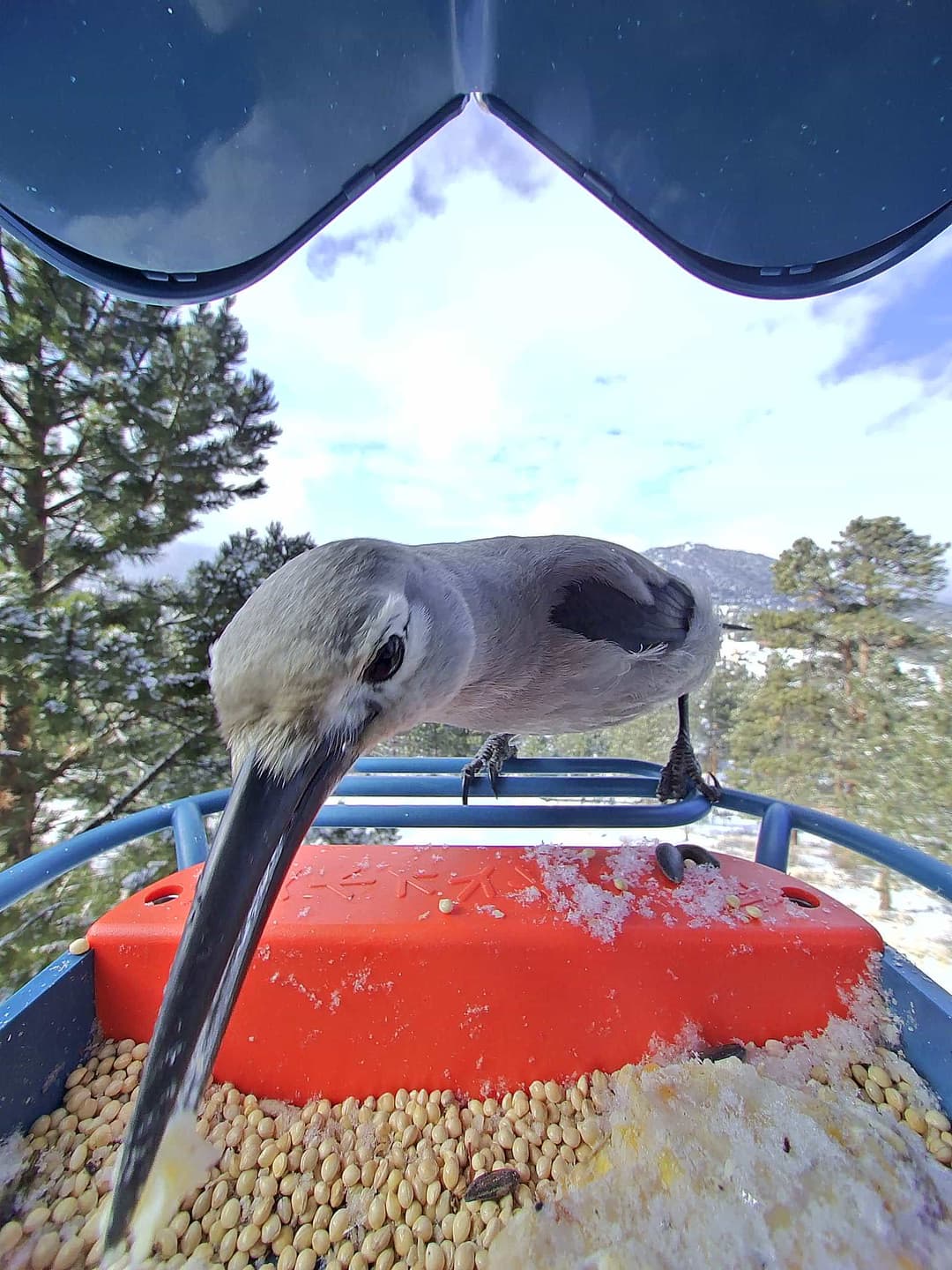
Clark’s Nutcracker
Canada Jay
Perisoreus canadensis
Also known as: Gray Jay, Grey Jay, Camp Robber, Whisky Jack
General appearance
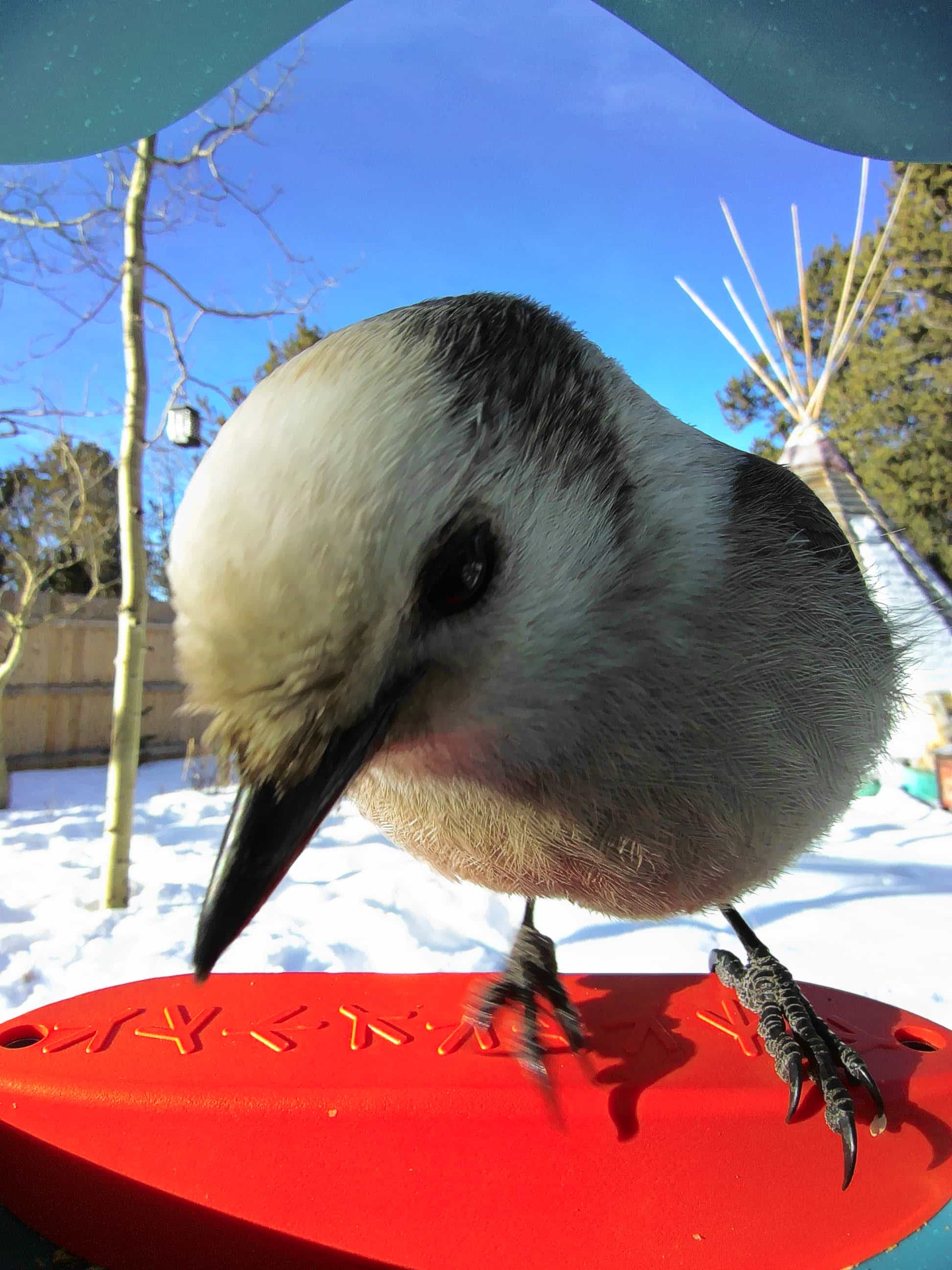
The Canada Jay is a medium-sized bird, standing at approximately 10-13 inches (25-33 cm) tall, similar in size to a crow or a robin. Their plumage is fluffy and primarily gray, though with a paler shade below. The Jay is also marked by its wing and tail shapes, which are broad, fingered, rounded, and occasionally, wedge-shaped.
Male vs female
There are no marked differences in physical appearance between male and female Canada Jays. Both share the same coloration and physical features, including the distinctive blackish patch on the nape that may extend to the top of the head, which varies by geographic region. More distinctions may be noticed in behavior rather than appearance.
Juvenile
Juvenile Canada Jays have a darker hue than their adult counterparts. Initially, their plumage is mostly dark charcoal gray. As they mature, the darker color recedes, replaced by the lighter gray and white colors of adult jays. Juveniles also have a noticeable paler whisker mark.
Size
10.6 - 12.2 in/2.2 - 2.9 oz
There's more to learn about Canada Jay
View full detailsClark’s Nutcracker
Nucifraga columbiana
Also known as: Clark's Crow, Woodpecker Crow
General appearance
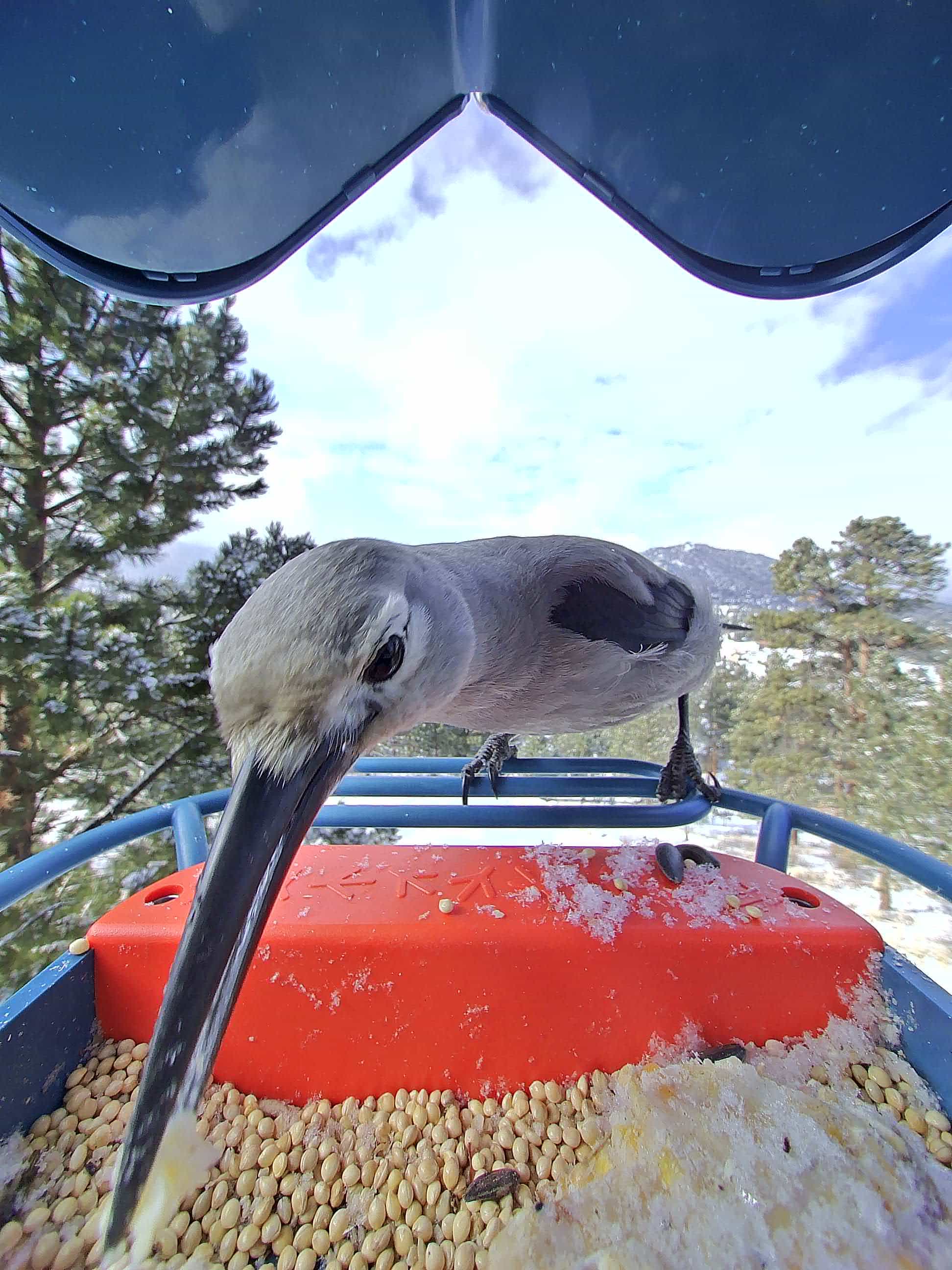
The Clark’s nutcracker is a large bird around 12-13 inches (30-33 cm) in size, roughly the size of a crow, with a predominant pale gray coloration. It has a distinct long, finger-rounded wings shape and square-tipped, rounded tail. Noticeable in its appearance are the large white patches amid its black wings and tail, especially evident during flight. Its bill is spike-pointed, a trait that is more pronounced than the smaller bill of the Gray Jay.
Male vs female
The physical traits such as size, coloration, and distinctive marks of the Clark’s nutcracker do not significantly differ between males and females. Both sexes share similar features, which make it difficult to distinguish them based on physical appearance alone.
Juvenile
Juvenile Clark’s nutcrackers resemble adults but are generally duller. Their feathers, while also gray, tend to be more muted, lacking the stark contrast between the white patches and black wings and tail seen in adults. Their bills may also be less pointed as compared to the spiked bill of mature nutcrackers.
Size
10.6 - 11.9 in/3.7 - 5.7 oz
There's more to learn about Clark’s Nutcracker
View full detailsHow to tell the Canada Jay from the Clark’s Nutcracker
Visual differences
The Canada Jay measures 10-13 inches, with fluffy gray plumage, paler underparts, and a blackish nape patch, featuring broad, rounded wings and tail. In contrast, Clark's Nutcracker is 12-13 inches, with predominately pale gray plumage accented by large white patches on black wings and tail, more visible in flight, and a distinctive spike-pointed bill. The nutcracker is bulkier, with a more pronounced beak compared to the smaller-billed, darker juvenile Canada Jay. The Clark's Nutcracker's wings are finger-rounded with a square-tipped tail, compared to the Canada Jay's occasionally wedge-shaped tail.
Key differences and behavior
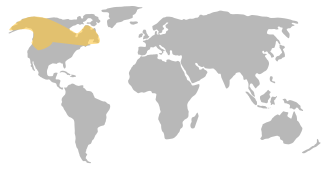
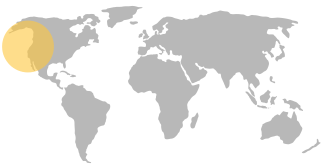
The Canada Jay and Clark's Nutcracker are discernible through their behaviors and habitats. Canada Jays thrive in spruce and fir forests peppered with social interactions and mimicking calls, often sunbathing in family groups. Conversely, Clark's Nutcrackers prefer high-elevation mountain areas with pine forests, showcasing remarkable memory for seed caching and unique long-flight courtship rituals. Both species are omnivorous, yet Canada Jays consume a broader variety of foods, including small rodents and insects, while Clark's Nutcrackers focus heavily on pine seeds, leveraging their specialized throat pouch. During breeding, both species nest in conifers, yet Clark's Nutcracker builds nests further from the trunk. Territorially, Canada Jays maintain year-round territories, while Clark's Nutcrackers may migrate. Both species enjoy feeders, but Canada Jays are more versatile in their choices.
Still not sure? Here are more lookalikes!
Canada Jay vs [Select a bird]

[Select a bird]
Pick a bird to compare
Clark’s Nutcracker vs [Select a bird]
[Select a bird]
Pick a bird to compare