Common Yellowthroat or Nashville Warbler?
Here's how to tell the difference




Common Yellowthroat

Nashville Warbler
Common Yellowthroat
Geothlypis trichas
Also known as: Yellow Bandit
General appearance
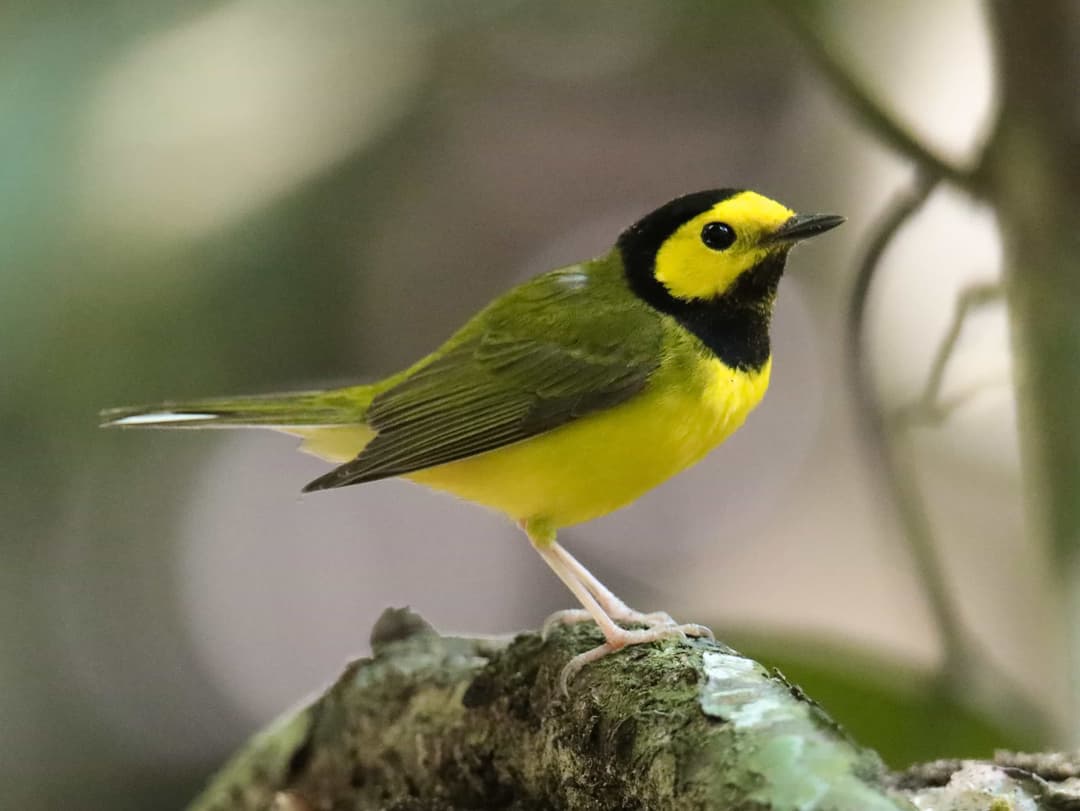
The common yellowthroat is a small warbler with a round body and a short, sleek tail. Overall plumage is olive-brown with a bright yellow throat and breast, and white underparts. It has a distinctive black face mask across the eyes, bordered by a thin white or gray line.
Male vs female
Males are easily identified by their vibrant black face masks and brighter yellow throats, while females lack the black mask and have duller olive tones. Females may also show a less vivid yellow throat and a more uniformly olive-brown appearance.
Juvenile
Juvenile common yellowthroats resemble adult females but appear even duller, with more muted tones and a less pronounced yellow on the throat. They lack the black mask seen in adult males.
Size
4.3 - 5.1 in/0.3 - 0.4 oz
There's more to learn about Common Yellowthroat
View full detailsNashville Warbler
Leiothlypis ruficapilla
General appearance
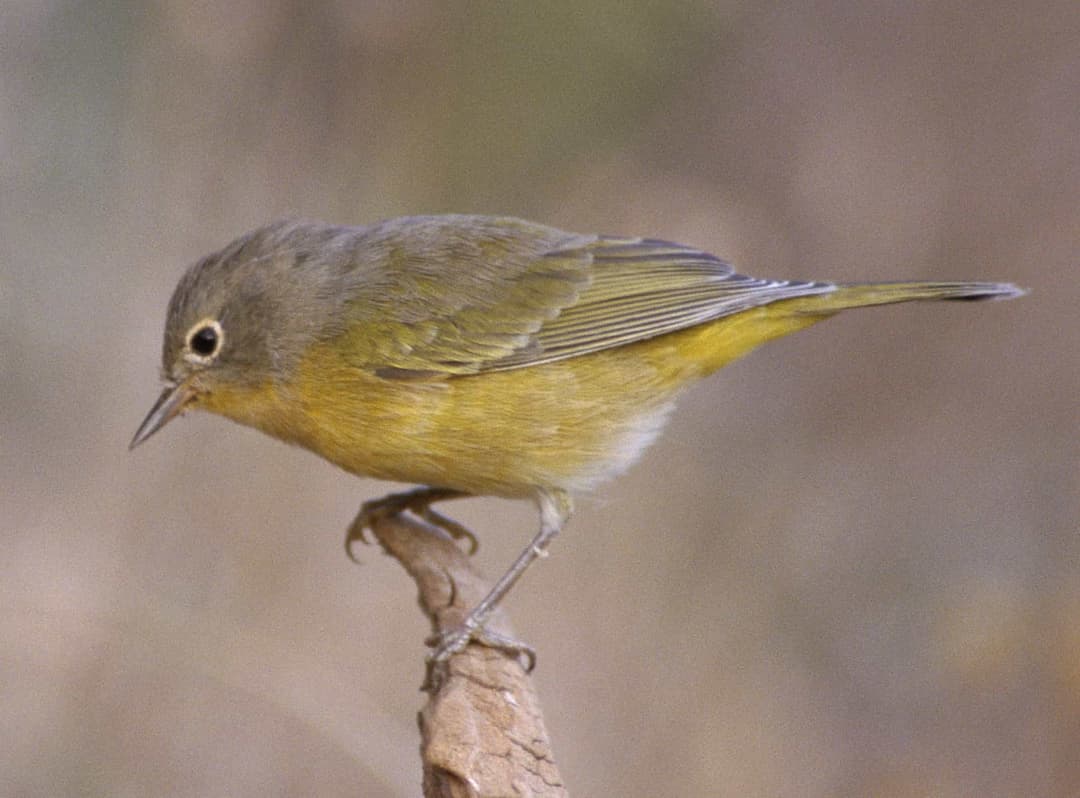
The Nashville warbler is a small songbird with olive-green upperparts and a bright yellow underside. It features a distinctive white eye ring and a gray head. The wings and tail are a darker shade of olive, and it has a thin, pointed bill ideal for insect hunting.
Male vs female
Both male and female Nashville warblers share similar coloration, though males are generally more vibrant. The male has a more pronounced gray head and may exhibit subtle rust tones on the crown and chest not seen in females. Females tend to have a slightly duller overall appearance.
Juvenile
Juvenile Nashville warblers resemble adults but with paler, less defined coloration. Their eye ring may be less distinct, and the yellow underside is more subdued. Juveniles lack the mature head patterns of adults, appearing more uniformly olive-gray.
Size
4.3 - 4.7 in/0.2 - 0.5 oz
There's more to learn about Nashville Warbler
View full detailsHow to tell the Common Yellowthroat from the Nashville Warbler
Visual differences
The Common Yellowthroat can be distinguished from the Nashville Warbler primarily by its black face mask in males and a rounder body, compared to the Nashville’s lack of mask and round white eye ring. Both are 4.3-5 inches long, but the Common Yellowthroat has olive-brown plumage with a bright yellow throat, while the Nashville Warbler displays olive-green upperparts, a gray head, and consistent bright yellow undersides. Nashville Warblers have a thin, pointed bill, contrasting with the Common Yellowthroat's short, sleek tail. Both males exhibit more vivid colors compared to females.
Key differences and behavior
The Common Yellowthroat and Nashville Warbler exhibit distinct behaviors and habitat preferences. Common Yellowthroats thrive in wet habitats like marshes and wetlands, while Nashville Warblers prefer cool woodlands and bogs. Both species are insectivorous, but Yellowthroats focus on ground-level foraging, contrasting with Nashville Warblers’ arboreal insect hunting. In breeding, male Common Yellowthroats perform aerial displays, whereas Nashville Warblers use song and hovering to attract mates. Yellowthroats nest low in wetland vegetation, building bulky open nests, while Nashville Warblers construct well-hidden ground nests using moss and bark. Yellowthroats exhibit monogamy with potential infidelity by females, while details of Nashville Warblers' mating systems are less documented. In terms of feeder behavior, both birds rarely visit feeders, preferring natural insect sources. The Nashville Warbler’s creative use of porcupine quills as nesting material highlights its unique nesting habits.
Still not sure? Here are more lookalikes!
Common Yellowthroat vs Orange-Crowned Warbler


Common Yellowthroat vs Yellow-Breasted Chat


Nashville Warbler vs Orange-Crowned Warbler
Common Yellowthroat vs [Select a bird]

[Select a bird]
Pick a bird to compare
Nashville Warbler vs [Select a bird]
[Select a bird]
Pick a bird to compare