
Pacific Wren
Pacific Wren
Troglodytes pacificus
Quick Identification guide
Quick Identification guide
- •
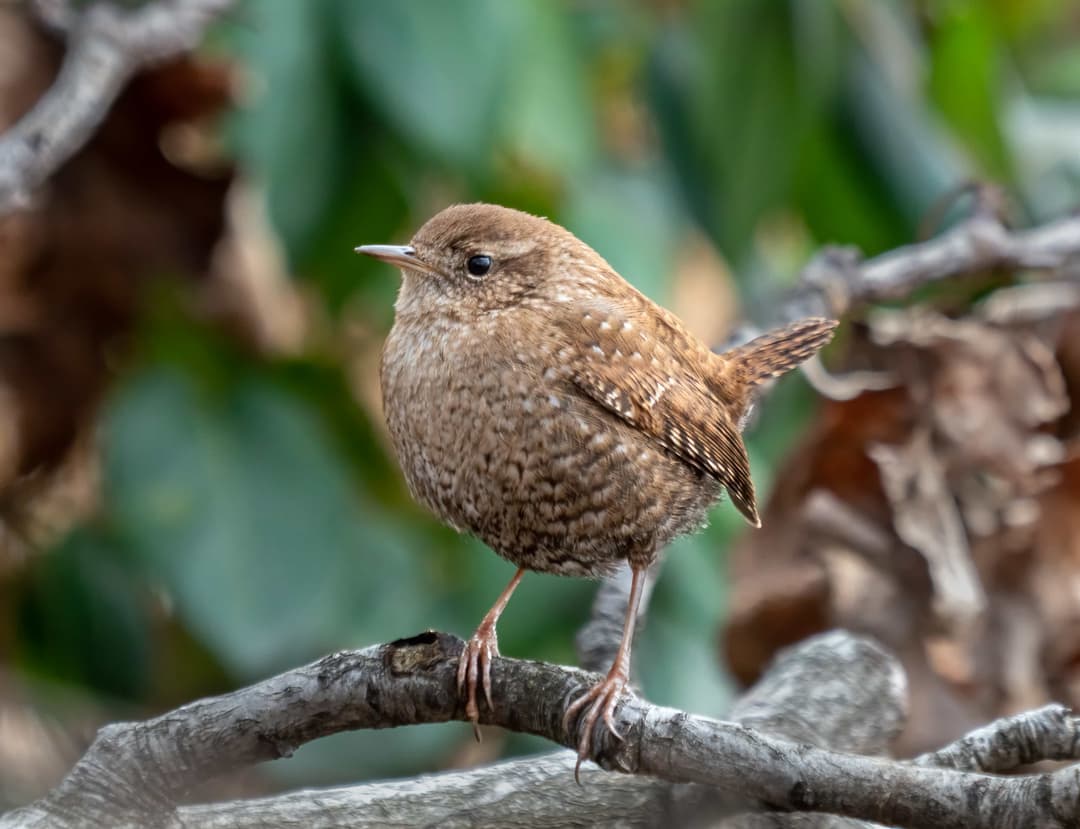
The compact body is adorned with rich brown plumage speckled with fine black barring
- •
Features a short, narrow beak suited for insect foraging
- •
Boasts a very short tail which is often held upright, giving it a distinctive posture
What does a Pacific wren sound like?
The Pacific Wren vocalizes through a high-pitched, varied, and rapid series of musical trills and chatters. Its call note exudes an explosive "kit!" or "kit-kit!" sound. The call pattern of this bird is complex, flat, and undulating with a buzzing, chirping, fluting, and trilling essence which can hit high pitches. The Pacific Wren also produces a unique whistle as part of its voice repertoire.
Description
These birds may be tiny but don't let that fool you! They are still impressive (and loud!) singers; all the more so because of their size. They are otherwise energetic, too, as well as resourceful. When they get cold, they have a habit of piling into nest boxes to keep warm. What's the record number of wrens found in a single one, you ask? 31 birds! That must have been a tight squeeze.
The Pacific wren can weigh between 8to12grams and be from8to12centimeters tall.
The Pacific wren typically lives up to about seven years. This is relatively longer when compared to some related species like the House wren, but shorter in comparison to the Carolina wren, which can live up to nine years.
Did you know?
Most popular questions about Pacific wren
How to recognise a Pacific wren?
General appearance
The Pacific Wren is a small bird of around 4-4 1/2 inches (10-11cm) in size with a shortened stubby tail. Its coloration is generally dark, contrasting with a warmer golden brown chest. The bird's flanks feature strong dark barring. It can often be mistaken for a House Wren due to its similar size, but it differentiates itself with its much shorter tail and unique voice. Rounds wings and small size makes it similar to a Sparrow.
Male vs female
There are not significant physical differences in appearance between males and females. Both genders share the same size, dark coloring and strong dark barring on their flanks. Identification between genders primarily comes down to the difference in their voices or during actions such as nesting.
Juvenile
Juvenile Pacific Wrens resemble the adults in overall appearance, but differences can be noted in subtler aspects of their coloring. Juvenile birds typically lack the richer golden-brown coloring on the chest seen in adults, displaying instead a duller shade of brown. Also, their callnote might vary slightly from adults.
Often mistaken for
Winter Wren vs Pacific Wren
The Pacific Wren and Winter Wren can be tricky to distinguish. Pacific Wrens typically have richer, more consistent brown plumage. Their song is longer and more complex than the Winter Wren's, often with a bubbly quality. Pacific Wrens are primarily found along the western North America coast, whereas Winter Wrens inhabit eastern regions. Listen for the differences in their songs and observe the more vibrant color in the Pacific Wren to help differentiate them.
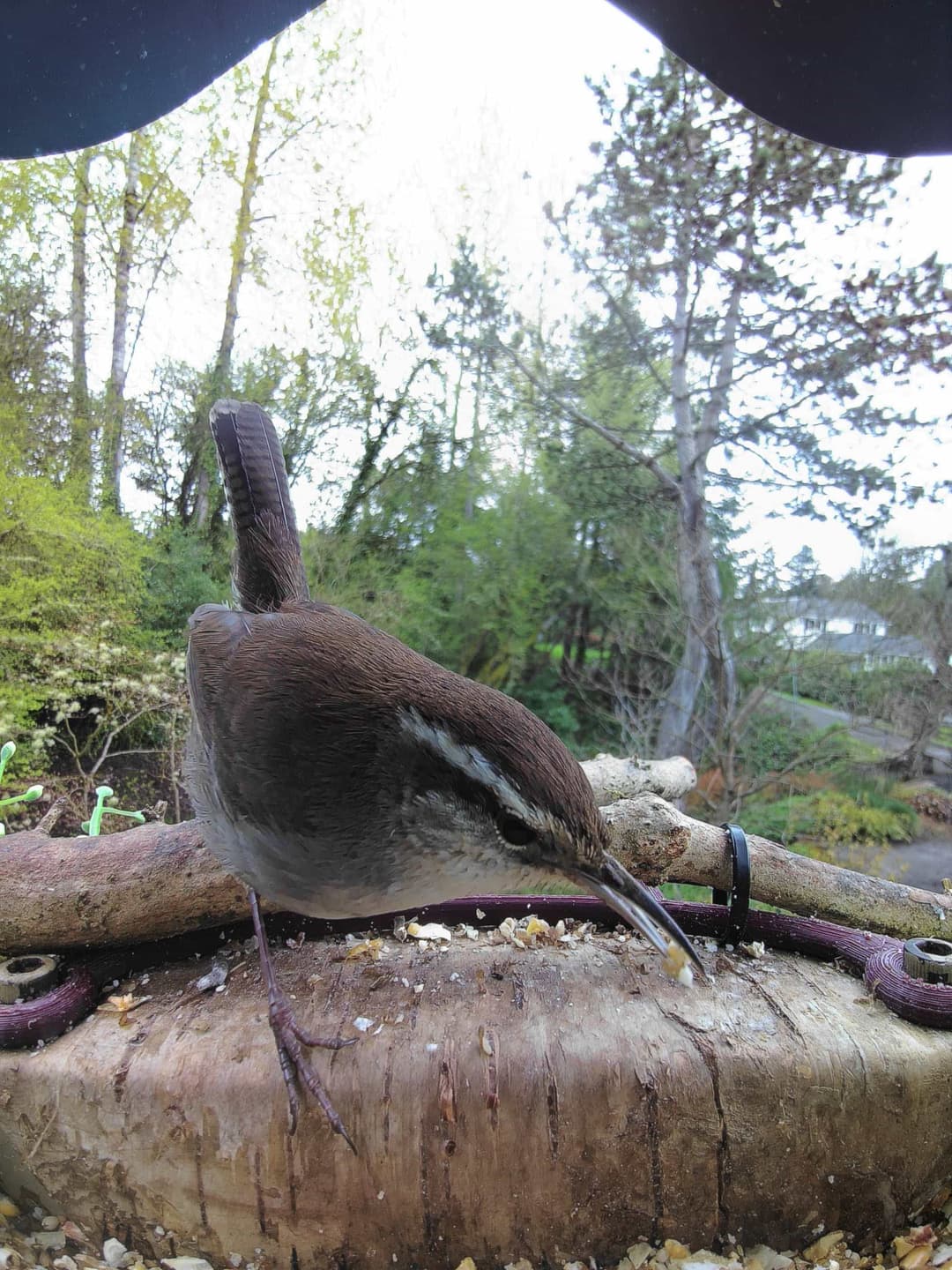
Bewick’s Wren vs Pacific Wren
Bewick’s Wren is larger than the Pacific Wren, with a longer tail often held upright. It has distinctive white eyebrows and a greyer, more muted color compared to the deep brown of the Pacific Wren. The song of Bewick’s Wren is a series of quick, loud notes, quite different from the Pacific Wren's complex melodies. Observe the tail position and eyebrow color to better identify the Bewick’s Wren.
Breeding and nesting habits of the Pacific wren
Mating behaviors
In spring, male Pacific wrens sing to defend territory and attract mates. During courtship, the male perches near the female with half-opened, fluttering wings and a side-to-side moving tail, while singing or calling.
Nesting details
Nests are built in natural cavities close to the ground, like holes among upturned roots, cavities in rotten stumps, old woodpecker holes, or rock crevices. Both sexes help build nests using grass, weeds, moss, rootlets, and line them with animal hair and feathers. Males may build unlined 'dummy' nests.
Eggs and chick-rearing
The female incubates the eggs, while both parents participate in feeding and raising the chicks. Providing dense shrubbery or small cavities in gardens can help create a suitable nesting habitat.
What does a Pacific wren like to eat?
Berries
Insects
Snails
Spiders
Natural diet
The Pacific wren primarily feeds on a diverse array of insects, including beetles, caterpillars, true bugs, flies, and other insects. It also consumes many spiders and occasionally feeds on millipedes and snails. Additionally, this bird sometimes includes berries in its diet.
Bird feeders
While the Pacific wren may occasionally visit bird feeders, its visits are not frequent since its diet mainly consists of insects and invertebrates found in the wild. However, it might be attracted to feeders offering suet or mealworms, which resemble its natural diet.
Setting up your space for the pacific wren
Pacific Wrens are particularly partial to dense shrubs and moist woodlands, so try filling your yard with plenty of evergreen bushes and trees. You can also put up bird houses with small entrances as Pacific Wren like cozy spaces, or consider creating a brush pile to provide further shelter. Provide a fresh source of water for the Pacific Wren in the form of a birdbath or a shallow pond.
Choosing the right bird feeder and seeds
To attract Pacific Wrens, the type of feeder is critical since they are ground feeders. Opt for a platform feeder or scatter seeds directly on the ground in a quiet corner of your garden. Pacific Wrens enjoy a wide range of seeds, but we recommend using Bird Buddy seeds. These are specially selected by experts for the season, ensuring the Pacific Wren gets the nutrition it needs and is therefore more likely to visit your garden.
Fun tricks to catch a pacific wren’s attention
To lure these delightful birds into your garden, try playing some Pacific Wren bird songs, as they're known for their melodic voices and might be tempted into a sing-along. Remember, the early bird catches the worm, so ensure your seed supply is topped up first thing in the morning! Lastly, be patient, as Pacific Wrens can be a little shy at first, but with these measures, you’ll soon convince them that your garden is a safe haven!
Where can you find Pacific wrens?

Primary habitat
The Pacific wren typically prefers dense coniferous forests, especially those in the Pacific northwest with a moist climate and an understory of dense thickets.
Additional range
In winter, it can be found in southwest woodlands and brush, or among tangles and fallen logs in woods. Uniquely, Alaskan island populations may inhabit more open areas.
Do they migrate?
The Pacific Wren exhibits different patterns of movement depending on its geographical location. In most of its range, particularly along the coast and islands of Alaska, the Pacific Wren is a permanent resident, meaning it stays in one place all year. However, populations from interior regions of western Canada and the northern Rockies exhibit migratory behavior. During winter, these interior populations move southward, with some reaching as far as the southwest. This migration is characterized by relatively early movement in the spring when these birds return north to their breeding grounds, and a late departure in the fall as they head south for the winter months. Key locations involved in this migration include the interior regions of western Canada and the northern Rockies, where these wrens breed, and various locations in the southwest where some overwinter. The precise routes can vary, but the migration generally follows the north-south axis between these breeding and wintering areas. This seasonal movement ensures that the population adapts to the changing availability of food resources and suitable habitat during different times of the year.
What is the role of Pacific wrens in nature and how to protect them?
Conservation status
The Pacific wren remains common and widespread, though its populations face certain threats. Habitat destruction in the northwest poses a risk of decline, and island populations in Alaska may be particularly vulnerable. While not currently endangered, ongoing conservation efforts should focus on preserving habitats to prevent potential population declines. Addressing habitat destruction is crucial to maintaining the species' overall health and preventing it from becoming vulnerable or endangered in the future.
Ecological role of Pacific wrens
Its role in the ecosystem
The Pacific wren is an important part of the ecosystem, serving many vital roles. It predominately feeds on a wide variety of insects, including many beetles, caterpillars, true bugs, and flies, assisting in natural pest control by regulating their population in their habitats. This aids in maintaining a balanced ecosystem and can also be beneficial for humans, as some of these insects are often considered pests. In addition, the Pacific wren occasionally eats berries, which may contribute to seed dispersal, promoting plant biodiversity and forest regeneration. Moreover, the species' nesting habit of using any type of natural cavity close to the ground can also contribute to nutrient recycling in the forest ecosystem. In preparation for their offspring, these small wrens collect various materials, including grass, weeds, moss, and rootlets, inadvertently aiding in the decomposition of these organic materials. Not to forget, the fact that both parents participate in feeding the nestlings, exemplifies parental investment which not only ensure the survival of their offspring but also positively impact the overall bird population.
How to help protect Pacific wrens
Preservation tips
Habitat preservation strategies
One of the key actions to support the conservation of the Pacific wren involves safeguarding its natural habitats such as mature forests, shrublands, and understories. Enhance the preservation by implementing policies against harmful activities like logging, land encroachment, and pollution. Support reforestation projects aiming at restoring biodiverse habitats.
Community science initiatives
Empower community on-ground through education about the importance of the Pacific wren and its habitat. Initiate community-led programs like 'Adopt-a-Habitat' and citizen science initiatives, where people can contribute to data collection about the Pacific wren's population, breeding and nesting habits. Collaborate with local schools and organizations to engage youth in conservation activities.