Pacific Wren or Winter Wren?
Here's how to tell the difference



Pacific Wren
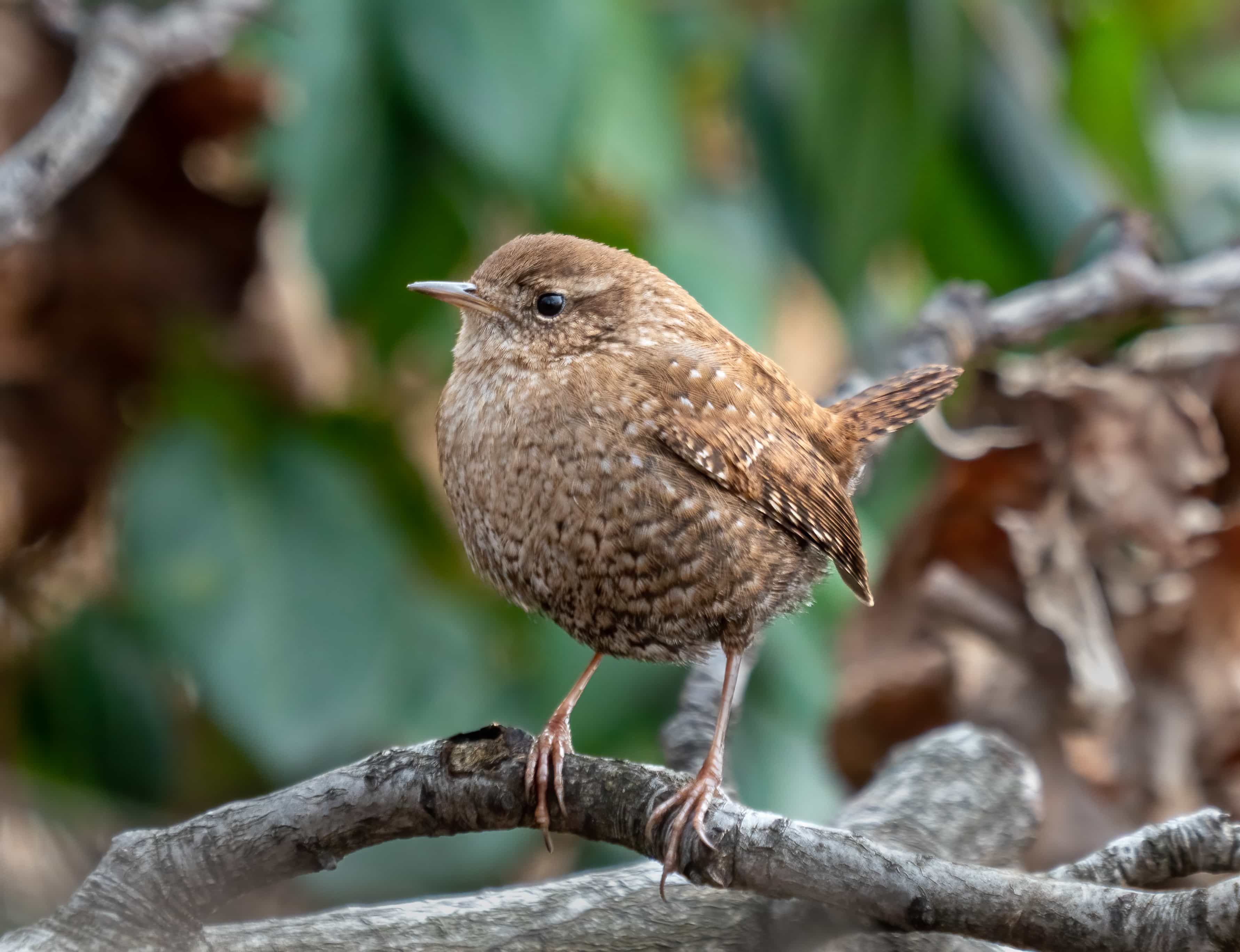
Winter Wren
Pacific Wren
Troglodytes pacificus
General appearance
The Pacific Wren is a small bird of around 4-4 1/2 inches (10-11cm) in size with a shortened stubby tail. Its coloration is generally dark, contrasting with a warmer golden brown chest. The bird's flanks feature strong dark barring. It can often be mistaken for a House Wren due to its similar size, but it differentiates itself with its much shorter tail and unique voice. Rounds wings and small size makes it similar to a Sparrow.
Male vs female
There are not significant physical differences in appearance between males and females. Both genders share the same size, dark coloring and strong dark barring on their flanks. Identification between genders primarily comes down to the difference in their voices or during actions such as nesting.
Juvenile
Juvenile Pacific Wrens resemble the adults in overall appearance, but differences can be noted in subtler aspects of their coloring. Juvenile birds typically lack the richer golden-brown coloring on the chest seen in adults, displaying instead a duller shade of brown. Also, their callnote might vary slightly from adults.
Size
3.1 - 4.7 in/0.3 - 0.4 oz
There's more to learn about Pacific Wren
View full detailsWinter Wren
Troglodytes hiemalis
General appearance
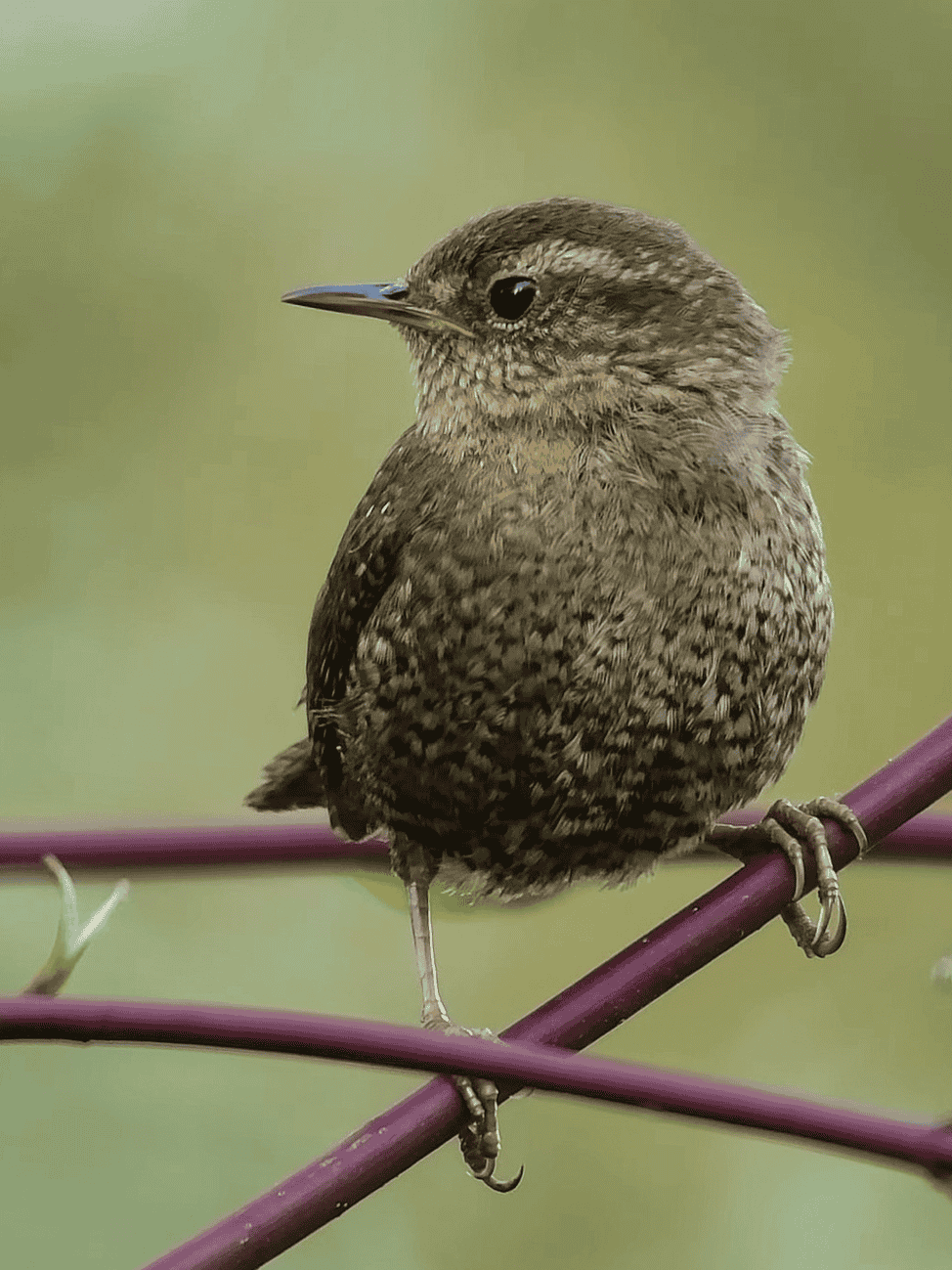
The Winter Wren is a small bird, about 10 cm in length and like a Sparrow in size. It possesses a brown and tan coloration, with stronger dark barring flanks. Its tail is short, and it has a robust, rounded-wing shape. It is generally darker than the Pacific Wren but possesses a contrasting pale throat.
Male vs female
There is little to no sexual dimorphism observed in Winter Wrens, meaning males and females appear similar. Both genders exhibit the same coloration and tail length. They're usually recognized by their distinctive callnotes.
Juvenile
Juvenile Winter Wrens also bear resemblance to adults, possessing similar coloration. Their dark barring on the flanks might appear less defined. As the little birds mature, they will develop the characteristic throat paleness and distinct call notes of the adults.
Size
3.1 - 4.7 in/0.3 - 0.4 oz
There's more to learn about Winter Wren
View full detailsHow to tell the Pacific Wren from the Winter Wren
Visual differences
The Pacific Wren and Winter Wren are both small birds around 4 inches in length. The Pacific Wren has a darker body with a warmer golden-brown chest, and strong dark barring on its flanks. In contrast, the Winter Wren is generally darker overall with a contrasting pale throat. Both species have short tails and rounded wings, but Winter Wrens appear slightly more robust. There are no significant visual differences between genders in either species. Juvenile Pacific Wrens tend to have duller chest coloring, whereas Winter Wren juveniles may have less defined flank barring.
Key differences and behavior
The Pacific Wren and Winter Wren exhibit similar behavioral traits, such as loud, impressive singing and nesting in natural cavities. Both species inhabit moist coniferous forests, favoring dense thickets and fallen logs. However, Pacific Wrens tend to gather in large groups during cold weather, whereas Winter Wrens are solitary. In diet, both consume insects and spiders but occasionally vary; Pacific Wrens eat berries, while Winter Wrens may rarely consume tiny fish. During courtship, both males sing and flutter wings, but Winter Wrens may practice polygamy. Nest-building behavior is alike, with males constructing dummy nests. Despite sharing similar habitats, Pacific Wrens focus more on the coastal Pacific Northwest, while Winter Wrens range widely near water sources.
Still not sure? Here are more lookalikes!
Pacific Wren vs [Select a bird]

[Select a bird]
Pick a bird to compare
Winter Wren vs [Select a bird]
[Select a bird]
Pick a bird to compare