
Saffron Finch
Saffron Finch
Sicalis flaveola


Quick Identification guide
Quick Identification guide
- •
Exhibits bright yellow plumage that covers most of the body, with males generally brighter than females
- •
Features a stout, conical beak perfectly adapted for seed eating
- •
Displays a compact build, with a rounded head and no crest
What does a saffron finch sound like?
The saffron finch is known for its melodious songs and sharp calls. Its typical song is a fast-paced, intricate melody of high-pitched notes lasting around 5 seconds, often repeated incessantly during mating season. The main call, used for communication and signaling danger, is a sharp "tsi-tsi" sound. This finch's vocalizations, particularly its song, are complex and vary greatly from individual to individual.


Description
The saffron finch is a bird of many names – in northern Venezuela it's referred to as the roof canary and as the native canary in western Brazil. These yellow birds, known for their pleasant song, aren't wary of humans and will often use parts of our dwellings as a location for their dream home.
The saffron finch can weigh between 12to23grams and be from13.5to15centimeters tall.
The lifespan of the Saffron Finch is typically around 10 years. Compared to other finch species such as the zebra finch with an average lifespan of 5-7 years, they live significantly longer. However, certain finch species like the greenfinch have a similar lifespan. The lifespan can change depending on factors such as diet and environment.
Did you know?
Most popular questions about saffron finch
How to recognise a saffron finch?
General appearance
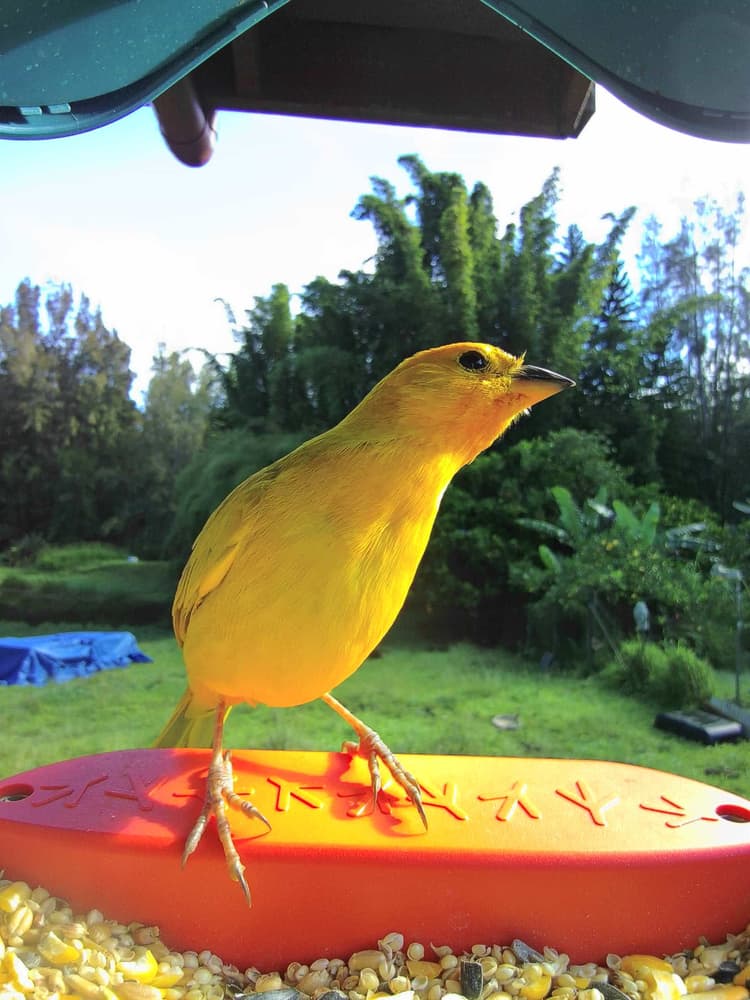
Saffron finches have a bright yellow coloring that distinguishes them from other birds. Notably, they possess a striking yellow-greenish hue on their wings and tail, and their beaks are coloured light orange. Their entire body is adorned with saffron hues, living up to their name. Size-wise, they are relatively small, typically ranging between 13 to 15 cm.
Male vs female
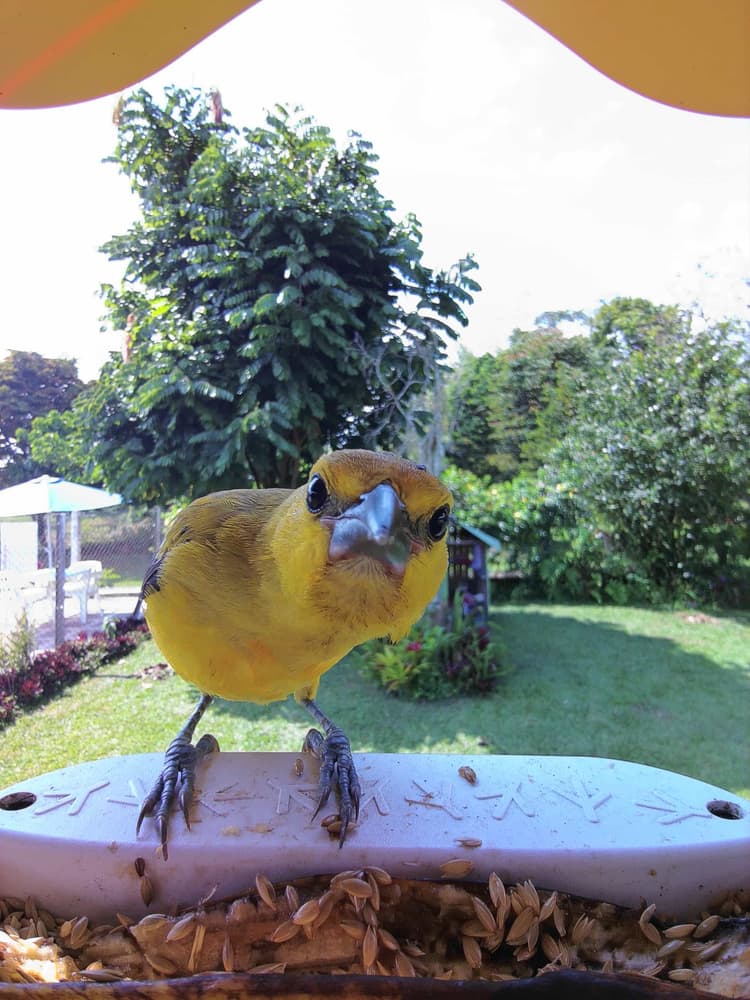
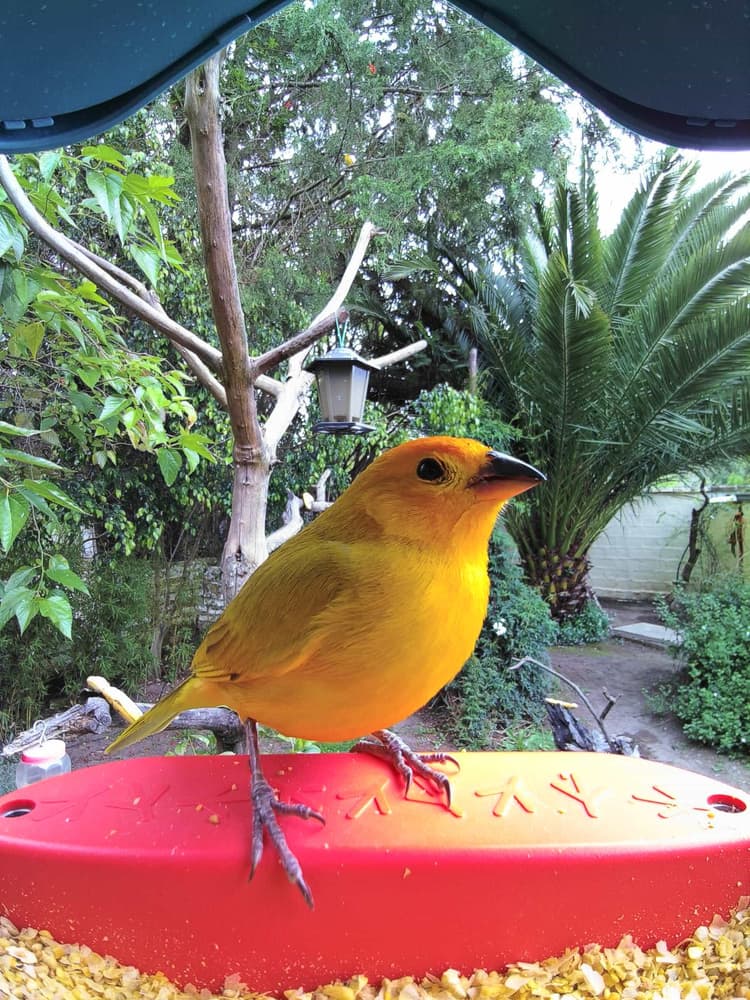
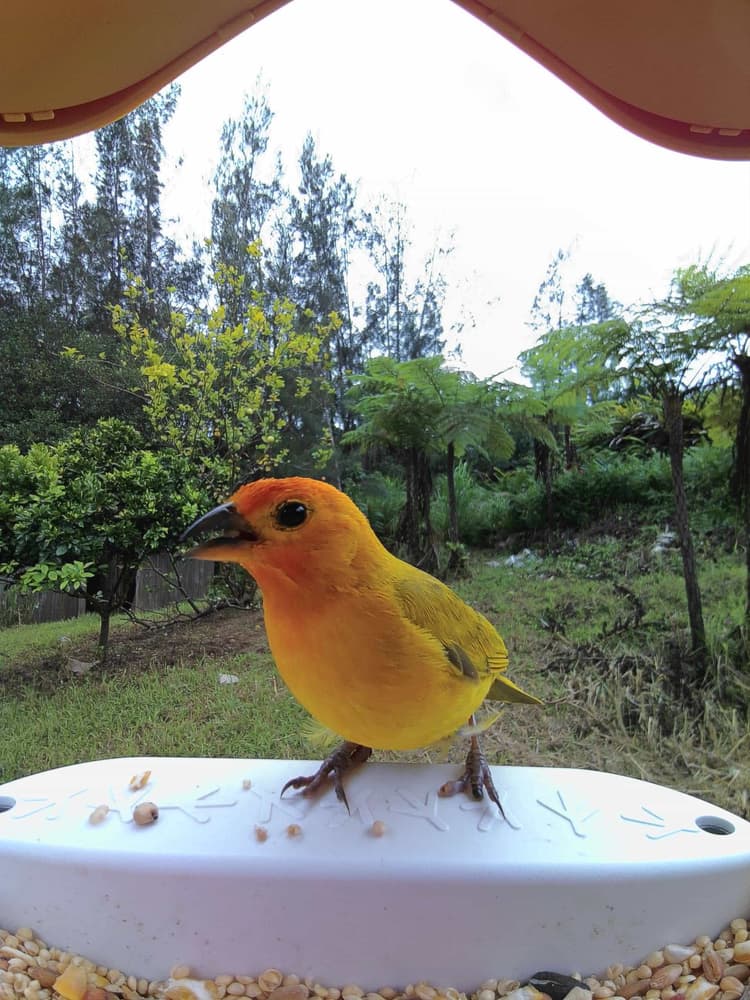
The males are more vibrant in color than the females, their yellow being strong and bright, often with vague streaks of black on the back. On the other hand, female saffron finches are typically paler, with an almost greenish-yellow upper part. Moreover, the females also have brown streaks on their belly.
Male Saffron Finch
Male Saffron Finch
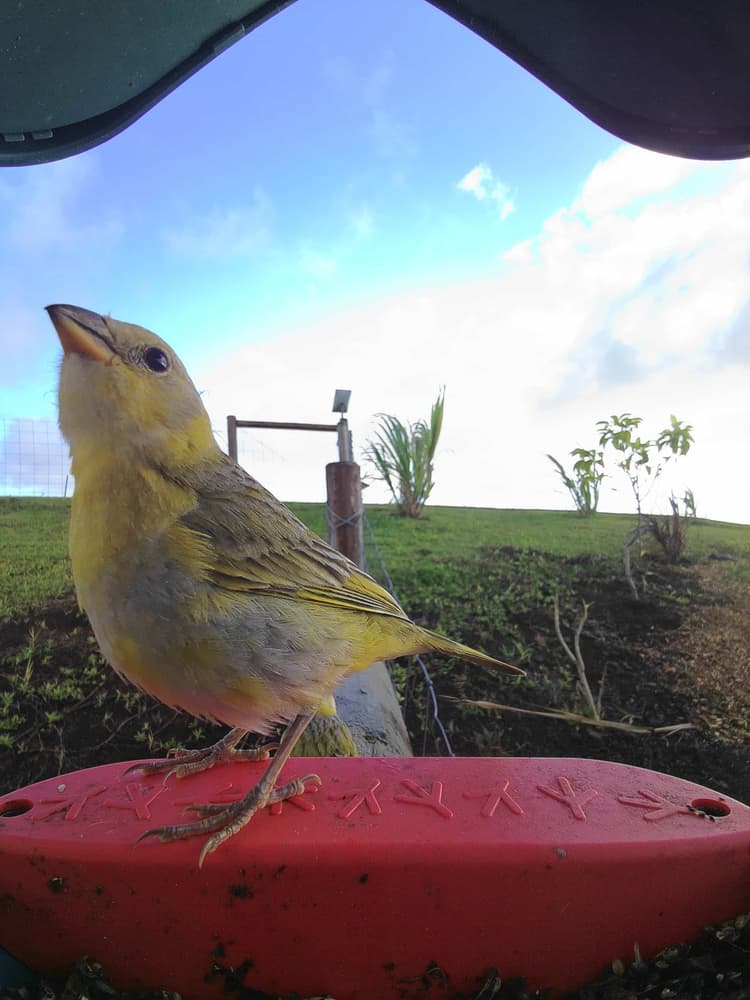
Female Saffron Finch
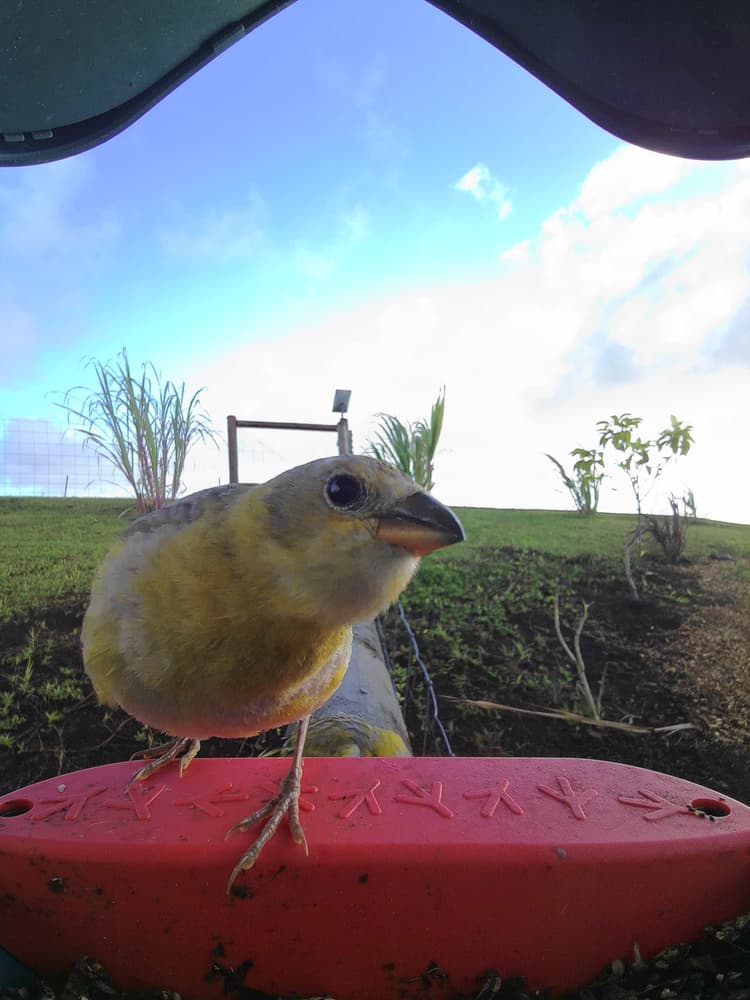
Female Saffron Finch
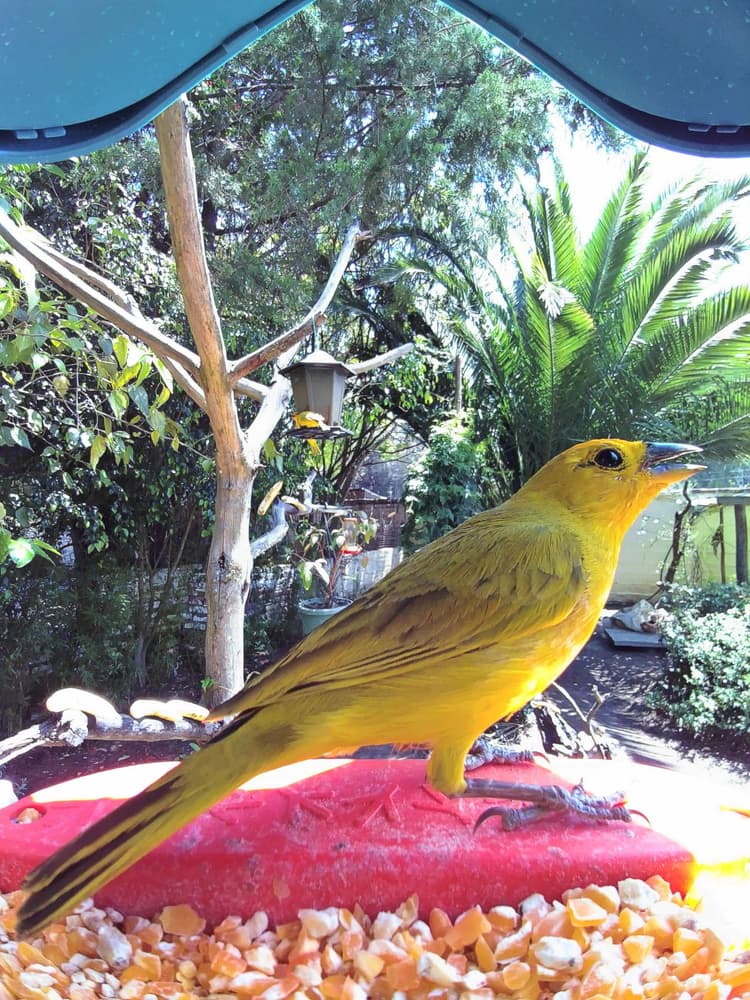
Female Saffron Finch
Juvenile
Juvenile saffron finches have a dull yellow coloration and blend in more effectively with their surroundings than the adults. They are characterized by their faintly streaked underparts and lack the black markings on the upper parts, characteristic of adult males. Their appearance undergoes significant changes as they mature into adults and their colour brightens becoming more vibrant.
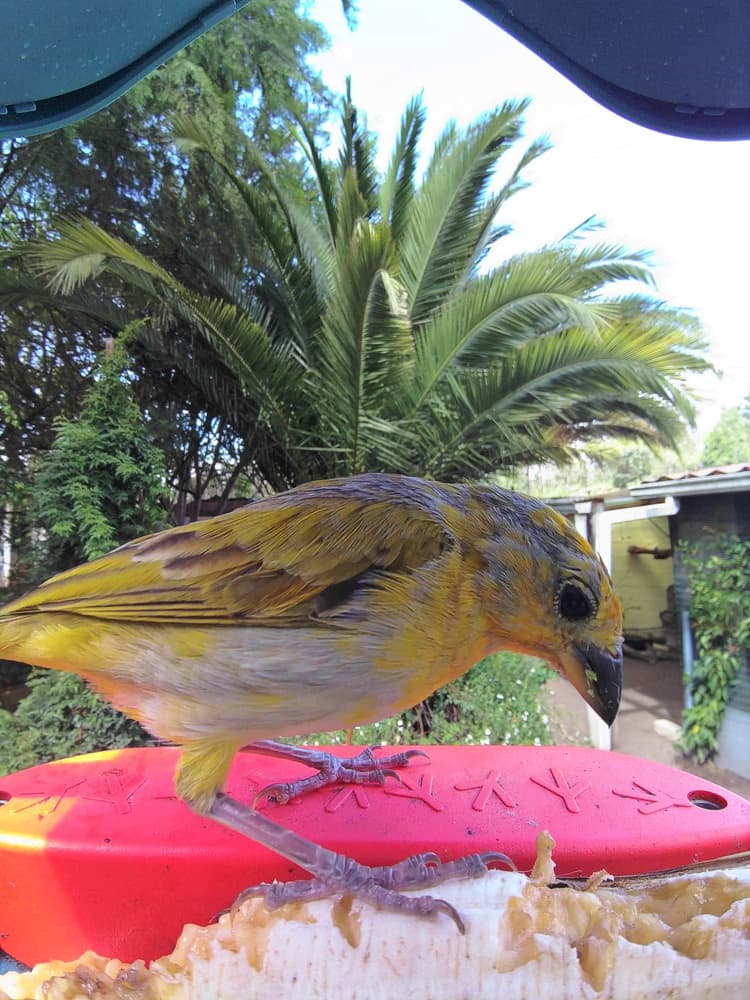
Often mistaken for
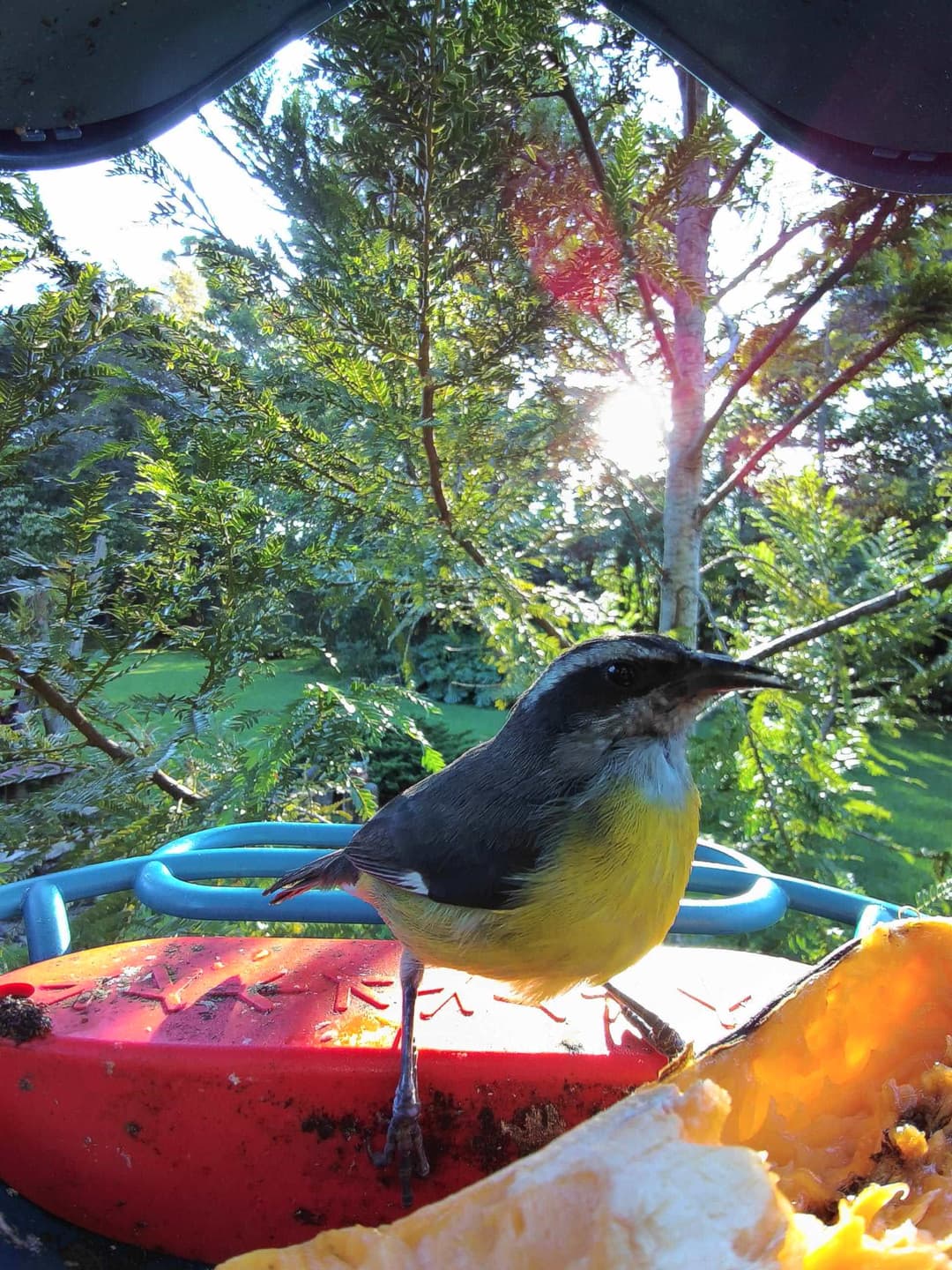
Bananaquit vs Saffron Finch
The Bananaquit is similar in size to the Saffron Finch but can be distinguished by its black upperparts and yellow underparts compared to the uniformly yellow body of the Saffron Finch.
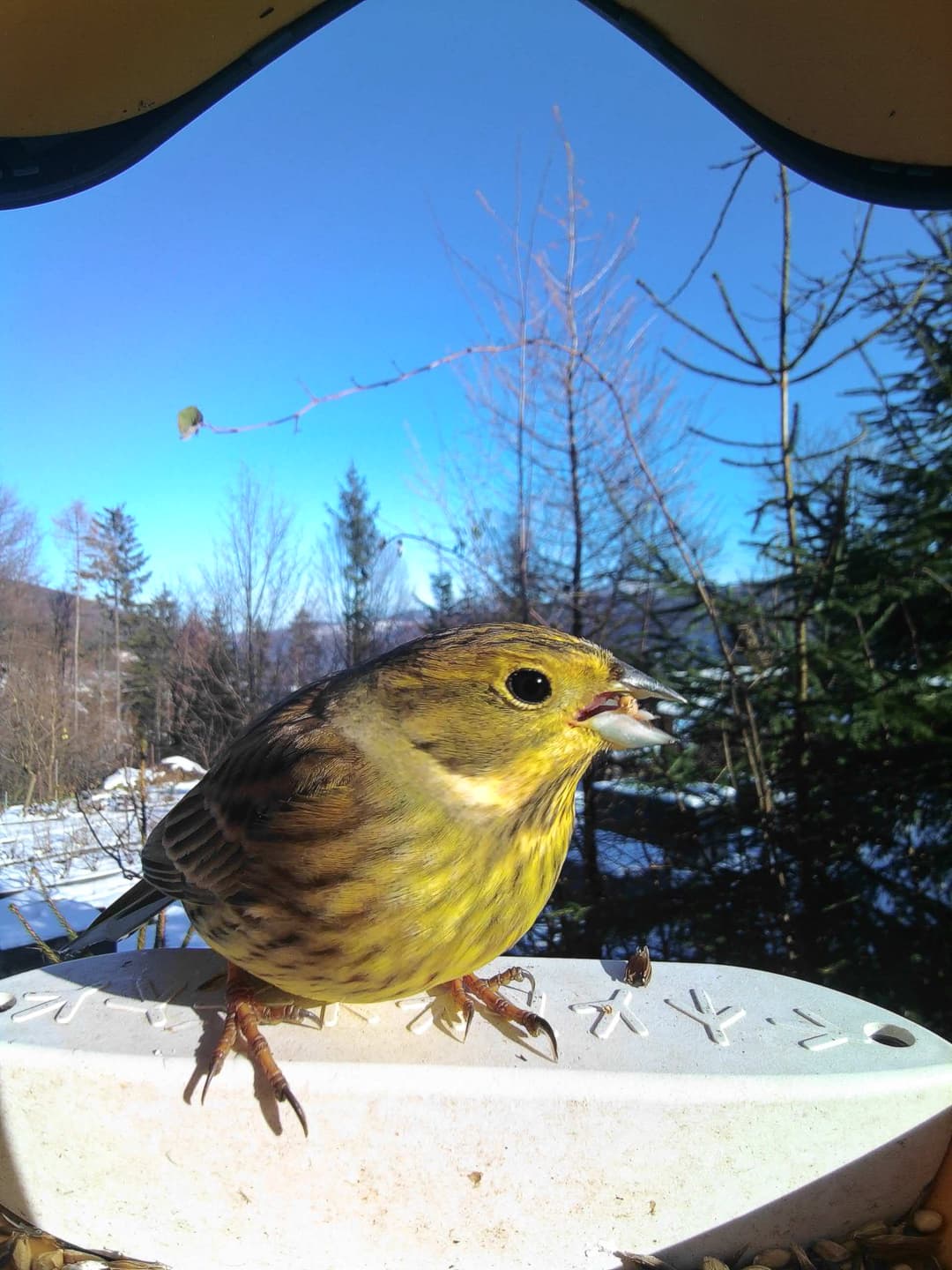
Yellowhammer vs Saffron Finch
The Yellowhammer is similar in color to the Saffron Finch with its bright yellow plumage, but it has distinctive brown streaks on its back and a reddish-brown rump.
Breeding and nesting habits of the saffron finch
Mating behaviors
Saffron finches engage in lively courtship displays, often involving aerial acrobatics and distinctive calls to attract mates. Males showcase vibrant plumage to appeal to potential partners.
Nesting details
Nests are constructed in trees, shrubs, or on man-made structures using grasses, moss, and feathers. In gardens, providing dense shrubs and trees encourages nesting.
Eggs and chick-rearing
Females lay 3-5 eggs, which are incubated for about two weeks. Both parents partake in feeding the chicks, supplying them with insects and seeds until they fledge.
What does a saffron finch like to eat?
Insects
Seeds
Spiders
Natural diet
The saffron finch primarily feeds on various seeds and grains found in its natural habitat, particularly favoring grasses. It may also consume small insects and other invertebrates, especially during the breeding season to provide additional protein for its young.
Bird feeders
At bird feeders, saffron finches commonly eat seeds such as millet and sunflower seeds. They may also enjoy commercial birdseed mixes that contain a variety of seeds and grains. Occasionally, they might peck at suet or fruit if available.
Setting up the perfect environment
To attract the Saffron Finch, plant shrubs and trees that these birds prefer, such as sunflowers and grasses with plentiful seeds. They enjoy open spaces with a mix of shrubbery and trees. Make sure to keep your yard safe from predators like cats and dogs, as Saffron Finches are ground feeders.
Choosing the right feeder
Saffron Finches enjoy feeding from the ground, but they also love platform feeders, tray feeders and tube feeders. Suction-cup feeders attached to your window are also a great choice as they can provide a close-up view of these beautiful birds. Clean the feeders regularly to keep them proof for diseases.
Favorite snacks
These birds are primarily seed eaters, so offering a variety of seeds can be an excellent way to attract them. Bird Buddy seeds are highly recommended as they are chosen by experts for the season and can boost the chances of Saffron Finches visiting.
Fun tricks to encourage visits from saffron finches
Playing recordings of Saffron Finch songs can entice these birds to visit your yard. You can also put up a bird bath as these birds are attracted by clean water sources for bathing and drinking.
Where can you find saffron finches?
Primary habitat
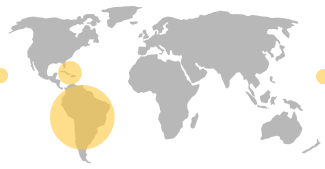
The saffron finch primarily resides in open and semi-open areas of South America, especially in Brazil, Colombia, and Venezuela, preferring warm tropical climates.
Additional range
It can also inhabit urban areas, plantations, and unexpectedly thrive in regions outside its native range, such as Hawaii and parts of Central America.
Do they migrate?
The saffron finch is generally a resident species and does not migrate. This bird is native to South America and can be found in countries such as Brazil, Colombia, Venezuela, and Argentina. Its habitat includes open and semi-open areas, such as savannas and grasslands, often near human habitation. Because it does not migrate, the saffron finch remains in its habitat throughout the year. It adapts well to different environments and often thrives in gardens, parks, and urban areas. The species is known for its vibrant yellow plumage and melodic song, making it a popular sight in its native regions. In some localized areas, there may be slight altitudinal movements, especially in regions with varying elevations. However, these movements are generally limited and do not represent true long-distance migration patterns. Instead, the saffron finch's presence throughout the year contributes to its status as a common and widespread bird in its native range.
What is the role of saffron finches in nature and how to protect them?
Conservation status
The saffron finch is currently considered a species of least concern, meaning it is relatively common and not at immediate risk of becoming vulnerable or endangered. It thrives across a wide range in South America and adapts well to disturbed habitats. However, threats like habitat destruction and capture for the pet trade can impact populations locally. Key conservation efforts include habitat preservation and enforcement of trade regulations. While not at significant risk presently, continued monitoring of population trends and habitat conditions is essential to ensure its long-term survival.
Ecological role of saffron finches
Its role in the ecosystem
The Saffron Finch, a bird species abundant in the South American region, has ecological significance as it contributes significantly to pest control and seed dispersal. They help maintain a balanced ecosystem by feeding on a variety of insects including beetles, spiders, and flies, thereby controlling the populations of these pests. As they feed in different habitats - forests, semi-desert areas, and open farmlands - they prevent infestations from rising to harmful levels. They are also effective seed dispersers, which an essential role in an environment's health and diversity is. They consume a wide range of fruits and subsequently disperse the seeds through their excreta, allowing new plants to sprout in different areas. This not only aids in plant propagation but also ensures the survival of different plant species. The Saffron Finch’s melodious song even contributes to the soundscape of the ecosystems they inhabit, potentially aiding in the communication of other species. Therefore, this bird exemplifies the interconnectedness of organisms within ecological systems.
How to help protect saffron finches
Preservation tips
Habitat preservation for saffron finch
To conserve the Saffron Finch, prioritize preserving its habitat. This involves avoiding deforestation and ensuring the bird's feeding grounds stay undisturbed. Support reforestation initiatives that promote growth of native plants, which provide food and shelter for the finches. Limit human encroachment into saffron finch territories to reduce disturbance and the threat of predation.
Community science initiatives for saffron finch conservation
Raise awareness within the community about the saffron finch's conservation status and need for protection. Encourage citizens to participate in local bird-watching groups to monitor the finch's population. Use this information to improve conservation efforts. Additionally, promote educational programs about the saffron finch and its importance for biodiversity, aimed at fostering a greater appreciation and respect for this species.