Saffron Finch or Bananaquit?
Here's how to tell the difference


Saffron Finch


Bananaquit
Saffron Finch
Sicalis flaveola
General appearance
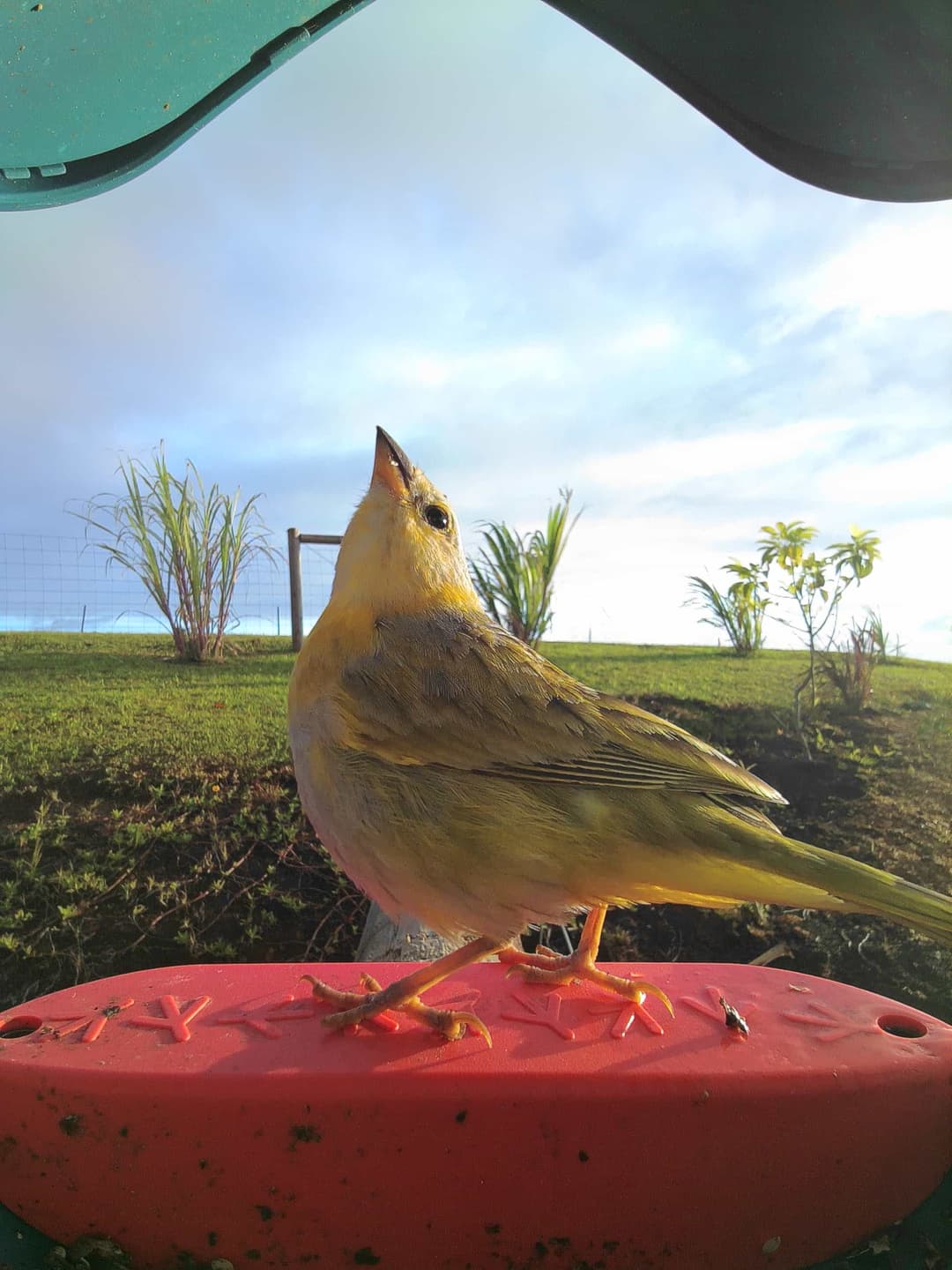
Saffron finches have a bright yellow coloring that distinguishes them from other birds. Notably, they possess a striking yellow-greenish hue on their wings and tail, and their beaks are coloured light orange. Their entire body is adorned with saffron hues, living up to their name. Size-wise, they are relatively small, typically ranging between 13 to 15 cm.
Male vs female
The males are more vibrant in color than the females, their yellow being strong and bright, often with vague streaks of black on the back. On the other hand, female saffron finches are typically paler, with an almost greenish-yellow upper part. Moreover, the females also have brown streaks on their belly.
Juvenile
Juvenile saffron finches have a dull yellow coloration and blend in more effectively with their surroundings than the adults. They are characterized by their faintly streaked underparts and lack the black markings on the upper parts, characteristic of adult males. Their appearance undergoes significant changes as they mature into adults and their colour brightens becoming more vibrant.
Size
5.3 - 5.9 in/0.4 - 0.8 oz
There's more to learn about Saffron Finch
View full detailsBananaquit
Coereba flaveola
General appearance
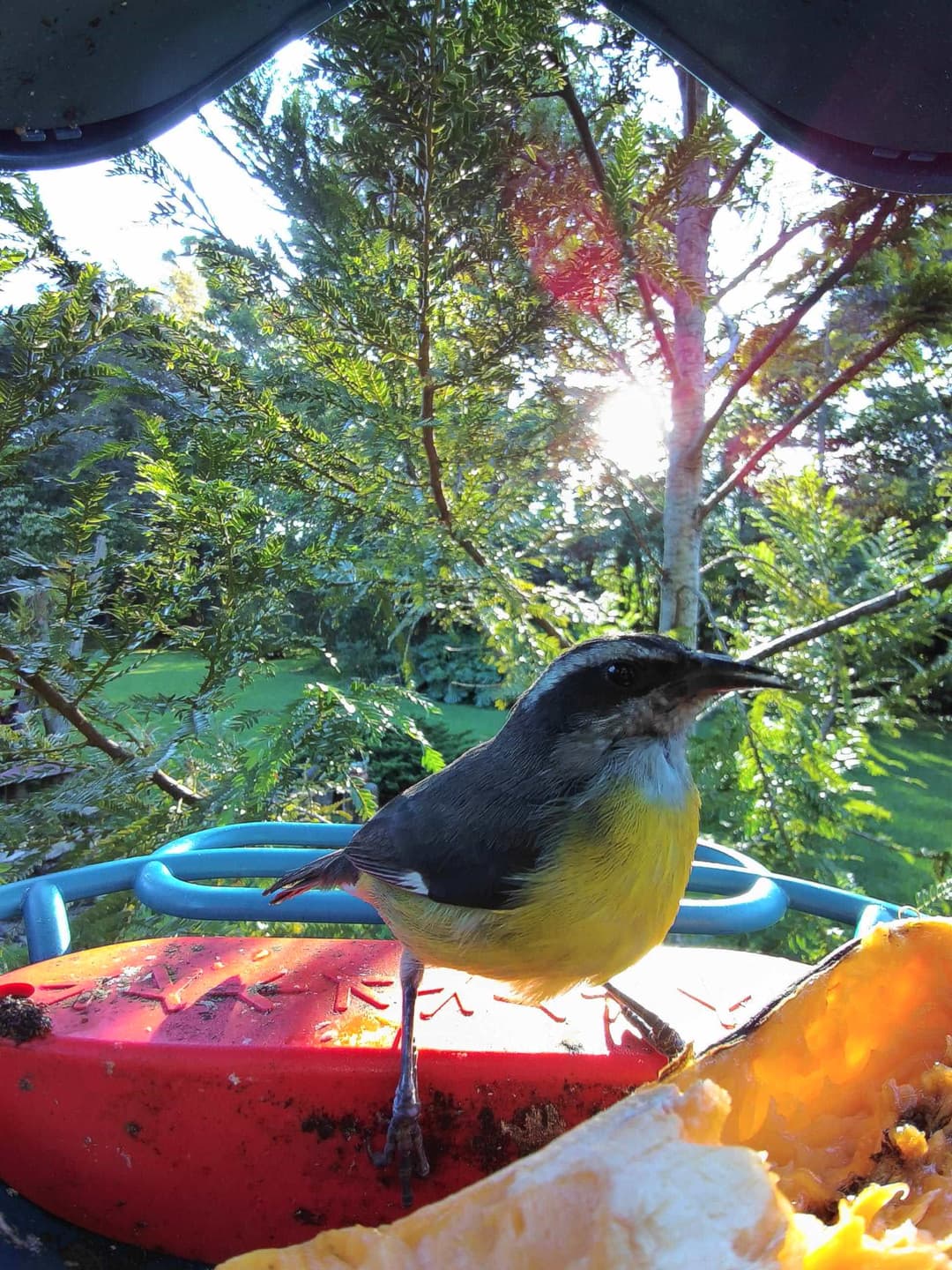
The bananaquit is small; about 4 1/2" (12 cm) in size, roughly the size of a sparrow. Its tail is short and squared at the tip. The bird has a white forehead extending to a white eyebrow and a yellow rump and chest. Its wings are broad and rounded. A distinctive feature is a spot of pink at the base of the thin, curved bill.
Male vs female
There are no significant differences visible between male and female bananaquits. Both genders share the same striking coloration: black, gray, red and white, with notable yellow parts. Hence, both males and females can be identified in the wild through these characteristics.
Juvenile
Young bananaquits, or juveniles, lack the vibrant coloration of the adults. They are generally duller in their coloration, which makes them less noticeable. As they mature, their vibrant adult colors start to show, making them easier to spot as they reach adulthood.
Size
3.9 - 4.3 in/0.2 - 0.5 oz
There's more to learn about Bananaquit
View full detailsHow to tell the Saffron Finch from the Bananaquit
Visual differences
The Saffron Finch (5.3-5.9 in) is visually distinct from the Bananaquit (4-4.5 in) by its larger size and bright yellow body with a yellow-greenish hue on wings and tail, and a light orange beak. In contrast, the Bananaquit features a smaller size, short square tail, a distinct white forehead and eyebrow, yellow rump and chest, and a thin, curved bill with a pink base spot. The contrast in beak shape—straight in Saffron Finch and curved in Bananaquit—is also a distinguishing feature.
Key differences and behavior
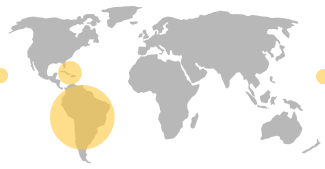
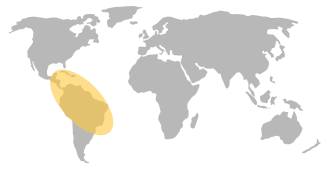
The Saffron Finch and Bananaquit differ in several key behaviors. Saffron Finches are adaptable, residing in open areas of South America, including urban settings, whereas Bananaquits frequent tropical and subtropical regions, such as forest edges and gardens across the Caribbean and Latin America. Saffron Finches build nests on trees or structures using grasses and moss, while Bananaquits create globular nests with a side entrance in branches. During courtship, Saffron Finches engage in aerial acrobatics, whereas Bananaquits perform vocal displays and chase sequences. In diet, Saffron Finches feed on seeds and insects, particularly during breeding seasons, while Bananaquits primarily consume nectar and insects, often visiting hummingbird feeders. Both species adapt well to human presence, but distinct dietary preferences and nesting behaviors help differentiate them in the field.
Still not sure? Here are more lookalikes!
Saffron Finch vs Yellowhammer
Saffron Finch vs [Select a bird]

[Select a bird]
Pick a bird to compare
Bananaquit vs [Select a bird]
[Select a bird]
Pick a bird to compare