
Western Meadowlark
Western Meadowlark
Sturnella neglecta


Quick Identification guide
Quick Identification guide
- •
Displays a bright yellow throat and underparts contrasting with a bold black 'V'-shaped band across the chest
- •
Upperparts are a mix of streaked brown and buff, providing excellent camouflage in their grassy habitats
- •
Possesses a slender, pointed bill and a relatively long, rounded tail that aids in their graceful flight
What does a western meadowlark sound like?
The Western Meadowlark vocalizes through a rich, flute-like jumble of gurgling notes, typically descending the scale. This is distinct from the Eastern Meadowlark's series of simple, mournful whistles. Its call pattern is complex, falling, and flat. The type of call it produces can be characterised as a flute or whistle sound.


Description
These birds are quite the architects! They build nests that are partially covered by a roof of grass or sometimes even fully covered with an entrance tunnel. Fancy! These members of the blackbird family feed by 'gaping' – they jam their beaks into the ground and use their unusually strong jaws to create a hole out of which they pick their lunch.
The western meadowlark can weigh between 88to116grams and be from19to23centimeters tall.
The western meadowlark has an average lifespan of 5-6 years. This is comparable to related species such as the Eastern Meadowlark, which also averages a life expectancy of 5-6 years. However, some studies have recorded the species living up to ten years in the wild, which is somewhat longer than many similar sized birds.
Did you know?
Most popular questions about western meadowlark
How to recognise a western meadowlark?
General appearance
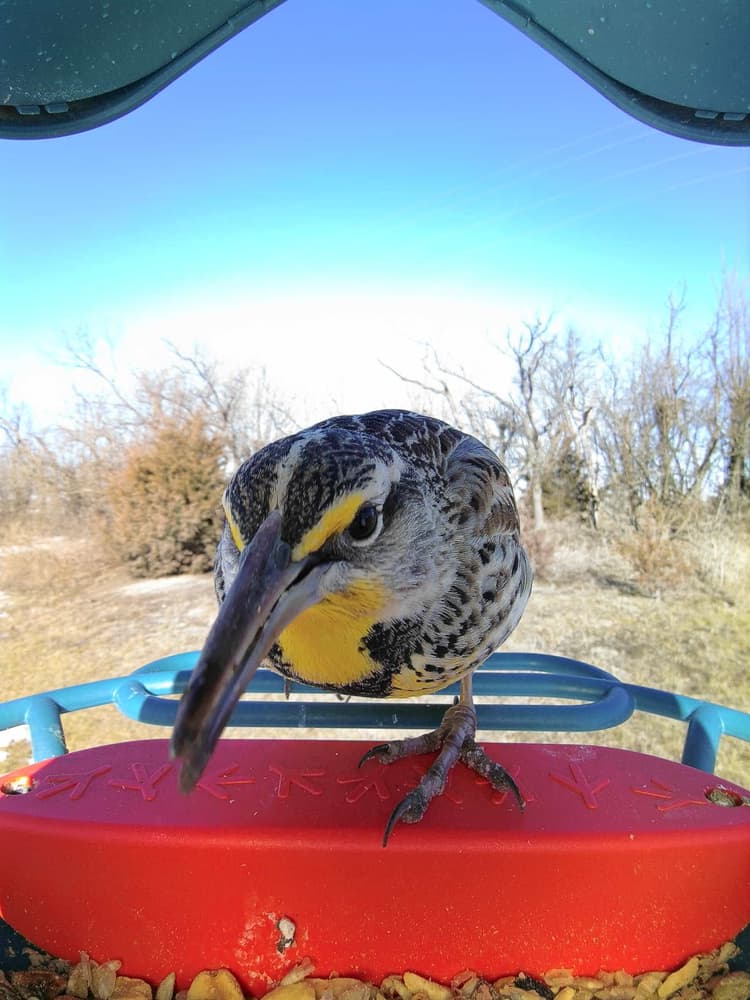
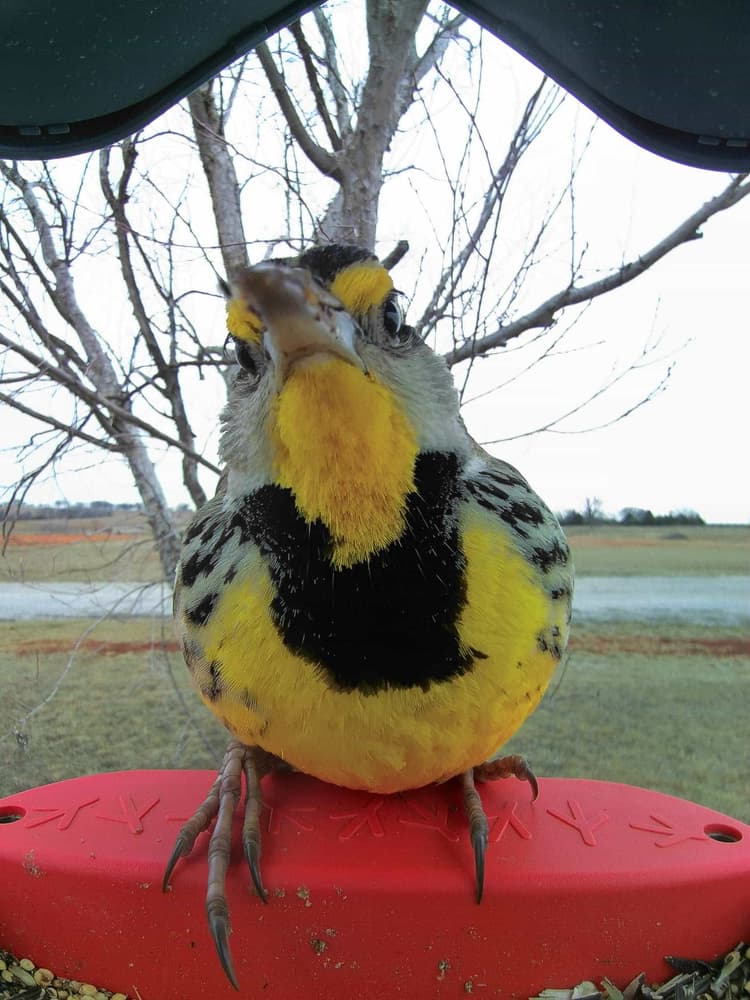
The western meadowlark is approximately 8 1/2-11 inches (22-28 cm) in size. It is the size of a Robin. Its distinctive features include a black pattern forming a 'V' on its yellow breast, which is partly veiled in fall. The bird also has white outer tail feathers, which are particularly visible upon takeoff and landing. Its wings are rounded in shape and it possesses a rounded, short, square-tipped tail.
Male vs female
There is no significant difference in appearance between the male and female western meadowlark, making it difficult to distinguish between the two genders.
Juvenile
Juvenile western meadowlarks resemble the adult birds but their plumage is generally less vibrant. The juveniles' yellow coloration on the breast area might be slightly muted in comparison to the adults.
Often mistaken for
Eastern Meadowlark vs Western Meadowlark
Western Meadowlarks have a more yellow throat extending to their malar region, whereas Eastern Meadowlarks have more white on these areas. Their songs are also distinct; Western has a flute-like series of whistles.
Yellow-Headed Blackbird vs Western Meadowlark
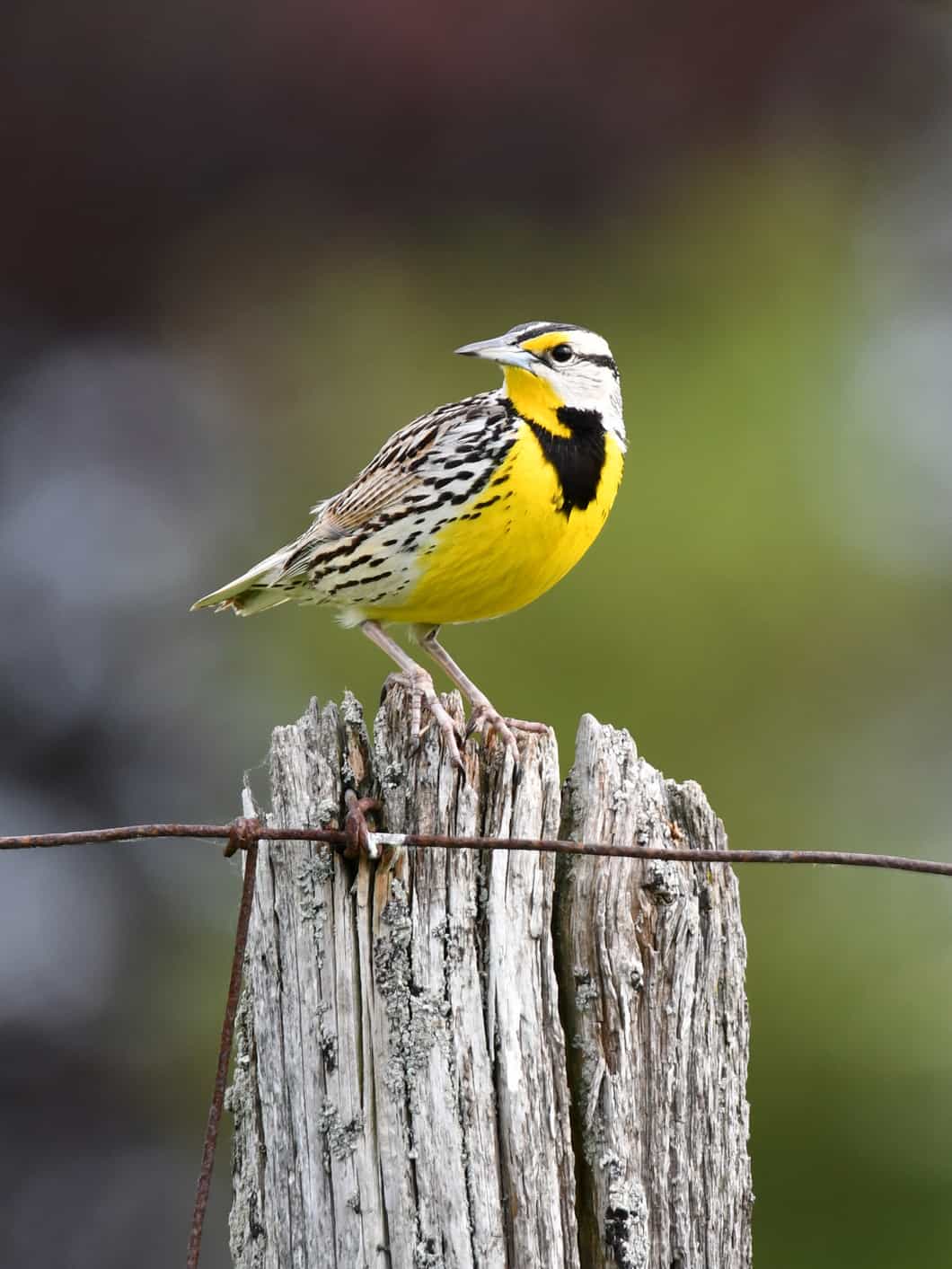
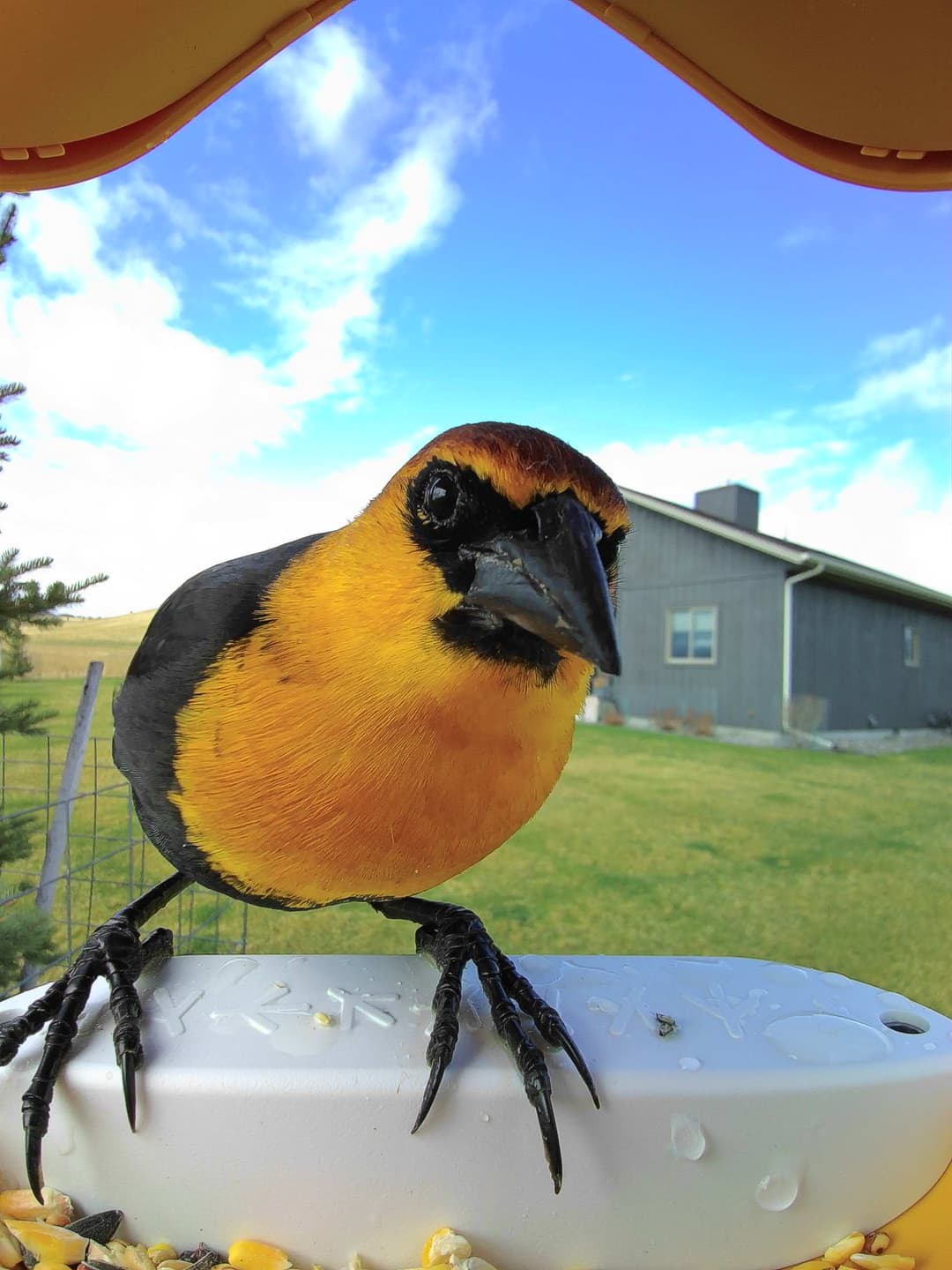
Western Meadowlarks have a yellow throat and chest with a black V, while Yellow-Headed Blackbirds sport a striking yellow head and chest. The meadowlark's back shows intricate patterns, unlike the blackbird's solid black.
Red-Winged Blackbird vs Western Meadowlark
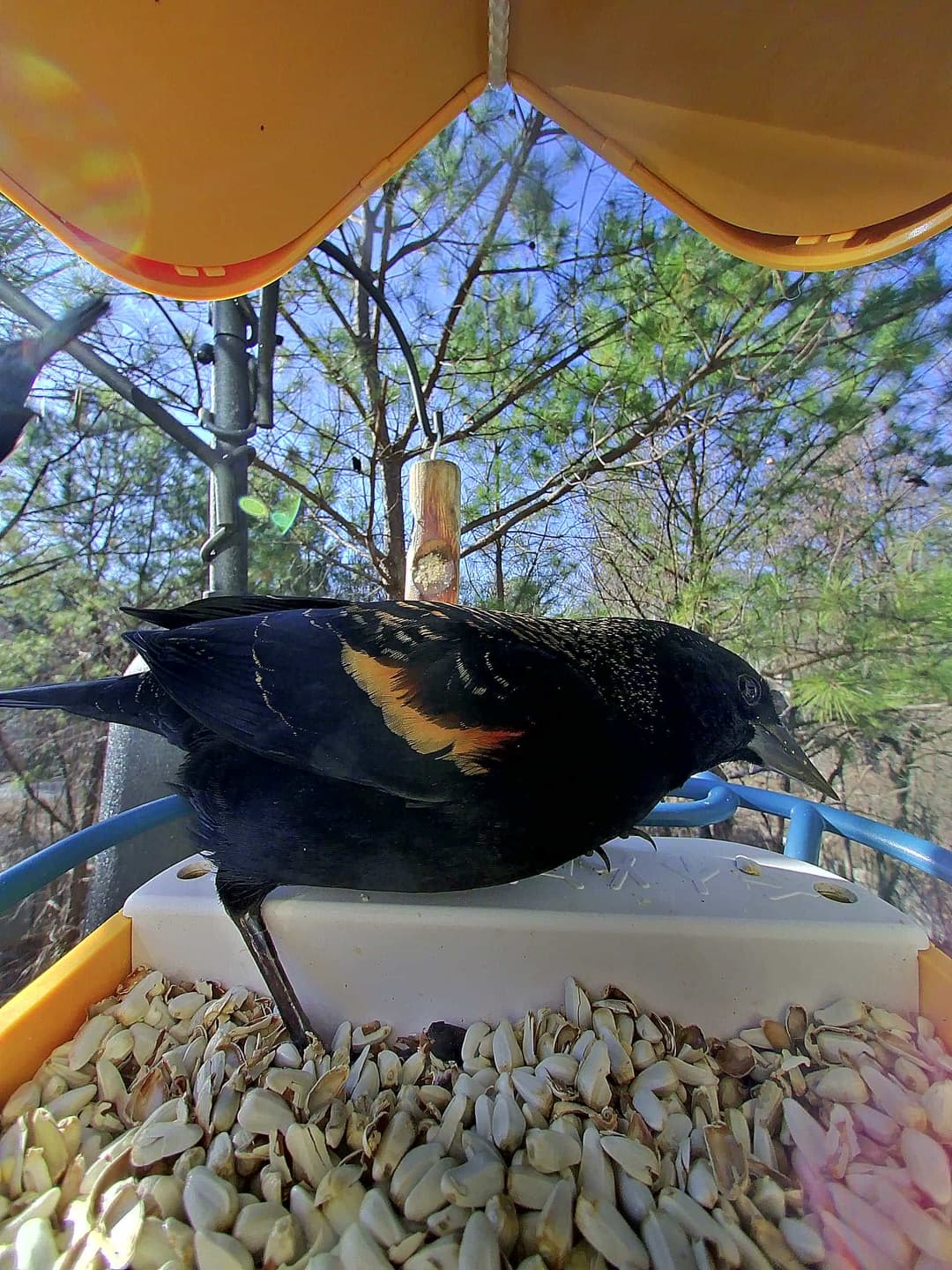
Red-Winged Blackbirds have conspicuous red and yellow shoulder patches, absent in Western Meadowlarks, which are brown and heavily streaked on the back. Listen for the song: blackbirds have a distinct 'conk-la-ree', while meadowlarks whistle.
Breeding and nesting habits of the western meadowlark
Mating behaviors
The male sings to defend its nesting territory and may have more than one mate. During courtship, the male faces the female, puffs out its chest feathers, and points its bill straight up to display a black 'V.' It also spreads its tail broadly and flicks its wings to attract the female.
Nesting details
Nests are located on the ground in areas with dense grass cover. The female builds a domed nest made of grass stems interwoven with the surrounding vegetation. The nest is placed in a small hollow or depression with the entrance on the side, often featuring narrow trails leading to it through the grass.
Eggs and chick-rearing
Once the eggs are laid, the female incubates them. After hatching, both parents typically participate in feeding the chicks. Suitable nesting sites include gardens with thick grass cover and minimal disturbance, creating a natural setting for nesting.
What does a western meadowlark like to eat?
Insects
Seeds
Natural diet
The western meadowlark primarily consumes insects and seeds. During the summer months, their diet consists heavily of insects such as beetles, grasshoppers, crickets, caterpillars, ants, true bugs, and others, as well as spiders, snails, and sowbugs. In addition to insects, seeds and waste grain make up about one-third of their annual diet, with these being especially significant in the fall and winter months.
Bird feeders
While the western meadowlark is not commonly known to visit bird feeders, they may occasionally consume cracked corn or other seed mixtures that are similar to those found in their natural diet. However, they are more often found foraging for food in open fields and grasslands.
Lure western meadowlarks with their favorite foods
Western meadowlarks enjoy a variety of insects and seeds. Offering plenty of seeds from Bird Buddy, chosen by the experts to suit the season, could be a great way to attract these birds to your yard. You can also tempt them with mealworms and sunflower seeds. Just make sure that the food is visible and easy for them to access.
Feeders for western meadowlarks
While these birds prefer to forage on the ground, they will visit feeders if the conditions are right. It's best to use ground feeders or low platform feeders to make them feel at home. The feeders need to be in a quiet and safe area, preferably near shrubs or small trees, which provides a convenient place for the birds to escape predators.
Create a meadowlark-friendly environment
Western meadowlarks prefer open, grassy areas, so keep a portion of your yard un-mowed and wild. They're also attracted to water, so consider installing a bird bath or water feature. You could even play recordings of meadowlark songs to attract these melodious birds for a cozy backyard sing-along!
Where can you find western meadowlarks?

Primary habitat
The Western Meadowlark predominantly occupies natural grasslands, shorter grass in drier fields, and abandoned weedy fields.
Additional range
This bird extends its habitat to include meadows, prairies, rangeland, cultivated fields, and pastures. In winters, it is often found in stubble fields and farmland.
Do they migrate?
The western meadowlark is a migratory bird that exhibits specific movement patterns based on seasonal changes. It migrates relatively late in the fall and early in the spring. During the summer, its range and population size can significantly vary in the drier regions of the western United States, largely influenced by the amount of spring rainfall which impacts breeding numbers. In terms of migration routes, western meadowlarks typically breed across open grasslands and agricultural areas from the central Canadian provinces through the central and western United States, reaching as far south as northern Texas. As seasons change, many meadowlarks move southward towards warmer regions for the winter. They are known to spend winters in the southern parts of the United States and occasionally into northern Mexico. Key locations for observing their migration include the Great Plains and regions west of the Mississippi River during breeding and fall migration, while wintering grounds often extend across the southwestern U.S. and into the Mexican border areas. This migration is influenced by climate and geography, reflecting the adaptability of the species to various environments.
What is the role of western meadowlarks in nature and how to protect them?
Conservation status
The western meadowlark is classified as common, with a stable population across much of its range. It is not currently considered vulnerable or endangered. Key conservation efforts focus on maintaining suitable grassland habitats, crucial for their nesting and foraging. Significant threats include habitat loss due to agricultural expansion, urban development, and pesticide use, which can reduce insect prey abundance. Conservationists advocate for sustainable land management practices to preserve these open landscapes and support long-term population stability.
Ecological role of western meadowlarks
Its role in the ecosystem
The Western Meadowlark plays a vital role in maintaining the ecological balance within its ecosystem. Predominantly feeding on insects and seeds, it helps control the population of pests such as beetles, grasshoppers, crickets, caterpillars, ants, and true bugs amongst many others. In addition to curbing pest proliferation, they also aid in limiting potential plant damage by consuming numerous insects that can pose threats to vegetation. During non-breeding seasons, the Western Meadowlark aids in the dispersal of seeds, contributing to plant propagation and diversity in its environment. Their foraging behavior, which includes probing in the soil with their bills, also assists in soil aeration, boosting its health and fertility. Lastly, the Western Meadowlark potentially affects the population dynamics of its predators, offering a source of prey to larger predatory birds. These multifaceted contributions underscore the ecological significance of the Western Meadowlark in their habitat.
How to help protect western meadowlarks
Preservation tips
Habitat preservation strategies
The Western Meadowlark thrives in grasslands and agricultural fields, making their preservation crucial. Advocacy for policies promoting sustainable agricultural practices will aid habitat conservation. Resist development of open spaces and farms into commercial or residential areas. Participate in local land trust organizations to protect these habitats. As individuals, creating or maintaining wild meadow gardens can provide miniature habitats.
Community science initiatives
Participation in citizen science projects like 'Project FeederWatch' and 'eBird' help collect valuable data about the Meadowlark's populations and ranges. Consider hosting or joining birdwatching groups and activities in your community. These initiatives not only gather data, but also raise awareness about the bird’s plight. Encourage schools to include information about local wildlife and conservation in their curriculum to instill these values early in the next generation.