
White-Rumped Munia
White-Rumped Munia
Also known as: White-Rumped Mannikin, Striated Finch
Lonchura striata
Quick Identification guide
Quick Identification guide
- •
Features a short, thick beak that is ideal for seed consumption
- •
Exhibits a brown body with a distinctive white rump, providing strong contrast
- •
The rounded head and compact size contribute to its subtle yet noticeable appearance
What does a white-rumped munia sound like?
The white-rumped munia, also known as the white-rumped mannikin, typically vocalizes using soft, thin, high-pitched calls that sound like "pee-pip" or "pee-pit". Its songs comprise of fast, chattering trills and warbles that are often musical and rhythmic in nature. The song begins with a few notes followed by a quick succession of trills. The singing is frequently accompanied with body movements. They are sociable birds that often engage in communal singing.
Description
You might be looking at a flock of white-rumped munias without realising it! That's a bit of an exaggeration but it is true that these guys are so good at camouflage that they are famously tough to spot, even despite being very gregarious and often found in flocks!
The white-rumped munia can weigh between 9.5to13grams and be from11to12centimeters tall.
The White-rumped Munia typically lives for around 5-10 years. This is comparable to related species such as the Chestnut Munia, which has a similar lifespan. However, it is notably shorter than the lifespans of some larger and more robust birds in the same family, such as the Java Sparrow, which can live up to 12-15 years.
Did you know?
Most popular questions about white-rumped munia
How to recognise a white-rumped munia?
General appearance
The white-rumped munia is a small bird native to tropical regions in Asia. Adults have characteristic black plumage with a sharp contrast to their white rump and belly. Their compact, stout bodies feature a strong, conical beak designed for seed-eating, while their short and pointed wings facilitate rapid flight.
Male vs female
In terms of physical appearance, there is minimal sexual dimorphism in white-rumped munias. Both males and females share the same colour patterns and size. However, during the breeding season, the male can be identified by its song and display rituals, which include puffing up their feathers, posturing, and an audible, musical call, actions not performed by the female.
Juvenile
Juvenile white-rumped munias have a noticeably different appearance from adults. They possess a dull, brown colouration overall, as opposed to the distinctive black and white seen in adults. This aids in camouflage from predators. The juvenile's beak is also paler than the adults'. As they mature, they gradually acquire the adult's striking coloration and characteristics.
Often mistaken for
Scaly-Breasted Munia vs White-Rumped Munia
The Scaly-Breasted Munia resembles the White-Rumped Munia but can be distinguished by its scaly pattern on the breast, whereas the White-Rumped Munia lacks this pattern.
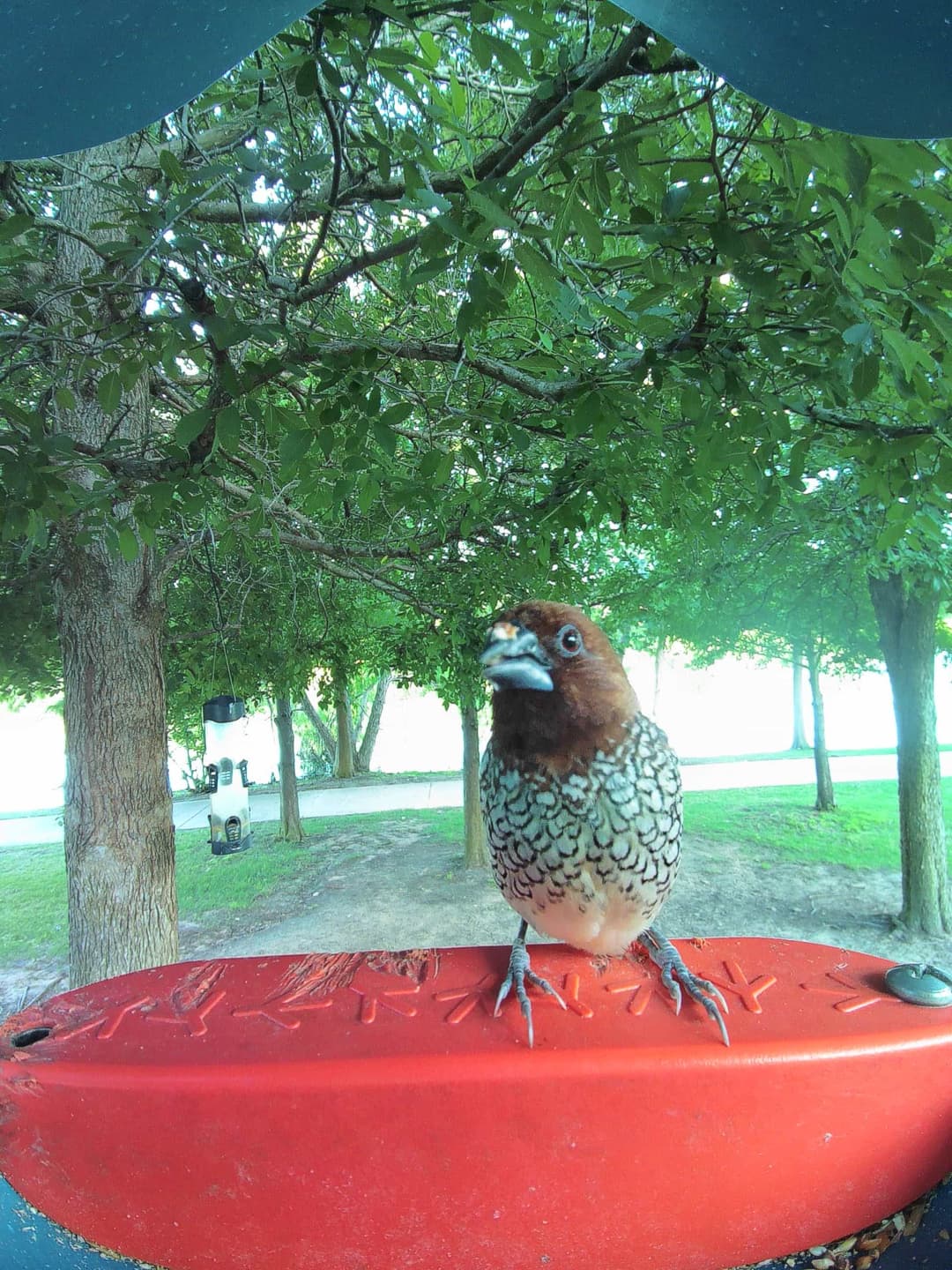
Zebra Finch vs White-Rumped Munia
The Zebra Finch may be confused with the White-Rumped Munia due to its similar size and shape. However, the Zebra Finch has distinctive zebra-like striping on its tail and a bright orange beak, which the White-Rumped Munia does not have.

Breeding and nesting habits of the white-rumped munia
Mating behaviors
The white-rumped munia's courtship involves males performing a distinctive display, fluttering and singing to attract females. Pairs form monogamous bonds during the breeding season.
Nesting details
White-rumped munias prefer building their nests in dense foliage, often in gardens or shrubbery. They construct round, basket-like nests using grasses, leaves, and feathers.
Eggs and chick-rearing
Females typically lay 4-6 eggs which are incubated by both parents for approximately 12-13 days. Chicks are fed regurgitated food and fledge within three weeks.
What does a white-rumped munia like to eat?
Plants
Seeds
Natural diet
The white-rumped munia primarily consumes seeds and grains, often favoring grass seeds. It also eats small fruits, berries, and occasionally insects, providing a source of protein especially during breeding seasons. This diet is supplemented by foraging in bushes and grasslands.
Bird feeders
At bird feeders, white-rumped munias are often attracted to millet, canary seeds, and small mixed grains. They may also feed on sunflower seeds and finely chopped fruits if offered. These feeders complement their natural diet, especially in urban areas where natural food sources might be limited.
Attracting white-rumped munia: the basics
If you're looking to attract the white-rumped munia, the first thing you'll need to remember is that these birds love seeds. Bird Buddy's seeds have been especially popular, as they are expertly chosen to suit the season.
Choosing the right feeder
White-rumped munias are quite small in size, about the size of a sparrow. They prefer feeders that are easy to perch on. Try a tube feeder with perches, which will allow them to feed in a position they're comfortable with.
Favorite snacks of the white-rumped munia
The white-rumped munia is a seed eater, with a diet largely made up of grass seeds. Some great choices are millet and sunflower seeds. When using Bird Buddy's seeds, you can rest assured you're providing a nutrient-rich snack they'll love.
Fun tricks to encourage visits
Keeping a consistent feeding schedule and ensuring a safe, quiet environment can encourage regular visits. White-rumped munias are social birds and are often found in flocks, so don't be surprised if multiple birds come to visit your feeder at once!
Encouraging long-term visits
If you want to have a sing-along with these birds, creating a bird-friendly environment is key. Provide a fresh water source, and consider adding a nesting box to give them a place to stay. A peaceful garden habitat with native plants can also encourage visits.
Where can you find white-rumped munias?
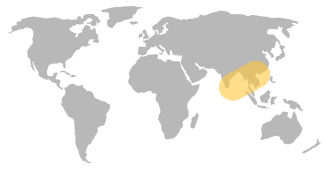
Primary habitat
The white-rumped munia is typically found in open fields, grasslands, and cultivated areas across South and Southeast Asia. It prefers tropical and subtropical climates.
Additional range
Unexpectedly, these birds have also been spotted in urban environments, including parks and gardens within city limits.
Do they migrate?
The white-rumped munia (Lonchura striata) is primarily a resident bird and is known for its sedentary behavior. It does not typically engage in long-distance migration. This species is native to South and Southeast Asia, inhabiting regions from India to the Philippines. Within its range, the white-rumped munia can sometimes make local movements, especially in response to food availability and environmental conditions, but these are not considered true migrations. The bird's range covers a variety of habitats, including grasslands, open woodlands, agricultural areas, and urban gardens. They are well-adapted to a stable supply of seeds, their primary diet, which supports their non-migratory lifestyle. In some areas, slight seasonal movements may occur, often due to local climatic conditions, but these are usually altitudinal shifts or short distances within the same geographical area. The ability of the white-rumped munia to thrive in diverse and human-altered environments contributes further to its residency in most parts of its range. Overall, the species does not exhibit the traditional migratory patterns seen in some other bird species.
What is the role of white-rumped munias in nature and how to protect them?
Conservation status
The white-rumped munia is currently listed as "Least Concern" by the IUCN, indicating it is relatively common and not at immediate risk of extinction. This bird thrives in a variety of habitats across South and Southeast Asia. Key threats include habitat destruction due to agricultural expansion and urbanization. While there are no major conservation efforts specifically targeting this species, maintaining natural habitats and promoting sustainable land use practices can help support its population. Additionally, trade controls are important, as munias are sometimes captured for the pet trade.
Ecological role of white-rumped munias
Its role in the ecosystem
The White-rumped Munia, a small passerine bird, holds a key role in maintaining the ecological balance of its habitat. This bird contributes to pest control as part of its diet includes various insects and caterpillars, thus helping in the natural regulation of these species. In addition, the bird plays a significant role in seed dispersal. The White-rumped Munia feeds on seeds, grains, and berries. How distribution of undigested seeds in their droppings aids in the proliferation of plant species around their habitats, contributing to biodiversity. Therefore, beyond their unique aesthetic value to bird watchers and nature enthusiasts, White-rumped Munias provide essential ecosystem services that aid in pest management and the propagation of plant species.
How to help protect white-rumped munias
Preservation tips
Habitat preservation
Protection of the white-rumped munia’s natural habitat is key. Launch efforts to limit deforestation and degradation, particularly in regions known for their presence. Promote sustainable agriculture and forestry practices to reduce habitat loss. Identifying and protecting crucial breeding sites will also aid in their preservation.
Community science initiatives
Engage local communities in conservation efforts. Establish community monitoring groups to observe and record population trends. Encourage participation in citizen science projects, where locals can report sightings and nest locations. Encourage responsible birdwatching etiquette, e.g. maintaining distance from nests or birds. Additionally, conservation-themed workshops and lectures can promote awareness.