
Zebra Finch
Zebra Finch
Taeniopygia guttata
Quick Identification guide
Quick Identification guide
- •
Identified by its distinctive white underparts contrasted with gray back and wings
- •
Has a bright orange beak setting it apart, particularly striking in males
- •
Male zebra finches showcase black and white barred tails, while females are more uniform
What does a zebra finch sound like?
The zebra finch vocalizations consist of calls and songs. Their calls, like short beeps or peeps, are used for communication, while courtship and territoriality are expressed through complex songs. The song is unique to each bird, heavily influenced by its "song tutor," usually the father. Finches learn and refine the song during a critical learning period early in life. The song, composed of repetitive syllables, often begins with a series of introductory notes followed by a signature tune. Zebra finches are known for their high-pitched, rapid succession of notes as part of their signature vocal expression.
Description
Did you know that zebra finches are the first species in which it is proven that parents vocally discuss details of parenting? We're not so different after all! But we'd do better to stay far apart: traffic noise makes their song-learning process more difficult and time-consuming.
The zebra finch can weigh between 9to16grams and be from10to11centimeters tall.
The typical lifespan of a zebra finch is about 5 to 9 years in captivity, significantly longer than its average lifespan of 2 to 3 years in the wild. Compared to related finch species like the Gouldian finch that lives up to 6 years in captivity or the canary with an average lifespan of 10 years, the zebra finch has a moderate lifespan.
Did you know?
Most popular questions about zebra finch
How to recognise a zebra finch?
General appearance
Zebra finches are small birds with strong beaks, measuring approximately 10 cm long. They have distinct white and gray coloration, with vivid black striping resembling a zebra's stripes and a red-orange beak, which matches their legs and feet in color.
Male vs female
Male zebra finches are more vibrant than females. They feature chestnut colored cheeks, a bright red beak, and distinct black and white striping or 'zebra stripes' on their throat and chest. On the other hand, females are predominantly gray without stripes on the chest or cheeks.
Juvenile
Juvenile zebra finches share a similar look to adult females due to their predominantly gray color. After birth, they have a black beak that turns to red-orange as they mature. The unique black and white striping pattern develops later on male juveniles.
Often mistaken for
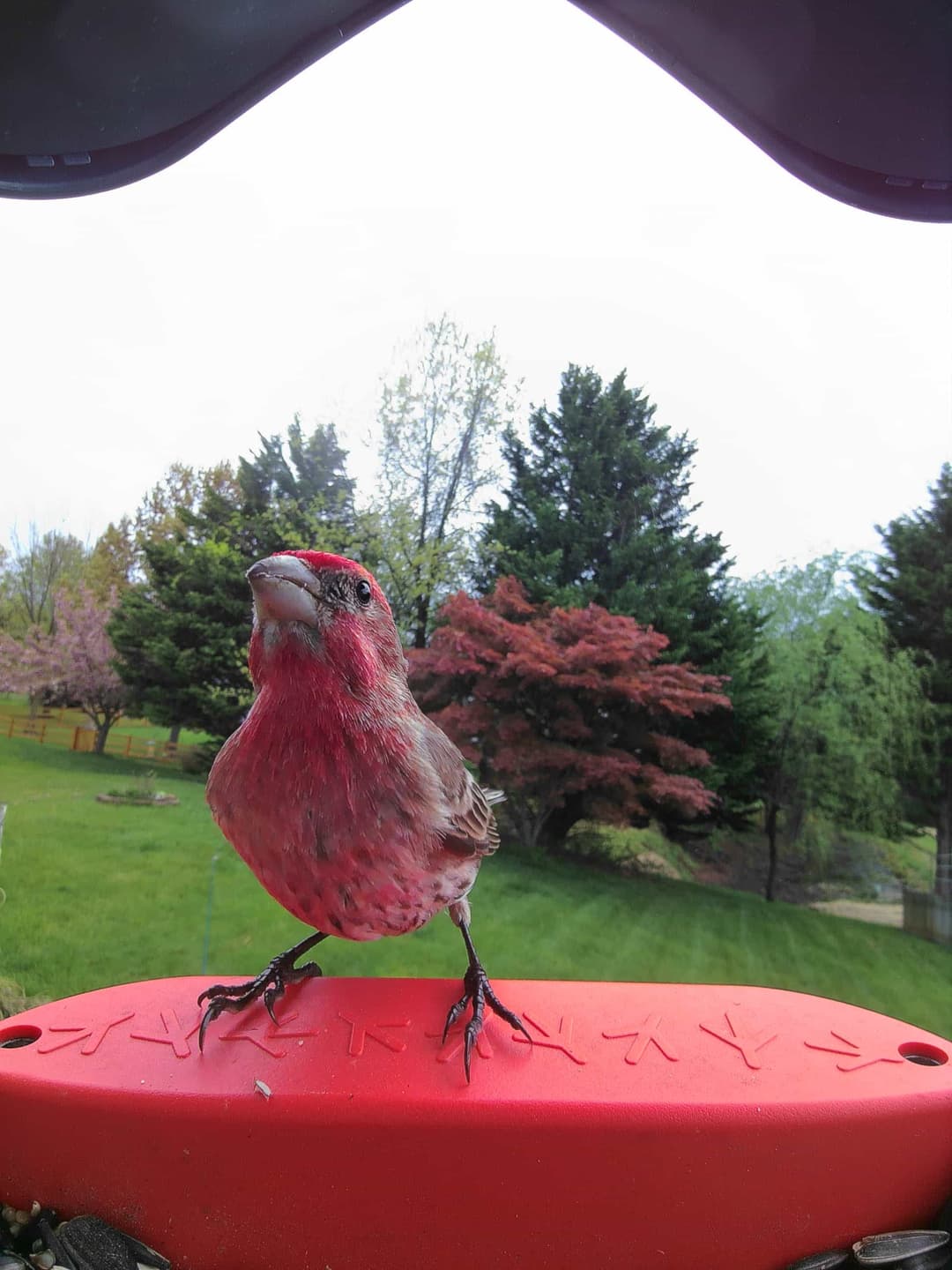
House Finch vs Zebra Finch
House Finches can be confused with Zebra Finches due to their similar size and shape. However, House Finches have reddish coloration primarily around the head and throat, whereas Zebra Finches have distinctive orange cheeks and a more pronounced black and white banding across their body.
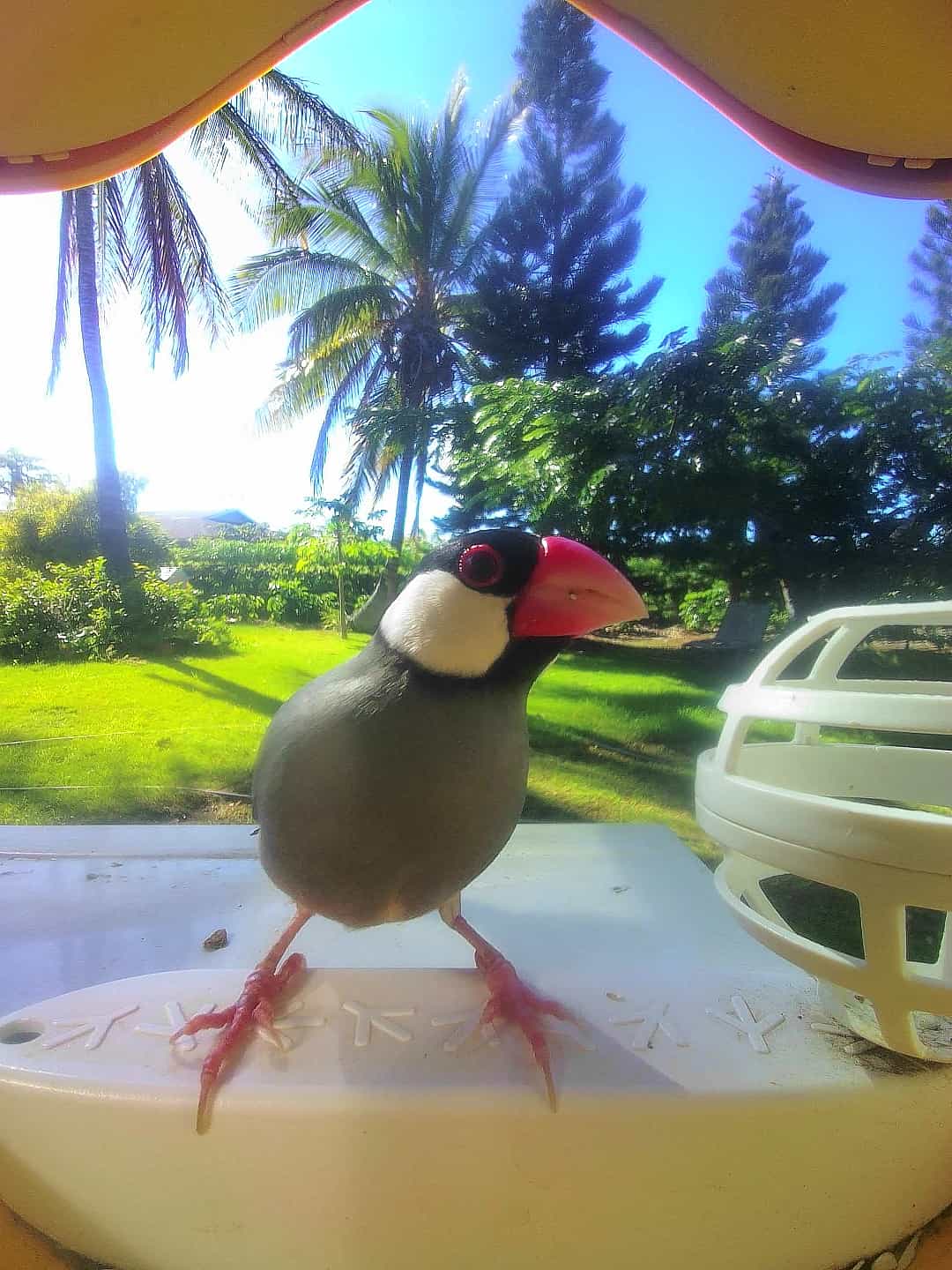
Java Sparrow vs Zebra Finch
Java Sparrows might resemble Zebra Finches because of their similar size and being both popular cage birds. However, Java Sparrows have a more uniform gray body, a pinkish bill, and lack the black and white striping found on Zebra Finches.
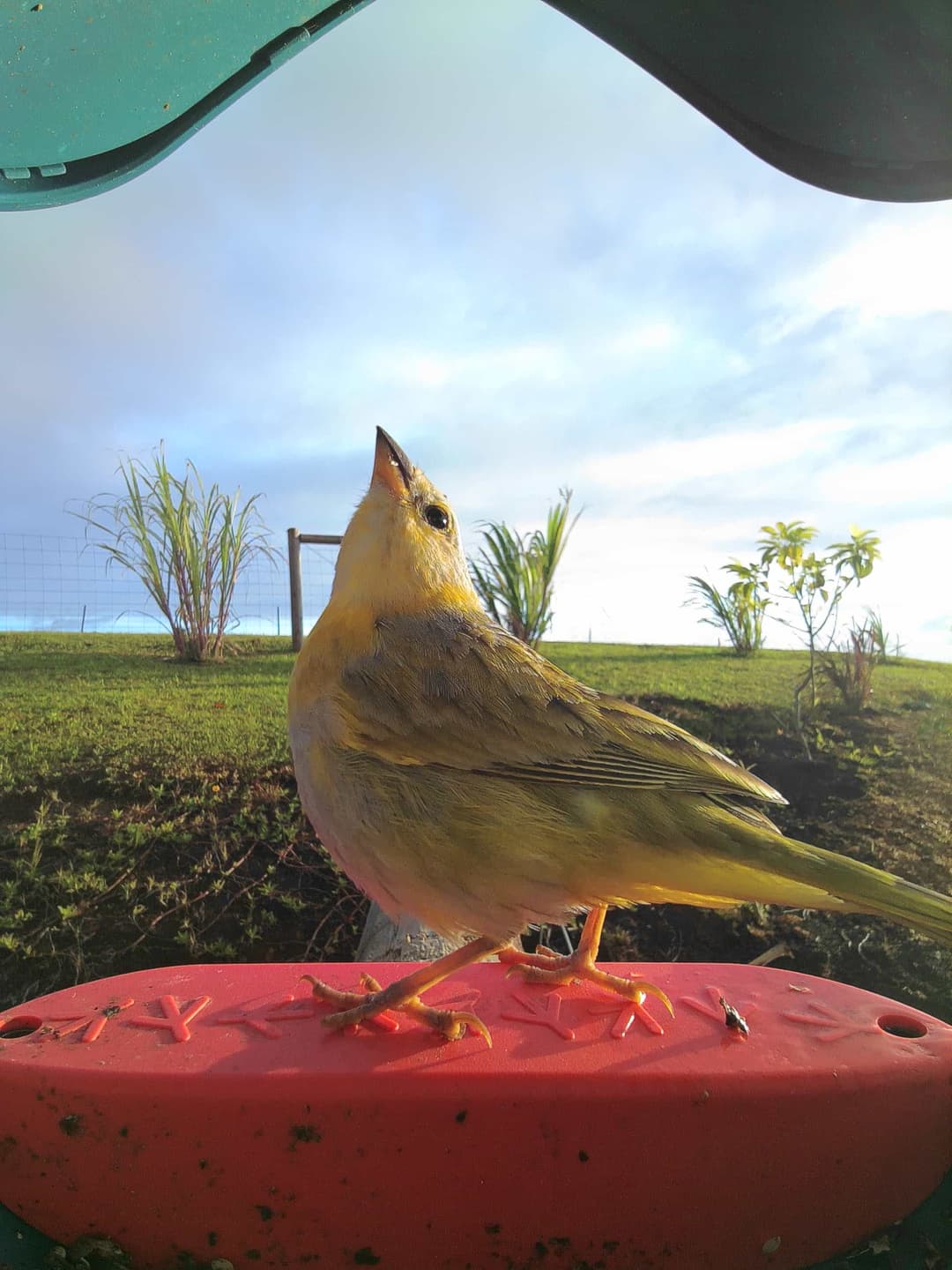
Saffron Finch vs Zebra Finch
Saffron Finches may appear similar to Zebra Finches due to their size and finch family resemblance. Saffron Finches are primarily bright yellow with no distinct cheek patches, unlike the orange-cheeked Zebra Finch.
Breeding and nesting habits of the zebra finch
Mating behaviors
Zebra finches engage in elaborate courtship displays, including song and dance. Males sing to attract females, flapping wings and puffing chest feathers to showcase fitness. Pair bonds form quickly, often for life.
Nesting details
Zebra finches prefer nesting in shrubs and low trees, sometimes in gardens. Nests are built using grass, twigs, and feathers. Providing dense foliage and nesting materials can create suitable garden habitats.
Eggs and chick-rearing
Females lay 4-6 eggs per clutch, incubating them for about 14 days. Both parents participate in feeding. Chicks fledge at around 18-21 days, gaining independence shortly after.
What does a zebra finch like to eat?
Insects
Plants
Seeds
Natural diet
Zebra finches primarily consume a variety of seeds, which form the core of their diet in the wild. They favor grass seeds, particularly those of spinifex and millet. Zebra finches also eat small insects, which provide essential proteins, especially during the breeding season when nutritional demands are higher. Their adaptation to arid habitats means they can survive on limited water, deriving moisture from the food they eat.
Bird feeders
At bird feeders, zebra finches readily accept seeds commonly offered in aviaries and feeders, such as millet and canary seed. They tend to pick smaller seeds, which suit their beak size and feeding habits. Supplements like cuttlebone are also beneficial, providing necessary calcium for eggshell production in females.
Attracting zebra finches to your yard
Creating a welcome environment in your yard is key to attracting these charming birds. Zebra Finches enjoy a safe, clean feeder. Opt for a simple, sturdy feeder, that is easy to clean. An elevated feeder, away from predators, is an attractive option.
Must-have snacks for zebra finches
These seed-eating birds are particularly fond of millet, a small, round grain. However, to ensure a balanced diet that can attract a wider variety of birds, Bird Buddy seeds are the ideal choice. Expertly chosen for each season, these seeds are very popular with Zebra Finches.
Entertaining tricks to encourage regular visits
Having a water source, like a bird bath, can pique interest. Zebra Finches are also attracted by mirrors which are believed to stimulate courtship behavior and singing. Place a small, non-reflective mirror near your feeder for some entertaining finch antics!
Listening to zebra finches sing
If you're lucky enough to have Zebra Finches decide to stay, you can enjoy daily birdsong concerts right in your backyard. Regularly filling your feeder with Bird Buddy seeds will encourage them to revisit and potentially take up residence in the safe, welcoming environment you've created.
Where can you find zebra finches?

Primary habitat
Zebra finches primarily inhabit the arid and semi-arid regions of Australia.
Additional range
They prefer open habitats with access to water. Though unexpected, they can also adapt to urban environments.
Do they migrate?
The zebra finch (Taeniopygia guttata) does not migrate and is largely a sedentary bird. Native to Australia and the Lesser Sunda Islands, zebra finches are well-adapted to their environment and typically remain in their regional habitat year-round. They are highly adaptable to various climates, mainly inhabiting grasslands and open woodlands, but they can also persist in domesticated and urban areas. Zebra finches are known for their resilience to climatic changes, such as drought, provided there is a consistent food source. They survive on seeds and grains, which are abundant in their natural habitats. During periods of extreme conditions, like droughts, zebra finches might exhibit some nomadic behavior, moving short distances within their range to find adequate resources. However, this is not considered true migration, as they do not follow a fixed seasonal migration pattern. Therefore, their "movements" are more accurately described as short-range dispersals in response to environmental pressures rather than established migratory routes.
What is the role of zebra finches in nature and how to protect them?
Conservation status
The zebra finch is classified as "Least Concern" on the IUCN Red List, indicating it is common and not currently at significant risk of extinction. Native to Australia and Indonesia, it thrives in a variety of habitats, from grasslands to urban areas. Key conservation efforts focus on habitat preservation, but the species faces threats like habitat degradation and climate change. Despite these threats, the zebra finch's adaptability and widespread distribution contribute to its stable population, negating immediate vulnerability worries. Efforts continue to monitor environmental changes that might impact its habitat in the future.
Ecological role of zebra finches
Its role in the ecosystem
Zebra finches play an essential role in their ecosystem, providing a number of crucial services. As seed eaters, they contribute to seed dispersal, aiding in the propagation and distribution of plant life. When they consume seeds and subsequently excrete them in different locations, they help spread various plant species throughout their habitats. This ultimately benefits other organisms within the ecosystem which rely on these plant species for survival. Additionally, zebra finches also act as natural pest controllers. Their diet incorporates a wide range of small insects that can be harmful to crops and plants. By consuming these pests, they assist in maintaining the balance of the ecosystem and prevent the overpopulation of these pest species. Lastly, being a prey species, zebra finches form a crucial part of the food chain. They are a vital source of food for a myriad of predators, including birds of prey, snakes, and mammals. Hence, the zebra finch's ecological importance is indeed multi-faceted and significant.
How to help protect zebra finches
Preservation tips
Habitat preservation strategies
Preservation of the zebra finch habitat in Australia is crucial. This includes limiting construction and land development in these areas to prevent the destruction of their natural habitat. Restoration of degraded habitats is another approach, with focus on indigenous plant species that can provide food and cover for the zebra finch. Policy advocacy at local, state, and national levels can also contribute to the safeguarding of these habitats.
Community science initiatives
Public involvement through community science initiatives can aid zebra finch conservation. Encouraging community members to participate in bird-monitoring programs can increase awareness and provide valuable data on zebra finch populations. Educating the public about the importance of the finches for ecosystem balance and how to protect them, including keeping cats indoors and minimizing the use of pesticides, can greatly contribute to their survival. Support for these initiatives could be mobilized through social media campaigns, school programs, and local conservation events.