White-Rumped Munia or Zebra Finch?
Here's how to tell the difference
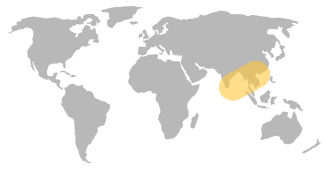


White-Rumped Munia

Zebra Finch
White-Rumped Munia
Lonchura striata
Also known as: White-Rumped Mannikin, Striated Finch
General appearance
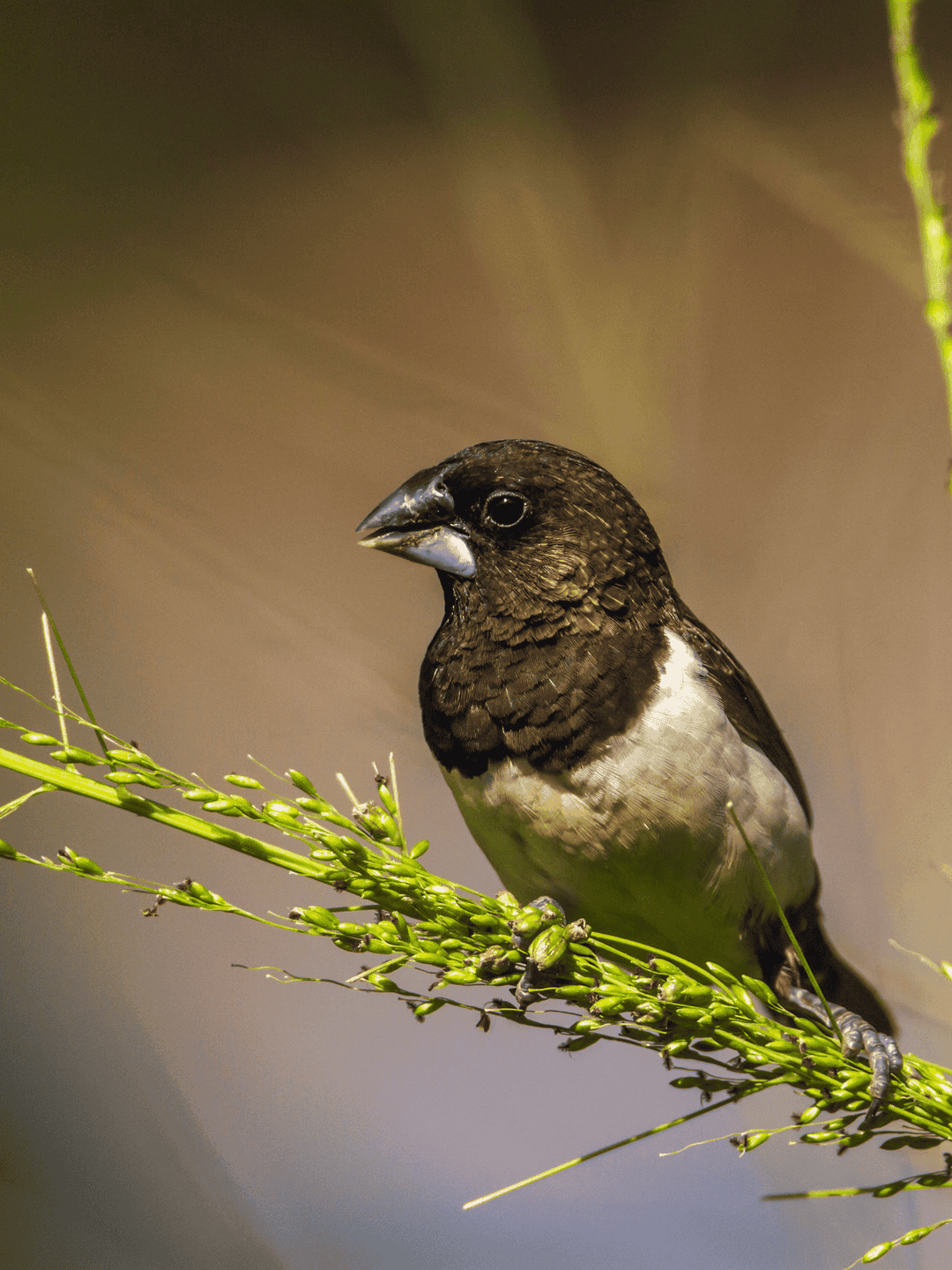
The white-rumped munia is a small bird native to tropical regions in Asia. Adults have characteristic black plumage with a sharp contrast to their white rump and belly. Their compact, stout bodies feature a strong, conical beak designed for seed-eating, while their short and pointed wings facilitate rapid flight.
Male vs female
In terms of physical appearance, there is minimal sexual dimorphism in white-rumped munias. Both males and females share the same colour patterns and size. However, during the breeding season, the male can be identified by its song and display rituals, which include puffing up their feathers, posturing, and an audible, musical call, actions not performed by the female.
Juvenile
Juvenile white-rumped munias have a noticeably different appearance from adults. They possess a dull, brown colouration overall, as opposed to the distinctive black and white seen in adults. This aids in camouflage from predators. The juvenile's beak is also paler than the adults'. As they mature, they gradually acquire the adult's striking coloration and characteristics.
Size
4.3 - 4.7 in/0.3 - 0.5 oz
There's more to learn about White-Rumped Munia
View full detailsZebra Finch
Taeniopygia guttata
General appearance
Zebra finches are small birds with strong beaks, measuring approximately 10 cm long. They have distinct white and gray coloration, with vivid black striping resembling a zebra's stripes and a red-orange beak, which matches their legs and feet in color.
Male vs female
Male zebra finches are more vibrant than females. They feature chestnut colored cheeks, a bright red beak, and distinct black and white striping or 'zebra stripes' on their throat and chest. On the other hand, females are predominantly gray without stripes on the chest or cheeks.
Juvenile
Juvenile zebra finches share a similar look to adult females due to their predominantly gray color. After birth, they have a black beak that turns to red-orange as they mature. The unique black and white striping pattern develops later on male juveniles.
Size
3.9 - 4.3 in/0.3 - 0.6 oz
There's more to learn about Zebra Finch
View full detailsHow to tell the White-Rumped Munia from the Zebra Finch
Visual differences
White-Rumped Munia (4.3–4.7 inches, 0.34–0.46 oz) has black plumage with a white rump and belly, and a strong, conical beak. Zebra Finch (4 inches, 0.32–0.56 oz) exhibits white and gray colors with black "zebra stripes" on the throat and chest, and a red-orange beak. Male Zebra Finches have chestnut cheeks and vibrant markings, unlike the more uniformly colored White-Rumped Munias. Munias have minimal sexual dimorphism, while male Zebra Finches are more colorful than females. Both use strong beaks suitable for seed eating.
Key differences and behavior
The White-Rumped Munia and Zebra Finch display distinct behaviors that can aid in field identification. White-Rumped Munias are often found in large, camouflaged flocks within tropical Asia, favoring seeds and occasional proteins, while Zebra Finches are more adapted to Australia's arid regions, forming lifelong monogamous pairs. Both species exhibit notable courtship displays, with Munias performing fluttering songs and finches conducting elaborate dances. Munias build nests in dense foliage, and Finches prefer shrubs or low trees, with both sharing incubation duties for 4-6 eggs. Although their diets overlap, Munias consume small fruits and berries, unlike Zebra Finches which rely on seeds and insects, especially during breeding season. Munias weigh 0.33-0.46 oz and stretch 4.3-4.7 in, slightly longer than the 0.32-0.56 oz, 3.9-4.3 in Zebra Finch, but these minor size differences are often less noticeable in wild observations than their distinct behavioral patterns.
Still not sure? Here are more lookalikes!
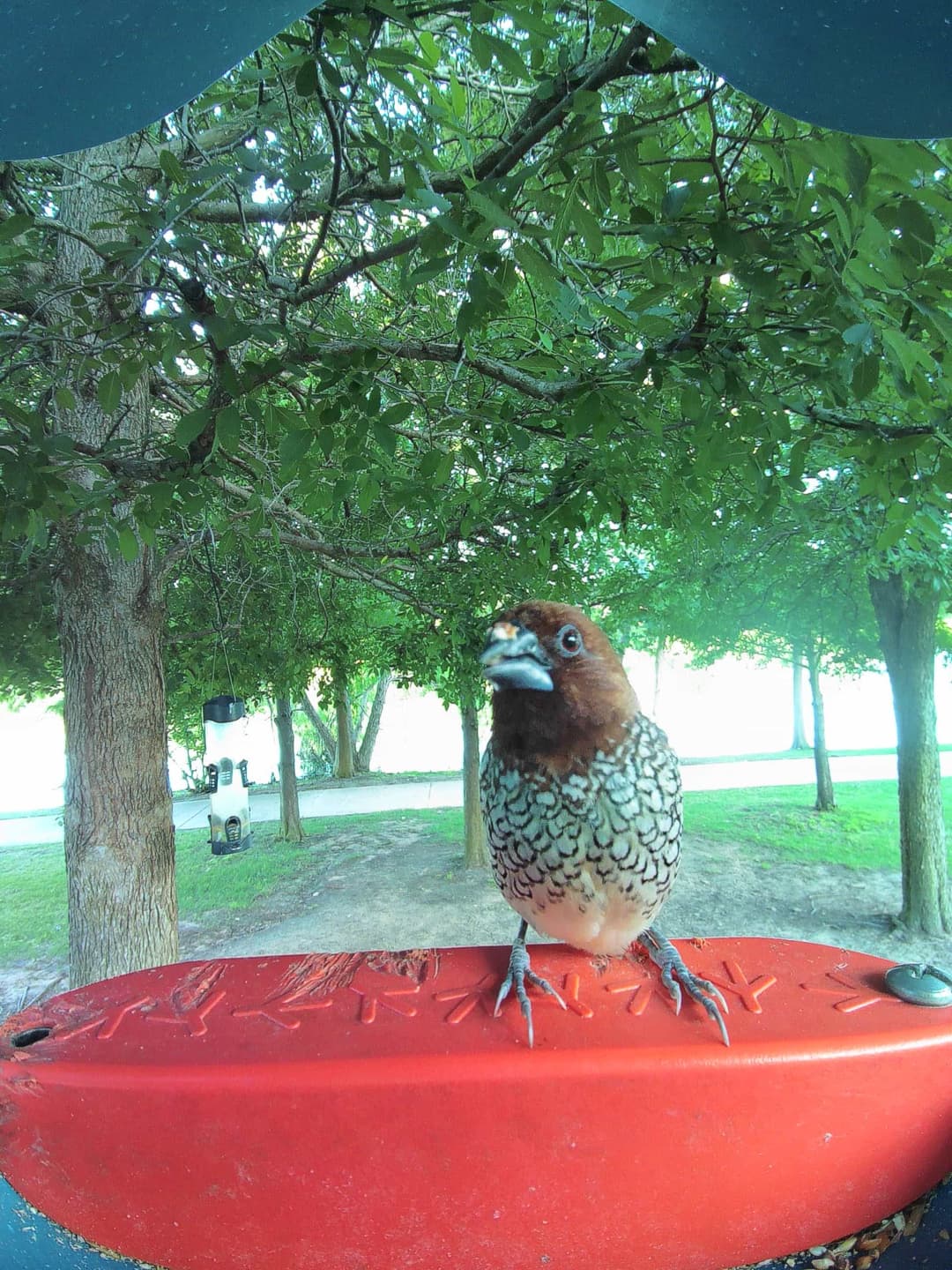
White-Rumped Munia vs Scaly-Breasted Munia
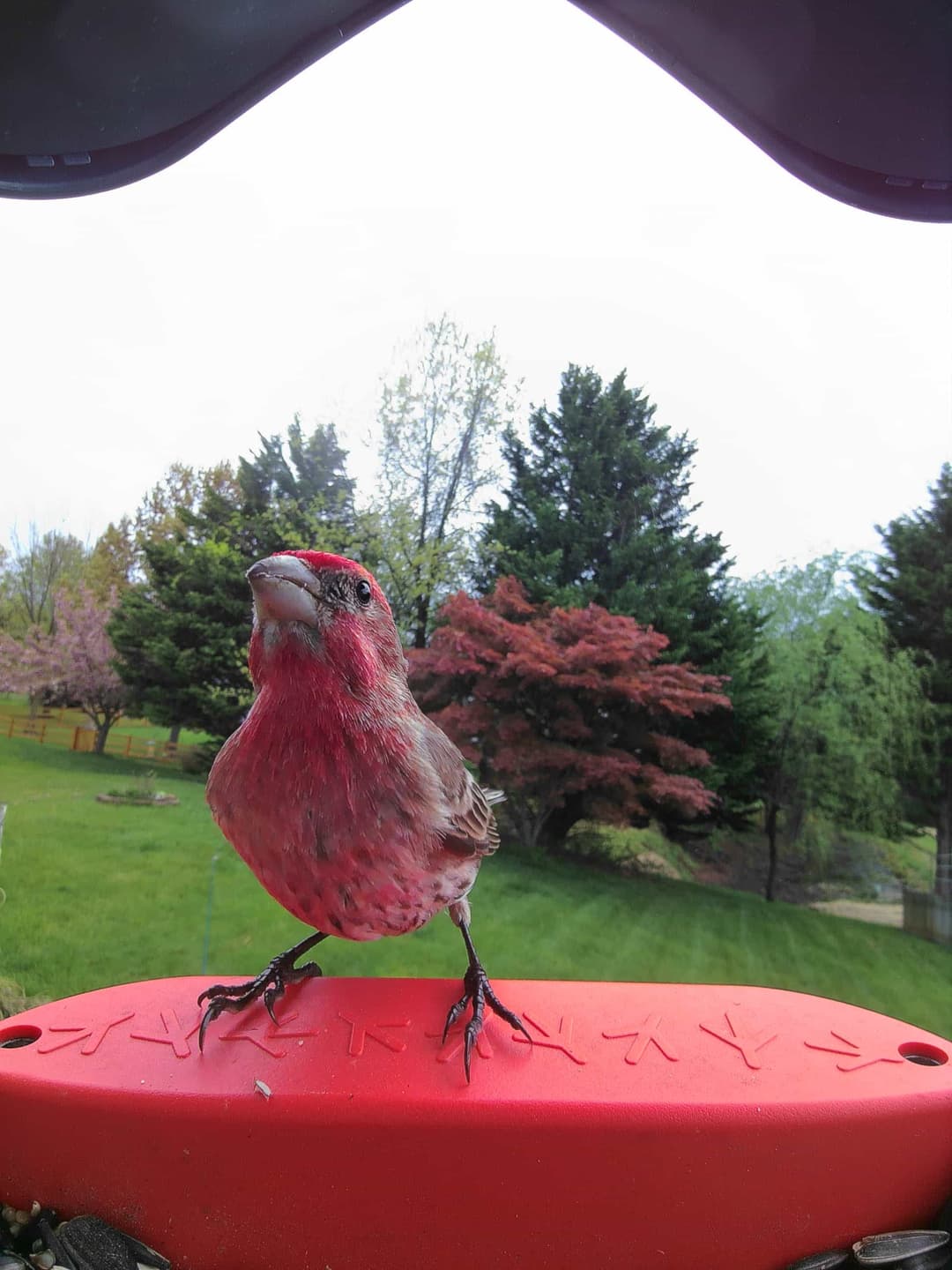
Zebra Finch vs House Finch

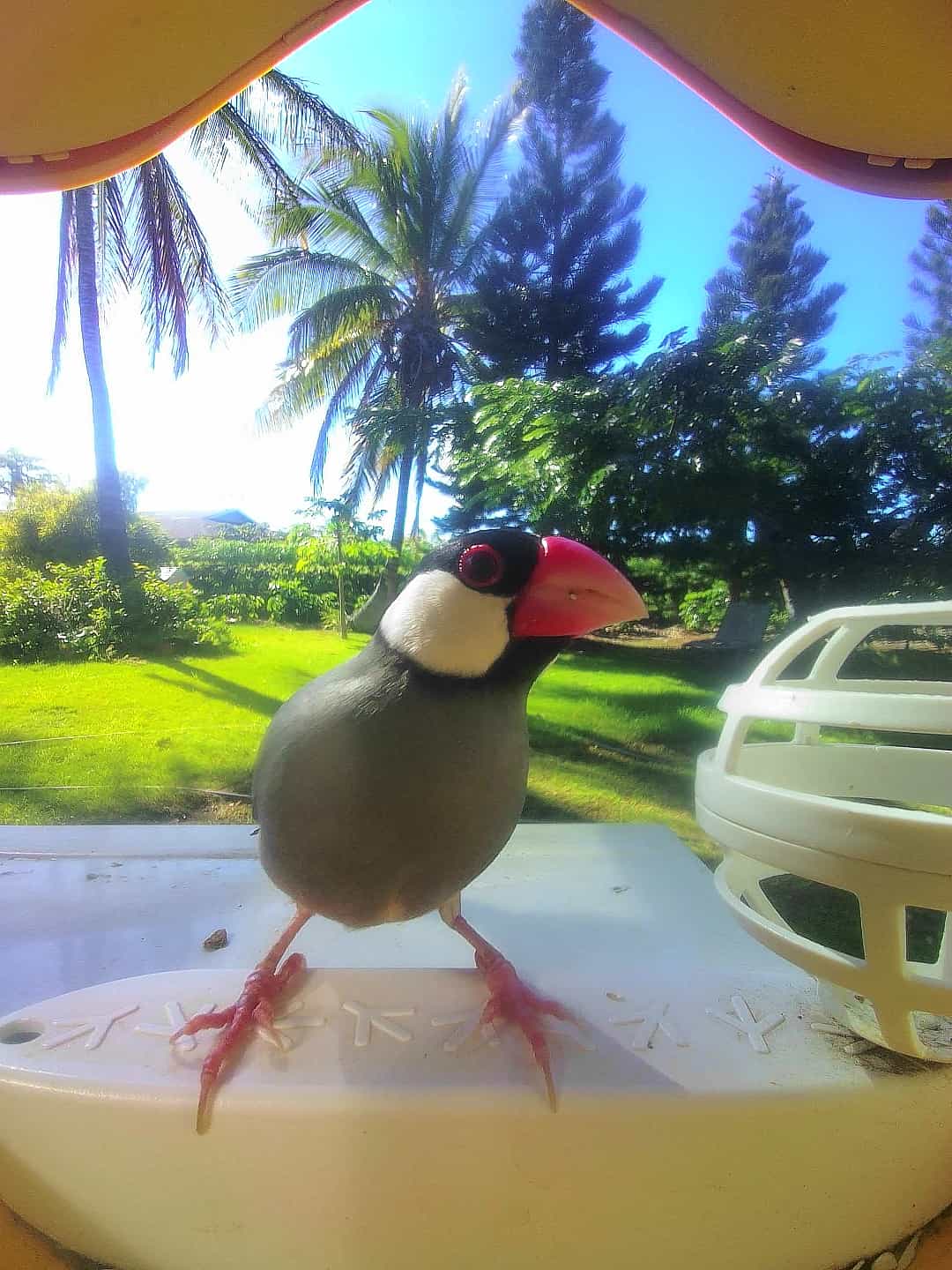
Zebra Finch vs Java Sparrow
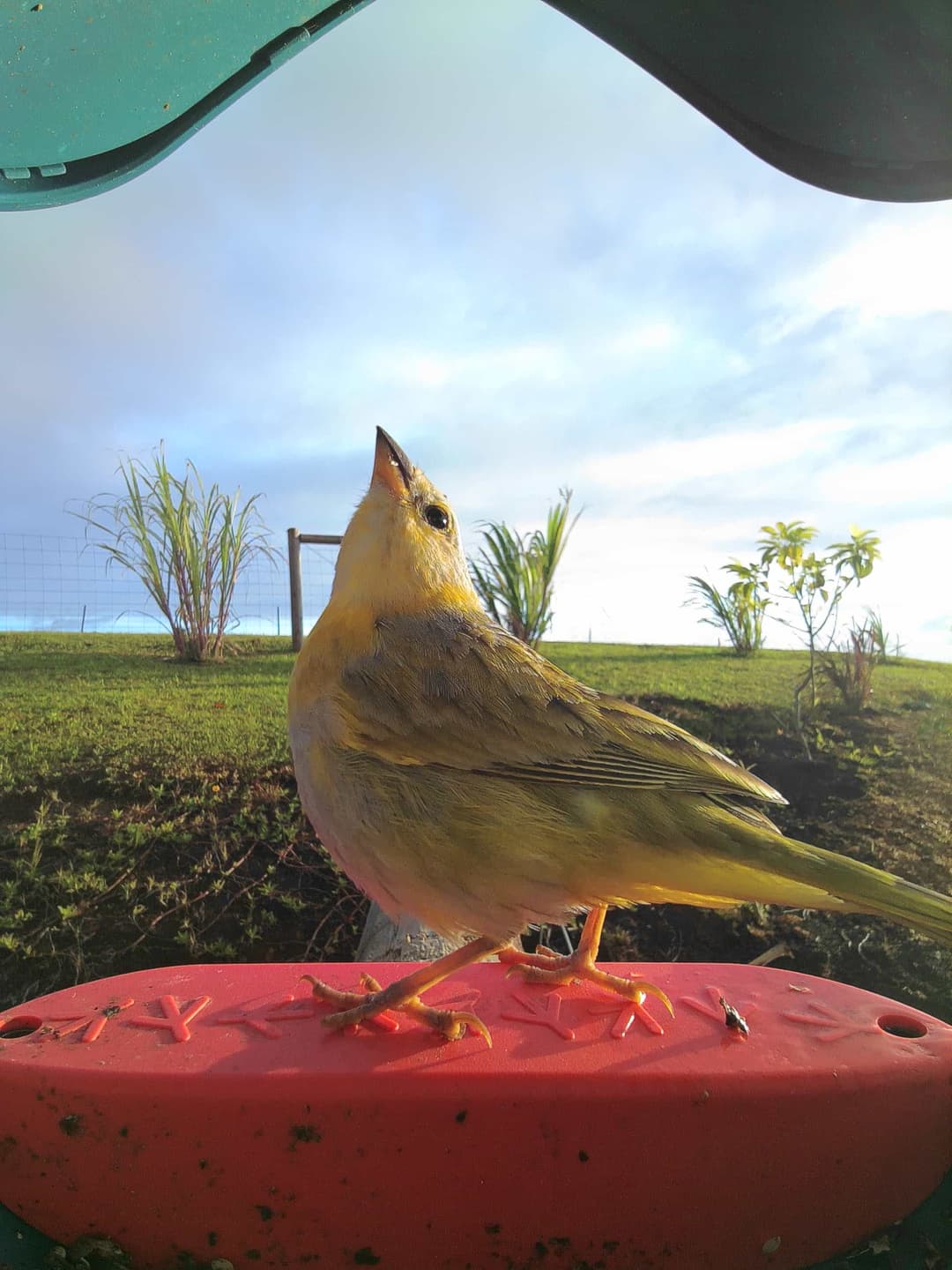
Zebra Finch vs Saffron Finch
White-Rumped Munia vs [Select a bird]

[Select a bird]
Pick a bird to compare
Zebra Finch vs [Select a bird]
[Select a bird]
Pick a bird to compare