
Wren
Wren
Troglodytidae
Quick Identification guide
Quick Identification guide
- •
Small bird with a compact, round body and relatively short tail
- •
Features a slender, slightly curved beak, ideal for probing
- •
Typically brown with subtle barred patterns on wings and tail
Description
Did you know that wrens are the shortest birds in England? There are some 88 species of these short-winged birds that may not look like much but wait until you hear one sing! Or two... Some love to duet and are quite famous for it. In Europe, the Eurasian wren is considered the king of birds and features heavily in culture. Messing with its nest or killing one is said to bring very bad luck!
The wren can weigh between 7.6to57grams and be from8to22centimeters tall.
The average lifespan of a wren is 2-5 years. Compared to related species, their life span is relatively short; for instance, sparrows and finches can live up to 11-12 years. However, the longevity of wrens can significantly vary depending on the sub-species, with the Bewick's wren known to live up to 8 years, and the Carolina wren live up to 6 years in the wild.
Did you know?
Most popular questions about wren
How to recognise a wren?
General appearance
Wrens have a compact, robust body with a rounded shape and a long, thin, slightly curved beak. They tend to be predominantly brown, often with a darker hue on the upper body and lighter underneath. The wing and tail feathers are typically marked with thin, dark bars which serve as camouflage. The wren exhibits a unique, tail-up posture when alert.
Male vs female
Male and female wrens are very similar in appearance, with no significant sexual dimorphism. Both sexes possess similar plumage and size characteristics, thus using coloration or size for identification between male and female wrens would be ineffective. However, during the breeding season, males can be recognized by their complex, melodious song which helps to establish territories and attract females.
Juvenile
Juvenile wrens often have a lighter, more mottled coloration than adults, aiding in camouflage. Their beaks are shorter and their feathers less developed. However, they quickly grow to resemble the adults in size and color, making age determination difficult beyond the very early stages of development. Juveniles can also be identified by their behaviour, as they are less likely to hold territory and may form small, loose flocks.
Often mistaken for
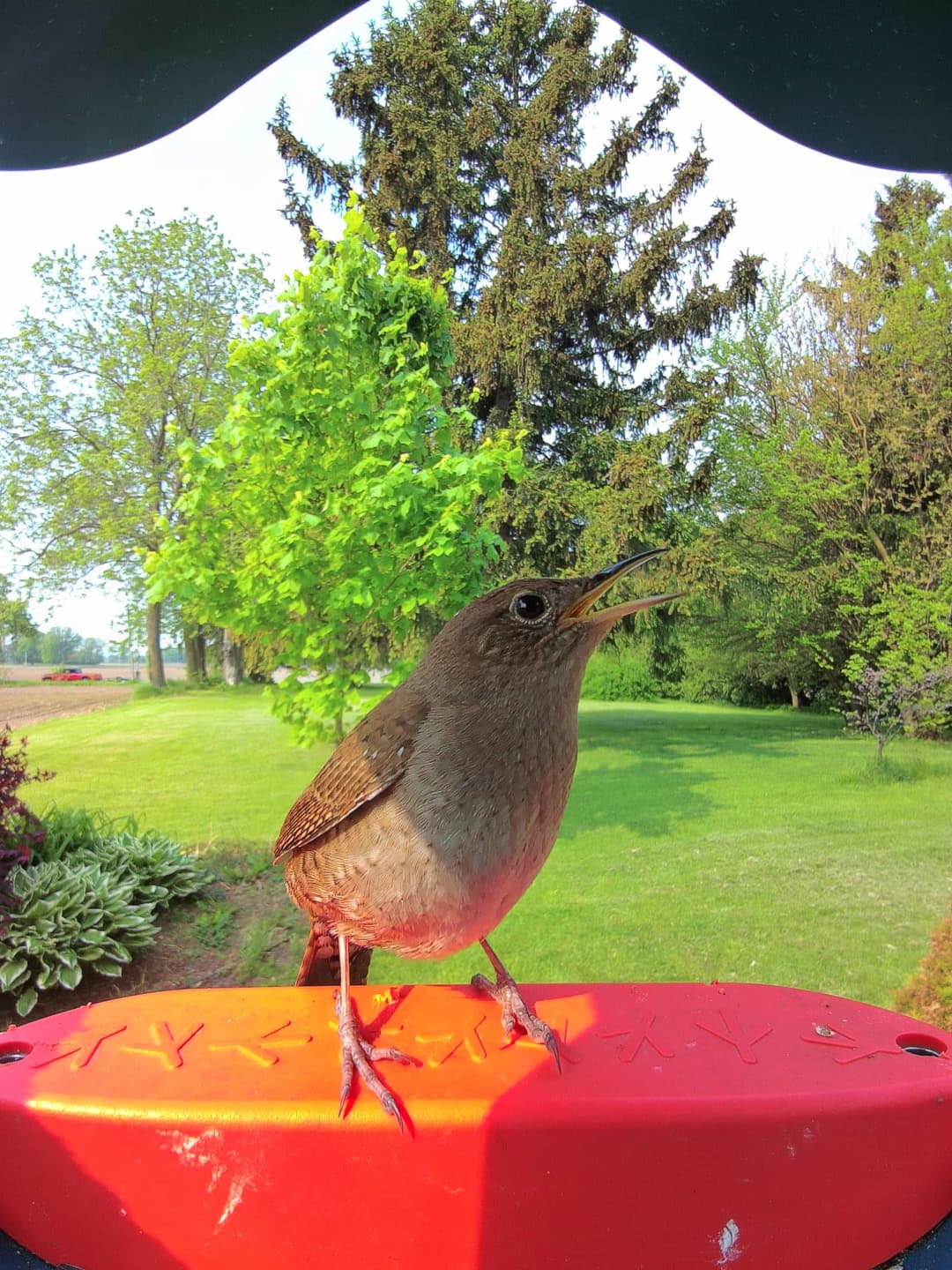
House Wren vs Wren
The House Wren and Carolina Wren both have a small size and similar body shapes, but the House Wren generally has a more subdued brown or gray color with less vibrant patterning compared to the Carolina Wren's warm and more colorful plumage.
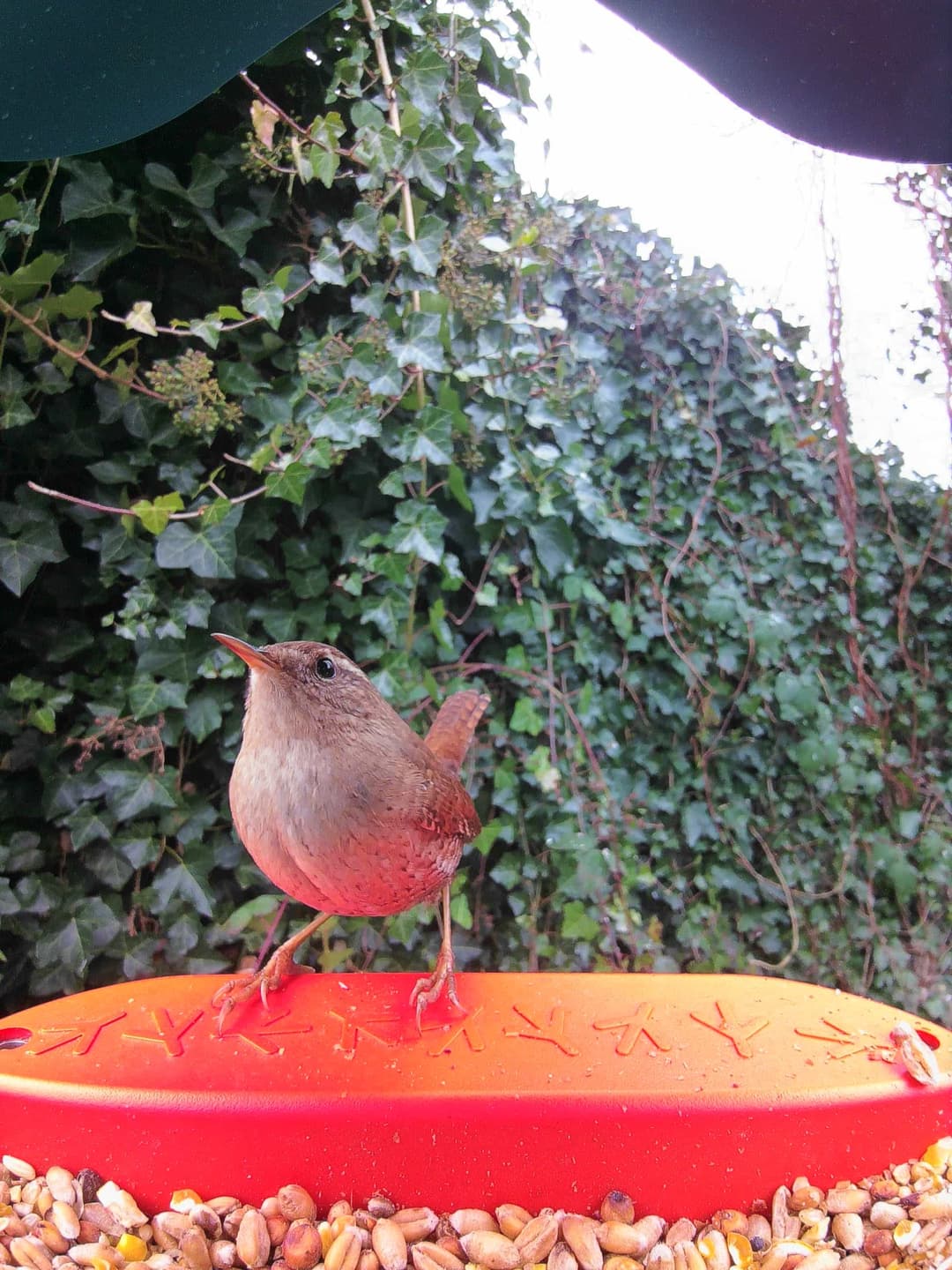
Eurasian Wren vs Wren
The Eurasian Wren is similar in size and shape to the Carolina Wren but can be distinguished by its more uniform brown coloring and lack of the striking white eyebrow stripe seen in the Carolina Wren.
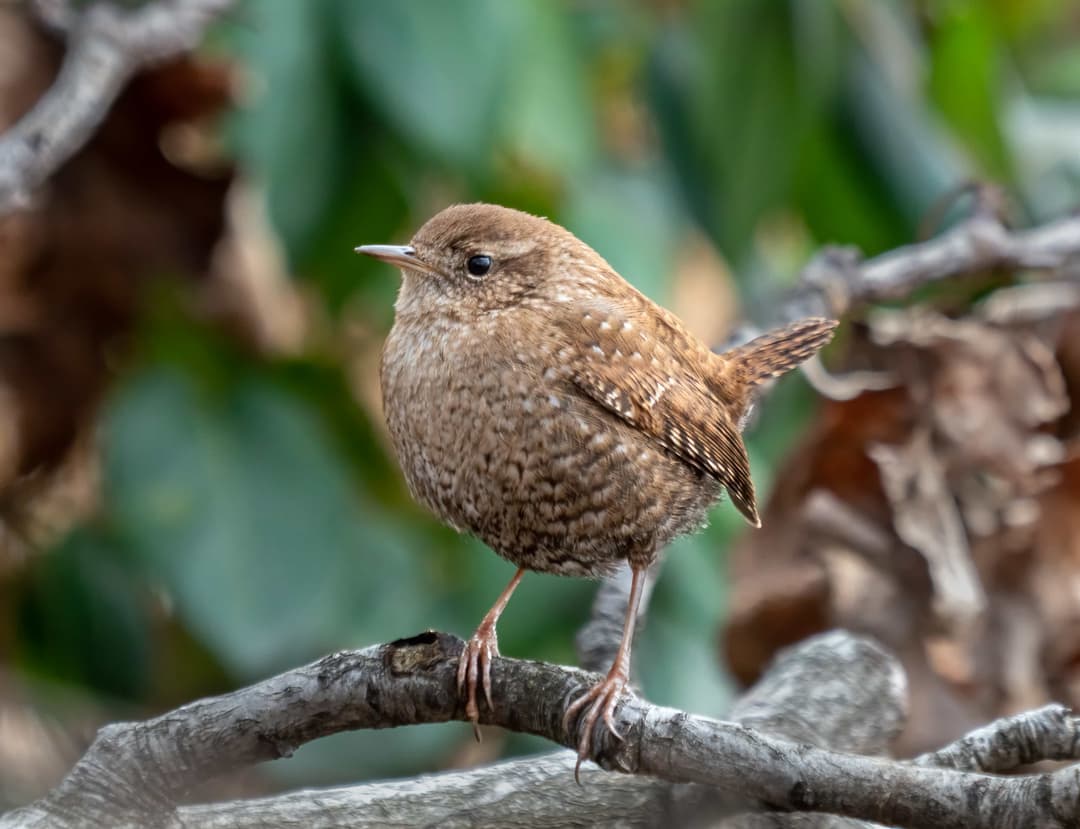
Winter Wren vs Wren
The Winter Wren shares a compact build and short tail with the Carolina Wren, but it is darker in color and has a more mottled brown appearance with a less prominent eye stripe.
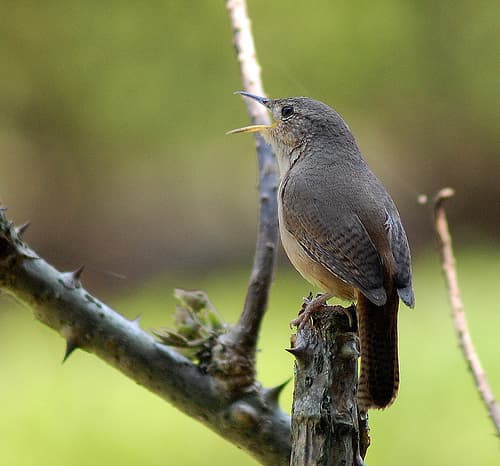
Southern House Wren vs Wren
The Southern House Wren, similar in size to the Carolina Wren, typically has less vibrant coloration and a less distinct eye stripe. It tends to be a uniform brown color.
Breeding and nesting habits of the wren
Mating behaviors
Wrens engage in elaborate courtship rituals, where males sing complex songs to attract females. Males often build multiple nests to give females options to choose from, demonstrating their suitability as mates.
Nesting details
Wrens prefer nesting in sheltered locations such as tree cavities, shrubs, or artificial nest boxes. They use twigs, leaves, and feathers to construct their nests. Nest boxes in gardens should be placed away from predators and high enough to provide safety.
Eggs and chick-rearing
Wrens typically lay 5-8 eggs, which hatch after about two weeks. Both parents feed the chicks, bringing them insects and other small invertebrates. The chicks fledge approximately 15-17 days after hatching and continue to be cared for by the parents for a short period thereafter.
What does a wren like to eat?
Aquatic animals
Berries
Crustaceans
Fruits
Insects
Plants
Seeds
Small animals
Snails
Spiders
Worms
Natural diet
Wrens primarily consume a variety of small insects and spiders, including beetles, caterpillars, flies, ants, and moths. They are also known to eat snails, which they can crack open with their sharp beaks. Additionally, wrens may occasionally consume seeds and small fruits, particularly during colder months when insects are scarce. Their diet is largely dictated by what they can forage in their natural habitat, such as woodlands, gardens, and shrublands.
Bird feeders
At bird feeders, wrens are attracted to high-energy food sources. They often consume suet, which provides essential fats and proteins. They may also feed on mealworms, either live or dried, which mimic their natural insect diet. Although not as common, wrens may eat small seeds, such as sunflower hearts or finely chopped peanuts, especially if more familiar food sources are unavailable. Their visits to feeders can increase during colder months when natural foraging is less fruitful.
Setting up an ideal feeder for wrens
Wrens are attracted by certain types of feeders, among the best are tube and hopper feeders. Place your feeder within shrubs or small trees, as they provide safe spots for the birds away from predators. Offer them Bird Buddy seeds, specifically chosen by experts for the season, hence offering the best results.
Preferred snacks for wrens
Wrens aren't picky eaters. They love live insects, mealworms, and various types of seeds. Make sure to frequently replenish Bird Buddy seeds, the favourite among wrens, as they disappear fast once the birds discover them in your yard.
Creating a welcoming environment for wrens
Try to create a natural environment by incorporating native plants and bushes where wrens can search for insects. Leave some leaf litter and fallen logs around your yard as they serve as perfect foraging spots. Maintaining birdbaths with clean water can also encourage them to stop by.
Fun tricks to encourage wrens visits
Try playing recorded wren songs as these songs can pique their curiosity and draw them towards your yard. Don't forget to hang some nesting boxes to entice them to stay longer, and you might just get your own backyard serenade!
Where can you find wrens?

Primary habitat
Wrens typically inhabit forests, gardens, and farmlands across North and South America, Europe, and Asia. They prefer temperate or tropical climates.
Additional range
Surprisingly, some species of wrens can also be found in arid desert regions, adapting to such harsh environments.
Do they migrate?
The migration patterns of wrens vary by species. The most widely known species, the Eurasian wren (Troglodytes troglodytes), generally remains resident throughout most of its range, including Europe and parts of Asia. However, in cooler climates, such as Scandinavia and Russia, these wrens may migrate short distances southward to escape harsh winters. In North America, the winter wren (Troglodytes hiemalis) and its close relative, the Pacific wren (Troglodytes pacificus), showcase more distinct migration behavior. The winter wren breeds in Canada and the northeastern United States and migrates southward to the southeastern United States during the winter months. Migration typically begins in late September to October, with wrens returning to their breeding grounds by late March to April. Key stopover locations include woodland areas with dense underbrush. Similarly, the Pacific wren, found along the western coast of North America, is mostly resident but may move short distances to lower elevations during colder months. Overall, wren migration is characterized by relatively short distances compared to long-distance migratory birds, often linked to food availability and mild climate during the winter season.
What is the role of wrens in nature and how to protect them?
Conservation status
The wren is generally a common bird with a stable population, and it is not considered vulnerable or endangered globally. However, habitat loss and degradation pose significant threats in certain regions, impacting local populations. Conservation efforts focus on preserving natural habitats, controlling invasive species, and monitoring population trends. Initiatives like habitat restoration and public education help mitigate these threats. Where specific subspecies are at risk, targeted conservation actions are implemented to protect these smaller populations. Overall, maintaining healthy ecosystems is crucial to ensuring the wren's continued survival and abundance.
Ecological role of wrens
Its role in the ecosystem
Wrens play significant roles in the ecology of their habitats. Foremost, they are vital pest controllers. Given their diet predominantly consists of insects and spiders, they help control the populations of these organisms, thereby maintaining balance within the ecosystem. An excessive quantity of insects, for instance, could lead to the decimation of plant life through overconsumption. Moreover, wrens are critical to the process of seed dispersal. In certain habitats, these birds dine on fruits and berries, and the seeds they consume are subsequently excreted in different locations. This contributes to the propagation and diversification of plant life across diverse areas of the globe. Wrens thus play a significant part in the preservation and enhancement of biodiversity within their ecosystems, helping to ensure the survival and growth of plant species whilst also aiding in pest regulation.
How to help protect wrens
Preservation tips
Habitat preservation strategies
To support wren conservation, preserve their natural habitats. This largely consists of thickets, forest edges, and brushy yards. Protect existing green spaces, and where possible, create new ones. Encourage plant diversity, including a variety of shrubs, bushes, and trees, which offers shelter and food sources. Restrict the use of pesticides that can harm wrens and their food supply.
Community science initiatives
Engage in community science projects to support wren conservation. Participate in bird counts and monitoring programs to help track wren populations and identify threats. Share observations with local conservation groups or on platforms like eBird. Advocate for policies that support bird conservation, and promote education about wrens and their habitats in your community.