
Southern House Wren
Southern House Wren
Troglodytes musculus
Quick Identification guide
Quick Identification guide
- •
The Southern House Wren features brown upperparts with fine dark barring, providing excellent camouflage against tree trunks
- •
Exhibits pale underparts with subtle buff hues, enhancing its contrasting characteristics with the upper body
- •
Possesses a slender, slightly curved beak ideal for insect hunting, alongside an upright posture and a relatively short tail often held upright
Description
Did you know the Southern House Wren is a bold little bird with a big personality? Often seen flitting around gardens and urban areas, they aren’t shy about nesting near humans, even in unexpected places like mailboxes or garden toolsheds! Known for their lively and complex song, these wrens are highly vocal, especially during breeding season, when they’ll energetically defend their chosen spot. Keep an ear out – you might hear one long before you see it!
The southern house wren can weigh between 10to12grams and be from10to12centimeters tall.
The southern house wren typically lives for 9 years. Its lifespan is relatively long for a small bird, with most related species, such as the northern house wren and the Bewick's wren, having a similar lifespan. However, the Carolina wren, another relative, typically lives slightly longer, up to 10 years.
Did you know?
Most popular questions about southern house wren
How to recognise a southern house wren?
General appearance
The Southern House Wren is a small, sturdy bird, measuring about 11 cm in length. It has brown plumage overall with a darker barring on the wings and tail. The abdomen is lighter with fine, dark barring. Its beak is long, thin, and slightly curved, with a pointed tip.
Male vs female
Sexes of the Southern House Wren are similar in plumage color and pattern. Both have brown bodies with dark barring, and a light belly. However, male wrens often appear slightly larger and may have a slightly brighter eye-ring.
Juvenile
Juvenile Southern House Wrens resemble adults but have softer, fluffier plumage, and their barring may be less distinct. They also have a faint eye-ring.
Often mistaken for
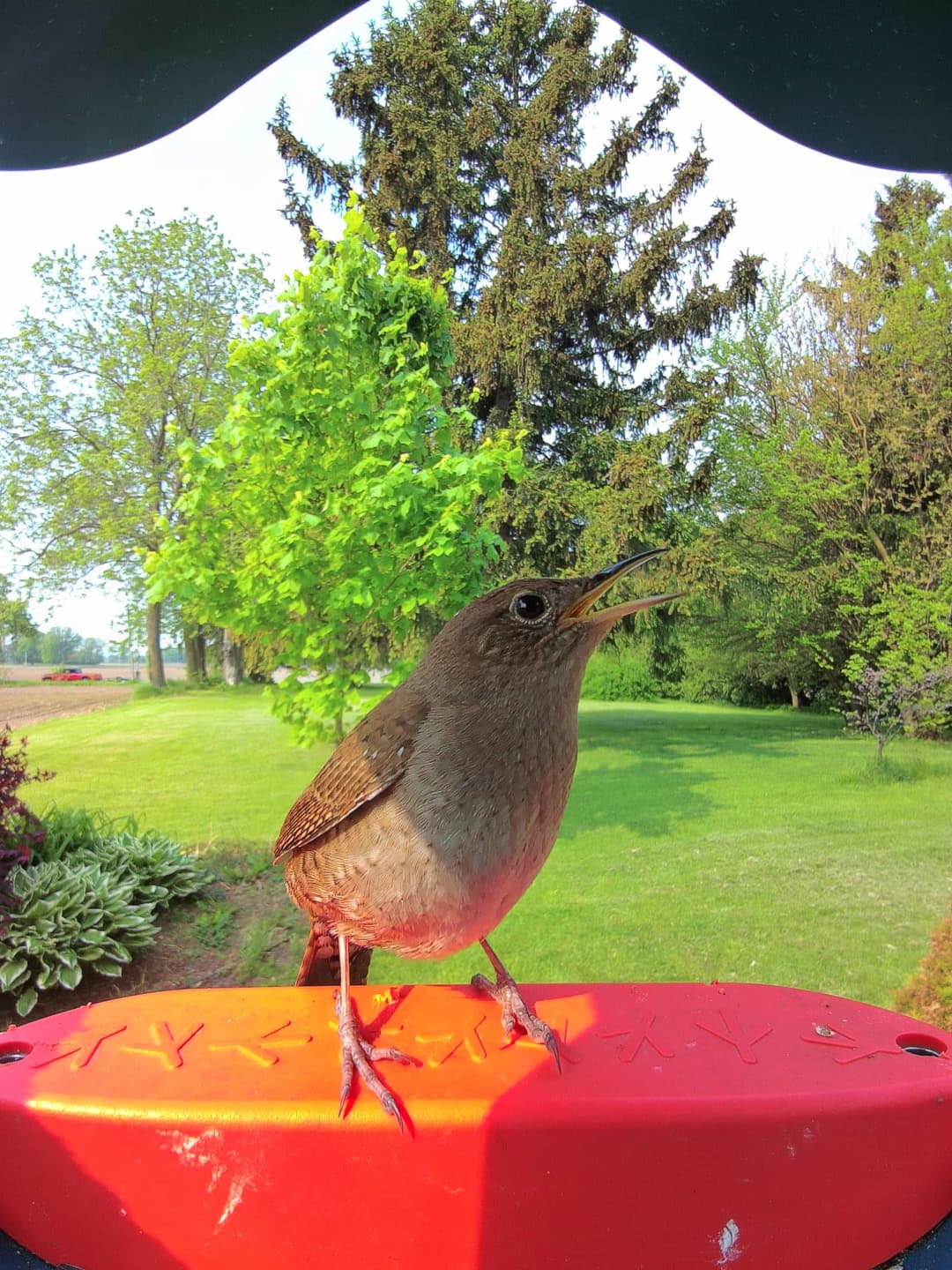
House Wren vs Southern House Wren
The House Wren, like the Southern House Wren, is small and brown. However, the House Wren is generally more uniformly brown without the slight barring present on the Southern House Wren's flanks.
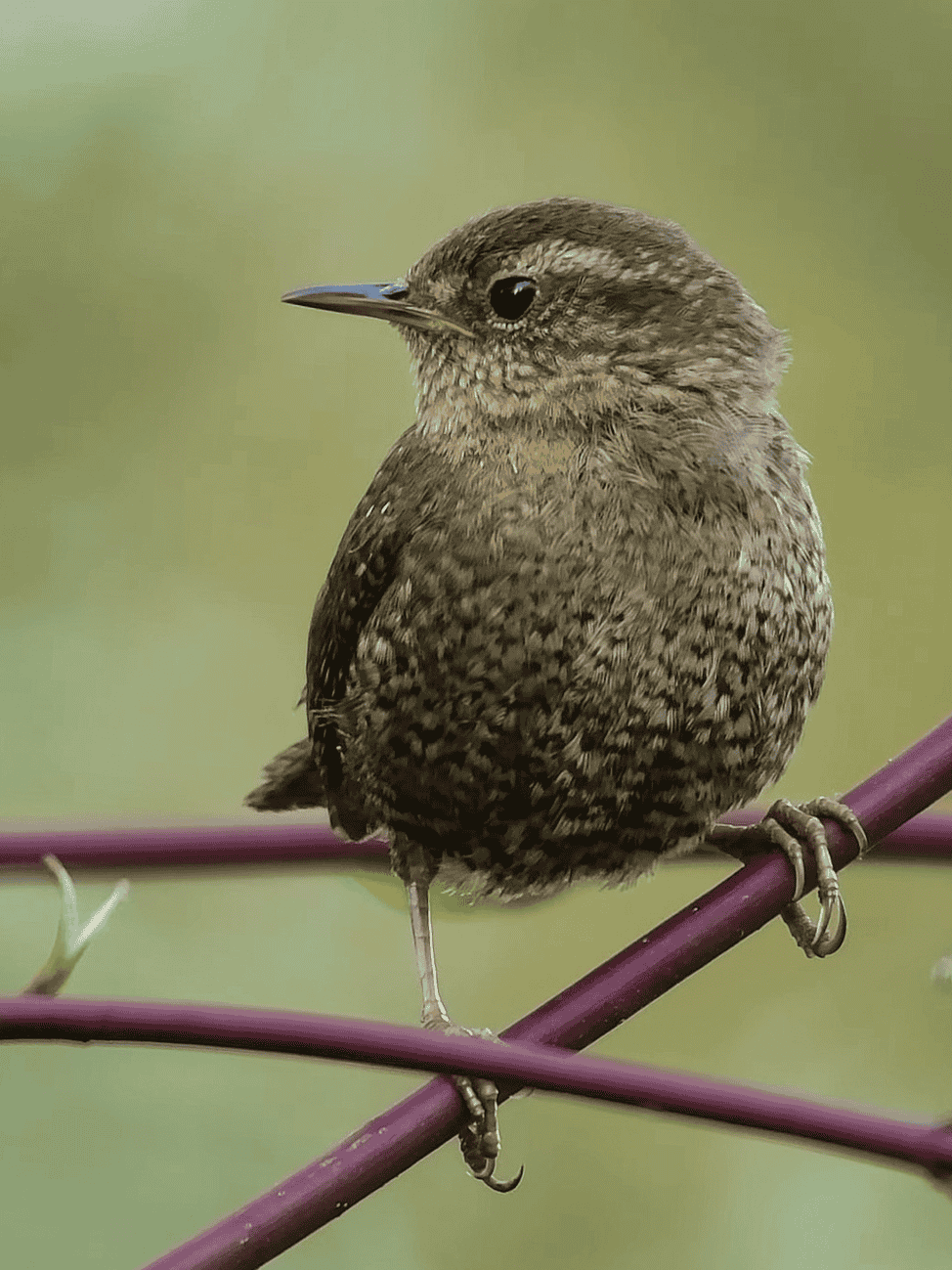
Pacific Wren vs Southern House Wren
The Pacific Wren is similarly small and brown, but it can be distinguished by its more upright tail and the dense pattern of streaks across its breast and underparts compared to the Southern House Wren.
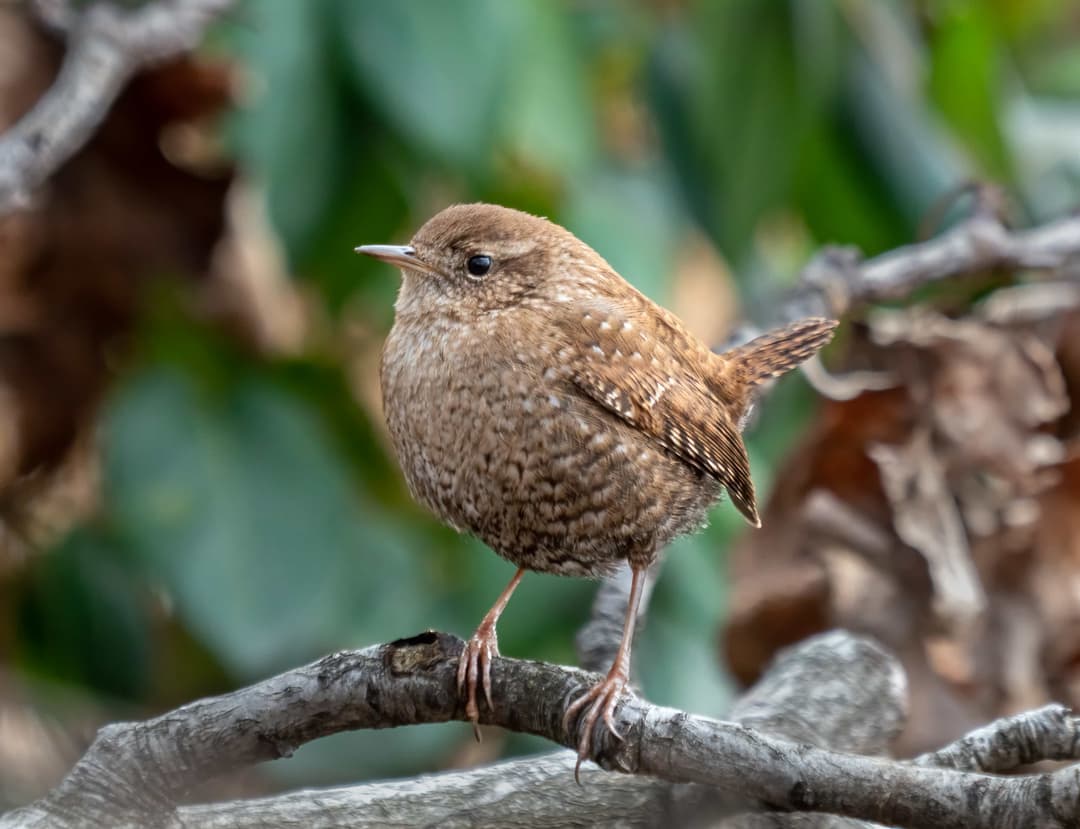
Winter Wren vs Southern House Wren
The Winter Wren is also similar in size and coloration to the Southern House Wren but can be distinguished by its much shorter tail and more distinct barred pattern on the wings and tail.
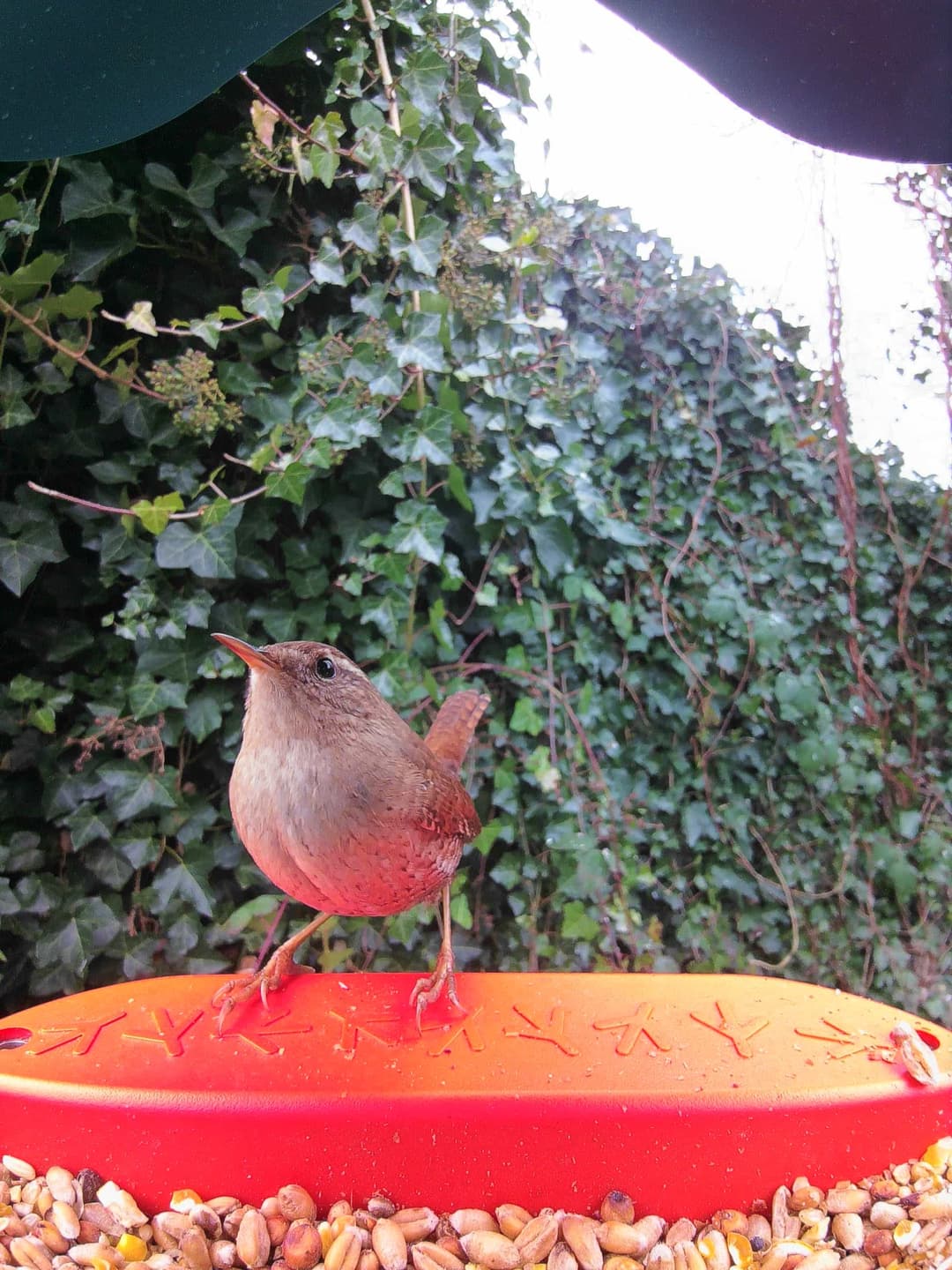
Eurasian Wren vs Southern House Wren
The Eurasian Wren shares similar overall brown plumage with the Southern House Wren. However, it is much smaller with a clearly notched tail that it often keeps cocked and displays a more distinct eye line.
Breeding and nesting habits of the southern house wren
Mating behaviors
Southern house wrens engage in energetic courtship displays involving singing and wing fluttering. Males often display these behaviors to attract females and establish territories.
Nesting details
These birds often nest in cavities in trees, holes in walls, or birdhouses. Nests are crafted from twigs, leaves, and feathers. They can adapt to nesting in gardens where birdhouses are available.
Eggs and chick-rearing
Females lay 3-7 eggs per clutch and incubate them for about two weeks. Both parents share feeding duties, providing insects and small invertebrates to the chicks until they fledge, approximately two weeks post-hatching.
What does a southern house wren like to eat?
Insects
Seeds
Spiders
Worms
Natural diet
The southern house wren primarily feeds on a variety of insects and arthropods. Its natural diet includes ants, beetles, caterpillars, spiders, and other small invertebrates. These birds engage in foraging activities on the ground, within foliage, and on tree bark to locate their prey. Occasionally, they may consume small amounts of plant materials such as seeds and fruits, especially when insect availability is lower.
Bird feeders
At bird feeders, southern house wrens are less frequent visitors compared to other bird species. However, they may sometimes be attracted to mealworms or suet, which are protein-rich offerings similar to their natural insect diet. They might also sample small seeds, though their preference leans strongly towards animal-based food sources.
Offer the right foods
One of the best ways to attract the southern house wren is to offer them their favorite snacks, including insects and small fruit. They also adore Bird Buddy seeds, which are specifically curated by bird experts for different seasons. Offering a variety of these choices will surely tempt them to visit your yard.
Use appropriate feeders
To ensure the wrens can access their food, use platform feeders or small hanging feeders with large openings. Southern house wrens also like feeders with a roof to protect them from the elements. In addition, you can sprinkle some seeds on the ground as these birds enjoy foraging.
Create a habitat they love
Besides food, southern house wrens are attracted to yards that provide shelter and nesting opportunities. Provide small birdhouses with 1-inch entry holes. Another trick is to mimic their natural habitat by including dense shrubbery or brush piles. The combination of food and comfortable habitat may not only bring them for a visit but also encourage them to stay longer and maybe even break into song!
Where can you find southern house wrens?

Primary habitat
The southern house wren primarily inhabits the tropical and subtropical regions of the Americas. Its range extends from central and south-eastern parts of United States to southernmost South America.
Additional range
Although typically found in lower altitudes, it may inhabit areas up to 3,000 meters above sea level. This bird has a preference for woodland edges, thickets, gardens, and areas with scattered trees.
Do they migrate?
The Southern House Wren (Troglodytes aedon musculus) is a non-migratory bird and tends to stay in one place year-round. This subspecies is commonly found in South America, particularly throughout Argentina, Bolivia, southern Brazil, Chile, Paraguay, and Uruguay. Unlike its northern relatives, which often migrate seasonally between breeding and non-breeding grounds in North America, the Southern House Wren has adapted to a wide range of environments within its range and is thus able to maintain its territory throughout the year. These birds are highly adaptable, occupying diverse habitats including gardens, parks, shrublands, and forests. As a result, they do not undertake the long-distance migrations typically associated with other wren species. Their ability to remain resident throughout the year is often attributed to the relatively mild climates and ample availability of resources in their South American habitats. Thus, with no significant migratory pattern to follow, the Southern House Wren exemplifies how some bird species adapt their life strategies to the specific environmental conditions of their regions.
What is the role of southern house wrens in nature and how to protect them?
Conservation status
The southern house wren is currently classified as a species of Least Concern. This common bird is widely distributed across Central and South America, thriving in a variety of habitats including urban areas and forests. Key threats are habitat destruction due to deforestation and urban expansion, but the species’ adaptability helps maintain its stable population. Conservation efforts focus on habitat protection and monitoring population trends. Despite some localized threats, the overall population remains robust, showing no immediate risk of vulnerability or endangerment.
Ecological role of southern house wrens
Its role in the ecosystem
The Southern House Wren, a small, unassuming bird, plays a vital role in balancing ecosystems. It contributes to pest control as it primarily feeds on insects and spiders, thus maintaining the population of these creatures in check. This is beneficial both ecologically, in ensuring the stability of local food chains, and economically, in reducing the need for human-initiated pest control mechanisms. Although Southern House Wrens are not particularly known for seed dispersal, these birds help maintain the health of the ecosystem by spreading the spores of fungi and other similar organisms adhering to their feathers. Their nesting behaviours also directly impact plant life – the twigs, grass, and other plant materials they use for nesting aid in the decomposition process as they break down, returning essential nutrients to the soil. In this way, Southern House Wrens also indirectly contribute to plant growth and vegetation health. Therefore, these birds act as ecological indicators, with changes in their population often indicating significant shifts in ecosystem health.
How to help protect southern house wrens
Preservation tips
Habitat preservation strategies
Support the conservation of the Southern House Wren by preserving its habitat. These areas often include deciduous woodland, gardens and parks. Avoid pesticide use that could harm their food resources like insects and spiders. Engage in reforestation of their native habitats and prevent deforestation, which directly impacts their nesting areas.
Community science initiatives
Involve local communities in the conservation of the Southern House Wren through community science projects. Encourage surveys and monitoring of the bird's population, nesting patterns and feeding habits. Reporting sightings in apps such as eBird can be beneficial. Educate the public about the importance of bird conservation and how to create bird-friendly spaces. Collaboration with wildlife organizations can also help raise awareness and funds for conservation efforts.