Black-Throated Blue Warbler or Orange-Crowned Warbler?
Here's how to tell the difference
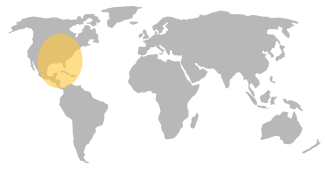


Black-Throated Blue Warbler
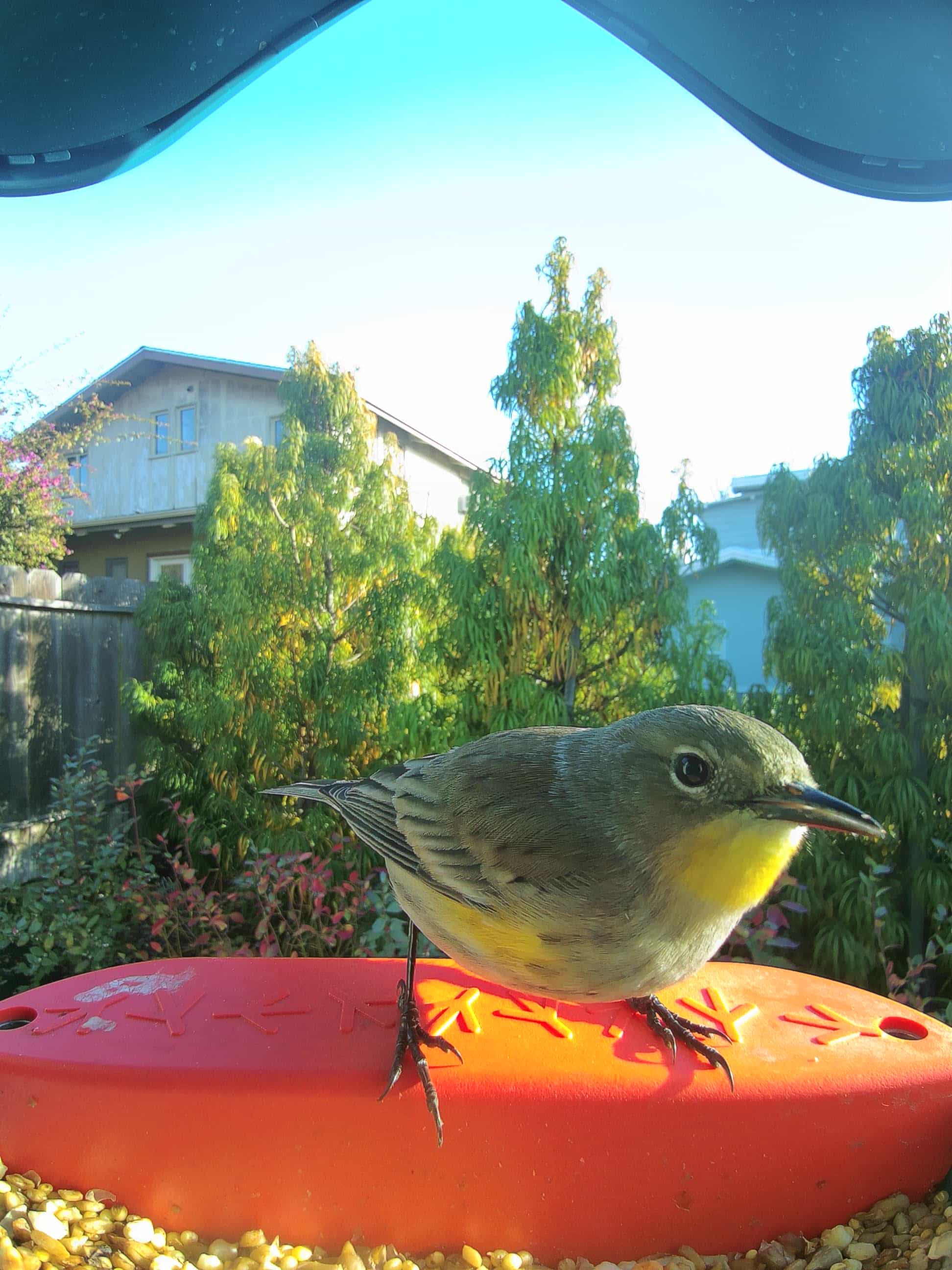


Orange-Crowned Warbler
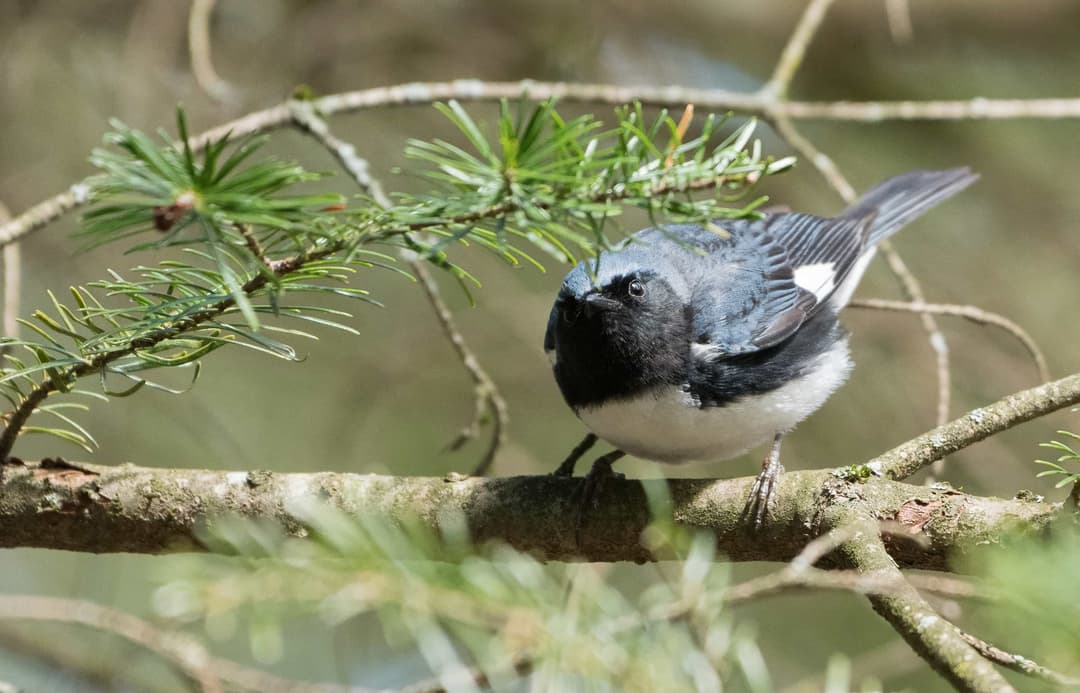
Black-Throated Blue Warbler
Setophaga caerulescens
General appearance
The black-throated blue warbler is approximately 13 cm in size, comparable to a sparrow. Its colors include black, blue, brown, tan, and white. The wing shape is rounded with a notched or square-tipped tail.
Male vs female
There are discernible differences between the genders. The male seems almost entirely black in shadows, with a white belly and a white spot on the wing. The female presents a more plain, dark upper body and buff lower body accompanied by a faint white wing spot and a dark cheek patch.
Juvenile
Younger females can be identified by the faint white wing spot which may not be as prominent as in mature females. Other physical traits and colorations are presumed to follow adult patterns, maturing with age.
Size
4.9 - 5.3 in/0.3 - 0.4 oz
There's more to learn about Black-Throated Blue Warbler
View full detailsOrange-Crowned Warbler
Leiothlypis celata
General appearance
The orange-crowned warbler is a small songbird with an inconspicuous orange patch on the crown, often hidden and rarely visible. Its plumage is generally olive-green with a yellowish undertone. The underparts are paler with a duller yellow, and the bird typically exhibits an indistinct eyeline and a faint wing bar. Its compact body and thin, pointed bill are distinctive physical traits. Observers might note its slight flicking tail movements.
Male vs female
Males and females are similar in appearance, both sporting the same overall color scheme. However, males may sometimes possess a more vivid yellow underbelly than females. The orange crown is typically less prominent in females. Both sexes share olive-brown upperparts and a lack of prominent wing bars.
Juvenile
Juvenile orange-crowned warblers resemble adults but with duller plumage. Their yellowish underparts and olive hues are less pronounced, appearing more grayish. Juveniles also lack the subtle orange crown, which only becomes visible as they mature. In the wild, they may be identified by their subtler color and less energetic behavior.
Size
4.3 - 5.5 in/0.3 - 0.4 oz
There's more to learn about Orange-Crowned Warbler
View full detailsHow to tell the Black-Throated Blue Warbler from the Orange-Crowned Warbler
Visual differences
The Black-Throated Blue Warbler (5 inches) is sparrow-sized with distinct male and female plumage. Males are almost entirely black with a white belly and wing spot; females are darker with a buff underside and faint wing spot. The Orange-Crowned Warbler (4.5-5.5 inches) has olive-green plumage with yellowish undersides and an often-hidden orange crown. Both sexes look similar, with a thin, pointed bill and indistinct eyeline, lacking prominent wing bars. The Black-Throated Blue Warbler has a rounded wing shape, while the Orange-Crowned Warbler has a compact body with a slight tail flick.
Key differences and behavior
The Black-Throated Blue Warbler and Orange-Crowned Warbler exhibit distinct behaviors. Black-Throated Blue Warblers prefer dense woods and low shrubs for nesting, often near the ground, while Orange-Crowned Warblers favor ground nests beneath cover like vegetation. Both species consume insects, but the Black-Throated Blue also enjoys tree sap and berries, visiting hummingbird feeders for sugar water, whereas the Orange-Crowned Warbler relies on sap from sapsucker wells and varies its diet with suet and peanut butter. In winter, their diets diversify. Black-Throated Blue Warblers show some polygyny and fidelity, whereas Orange-Crowned males establish and return to territories ahead of females. The former are 5 inches long, and the latter are 4.5-5.5 inches. Both adapt to winter gardens, though their preferred breeding and wintering grounds differ, focusing on dense woods and shrubby areas, respectively.
Still not sure? Here are more lookalikes!
Black-Throated Blue Warbler vs Tennessee Warbler
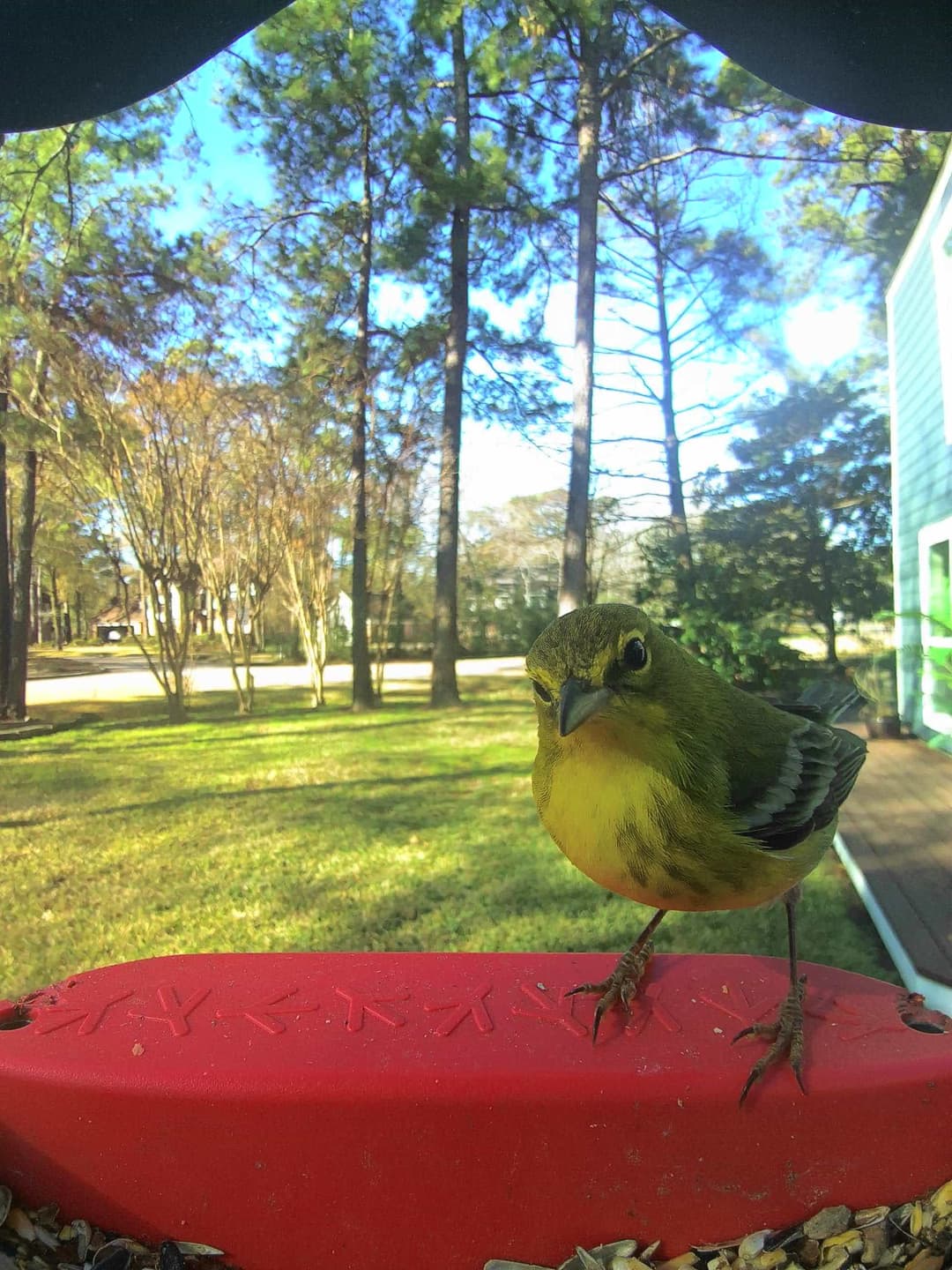
Black-Throated Blue Warbler vs Pine Warbler
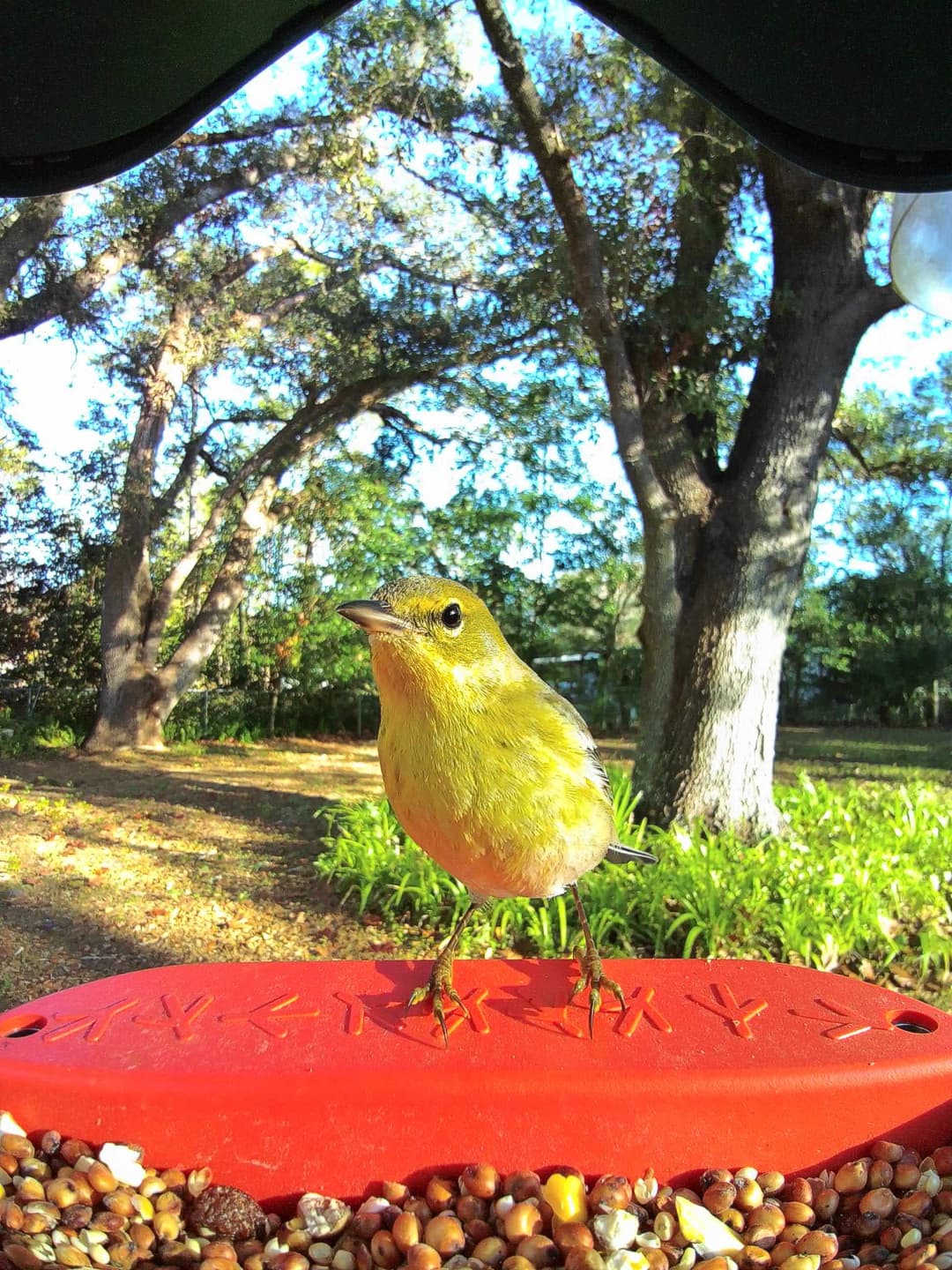
Black-Throated Blue Warbler vs Common Yellowthroat
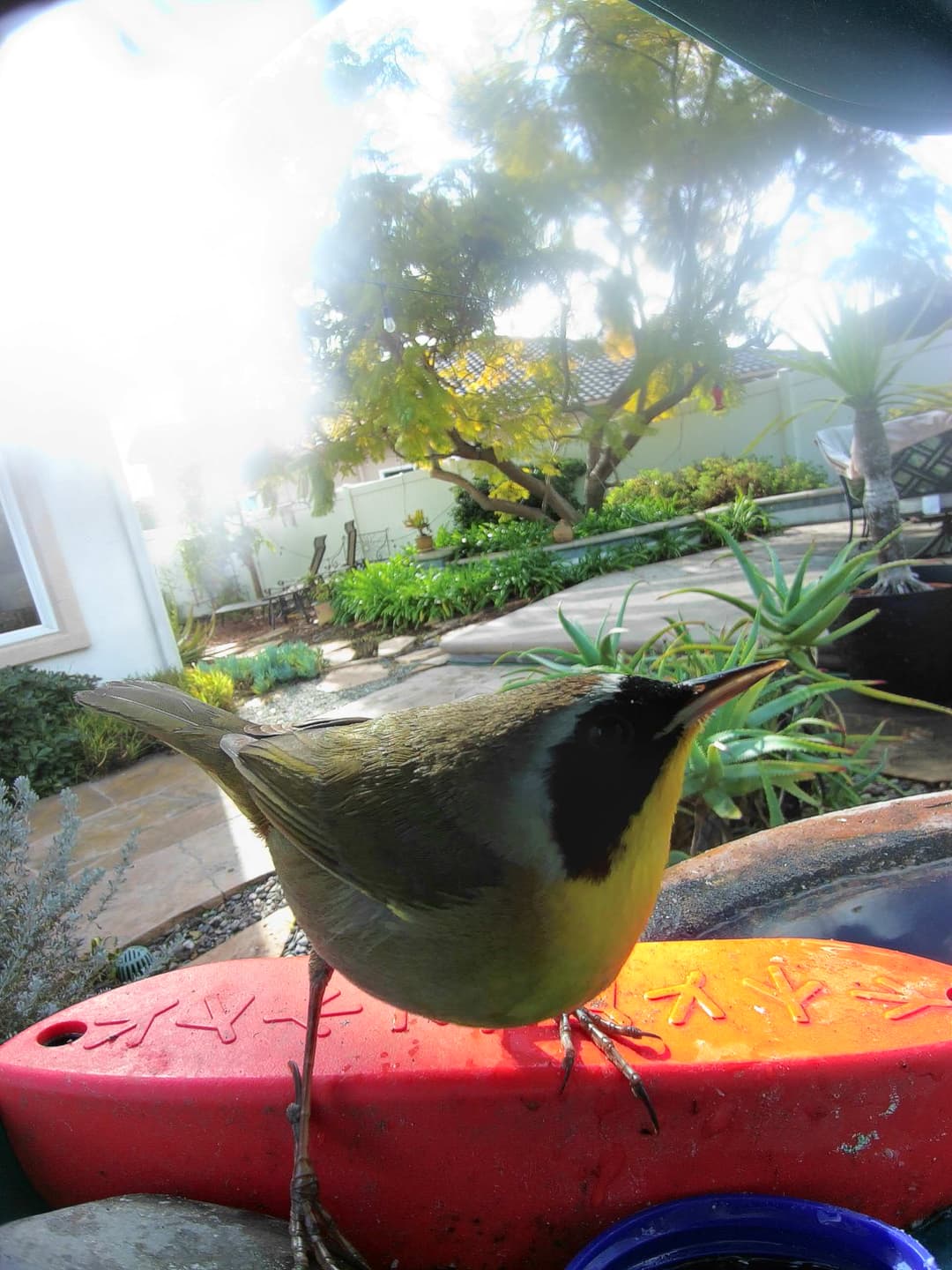
Orange-Crowned Warbler vs Chipping Sparrow
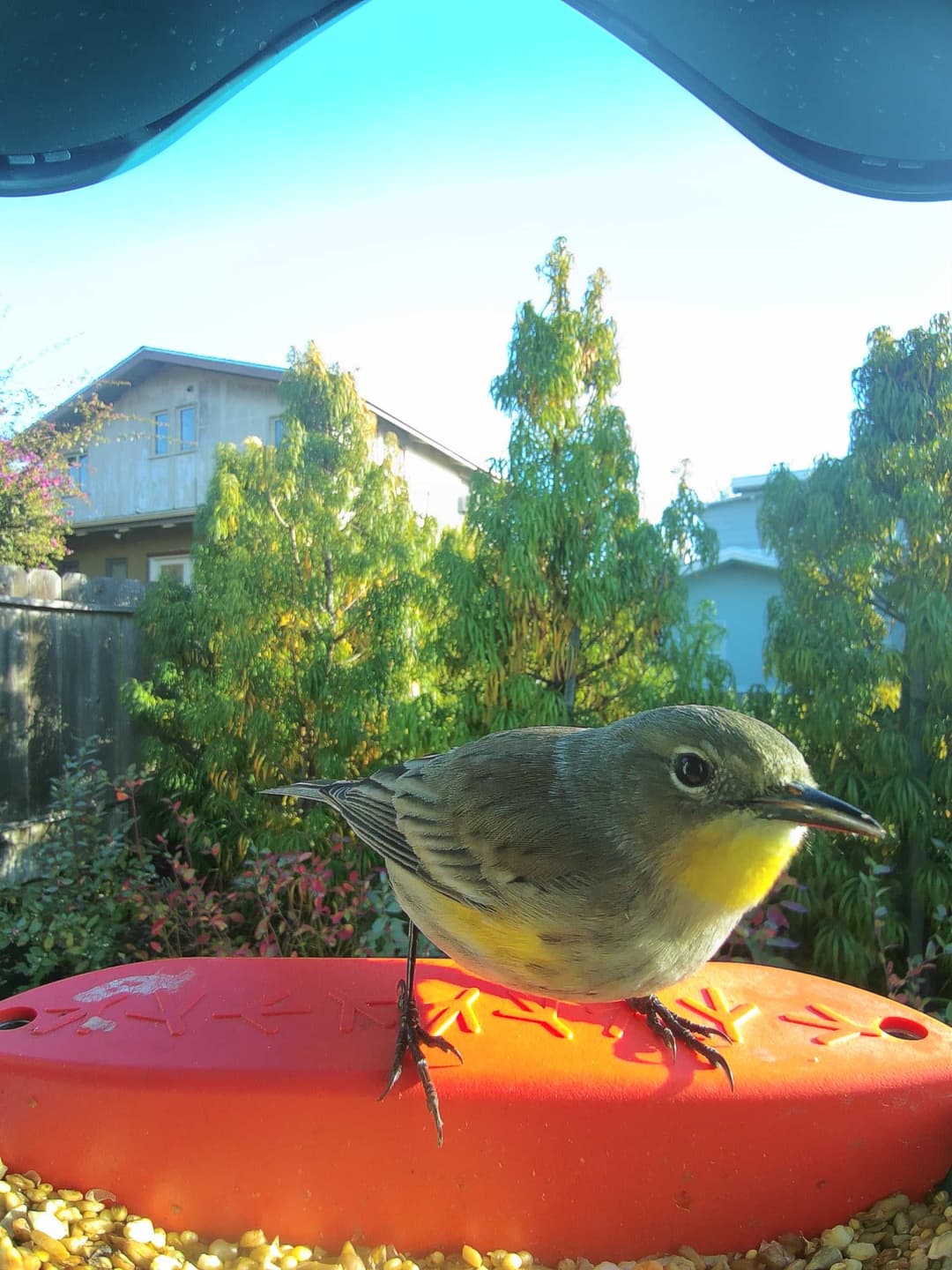
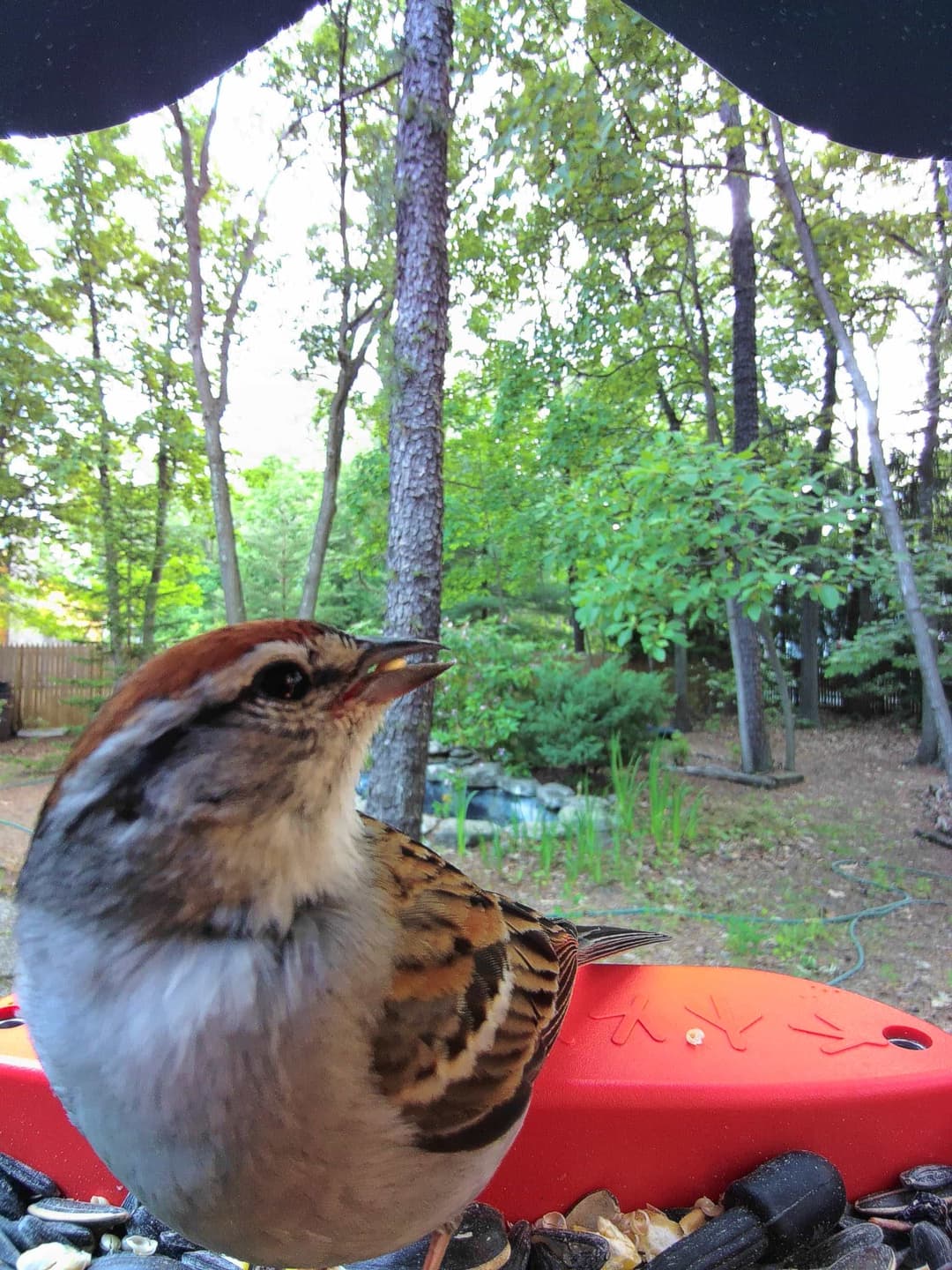
Orange-Crowned Warbler vs Tennessee Warbler
Black-Throated Blue Warbler vs [Select a bird]

[Select a bird]
Pick a bird to compare
Orange-Crowned Warbler vs [Select a bird]
[Select a bird]
Pick a bird to compare