Scaly-Breasted Munia or Eurasian Tree Sparrow?
Here's how to tell the difference
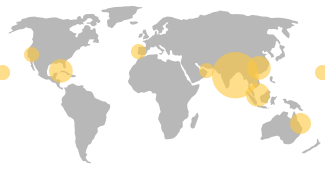
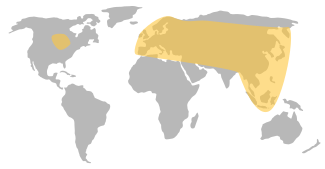
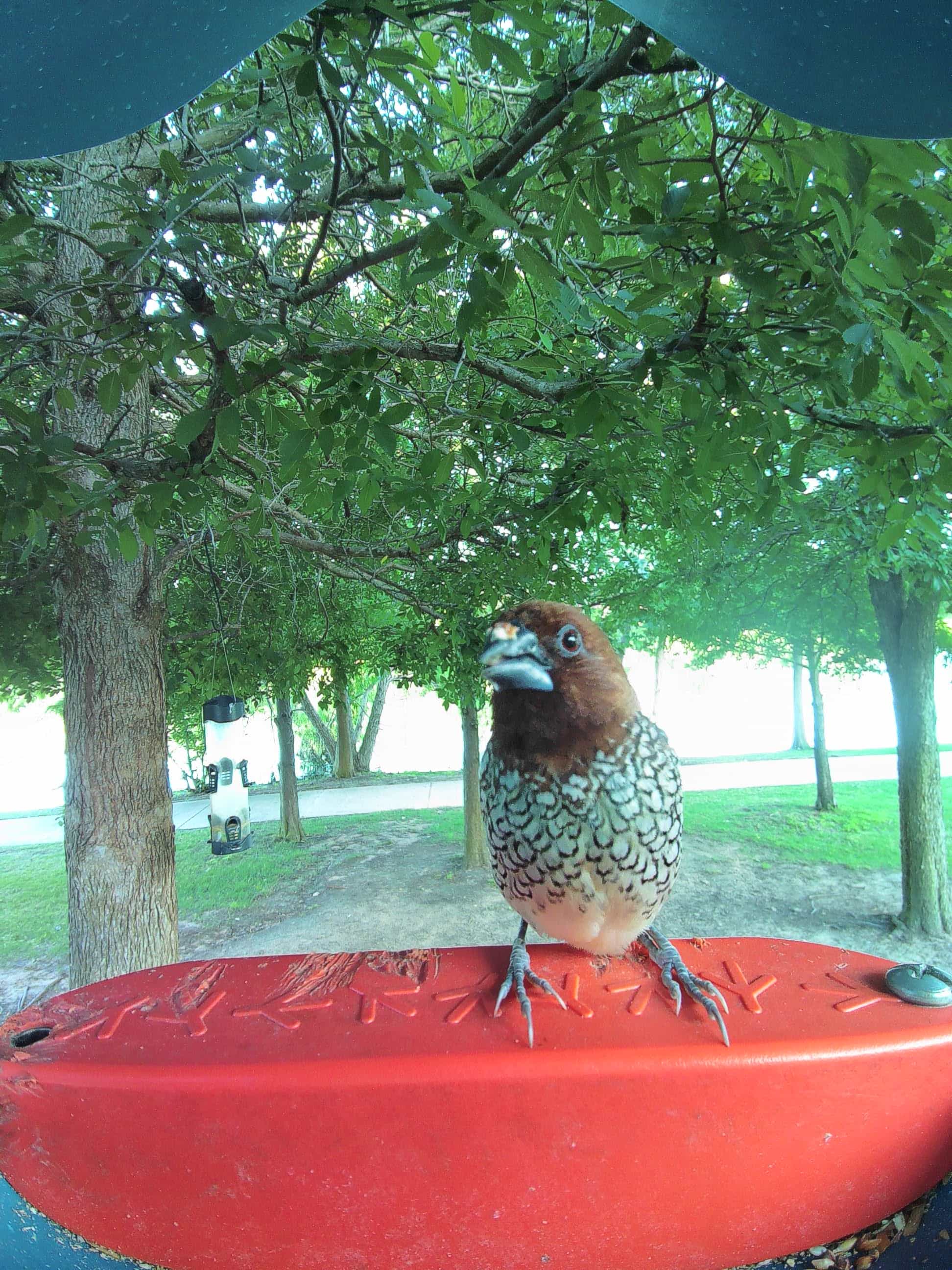


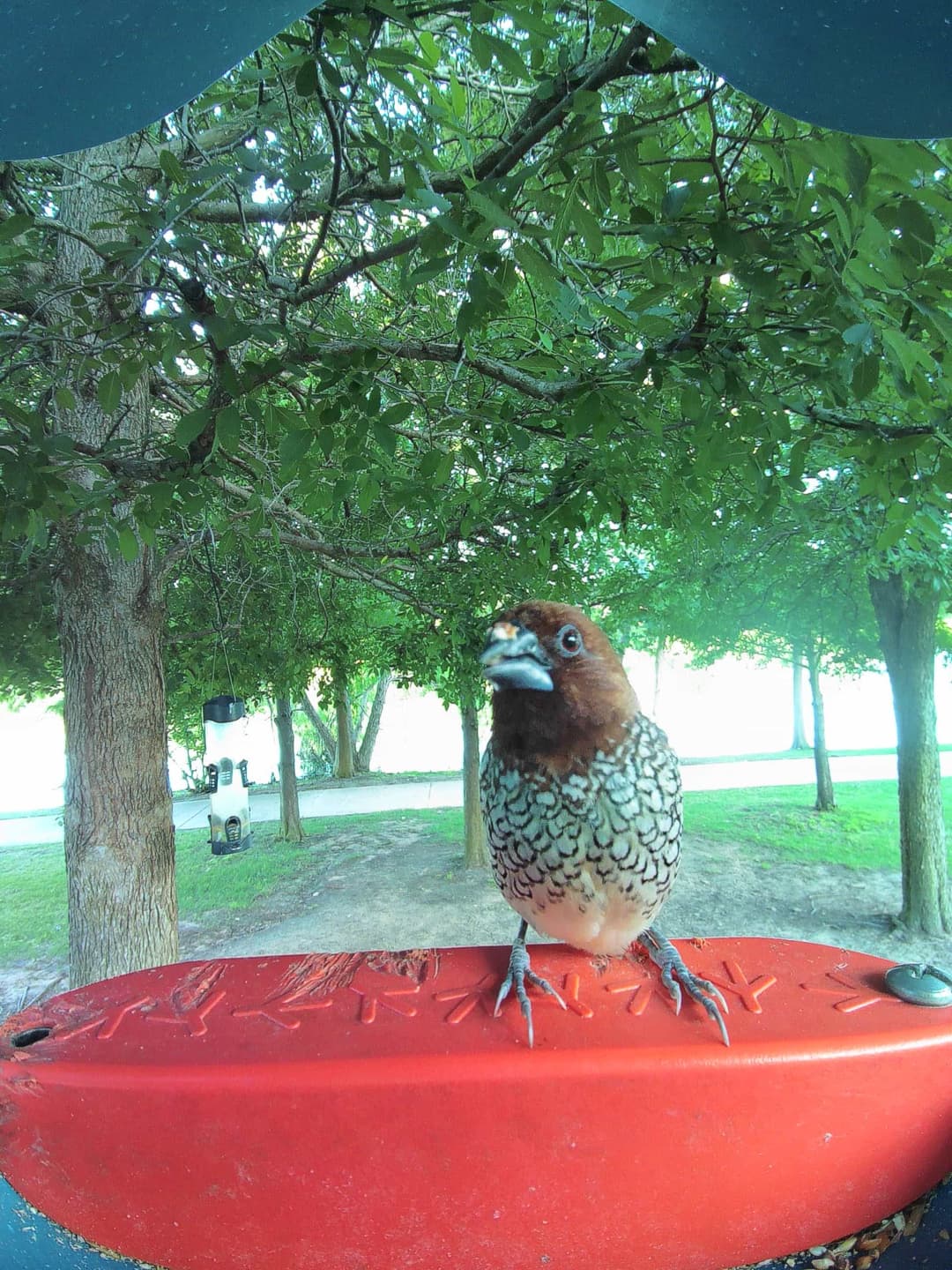
Scaly-Breasted Munia
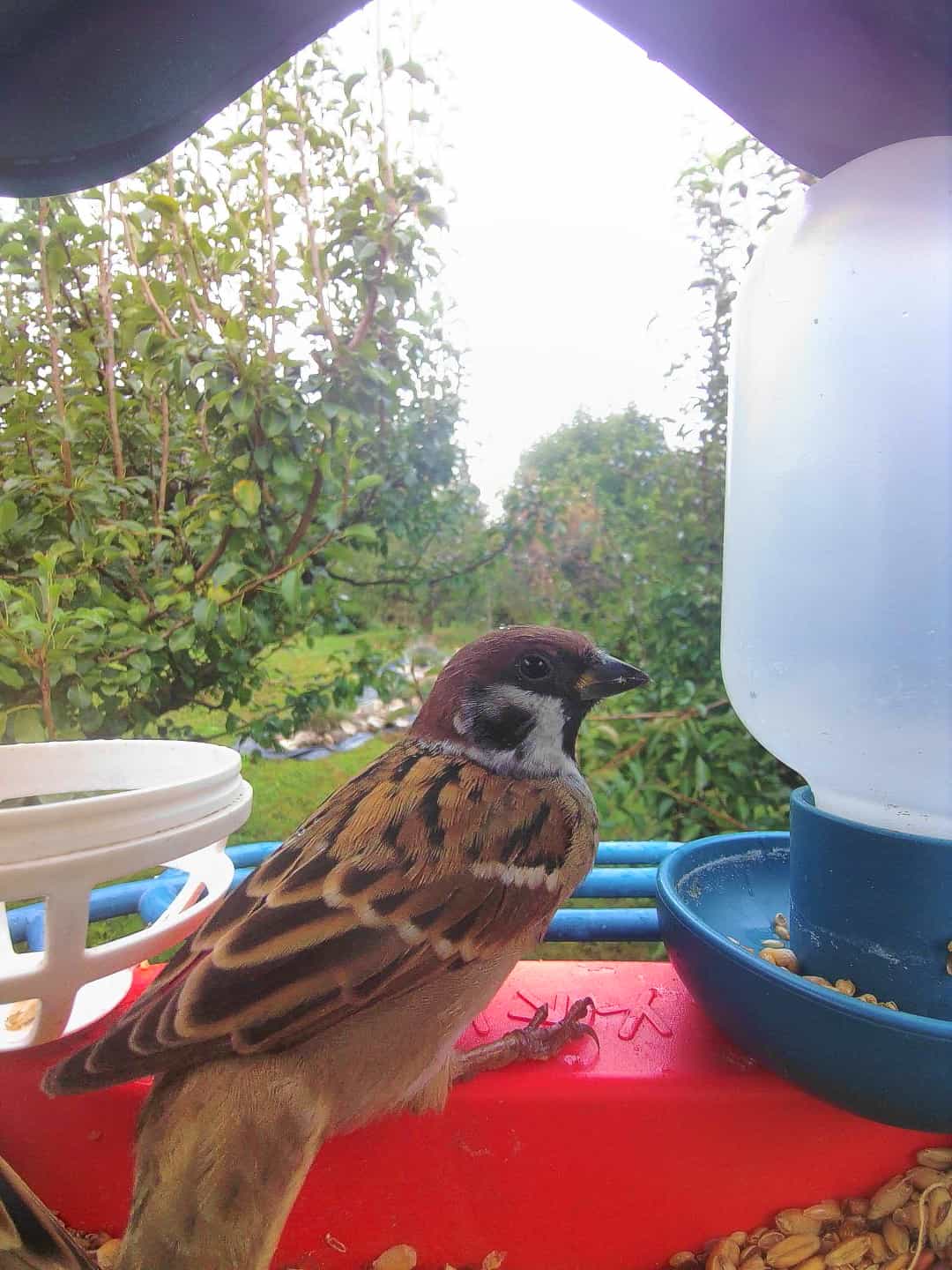


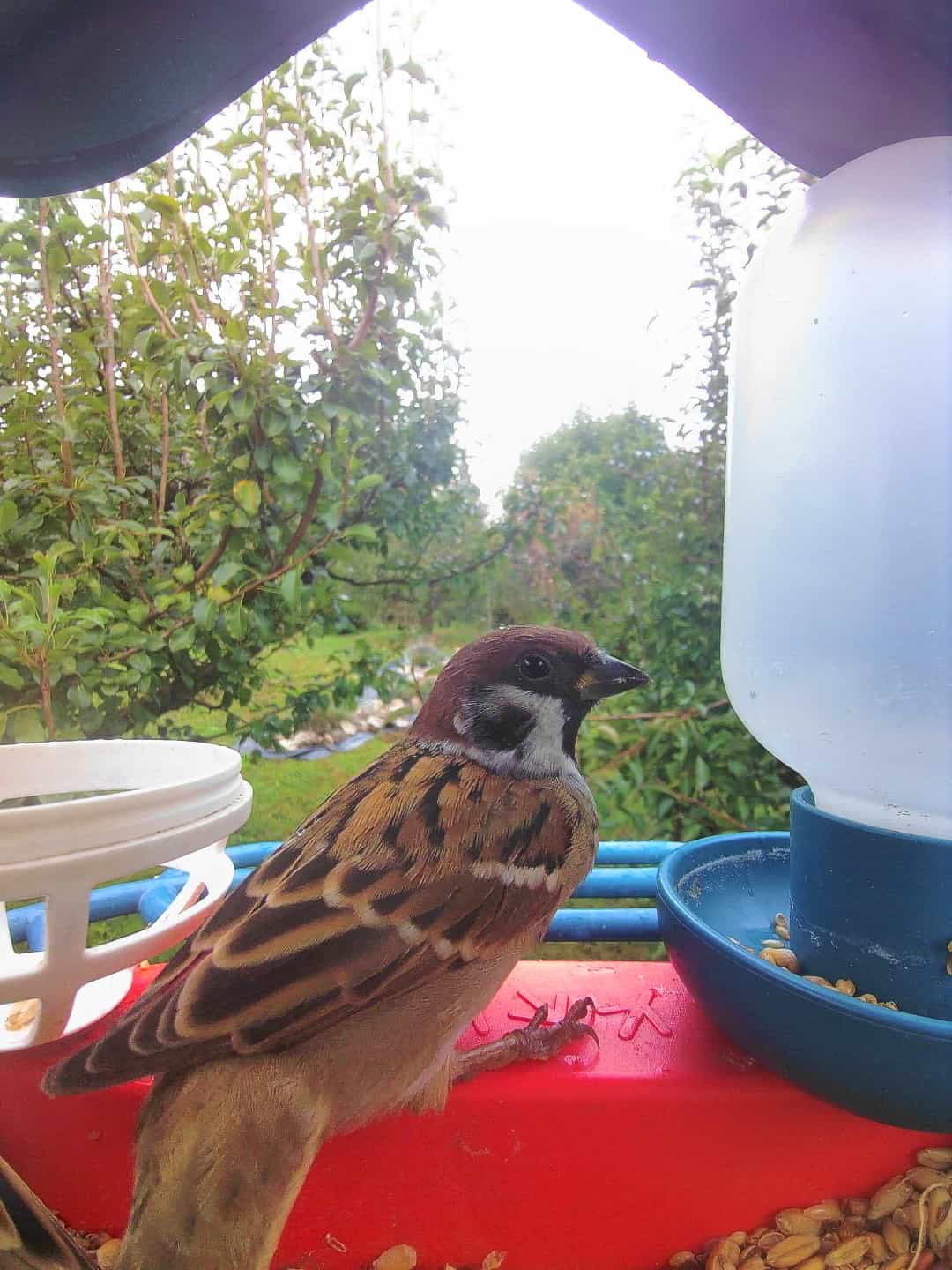
Eurasian Tree Sparrow
Scaly-Breasted Munia
Lonchura punctulata
Also known as: Spotted Munia, Nutmeg Mannikin, Spice Finch
General appearance
The scaly-breasted munia is a small passerine bird featuring a distinctive scale-like pattern on its breast and underparts. Its feathers are generally brown, with darker brown or black scaling. The wings and back have a warm chestnut hue, and the tail is short and pointed. The beak is stout and conical, ideal for seed-eating.
Male vs female
There is minimal sexual dimorphism in scaly-breasted munias. Both males and females have similar coloration and patterns, making them challenging to differentiate visually. However, during the breeding season, males may exhibit slightly more vibrant feathering and engage in courtship behaviors such as singing.
Juvenile
Juvenile scaly-breasted munias lack the distinct scale pattern of adults. Their plumage is primarily plain brown with lighter underparts, providing camouflage from predators. Over time, as they mature, the distinctive scaled pattern emerges. Identification in the wild involves listening for their soft calls and observing their social behavior in flocks, usually in grasslands and wetlands.
Size
3.9 - 5.1 in/0.4 - 0.6 oz
There's more to learn about Scaly-Breasted Munia
View full detailsEurasian Tree Sparrow
Passer montanus
Also known as: German Sparrow, Tree Sparrow
General appearance
The Eurasian tree sparrow is about the size of a House Sparrow, roughly 15 cm or 6 inches long. Its wing shape is either fingered or rounded and its tail may be notched, rounded, or square-tipped. It has a combination of colors; black, brown, gray, tan, and white. One distinctive feature is the brown crown on its head, differing from the gray crown of the House Sparrow. It also has a black ear spot on a white cheek.
Male vs female
Both male and female Eurasian tree sparrows resemble the male House Sparrow, and there is no notable sexual dimorphism between them. This means that both sexes share similar features such as a brown crown, white cheeks with black ear spot, and usually a smaller black bib. This species does not show significant changes in appearance between seasons.
Juvenile
Juvenile Eurasian tree sparrows tend to look like adults but their colors are more muted, making them less conspicuous to predators. As they mature, their colors will become more pronounced. It is noteworthy, however, that size or color variations may occur depending on their diet and habitat condition.
Size
4.9 - 5.5 in/0.6 - 1.0 oz
There's more to learn about Eurasian Tree Sparrow
View full detailsHow to tell the Scaly-Breasted Munia from the Eurasian Tree Sparrow
Visual differences
The Scaly-Breasted Munia is smaller (4-5 inches, 0.4-0.6 oz) with a distinctive brown, scale-like pattern on its breast and a short, pointed tail. Its beak is stout and conical. In contrast, the Eurasian Tree Sparrow is larger (5-6 inches, 0.6-1 oz) with a brown crown, black ear spot on white cheeks, and a more varied color palette including black, brown, gray, and white. Its tail is notched or rounded. Both species show little sexual dimorphism, but notable differences in plumage patterns aid identification.
Key differences and behavior
Scaly-Breasted Munias are highly social, often found in close-knit flocks, while Eurasian Tree Sparrows may form pairs that remain together across seasons. Munias favor brushy fields and woodland edges near water, whereas Tree Sparrows occupy semi-open habitats, including urban areas. Both species primarily eat seeds and insects, but Munias are more inclined to consume berries. In breeding, Munias construct spherical nests in dense foliage, with active courtship displays from both sexes. Tree Sparrows opt for cavity nests in trees or buildings, with less elaborate courtship. Munias are more communal in nesting, while Tree Sparrows have a stable pair bond for nesting. Munias are lighter (0.4-0.6 oz, 4-5 in) compared to heavier Tree Sparrows (0.6-1 oz, 5-5.5 in).
Still not sure? Here are more lookalikes!
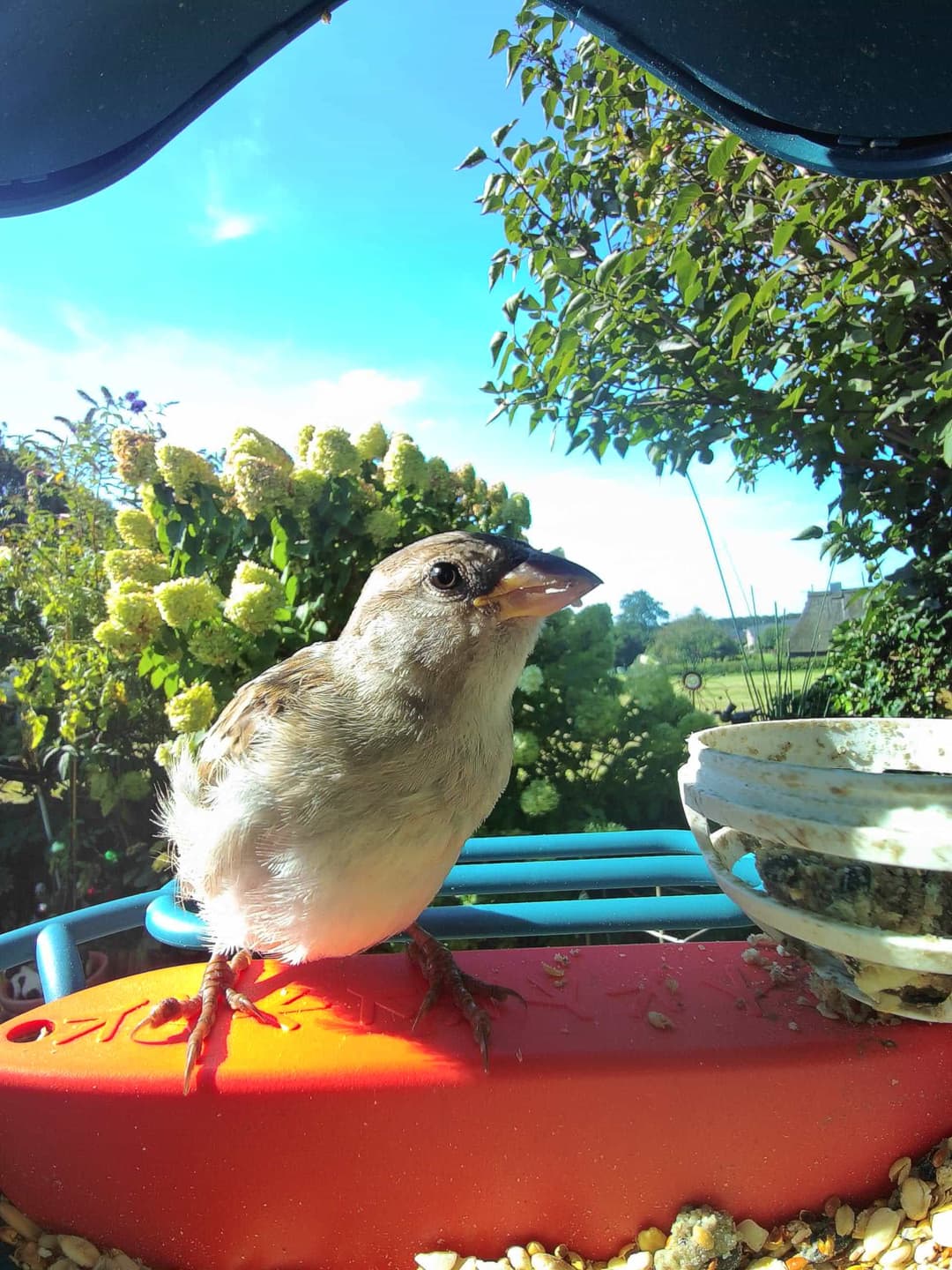
Scaly-Breasted Munia vs House Sparrow

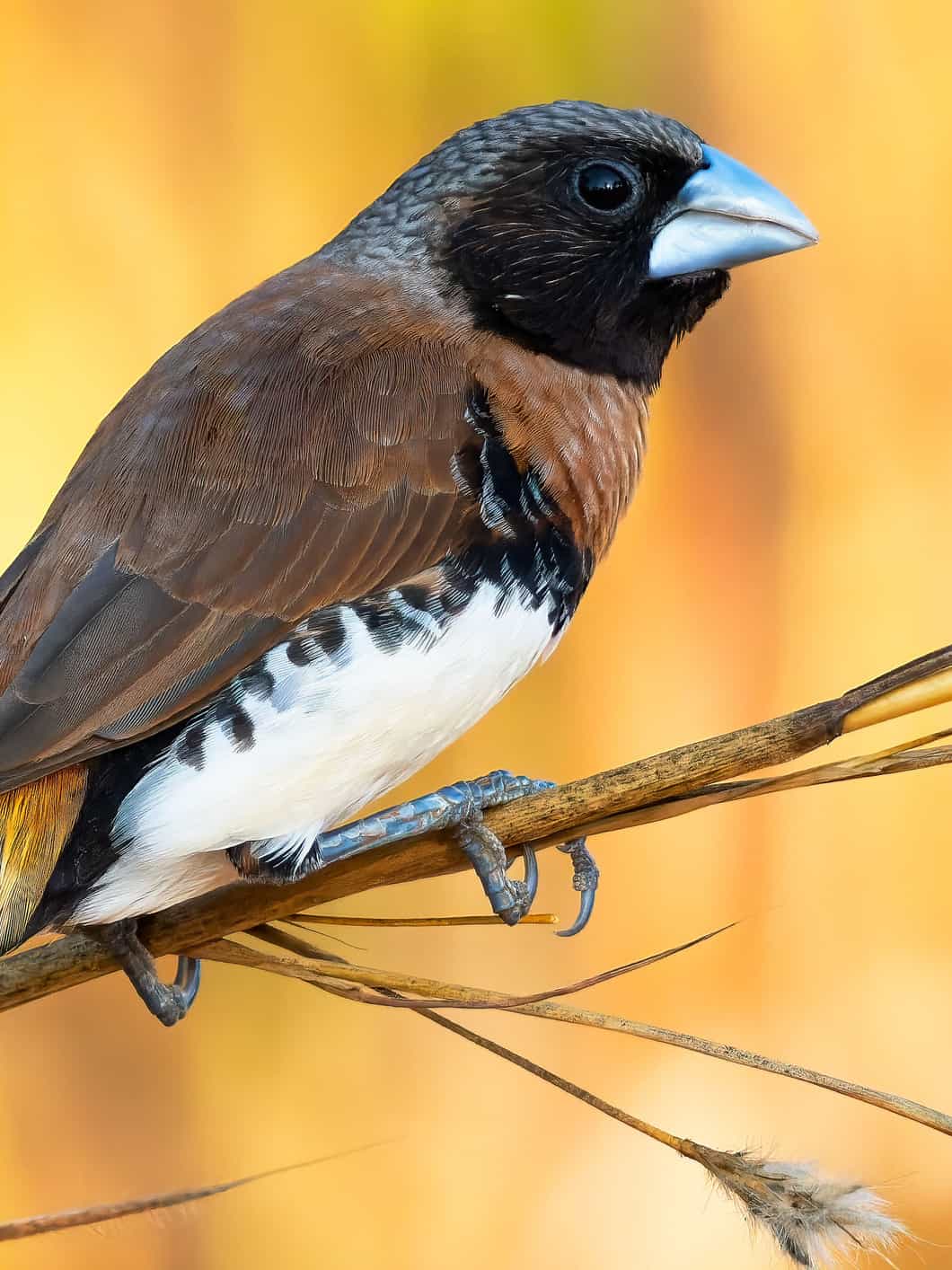
Scaly-Breasted Munia vs Chestnut-Breasted Munia
Eurasian Tree Sparrow vs House Sparrow
Eurasian Tree Sparrow vs Chipping Sparrow
Scaly-Breasted Munia vs [Select a bird]

[Select a bird]
Pick a bird to compare
Eurasian Tree Sparrow vs [Select a bird]
[Select a bird]
Pick a bird to compare