
Chestnut-Breasted Munia
Chestnut-Breasted Munia
Also known as: Chestnut-Breasted Mannikin, Bully Bird
Lonchura castaneothorax


Quick Identification guide
Quick Identification guide
- •
The chestnut-colored breast is a defining feature that stands out against the rest of the plumage
- •
Features a dark head and belly that contrast with its lighter underparts and sides
- •
The stubby, conical beak is specialized for seed eating and complements its compact body
What does a chestnut-breasted munia sound like?
The chestnut-breasted munia has a soft, warbling song that's complex and lengthy, often sung from a concealed location or during flight. Besides this melodious song, its common vocalizations include subdued 'seep' or 'pseet' calls, which are short, high-pitched, and continuous. These calls are typically utilised for maintaining contact with flock members or signifying alarm.


Description
Have you ever loved a food so much that you've ended up getting a nickname based on it? That's the story behind why the chestnut-breasted munia is referred to as the barley bird! Besides barley, there's something else they have an appetite for... dancing! Males perform an elaborate courtship dance for their lady of choice and they have really got some moves!
The chestnut-breasted munia can weigh between 12to15.5grams and be from10to11centimeters tall.
The Chestnut-breasted Munia typically lives for 5 to 8 years. This is similar to other small finch-like birds such as the Spice Finch and the Zebra Finch, indicating a similar lifespan within the family Estrildidae. However, like all species, exceptional individuals may live longer than the average.
Did you know?
Most popular questions about chestnut-breasted munia
How to recognise a chestnut-breasted munia?
General appearance
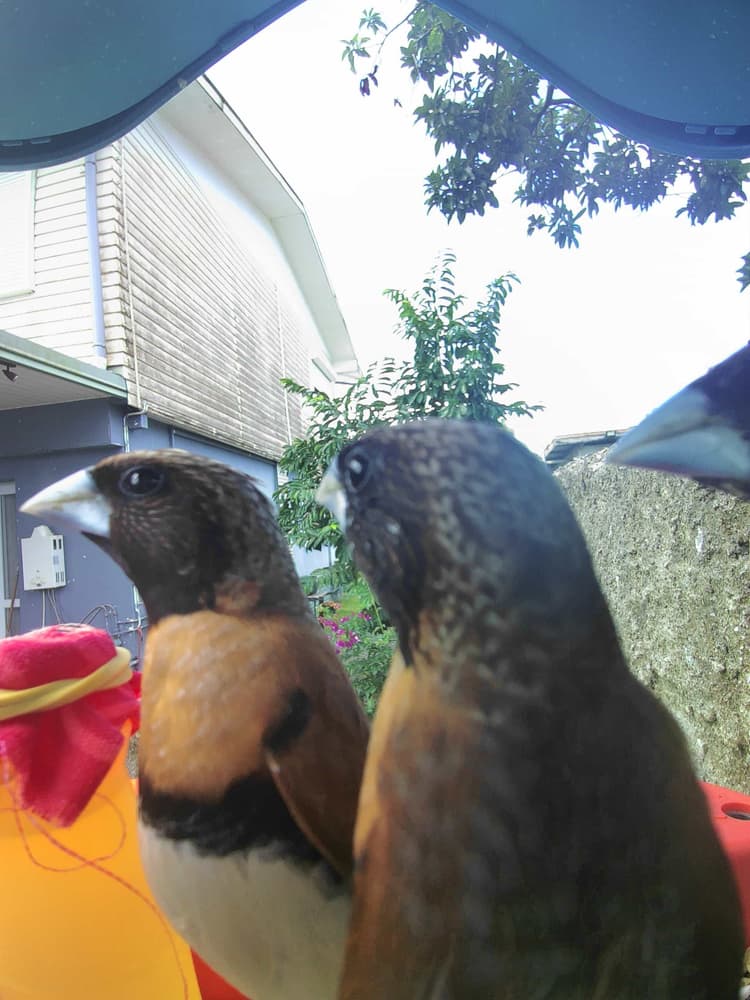
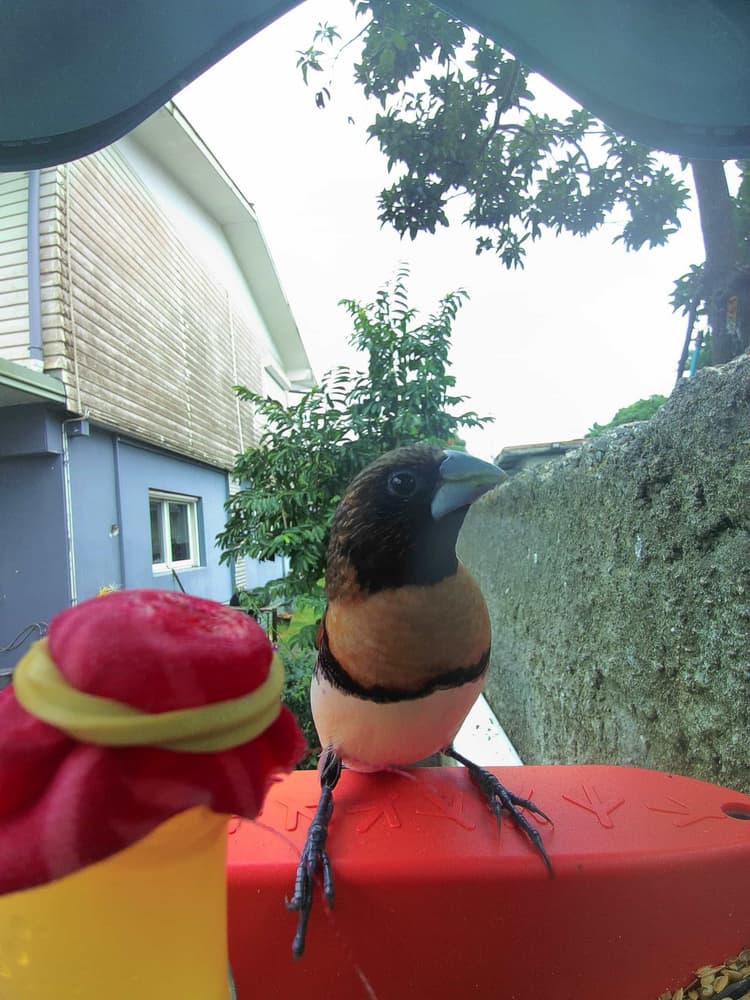
The chestnut-breasted munia is a small, finch-like bird roughly 11-12 cm long. It has a distinctive chestnut-colored breast and belly, contrasting sharply with its black head, tail, and back. Wings are brown and streaked subtly. The beak is blue-gray which adds to its distinctive appearance.
Male vs female
Both males and females display similar physical traits and coloration, making them nearly indistinguishable by appearance alone. Both sexes display the chestnut breast and black back and head. Females may have slightly less vibrant coloration but this is typically difficult to discern in the wild.
Juvenile
The juvenile chestnut-breasted munia has a distinctive appearance differing from adults. They are overall duller, with a pale brown body, grey-brown head, and a paler bill. The chestnut breast and vibrant black and brown coloration doesn't appear until they mature.
Often mistaken for
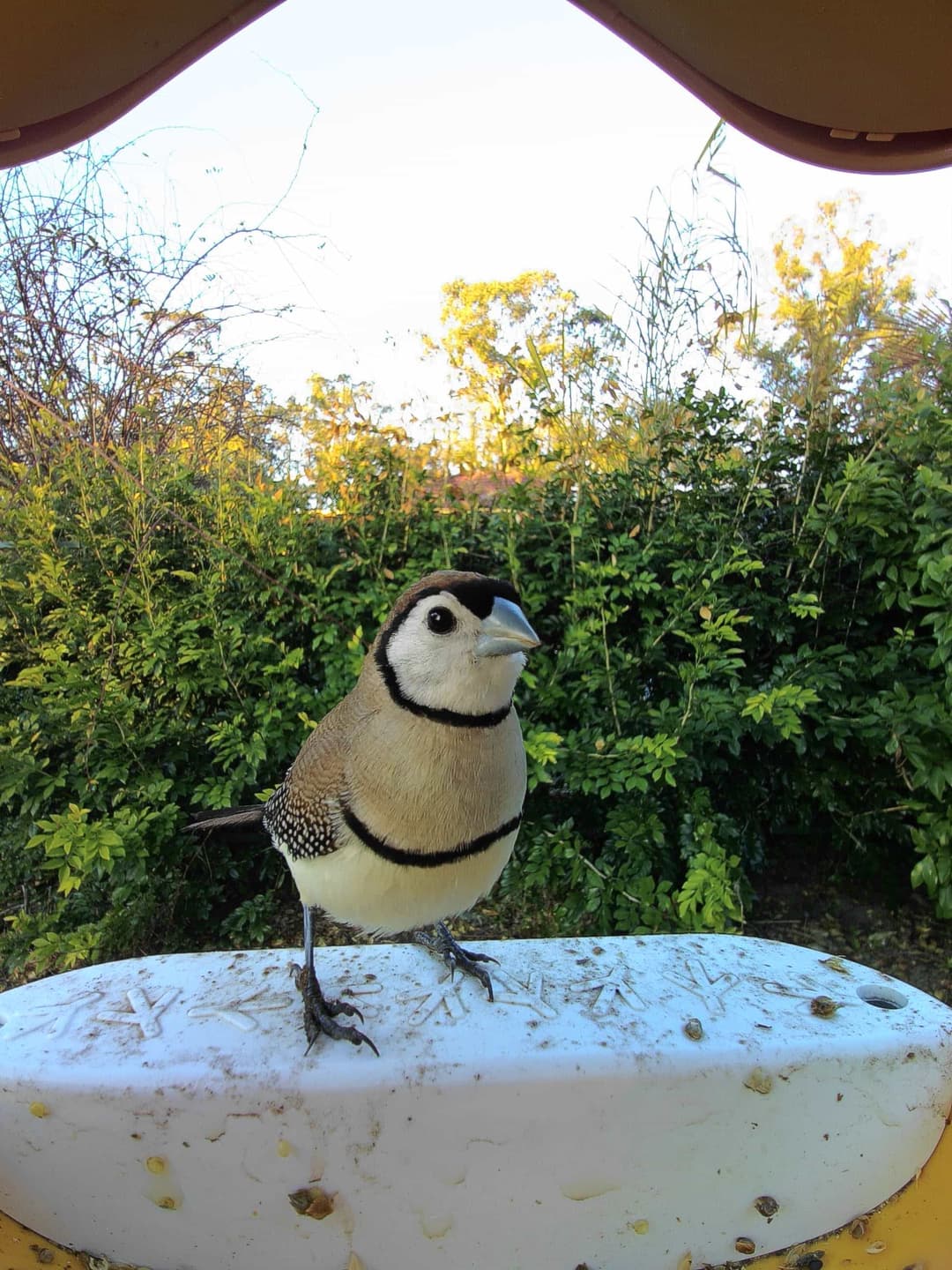
Double-Barred Finch vs Chestnut-Breasted Munia
The Double-Barred Finch resembles the Chestnut-Breasted Munia but can be distinguished by its distinctive white face bordered by a black line and its much smaller size.
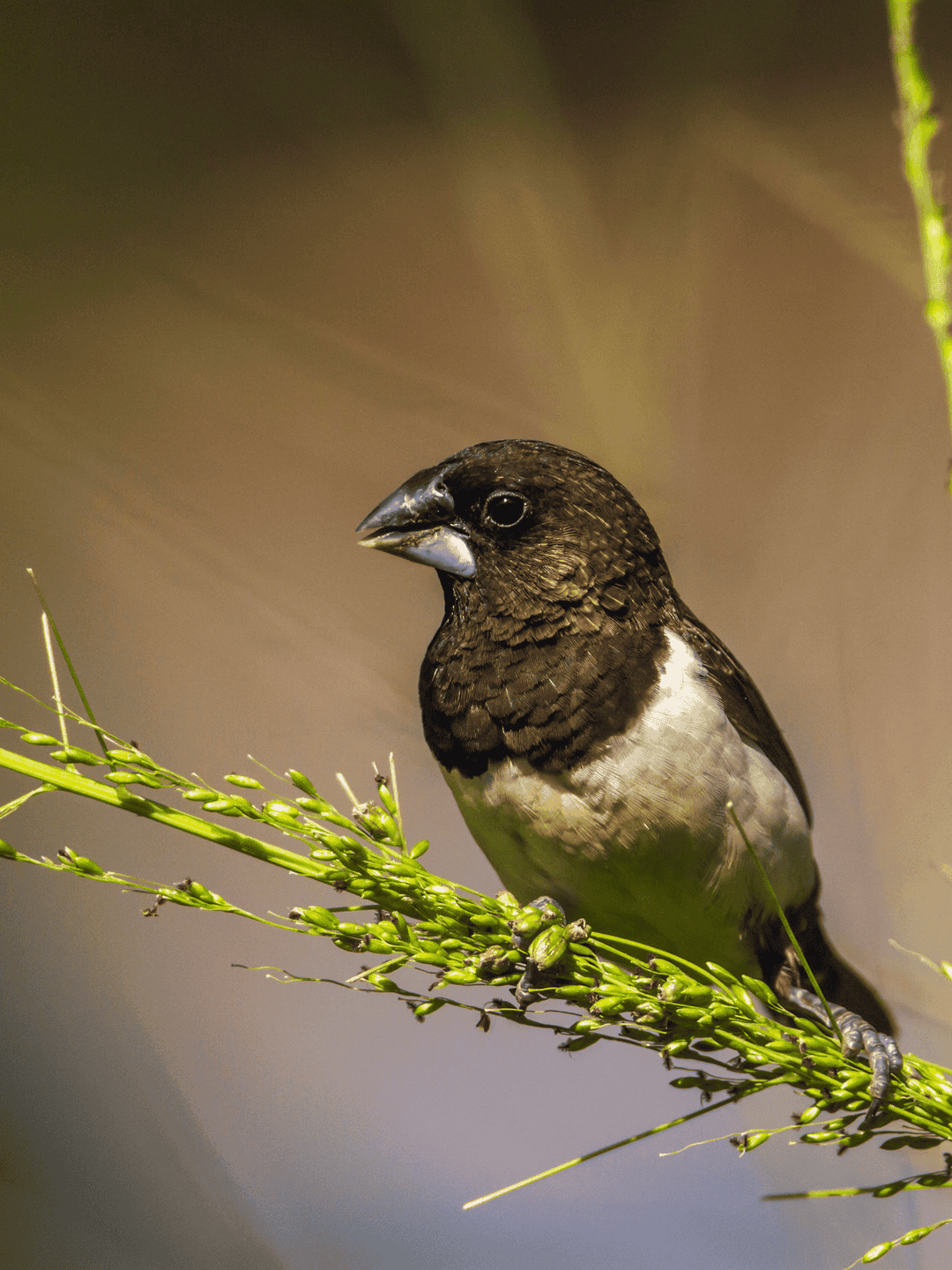
White-Rumped Munia vs Chestnut-Breasted Munia
The White-Rumped Munia is another small finch-like bird similar to the Chestnut-Breasted Munia. However, it can be identified by its distinct white rump and slightly paler overall coloration.
Scaly-Breasted Munia vs Chestnut-Breasted Munia
While the Scaly-Breasted Munia shares a similar body shape with the Chestnut-Breasted Munia, it has a distinctive scale-like pattern on its breast and underparts.
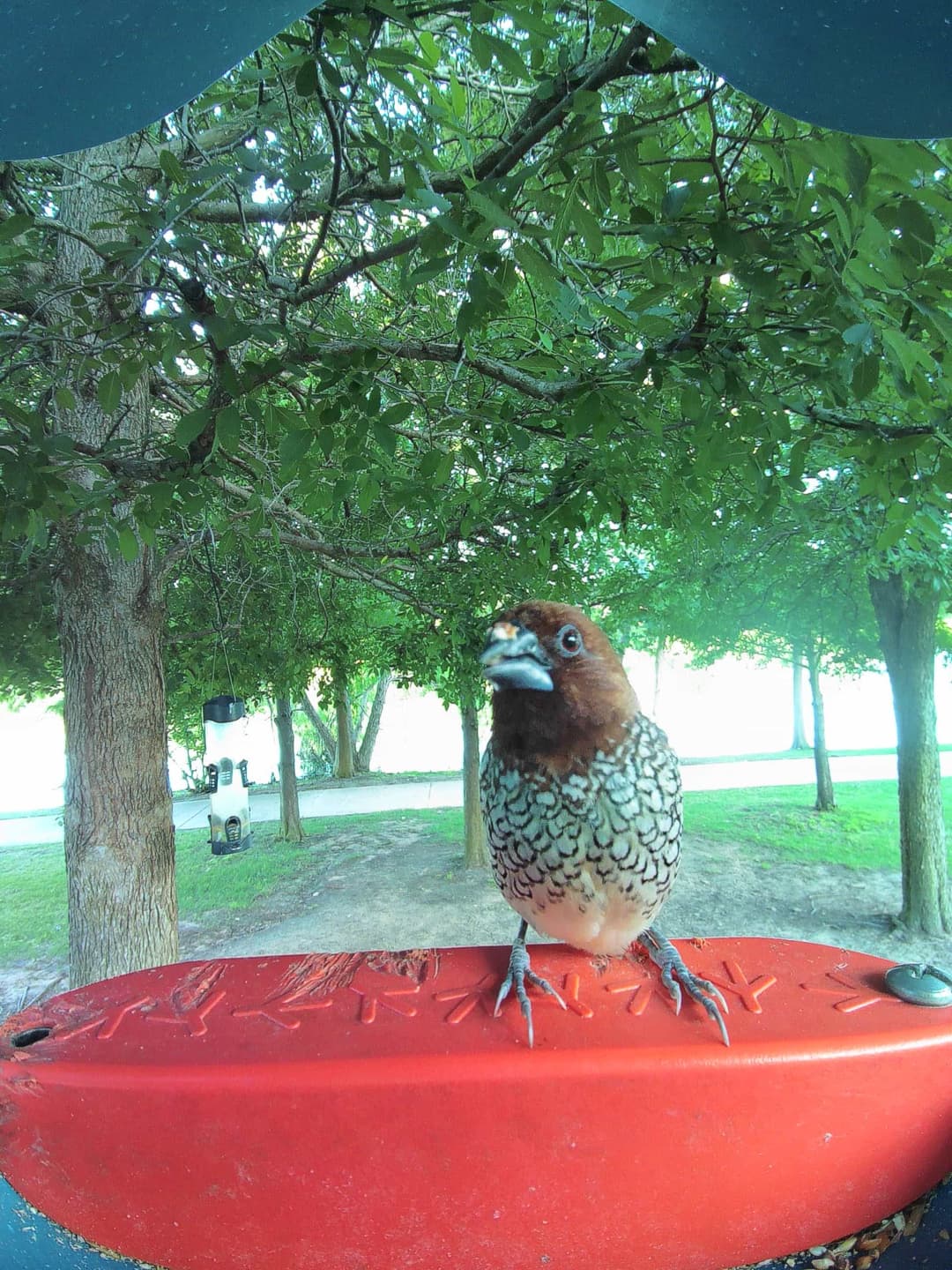
Zebra Finch vs Chestnut-Breasted Munia
The Zebra Finch could be mistaken for the Chestnut-Breasted Munia due to its size and finch-like appearance. However, it has a bright orange beak and distinctive markings on its face and body.

Breeding and nesting habits of the chestnut-breasted munia
Mating behaviors
Chestnut-breasted munias engage in elaborate courtship displays. Males puff out their chest feathers, perform hopping flights, and sing melodious tunes to attract a mate. Courtship often includes mutual preening and selecting nesting sites together.
Nesting details
They typically nest in tall grasses, reeds, or low shrubs, using fine grasses, leaves, and feathers as materials. The nests are globe-shaped structures with a side entrance. These birds can adapt to gardens. Planting native grasses and providing dense shrubbery creates an ideal habitat for nesting.
Eggs and chick-rearing
Females lay 4–6 eggs per clutch, incubated for about 14 days. Both parents participate in incubation and feeding. Chicks are fed regurgitated seeds and fledge within three weeks. Parental care continues for a short period post-fledging to ensure survival.
What does a chestnut-breasted munia like to eat?
Insects
Plants
Seeds
Natural diet
The chestnut-breasted munia primarily feeds on seeds, particularly those from grasses such as Panicum and Paspalum species. It also consumes insects, especially during the breeding season, to provide necessary protein. Occasional fruits and small berries complement its diet.
Bird feeders
At bird feeders, the chestnut-breasted munia commonly eats millet, canary seed, and other small seeds. It may also enjoy finely chopped greens and fruits if available, and can adapt to mixed seed blends typically provided in bird feeders.
Feeder types for attracting chestnut-breasted munias
Chestnut-breasted Munias are small finch-like birds that prefer tube or hopper type feeders. These feeders should be placed in a quiet and safe location, preferably shaded and near bushes or trees where they can seek refuge if they feel threatened.
Snacks for chestnut-breasted munia
These birds have a preference for small seeds, making millets a great choice. Also consider adding a variety of seeds to cater to their varied diet. Bird Buddy seeds are highly recommended as they are chosen by experts according to the season, ensuring the seeds are always fresh and appealing.
Fun tricks to encourage visits
Munias are sociable birds that are attracted to bird baths and moving water. Adding a pond or birdbath to your yard could attract them. Also, they are more likely to stay around if they feel safe. Therefore, provide plenty of bushes or trees for them to retreat to.
Creating a sing-along environment
If you want to encourage the munias to stay and sing, create a peaceful and calm environment. Make sure there are no cats or other predators around. Playing soft bird song recordings can also stimulate singing.
Where can you find chestnut-breasted munias?

Primary habitat
The Chestnut-breasted Munia primarily inhabits grasslands and wetlands in Australia, Indonesia, East Timor, Papua New Guinea, and Solomon Islands.
Additional range
Unexpectedly, this bird also thrives in human-altered environments like sugarcane fields, rice paddies, and urban gardens. It prefers warm, tropical climates.
Do they migrate?
The chestnut-breasted munia is generally a resident species, meaning it usually stays in one place year-round rather than undertaking long migrations. This bird is native to Australia, where it predominantly inhabits northern and eastern regions, including Queensland and New South Wales. Its habitat typically includes grasslands, shrublands, and wetlands, as well as cultivated areas such as rice fields. Although the chestnut-breasted munia is not migratory, it may exhibit some local movement or dispersal in response to changes in food availability, especially outside the breeding season. These movements are often short distances, within suitable habitats, rather than long migratory journeys. Birds in wetter areas may move slightly during dry spells, seeking more favorable environmental conditions. However, these are not considered true migrations like those seen in some other bird species. The munia's fidelity to particular regions and habitat types characterizes its generally sedentary lifestyle. Consequently, any movements it does make are typically irregular and influenced by local climatic and ecological factors, rather than seasonal migratory patterns.
What is the role of chestnut-breasted munias in nature and how to protect them?
Conservation status
The chestnut-breasted munia is classified as "Least Concern" on the IUCN Red List, indicating it is relatively common and not under significant threat. This small songbird thrives in a variety of habitats, including grasslands, wetlands, and agricultural areas. Conservation efforts primarily focus on habitat preservation, as habitat loss due to agriculture and development poses a potential threat. However, due to its adaptability and extensive range, the species currently faces no major, immediate risks. Continued monitoring and habitat management are essential to maintain stable populations.
Ecological role of chestnut-breasted munias
Its role in the ecosystem
The Chestnut-breasted Munia, also known as Lonchura castaneothorax, is native to Australia and has considerable ecological significance primarily through its role in seed dispersal. As with many bird species, it feeds on a variety of seeds, which often remain unbroken inside the bird's gut. When the munia defecates, these seeds are scattered in different geographic locations, aiding in the natural movement and propagation of plant species. The contribution to seed dispersal not only encourages plant growth but also creates opportunities for biodiversity in flora. Additionally, these tiny birds can also play a role in controlling pests by feeding on insects and larvae at times, reducing the levels of these small pests in their habitats. Therefore, the survival and thriving of the Chestnut-breasted Munia have implications for maintaining the health and diversity of the ecosystem it inhabits.
How to help protect chestnut-breasted munias
Preservation tips
Habitat preservation strategies for chestnut-breasted munia
Focus conservation efforts on preserving and restoring existing habitats, particularly wet grasslands and rice fields, where the species primarily resides. Implementing buffer zones around their habitats can inhibit encroachment. Campaigns for sustainable farming practices can also help minize the use of pesticides harmful to the species.
Community science initiatives for chestnut-breasted munia
Engage local communities in citizen science projects, such as birdwatching and nest monitoring, to gather data on population size, breeding success, and habitat use. This not only helps in monitoring the species' health but also instills conservation values among the populace. Encourage community-led initiatives to build nest boxes for these birds in safe areas.