Scaly-Breasted Munia or House Sparrow?
Here's how to tell the difference


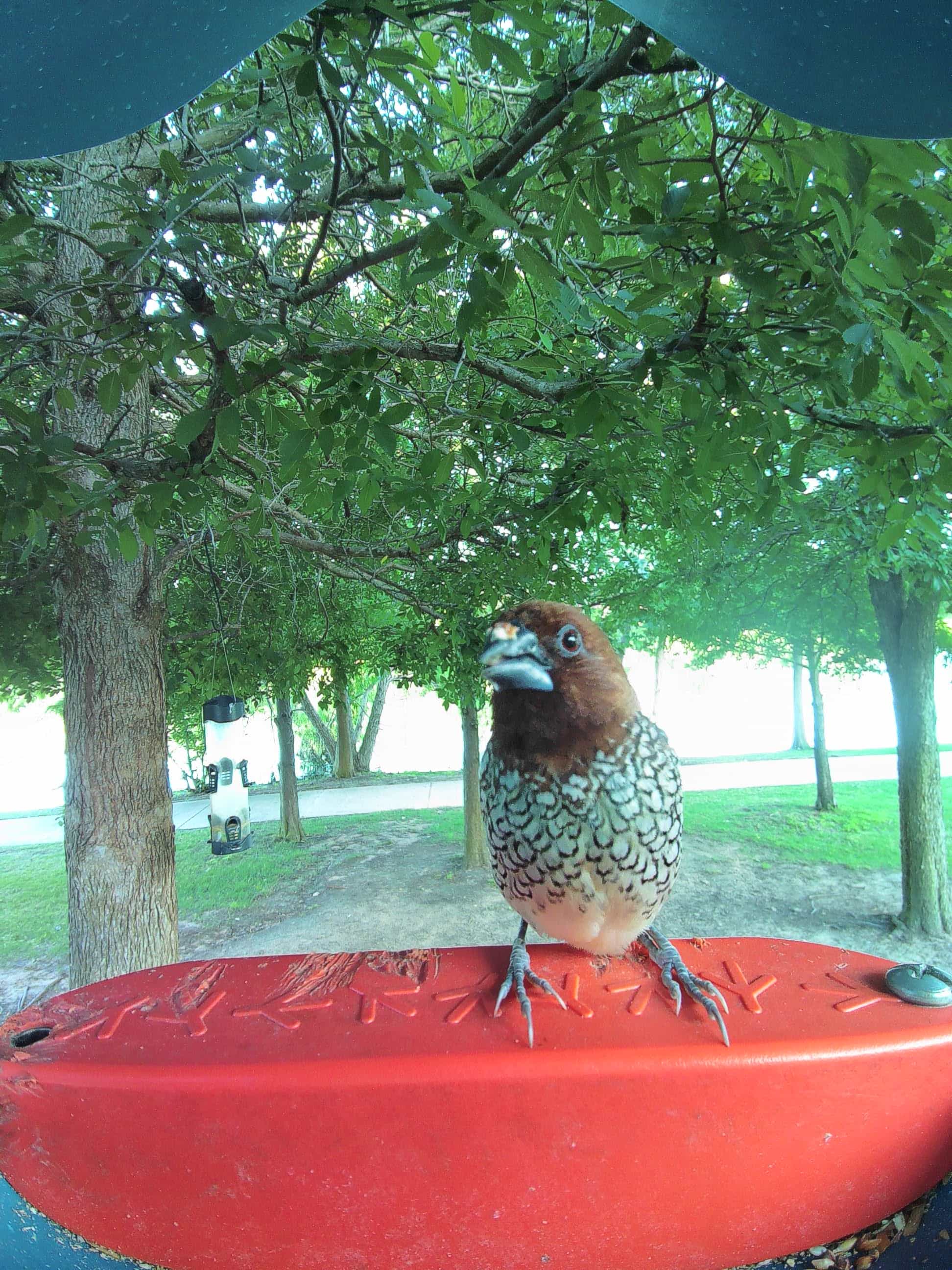


Scaly-Breasted Munia
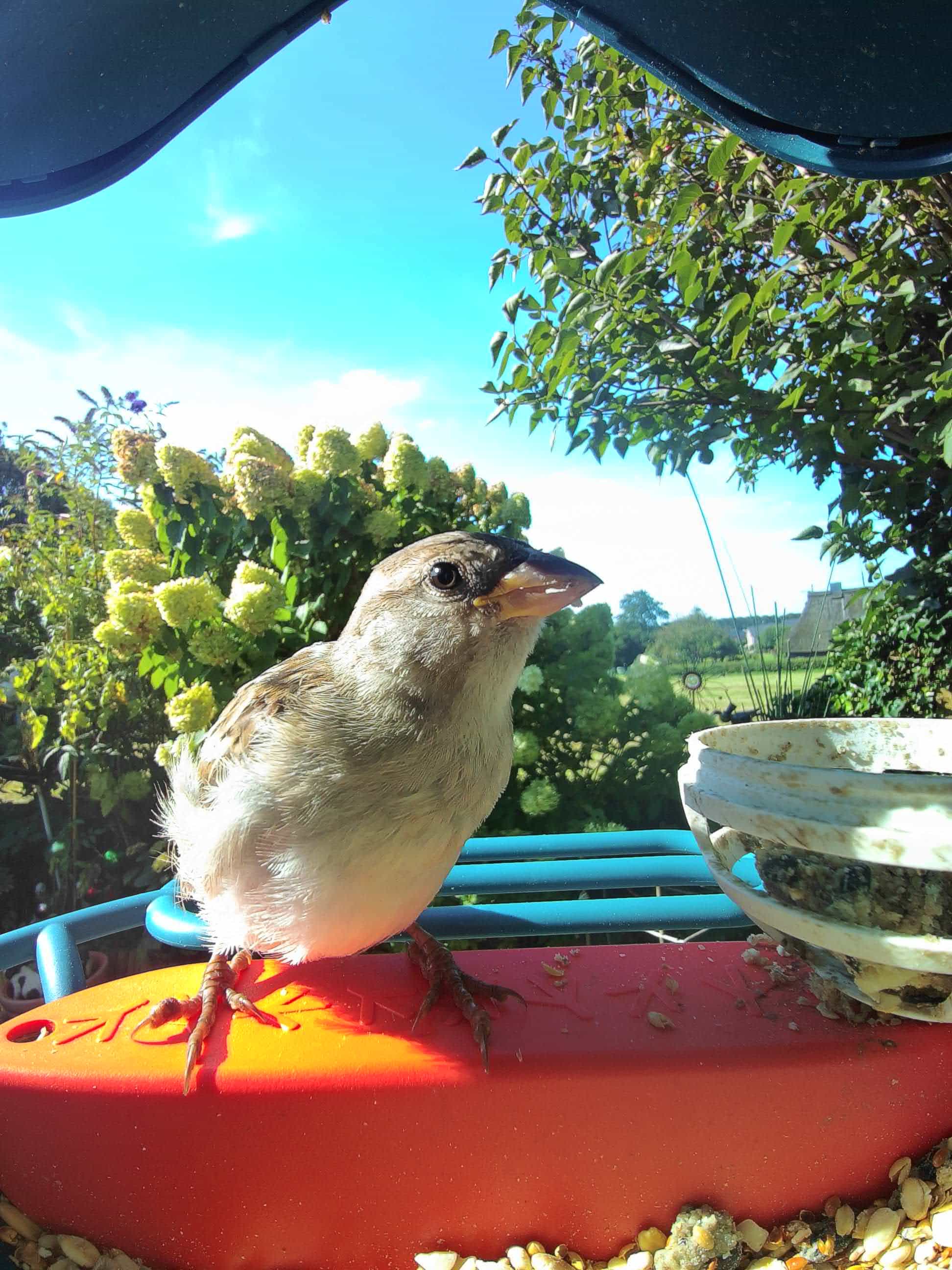


House Sparrow
Scaly-Breasted Munia
Lonchura punctulata
Also known as: Spotted Munia, Nutmeg Mannikin, Spice Finch
General appearance
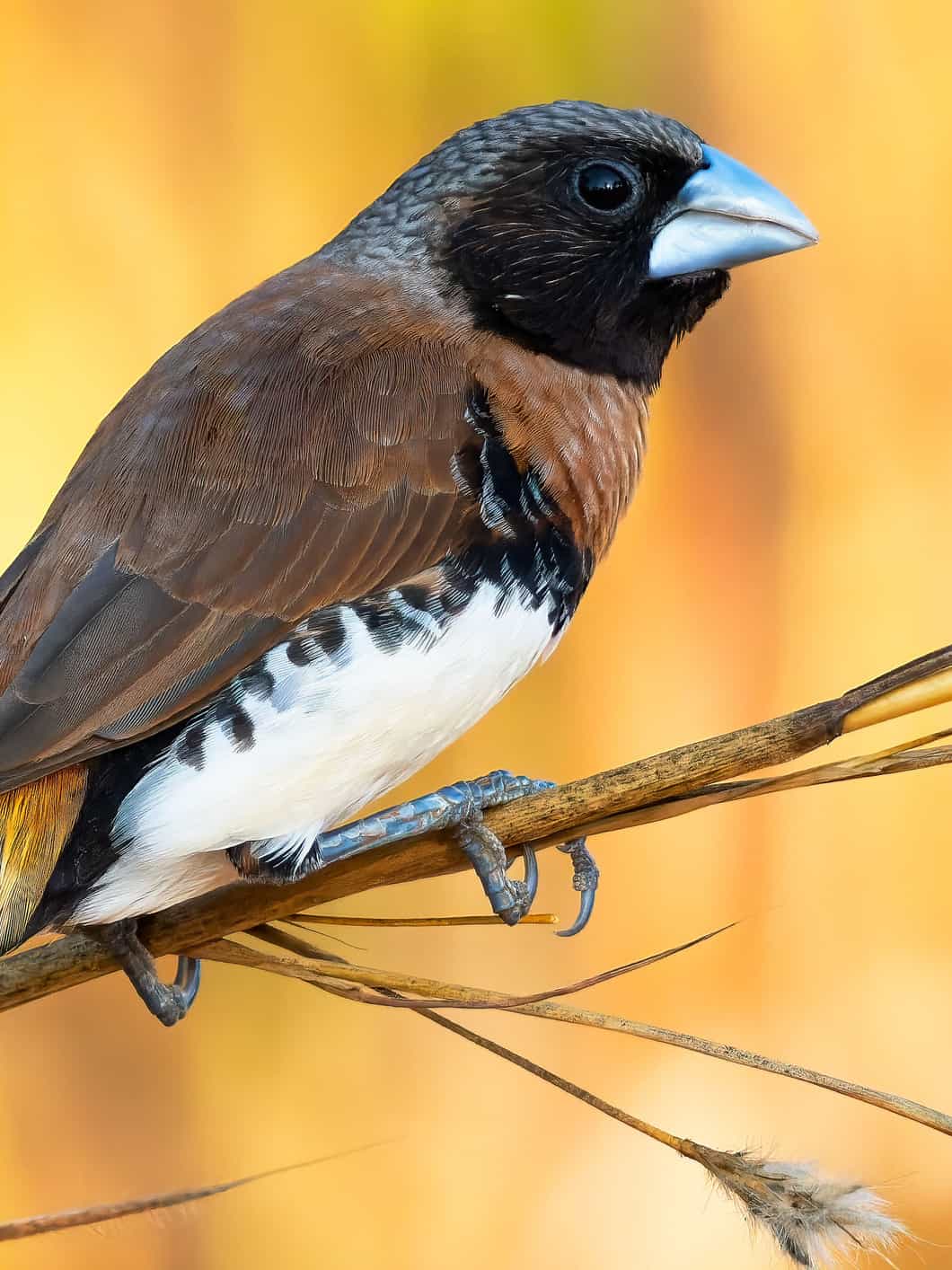
The scaly-breasted munia is a small passerine bird featuring a distinctive scale-like pattern on its breast and underparts. Its feathers are generally brown, with darker brown or black scaling. The wings and back have a warm chestnut hue, and the tail is short and pointed. The beak is stout and conical, ideal for seed-eating.
Male vs female
There is minimal sexual dimorphism in scaly-breasted munias. Both males and females have similar coloration and patterns, making them challenging to differentiate visually. However, during the breeding season, males may exhibit slightly more vibrant feathering and engage in courtship behaviors such as singing.
Juvenile
Juvenile scaly-breasted munias lack the distinct scale pattern of adults. Their plumage is primarily plain brown with lighter underparts, providing camouflage from predators. Over time, as they mature, the distinctive scaled pattern emerges. Identification in the wild involves listening for their soft calls and observing their social behavior in flocks, usually in grasslands and wetlands.
Size
3.9 - 5.1 in/0.4 - 0.6 oz
There's more to learn about Scaly-Breasted Munia
View full detailsHouse Sparrow
Passer domesticus
General appearance
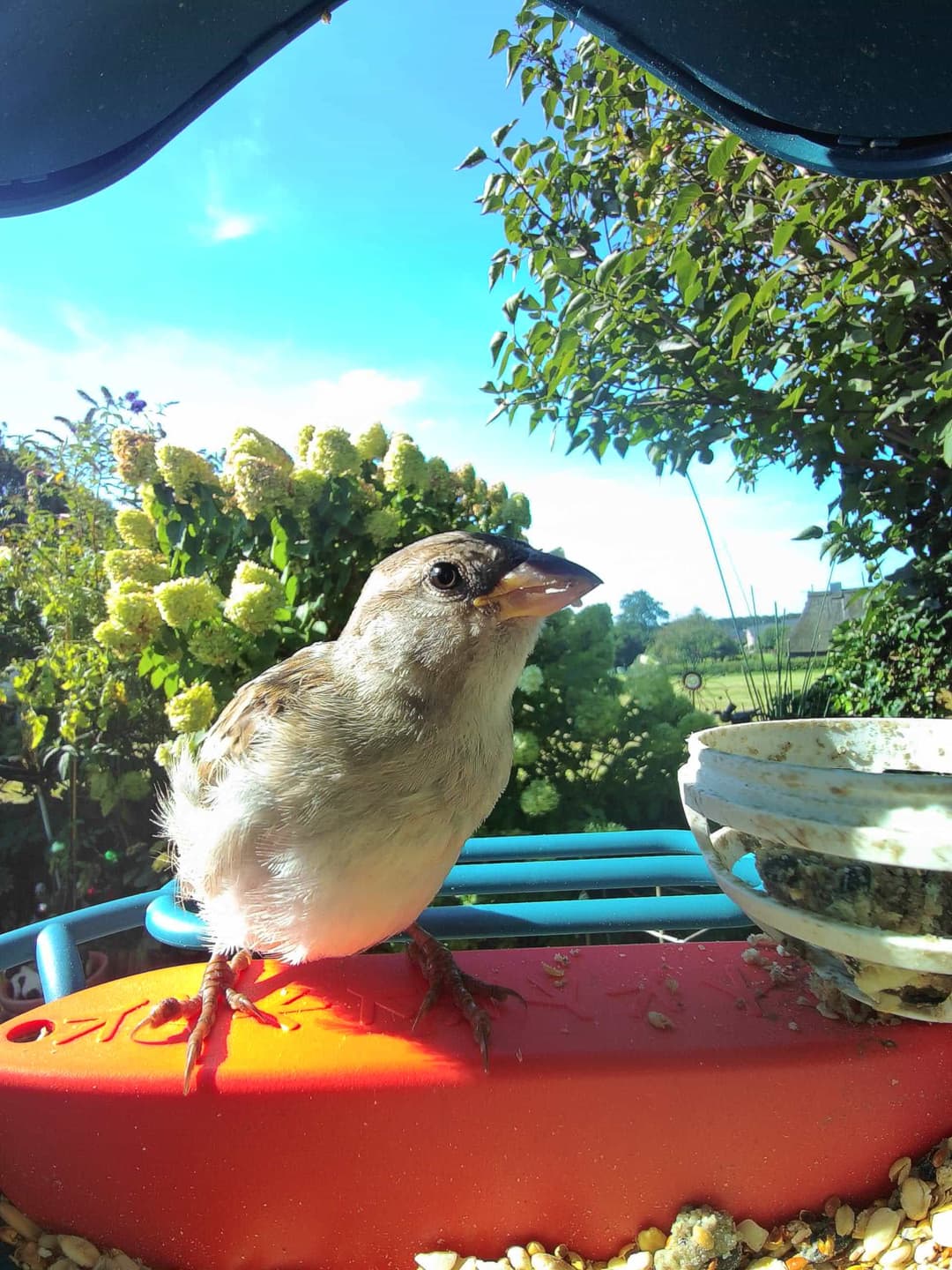
House sparrows are small, stocky birds measuring about 16 cm in length. They have a short tail and a stout bill. Their plumage is predominantly brown, with black streaks on their back and wings. This common bird has a distinctive, somewhat rounded head and a smooth body shape that helps in identifying it in urban and rural areas alike.
Male vs female
Male house sparrows are more vibrant with a gray crown, a chestnut-brown nape, and white cheeks. They have a distinctive black bib on their throat, which can vary in size seasonally. In contrast, females are duller with a more uniform brown coloration, lacking the bold markings of males. Their underparts are a plain grayish-brown, and they have a more pronounced eye stripe behind the eye.
Juvenile
Juvenile house sparrows resemble females but are even paler, with grayish-brown plumage and softer streaks. They lack the developed throat patch and bright head pattern found in adults. Juveniles gradually acquire adult coloration through moulting, becoming distinguishable by their more uniform brown appearance and subtler facial markings.
Size
5.9 - 6.7 in/1.0 - 1.1 oz
There's more to learn about House Sparrow
View full detailsHow to tell the Scaly-Breasted Munia from the House Sparrow
Visual differences
The Scaly-Breasted Munia is smaller (4-5 inches, 0.4-0.6 oz) with a distinctive scale-like pattern on its breast and a stout conical beak. It has brown and chestnut plumage. The House Sparrow is larger (6-6.5 inches, 0.9-1.1 oz) and stocky with a short tail, marked by black streaks on its brown back and wings. The male has a gray crown, black bib, and white cheeks, contrasting with the female's duller brown. The Sparrows' rounded heads and smoother body shape distinguish them further.
Key differences and behavior
Scaly-breasted Munias and House Sparrows exhibit different behaviors making them distinguishable in the field. Munias, weighing 0.42-0.56 oz and measuring 4-5 inches, are highly sociable, often roosting feather-to-feather with other munias, especially in grasslands and wetlands. They flick their tails during social interactions and feed primarily on seeds, sometimes venturing into berries and insects. Their nesting involves both sexes and is often hidden in dense foliage. Conversely, weighing 0.95-1.06 oz and measuring 6-6.7 inches, House Sparrows thrive alongside humans, engaging in social singing from urban perches. They are adaptive, nesting in cavities in man-made structures, and exhibit distinct courtship behavior with males displaying vivid plumage. House Sparrows consume a varied diet from bird feeders and urban scraps, reflecting their close association with human habitats. In essence, Munias favor natural, densely vegetated areas, while Sparrows are quintessential urban dwellers.
Still not sure? Here are more lookalikes!
Scaly-Breasted Munia vs Eurasian Tree Sparrow
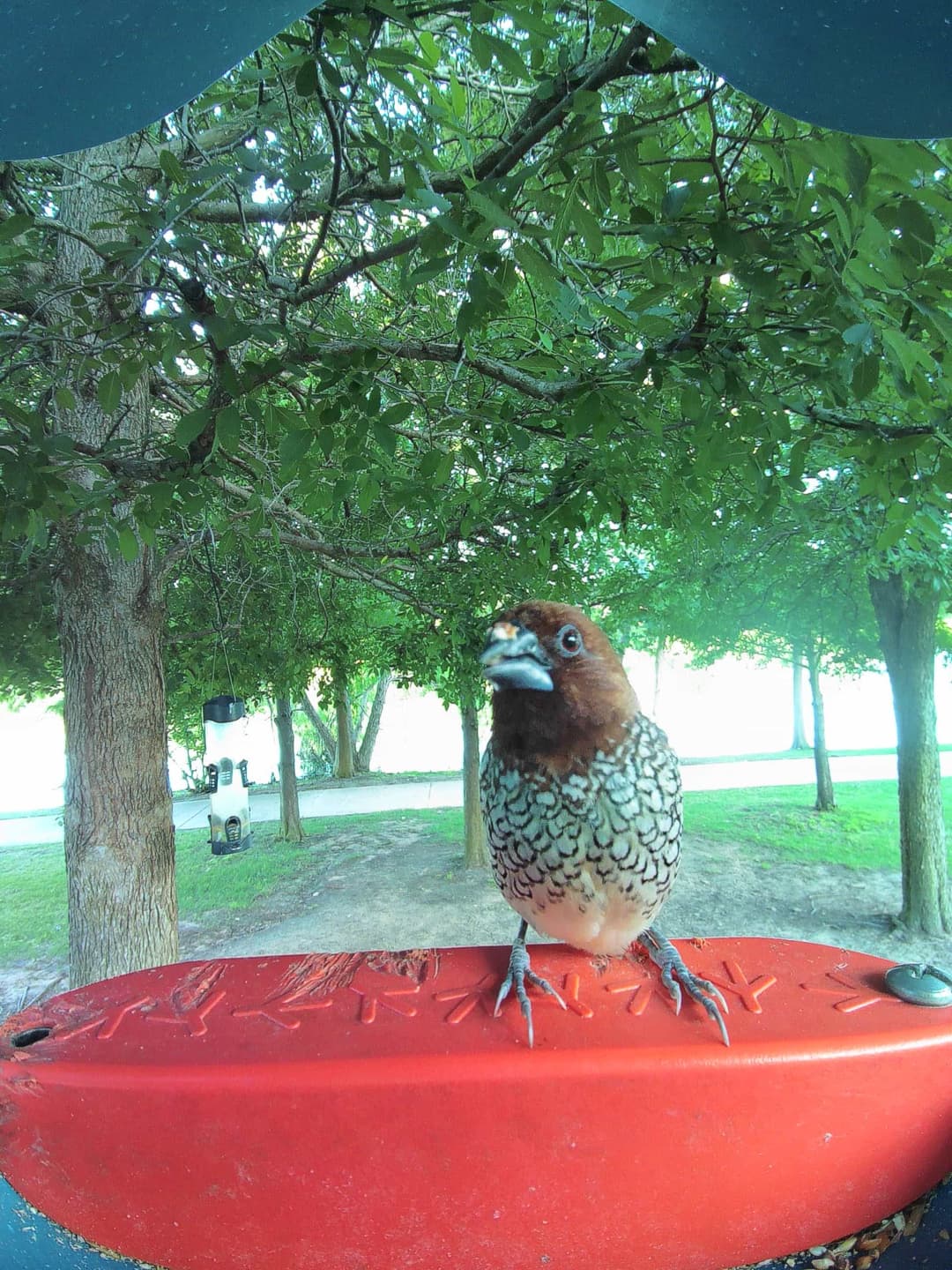
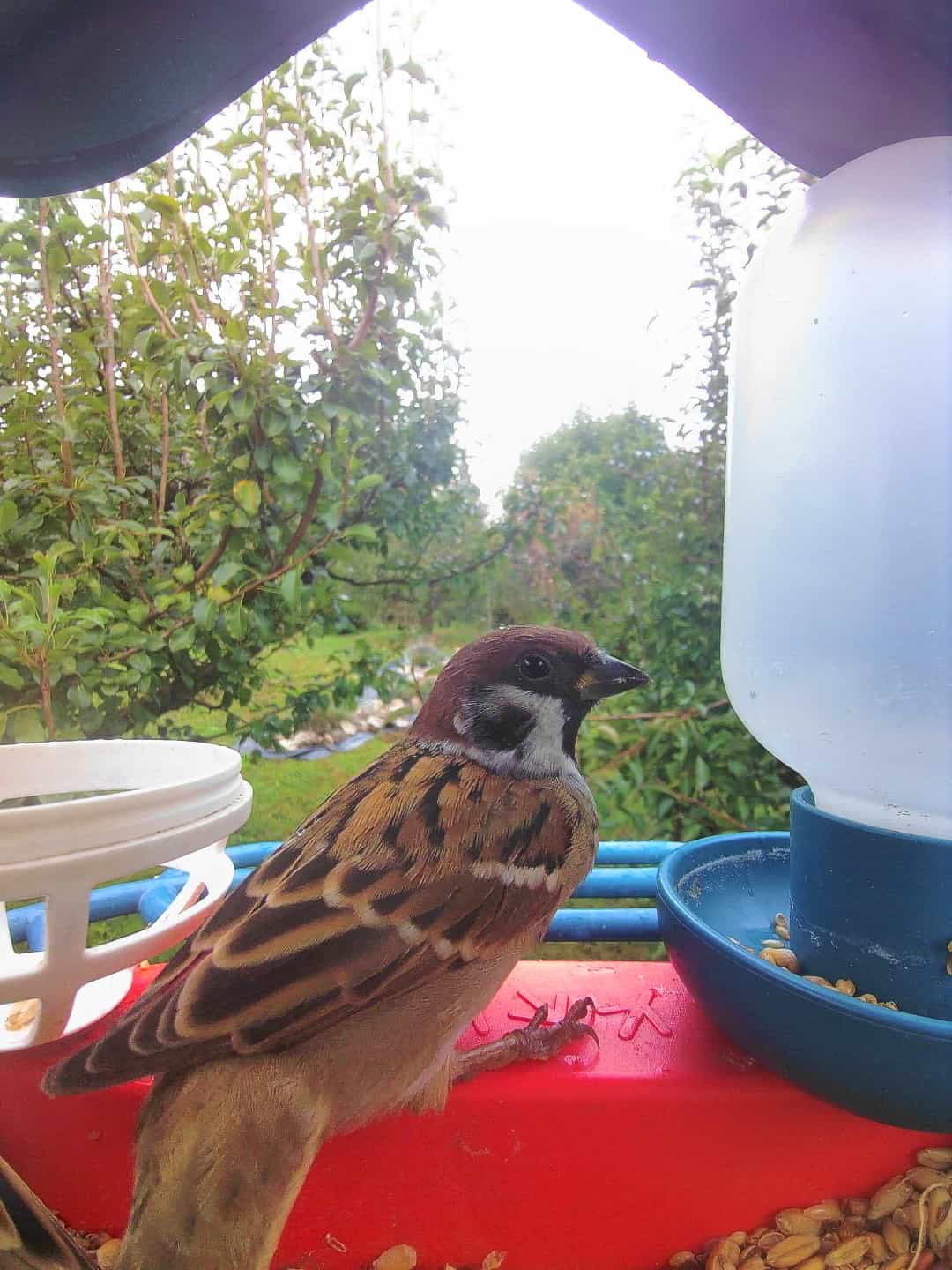

Scaly-Breasted Munia vs Chestnut-Breasted Munia
House Sparrow vs Chipping Sparrow
House Sparrow vs Song Sparrow
House Sparrow vs Eurasian Tree Sparrow
House Sparrow vs American Tree Sparrow
Scaly-Breasted Munia vs [Select a bird]

[Select a bird]
Pick a bird to compare
House Sparrow vs [Select a bird]
[Select a bird]
Pick a bird to compare