
Song Thrush
Song Thrush
Turdus philomelos


Quick Identification guide
Quick Identification guide
- •
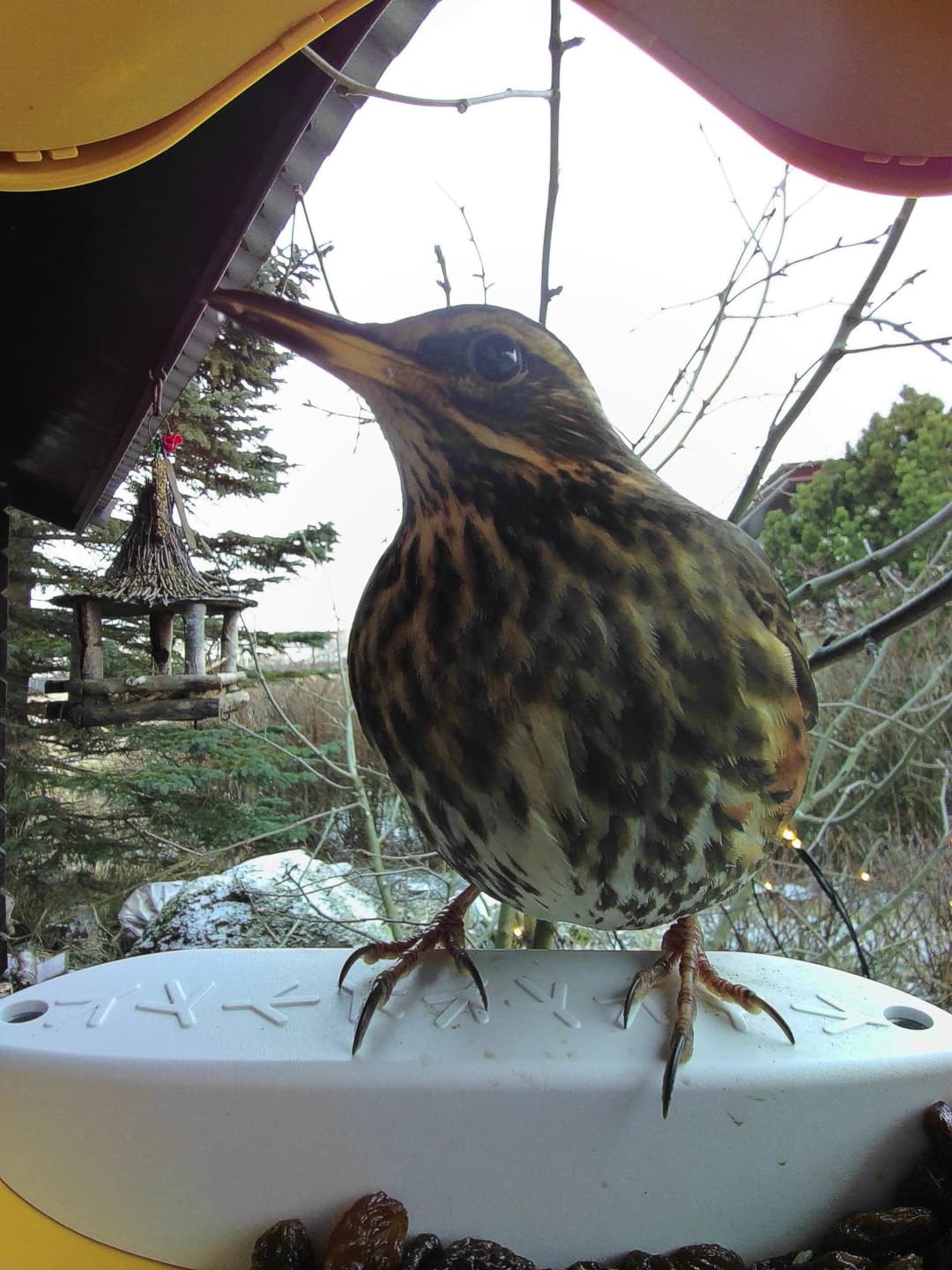
The Song Thrush showcases warm brown upperparts with black speckling, providing excellent camouflage against wooded backgrounds
- •
Its underparts are white to creamy with bold, dark, arrow-shaped spots that are denser on the breast, offering distinct identification
- •
Features a slender, slightly downturned beak that is pale at the base, suited for feeding on a variety of items
What does a song thrush sound like?
The song thrush has a loud, clear, melodious song with repeating phrases. Its repertoire is versatile, with mimicked sounds and varied notes, sometimes described as flute-like. Typical calls include a thin 'seee' alarm call and a 'tsip' contact call. It is known for singing from high perches during dawn and dusk, and its song is often heard before other birds in the morning.


Description
Song thrushes were named after what they do best and that is sing! A single male can sing over 100 different song phrases and they don't stop at bird sounds, either; they can mimic manmade objects, too, such as telephones! Did you know that they'll often pick a favourite stone they then use as an anvil to break open snail shells?
The song thrush can weigh between 50to107grams and be from20to23centimeters tall.
The typical lifespan of a song thrush is between two to three years, although the oldest recorded individual lived up to 13 years. In comparison, related species like the American robin can live up to 14 years, and the European blackbird has a similar lifespan of 2.4 years. These lifespans, however, can drastically vary depending on factors such as predation and disease. Most song thrushes do not survive their first year of life, but those that do can live relatively long.
Did you know?
Most popular questions about song thrush
How to recognise a song thrush?
General appearance
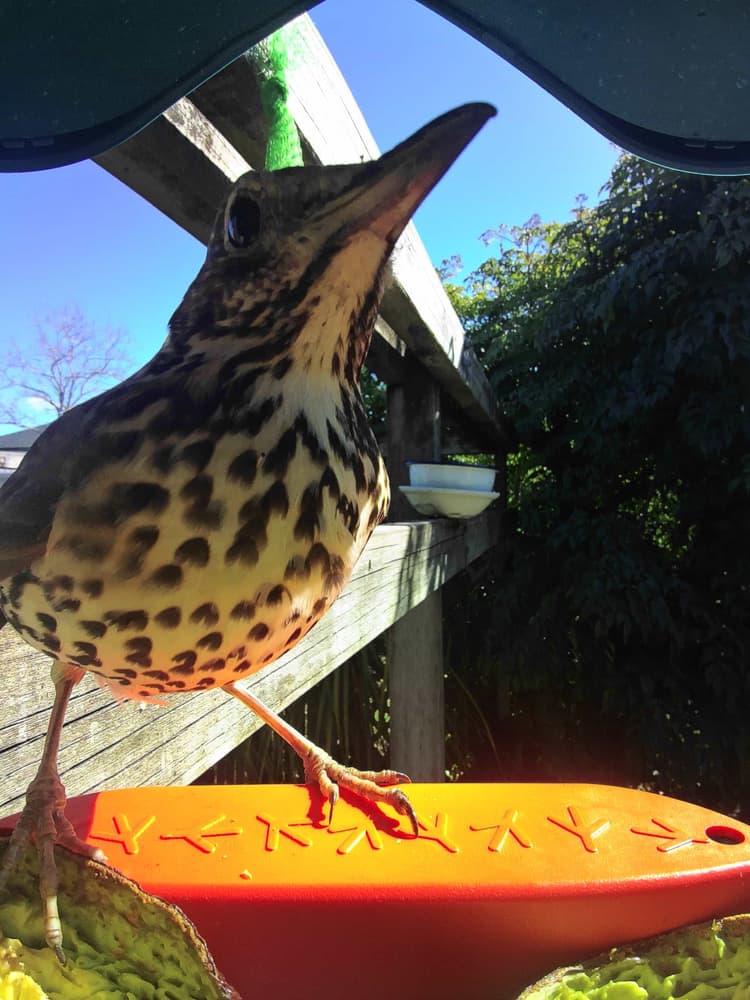
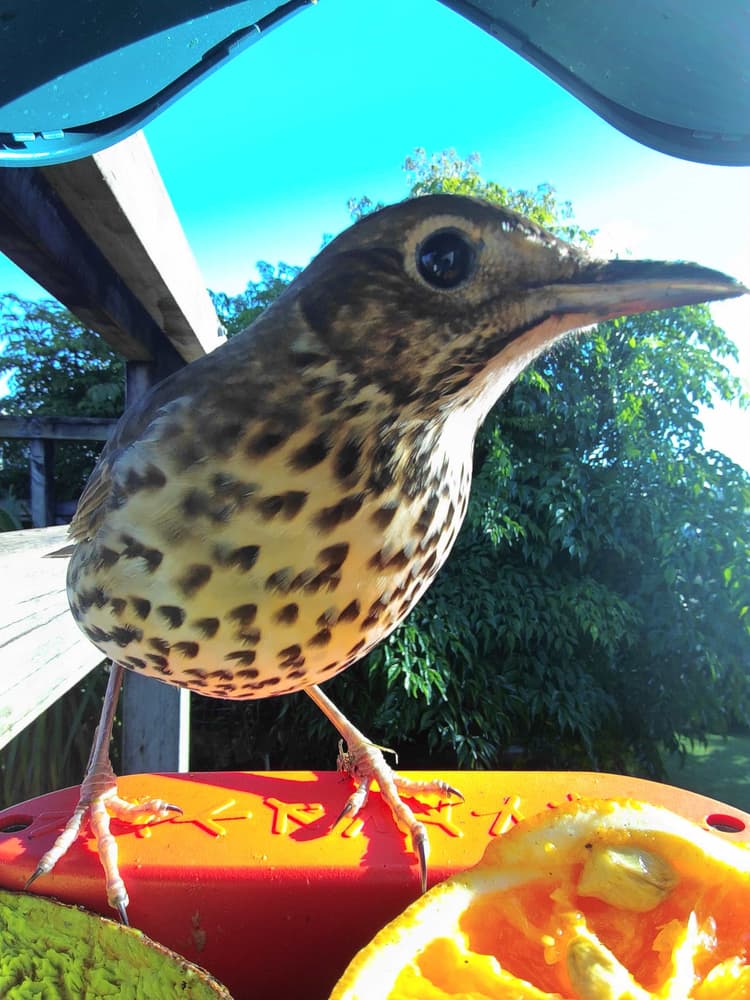
The Song Thrush is a bird recognizable with its warm brown upperparts and buff white chest and belly covered in black, kidney-shaped spots. Adults exhibit a speckled underbody and exquisite brown crown, while their underwings show a yellow hue during flight. Its distinctive coloration allows it to blend in woodland surroundings effectively. There are no significant seasonal variations in their appearance.
Male vs female
Males and females are quite similar in appearance with no distinctive differences. Both share the brown upperparts and speckled underparts. However, usually the male has a slightly larger size than the female.
Juvenile
Juvenile Song Thrushes are similar to the adults but their spotting is restricted to the underparts and their back is more uniformly brown. They exhibit a darker, almost black coloration on their beak, compared to the yellow of an adult. The juvenile's feather also have pale tips which are molted by the winter, resulting in a first-winter bird similar to the adult.
Often mistaken for
Mistle Thrush vs Song Thrush
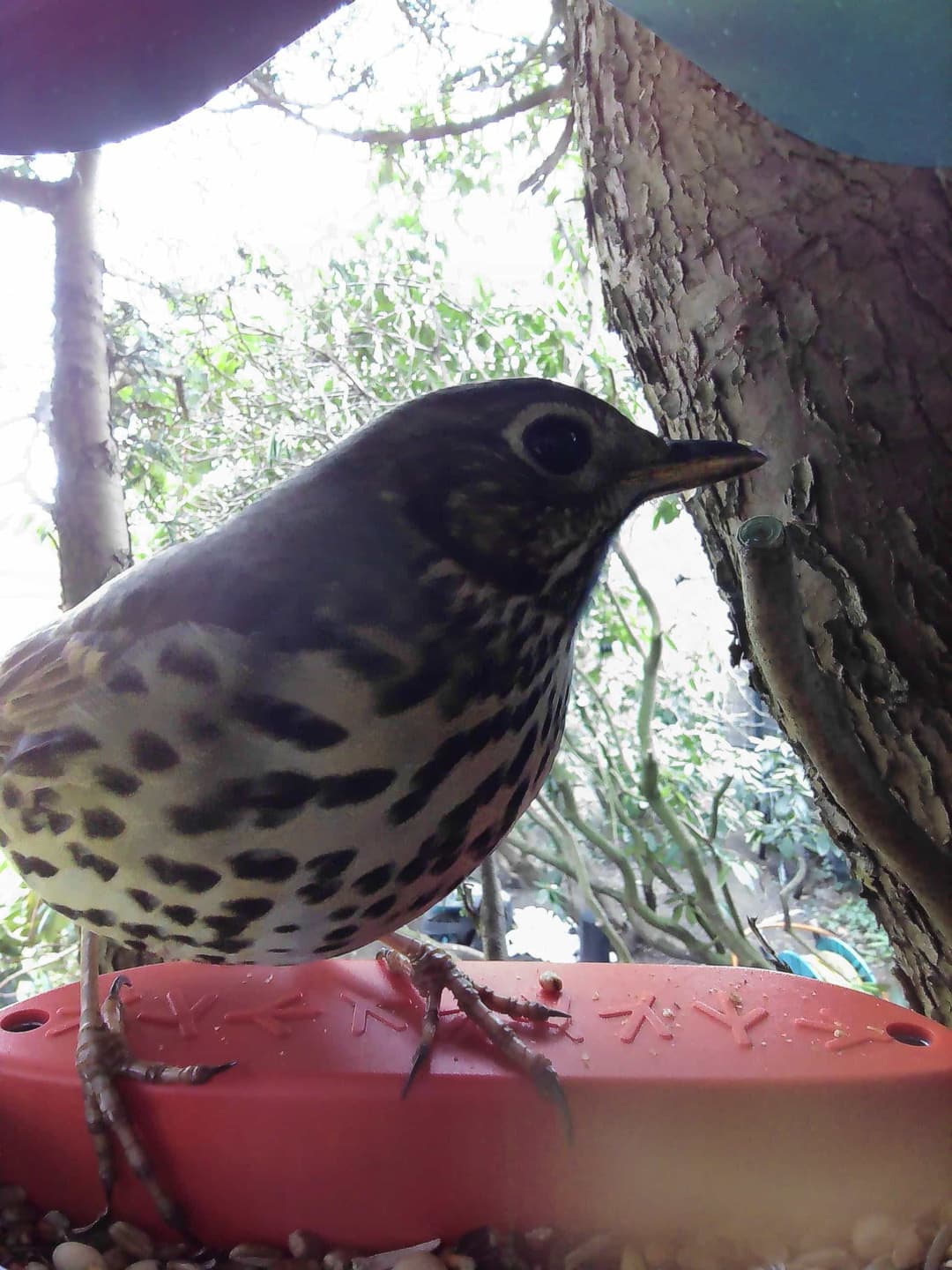
The Mistle Thrush is larger than the Song Thrush and has paler underparts with more distinct black spots. It also has a more upright stance compared to the Song Thrush.
Fieldfare vs Song Thrush
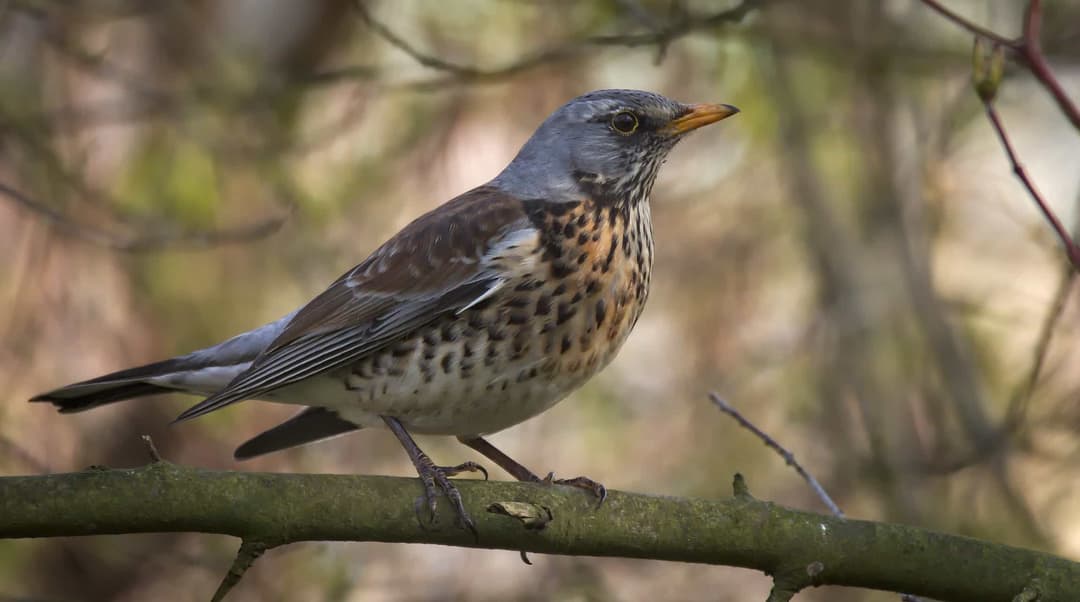
The Fieldfare is larger than the Song Thrush and has a gray head and rump with a brown back and wings. It has a more pronounced eye-stripe and a distinctive 'chack-chack' call.
Redwing vs Song Thrush
The Redwing is similar in size to the Song Thrush but has a distinctive cream-colored stripe above the eye and red flanks, which differ from the Song Thrush's brown and spotted plumage.
Breeding and nesting habits of the song thrush
Mating behaviors
Song thrushes engage in courtship through song and displays. Males sing to attract females and establish territory. Courtship feeding is common, where males offer food to females.
Nesting details
Nests are built in trees, shrubs, or garden hedges, often in dense foliage. The female constructs the nest using grass, twigs, and mud. Gardens with native shrubs provide ideal nesting spots.
Eggs and chick-rearing
Females lay 3-5 eggs, incubating them for about 13 days. Both parents feed the young, who fledge after two weeks. To support them, provide food sources like berries and leave leaf litter for insects.
What does a song thrush like to eat?
Berries
Fruits
Insects
Plants
Snails
Spiders
Worms
Natural diet
The song thrush primarily feeds on insects, earthworms, and snails, which they often break open using stones to gain access to the soft body inside. They also consume a variety of fruits and berries, especially in the autumn and winter months. This includes berries from holly, hawthorn, and rowan trees.
Bird feeders
Song thrushes sometimes visit bird feeders, though they are less frequent visitors compared to other species. When they do visit, they may eat homemade fat balls, mealworms, suet, and occasionally seed mixes, particularly those containing sunflower seeds and peanuts. They generally prefer feeders placed close to the ground.
Ideal feeder for song thrush
Song thrushes prefer to forage on the ground. So, choose a ground bird feeder for best results. Scatter the Bird Buddy seeds, which are expert-backed selections for the season, around the feeder to entice the thrushes to visit.
Favorite snacks of song thrush
Song thrushes enjoy a variety of food. They eat insects, earthworms, berries, and fruits. Incorporating Bird Buddy seeds can be an effective way to attract them since these seeds are carefully chosen to provide the nutrition thrushes need at any given time of the year.
Create a thrush-friendly environment
Encourage song thrushes to visit and stay in your yard by providing plenty of shrubs where they can nest and hide from predators. Make sure to have fresh water accessible in a shallow bird bath or shallow dish to keep them hydrated. A peaceful and safe environment will make them more likely to fly by for a visit and maybe even stay for a sing-along!
Where can you find song thrushes?
Primary habitat
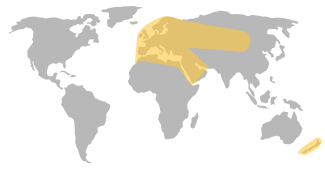
The song thrush primarily inhabits forests, gardens, and scrubs across Europe and Asia. They prefer moderate climates with mild winters and abundant rainfall.
Additional range
Unexpectedly, it can also adapt to urban areas, parks, and suburban gardens. Some migrate to northern Africa during winter.
Do they migrate?
The song thrush (Turdus philomelos) has both migratory and resident populations, depending on geographic location. In northern and eastern Europe, song thrushes are migratory. These birds typically migrate to southern Europe, North Africa, and the Middle East for the winter. Migration generally begins in September, with birds departing breeding grounds in northern regions. The main migratory routes include traveling southwest across Europe. Birds from Scandinavia often move through countries like the UK, France, and Iberian regions before reaching wintering areas. Key stopover locations during migration include the coastlines of the North Sea and the English Channel, where they may rest and refuel. During the return journey in spring, usually from March to April, song thrushes make their way back to their breeding territories in the north. As a result, the migratory song thrush populations are well-adapted to long distances, while resident populations, such as those in the British Isles and parts of western Europe, remain in their territories year-round, benefiting from milder climates and available food sources.
What is the role of song thrushes in nature and how to protect them?
Conservation status
The song thrush is currently classified as of "Least Concern" by the IUCN, indicating it is common but facing localized threats. Key threats include habitat loss due to urbanization, agricultural practices, and the use of pesticides, which reduce food sources. In some areas, populations have declined due to hunting. Conservation efforts focus on habitat restoration, legal protection, and promoting pesticide-free farming practices. Measures to maintain hedgerows and conserve woodlands are crucial in supporting robust populations. Despite some regional declines, the species remains widespread across its range.
Ecological role of song thrushes
Its role in the ecosystem
The Song Thrush (Turdus philomelos) has significant ecological importance. Residing in various types of wooded areas, thrushes are known for their ability to control pests. They consume large quantities of invertebrates, particularly earthworms and snails, thus responding to possible pest outbreaks and helping to maintain ecological balance. The song thrush also contributes to seed dispersal; it eats fruits and berries, and the undigested seeds in their droppings help in the propagation of many plant species. This not only diversifies the plant life in their habitat but also supports other wildlife that depend on these plants for survival. These actions make the Song Thrush integral to the health of various ecosystems. Lastly, song thrushes have noteworthy cultural significance due to their distinctive and melodious song, adding a unique characteristic to our natural environment.
How to help protect song thrushes
Preservation tips
Habitat preservation strategies
Protecting and restoring habitats ideally comprising mixed forests, hedges and grasslands can be pivotal to conserve the song thrush. Limiting the use of pesticides can promote their food resources including earthworms and snails. Ensuring provision of water, shelter and safe nesting spots in our gardens can provide additional support.
Community science initiatives
Engaging local communities in citizen science projects can drastically help in the song thrush conservation. Individuals can participate in initiatives like bird counts, nest monitoring, and reporting sightings. Schools and community groups can play a role in education and advocacy initiatives. Additionally, donations and volunteer work can support non-profit organizations dedicated to bird conservation.