Juniper Titmouse or Tufted Titmouse?
Here's how to tell the difference


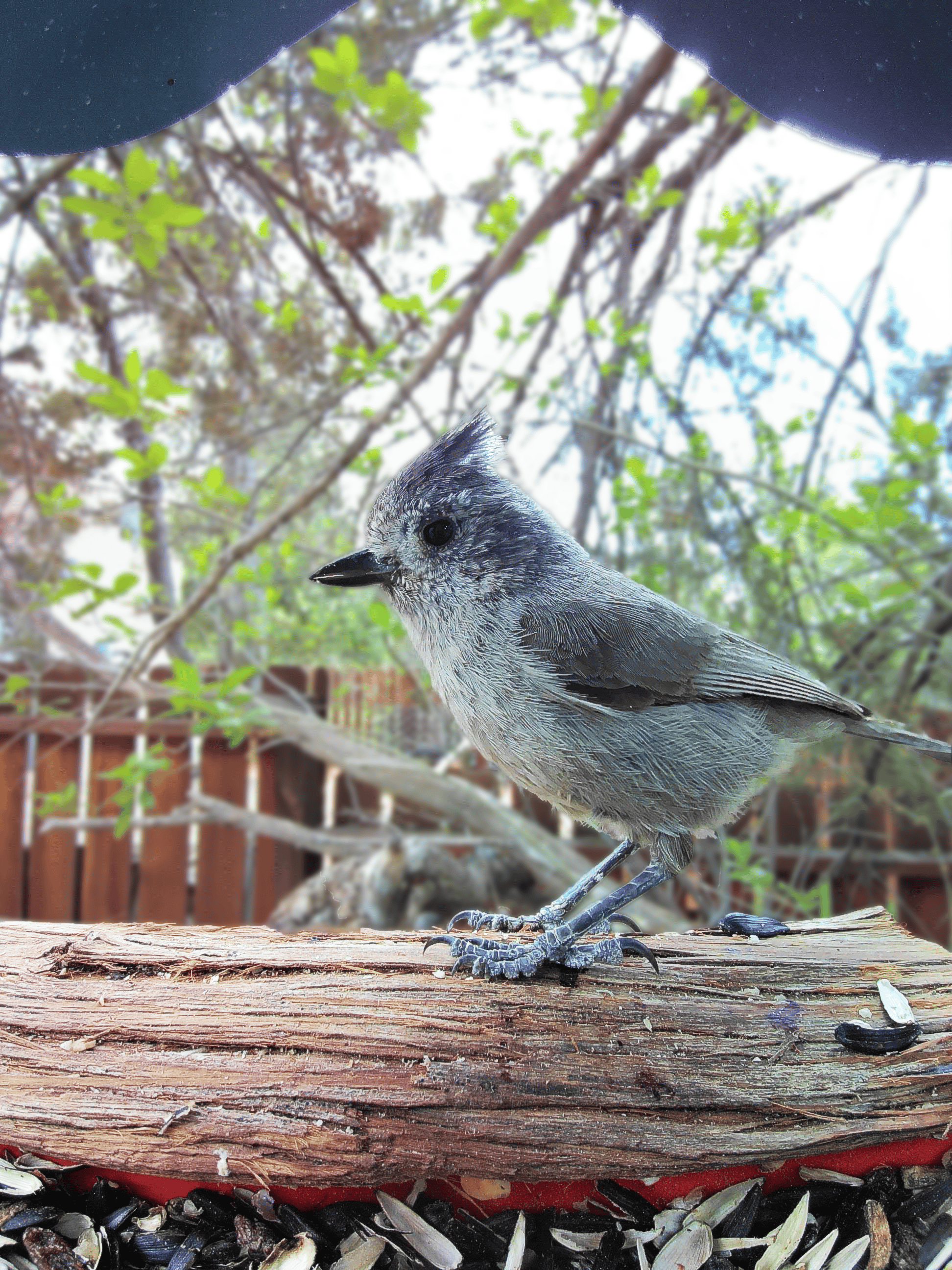


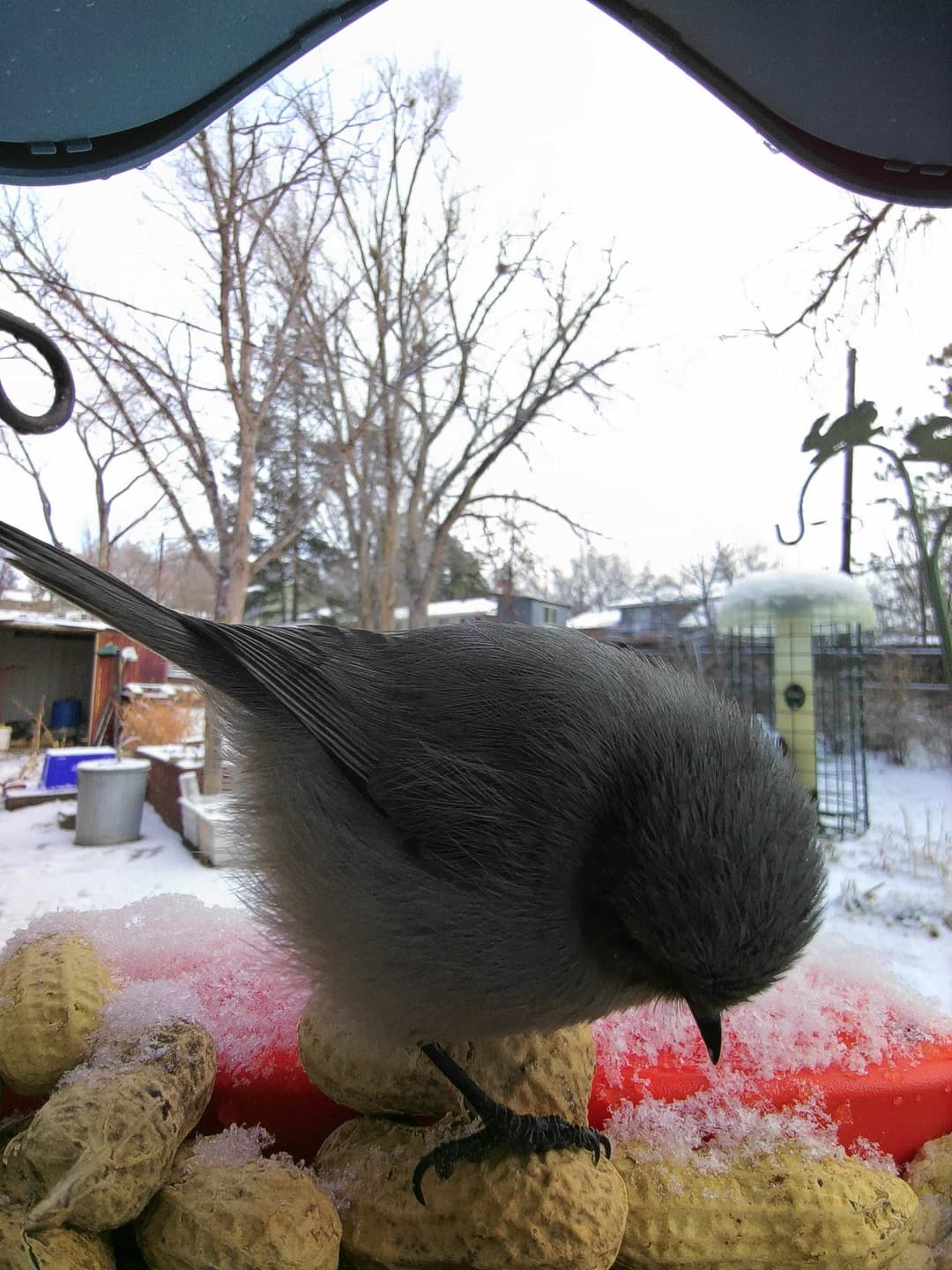
Juniper Titmouse
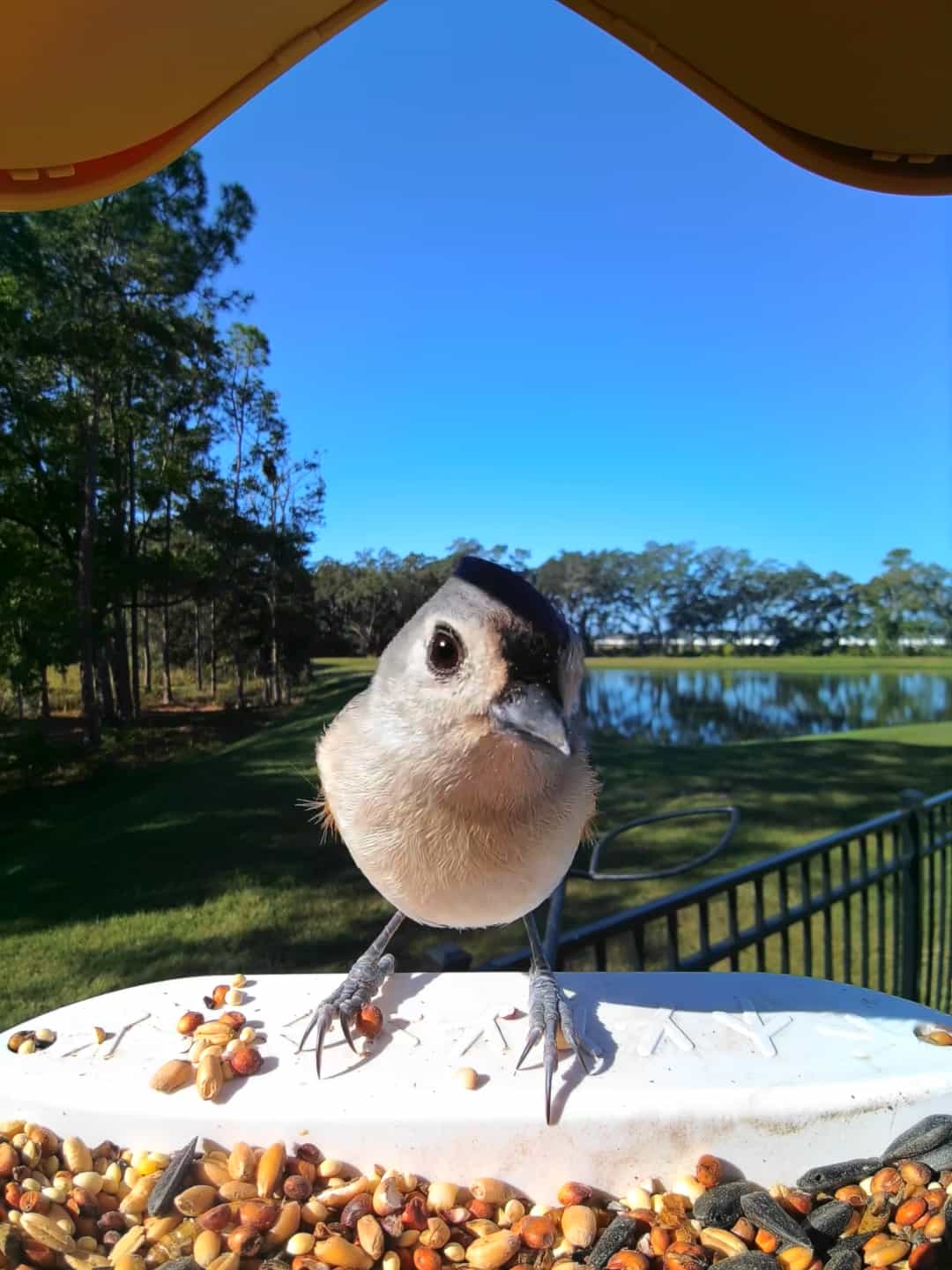


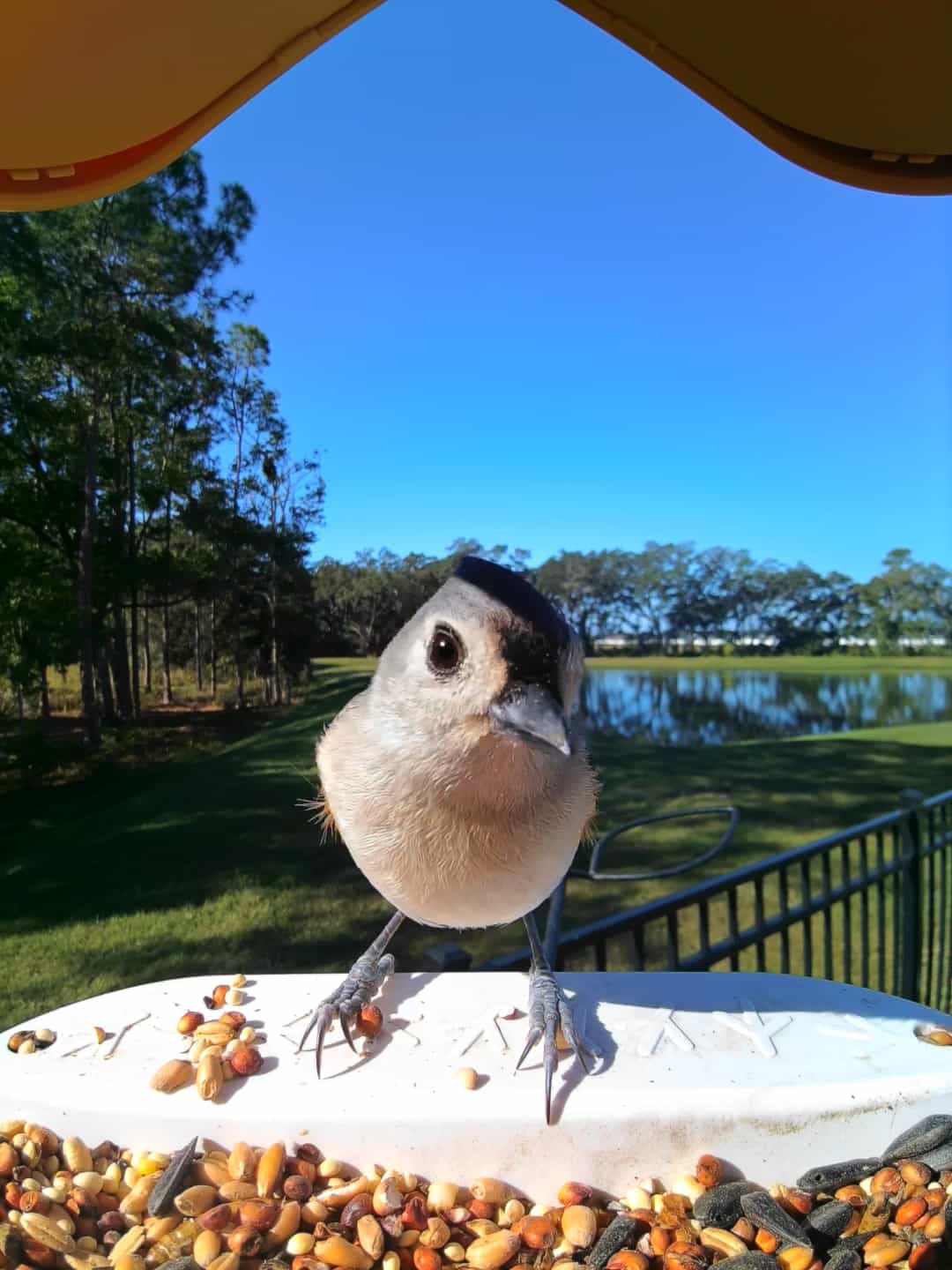
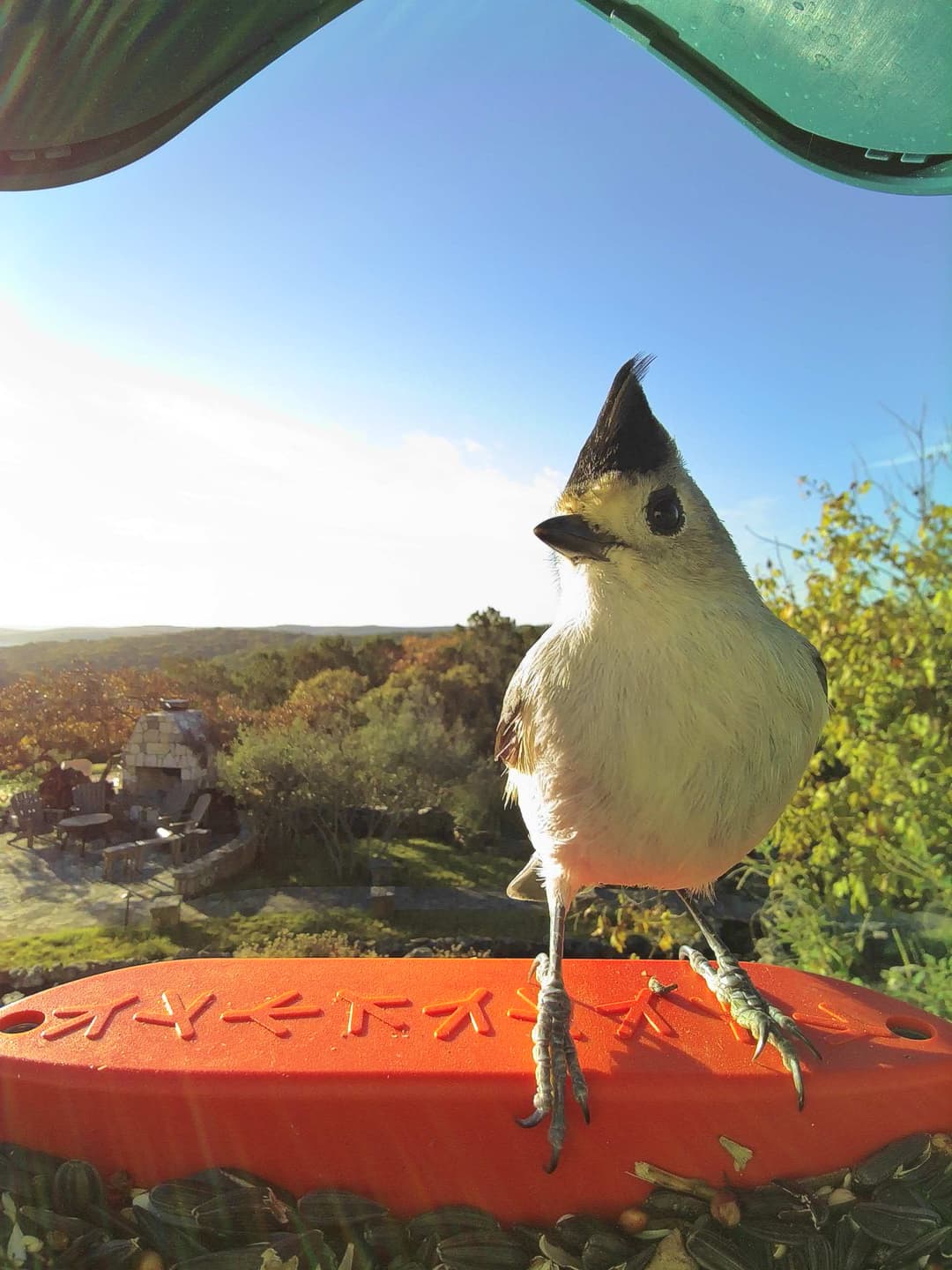
Tufted Titmouse
Juniper Titmouse
Baeolophus ridgwayi
General appearance
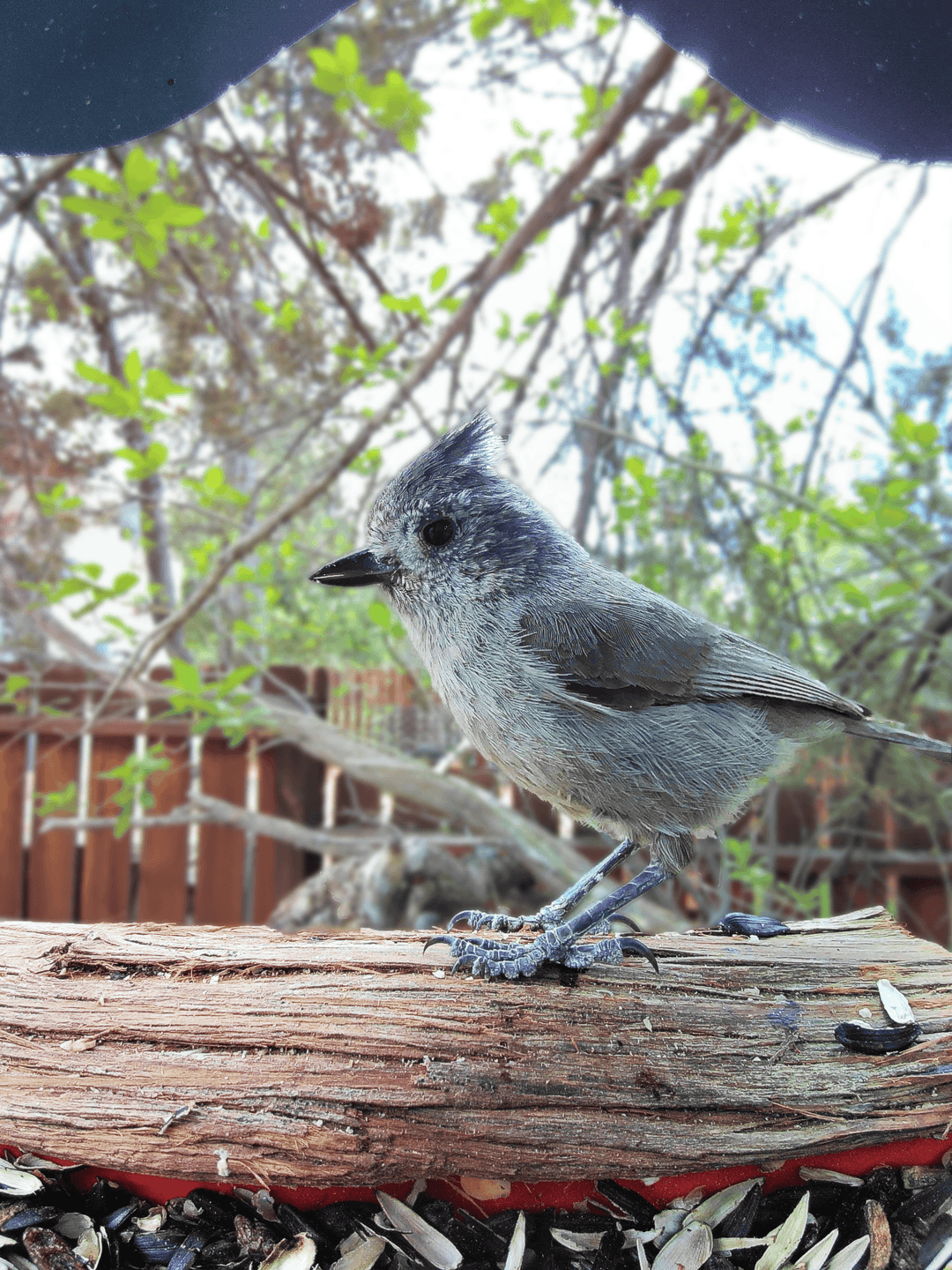
The Juniper Titmouse is a plain, grayish bird with a short crest, roughly the size of a Sparrow, about 15 cm in length. It possesses distinctly rounded wings and a rounded, square-tipped tail. Appearance is very similar to that of the Oak Titmouse, however, it tends to be a bit grayer with less brownish coloring.
Male vs female
This bird species does not have distinct differences in appearance between males and females. Both sexes share similar size and coloration, rendering gender identification in the wild considerably difficult based purely on physical appearance.
Juvenile
Young Juniper Titmice closely resemble adults, maintaining the same general appearance and grayish coloring. Attention to location may aid in identification as range is separate except very locally in northeast California. There are currently no documented seasonal variations in appearance.
Size
5.0 - 6.0 in/0.5 - 0.8 oz
There's more to learn about Juniper Titmouse
View full detailsTufted Titmouse
Baeolophus bicolor
General appearance
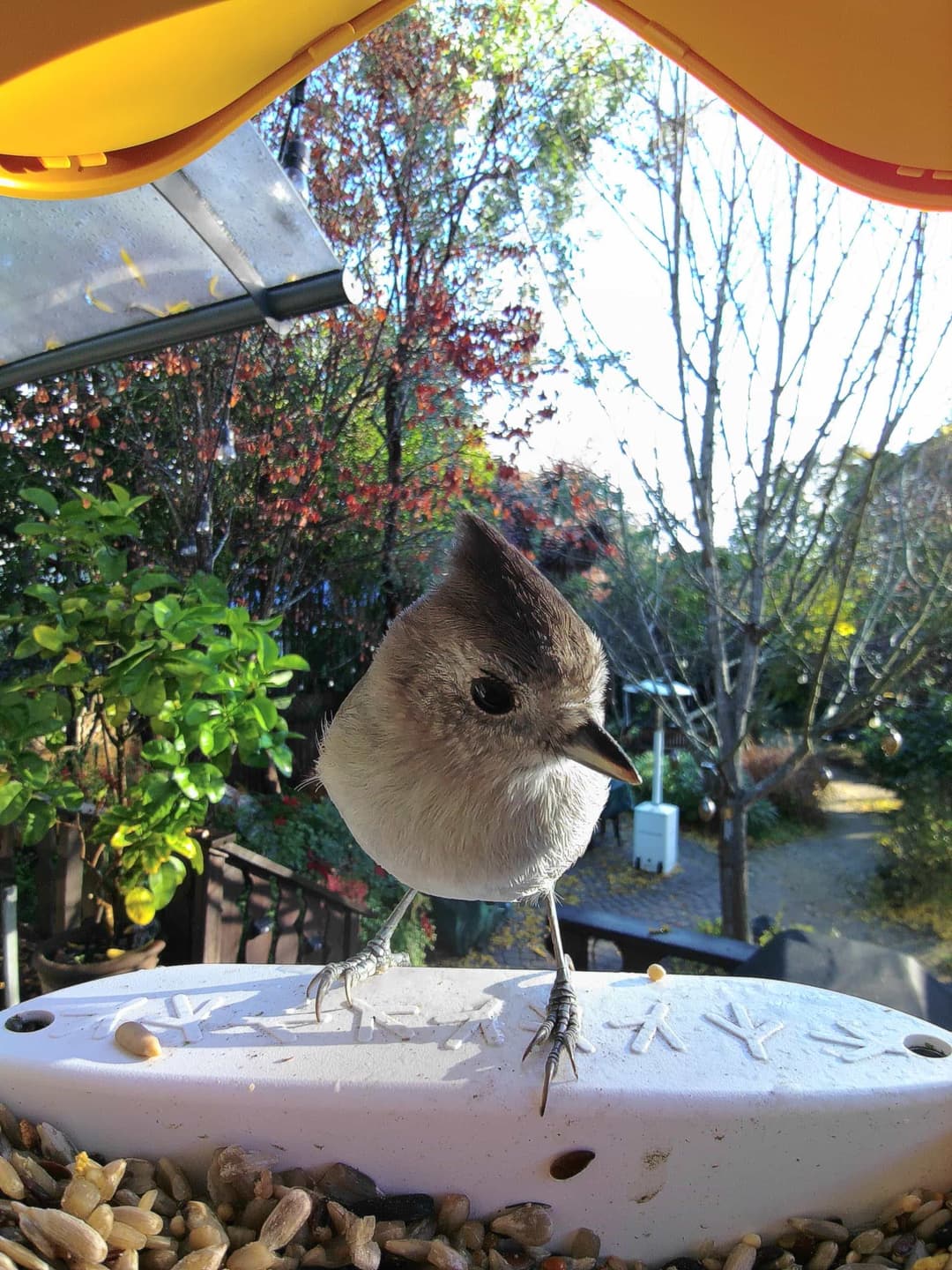
The tufted titmouse exhibits a general length of 6 inches or approximately 15 cm. It is predominantly recognizable by its gray and white coloration, complemented with black on the forehead. A distinguishing feature is its perky crest, along with a pale face and rusty sides. It is of similar size to a robin or a sparrow. In terms of shape, both its wings and tail are rounded, with the tail also being square-tipped.
Male vs female
There are no significant noticeable differences between the males and females in terms of coloration and physical traits. Both sexes of the tufted titmouse exhibit similar features including the characteristic crest, pale face, and black forehead. This makes it challenging to differentiate between the genders in the wild purely based on appearance.
Juvenile
Juvenile tufted titmice are generally similar to adults in appearance. However, their coloration might be slightly less vivid, and their foreheads may not be as boldly black. Over time, as they mature, these subtle variations gradually fade, making them resemble the adult birds more closely. It's important to note that these differences may not be very conspicuous and require close observation to spot.
Size
5.5 - 6.3 in/0.6 - 0.9 oz
There's more to learn about Tufted Titmouse
View full detailsHow to tell the Juniper Titmouse from the Tufted Titmouse
Visual differences
The Juniper Titmouse and Tufted Titmouse are visually similar but with key differences. The Juniper Titmouse is plainer, predominantly gray without significant color contrasts, and around 5-6 inches long. In contrast, the Tufted Titmouse features a distinct black forehead, a pale face, and rusty flanks, also measuring about 6 inches. Although both have crests and rounded, square-tipped tails, the Tufted Titmouse's contrasts are more pronounced, aiding identification. Both species' females and juveniles are similar to the males, complicating gender differentiation based on appearance alone.
Key differences and behavior
The Juniper Titmouse and Tufted Titmouse exhibit distinct behavioral and ecological traits. The Juniper Titmouse tends to inhabit open woodlands with pinyon and juniper trees, showing territorial behavior and cavity nesting. In contrast, the Tufted Titmouse prefers deciduous and mixed forests, often adapting to suburban areas, and demonstrates year-round pairing with male feeding behavior during incubation. Diet-wise, both birds consume insects and seeds, but the Tufted Titmouse relies more on insects, especially caterpillars. At feeders, both species enjoy sunflower seeds and nuts. While both engage in cavity nesting, the Juniper Titmouse actively enlarges cavities, whereas the Tufted Titmouse utilizes existing ones, sometimes gathering nesting materials from live animals. Despite their similar size (around 5-6 inches), the Juniper Titmouse’s pronounced territoriality and preference for specific woodland habitats help distinguish it from the more adaptable and widespread Tufted Titmouse.
Still not sure? Here are more lookalikes!
Juniper Titmouse vs Oak Titmouse
Tufted Titmouse vs Black-Crested Titmouse
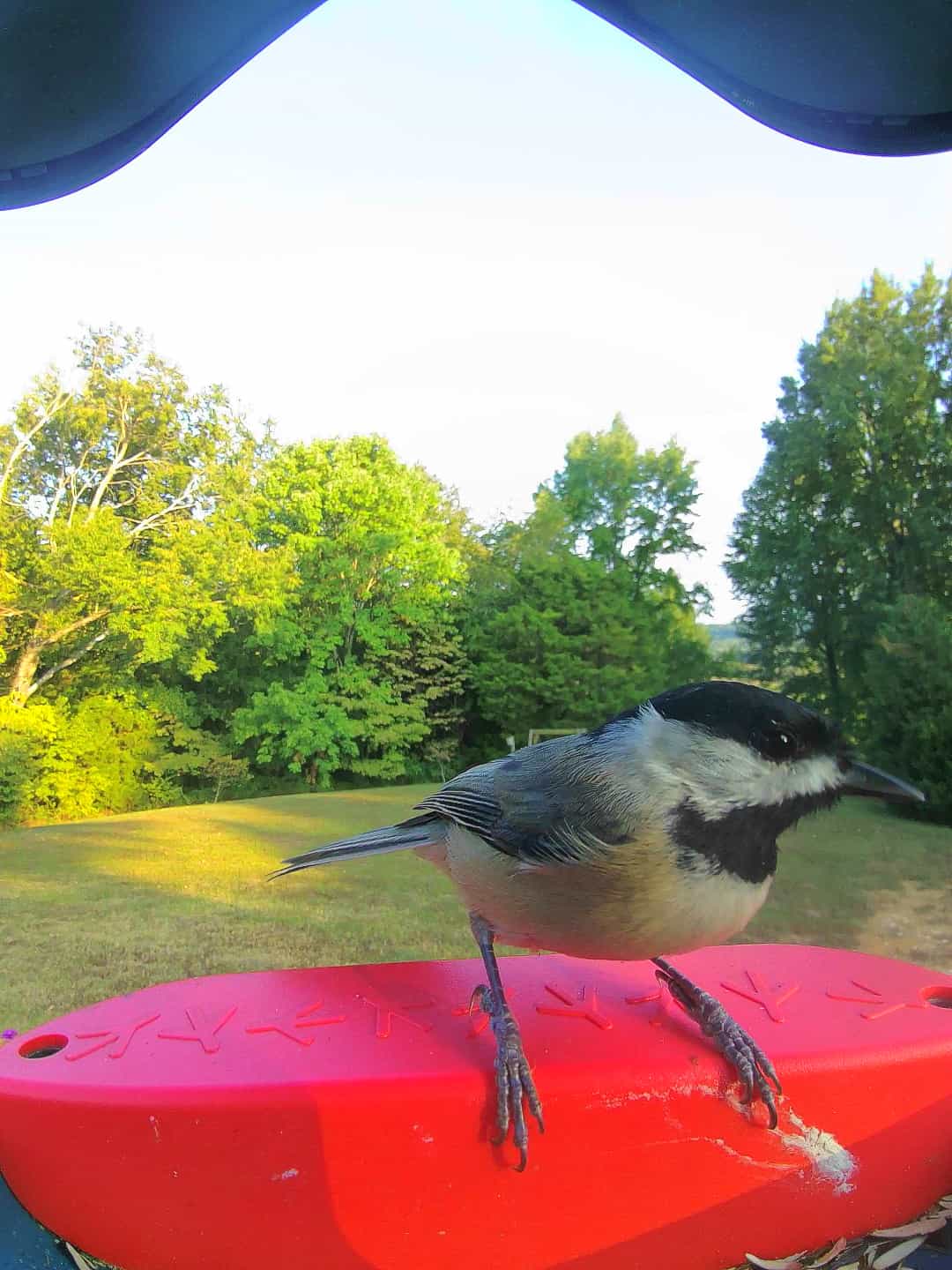
Tufted Titmouse vs Carolina Chickadee
Tufted Titmouse vs Black-Capped Chickadee
Juniper Titmouse vs [Select a bird]

[Select a bird]
Pick a bird to compare
Tufted Titmouse vs [Select a bird]
[Select a bird]
Pick a bird to compare