Wrentit or Oak Titmouse?
Here's how to tell the difference




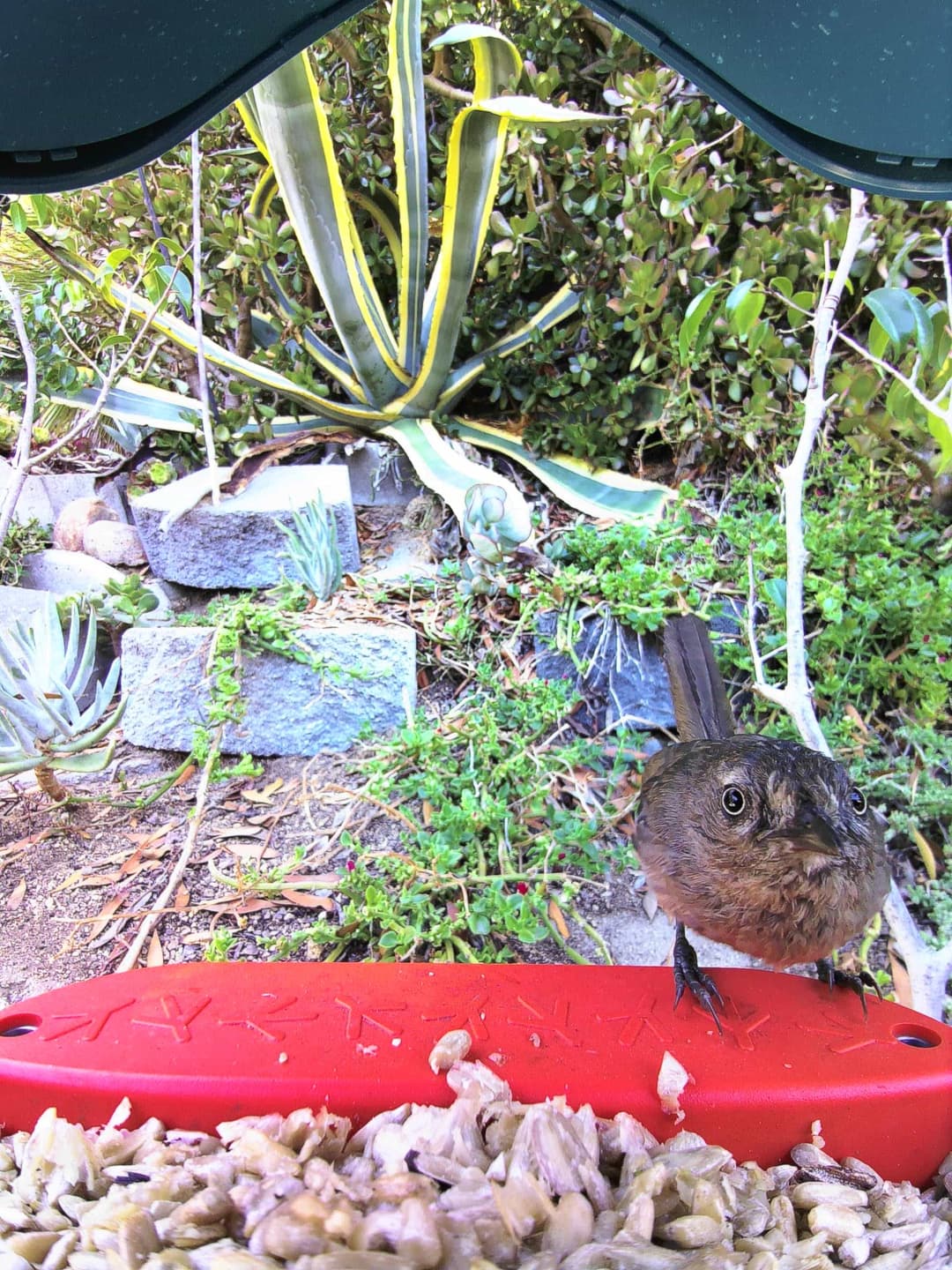
Wrentit
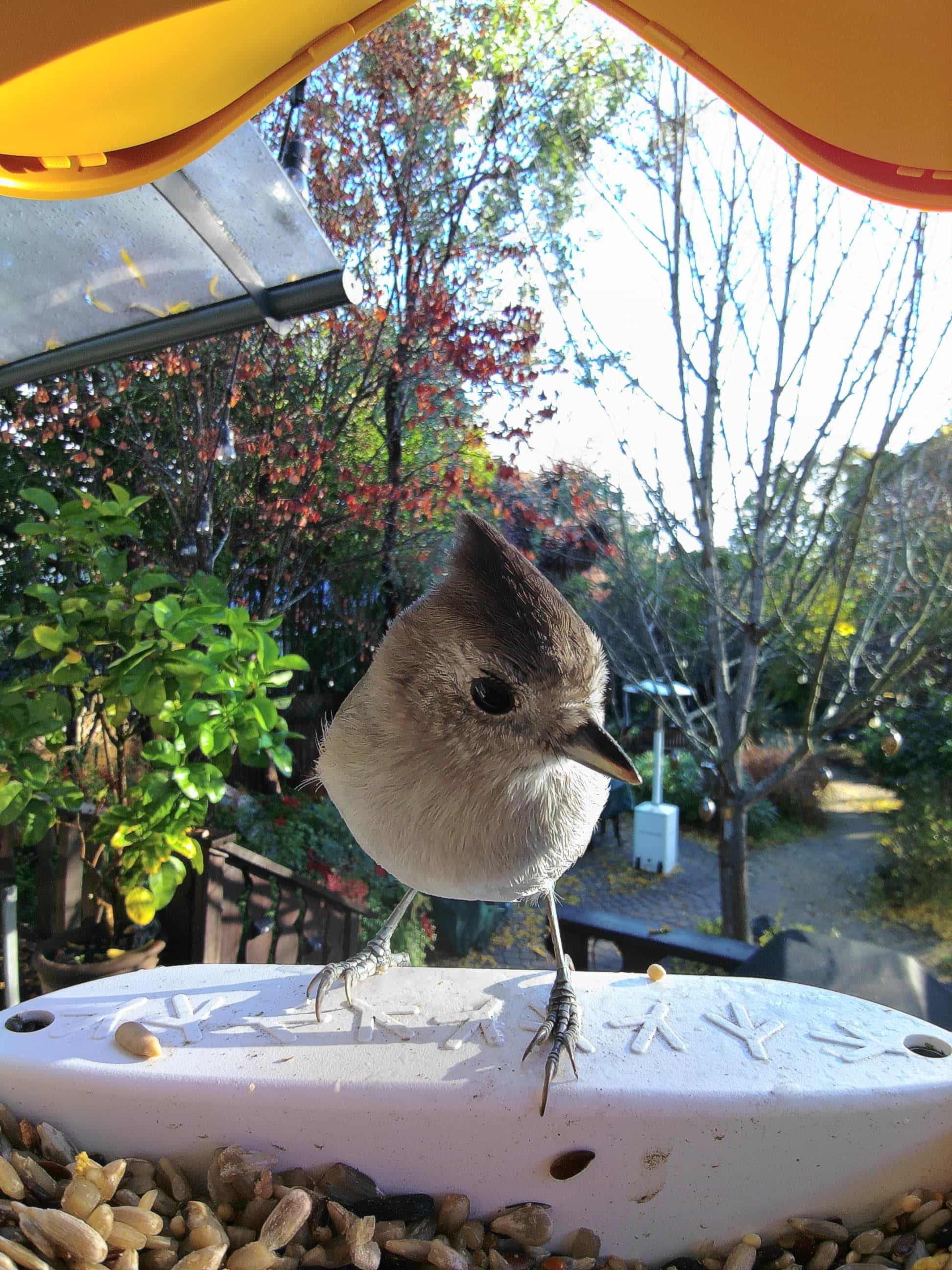


Oak Titmouse
Wrentit
Chamaea fasciata
General appearance
The wrentit is a small bird, measuring between 6-6 1/2 inches (15-17 cm) in length, roughly the size of a robin or a sparrow. Its overall color ranges from gray-brown to reddish brown, featuring a pale eye that stands out. The bird also possesses blurry stripes on its chest, a long tail, and a short, stubby bill. Due to its elusive nature, spotting the wrentit in the wild can be quite challenging.
Male vs female
No significant physical differences have been documented between male and female wrentits. Both genders share similar sizes, colorations, and physical traits making them difficult to differentiate in the wild.
Juvenile
Juvenile wrentits share much of the same characteristics as adults. However, no explicit details are provided about possible variations in size, coloration or differences in physical traits. More detailed information might be necessary to accurately identify juvenile wrentits.
Size
5.5 - 5.9 in/0.4 - 0.6 oz
There's more to learn about Wrentit
View full detailsOak Titmouse
Baeolophus inornatus
General appearance
The oak titmouse has a size of 5-5 1/2'' (13-14 cm), similar to a sparrow. It sports a gray or brownish-gray hue with a slightly paler underpart. This bird possesses a short crest that may be raised or almost flattened against its head. The face is very plain, and the bird's wing and tail shapes are rounded.
Male vs female
No significant visual difference is present between male and female oak titmice, as both genders share the same coloration and physical traits. This phenomenon is called sexual monomorphism. To differentiate between males and females, one must observe behavioral differences or have a professional perform a closer examination.
Juvenile
Juvenile oak titmice are similar in appearance to adults. However, they might be slightly duller in coloration. As they mature, they will develop the distinctive gray or brownish-gray hues that characterize adult oak titmice, along with the possible short crest.
Size
5.9 - 6.3 in/0.4 - 0.7 oz
There's more to learn about Oak Titmouse
View full detailsHow to tell the Wrentit from the Oak Titmouse
Visual differences
The Wrentit is slightly larger at about 6-6 1/2 inches long, with gray-brown to reddish-brown plumage, a pale eye, and blurry chest stripes. It has a short, stubby bill and a long tail. The Oak Titmouse is slightly smaller at 5-5 1/2 inches, has gray or brownish-gray plumage with paler underparts, and a distinctive short crest on its head. Its face is plain, with rounded wing and tail shapes. Both species exhibit no significant sexual dimorphism.
Key differences and behavior
The Wrentit and Oak Titmouse both exhibit unique behaviors and adaptations suited to their respective habitats. Wrentits are more often heard than seen, preferring dense low-growth areas like chaparral or streamside thickets. Conversely, the Oak Titmouse inhabits oak woodlands and can adapt to well-forested suburban areas. Both species form lifelong pair bonds and share parental duties; however, Wrentit pairs remain on nesting territories year-round, while Oak Titmouse pairs may form family groups to defend territories. In terms of diet, both species primarily eat insects, but the Wrentit also feeds on berries. At feeders, the Wrentit goes for soft items, while the Oak Titmouse prefers seeds and suet. The Wrentit builds concealed nests low to the ground, while the Oak Titmouse uses tree cavities or nest boxes. Vocalizations also differ; the Wrentit's song is similar to a bouncing ball, whereas the Oak Titmouse’s call is a distinct "chirp, chirp, chirp."
Still not sure? Here are more lookalikes!
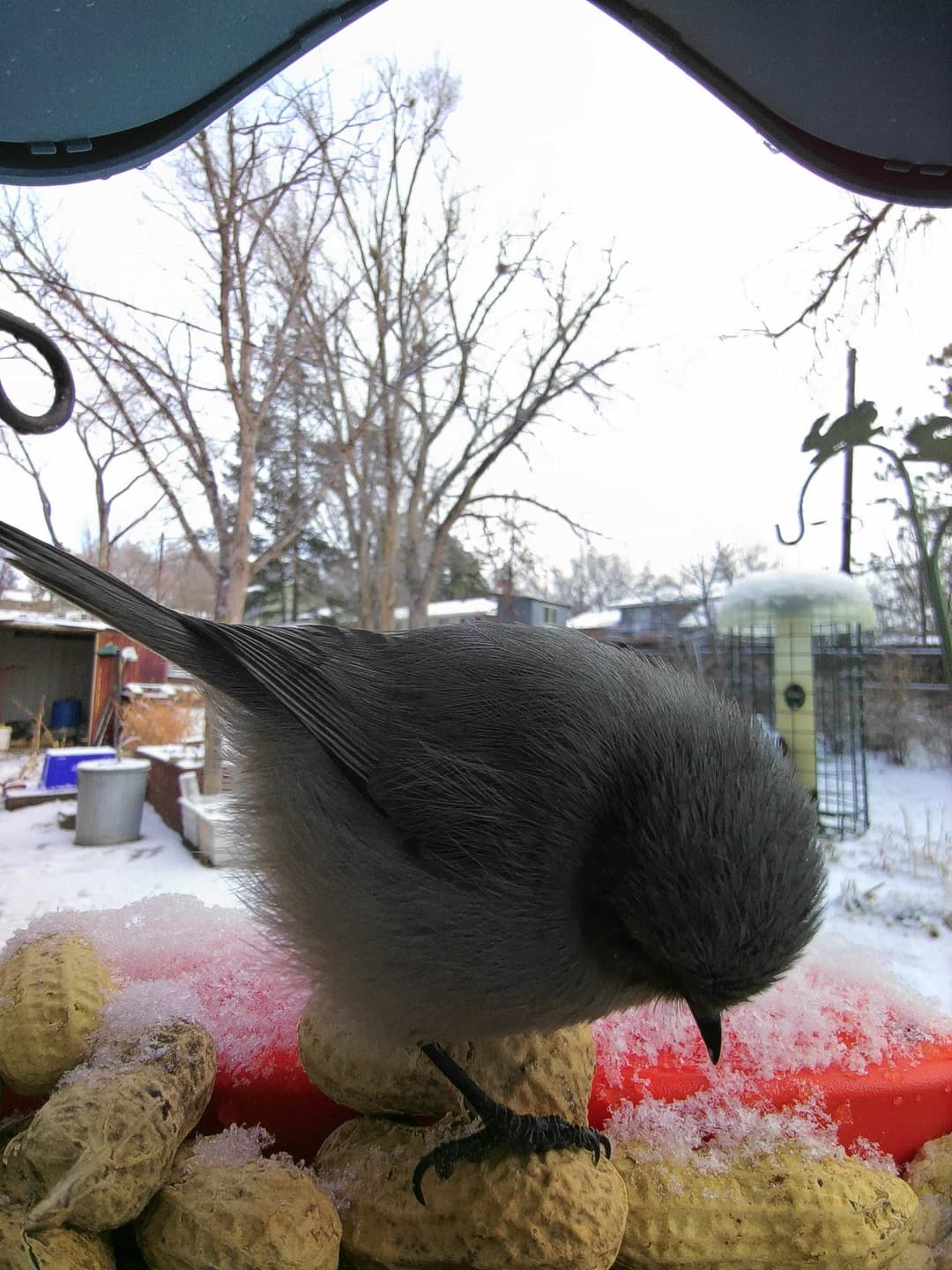
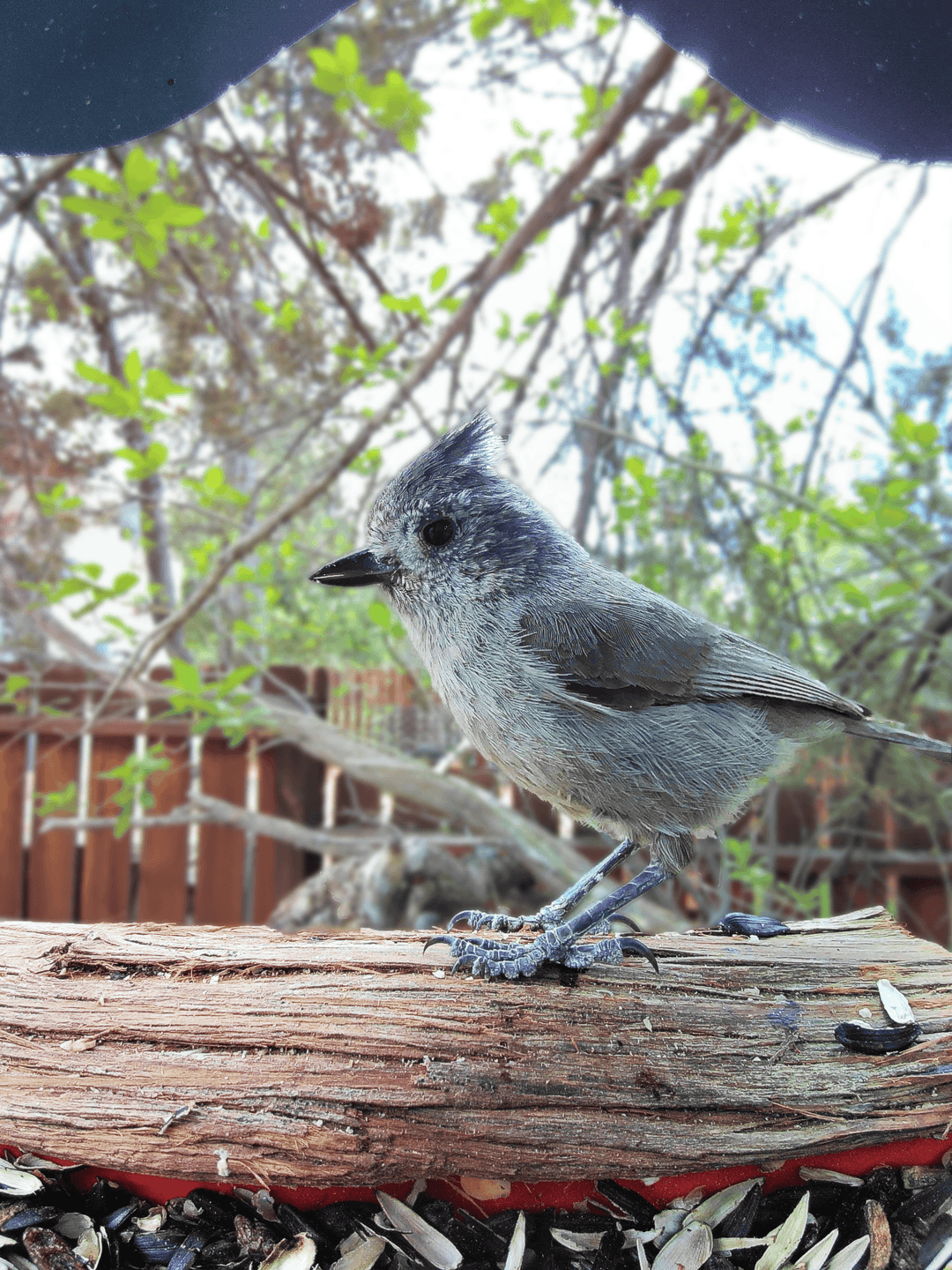
Oak Titmouse vs Juniper Titmouse
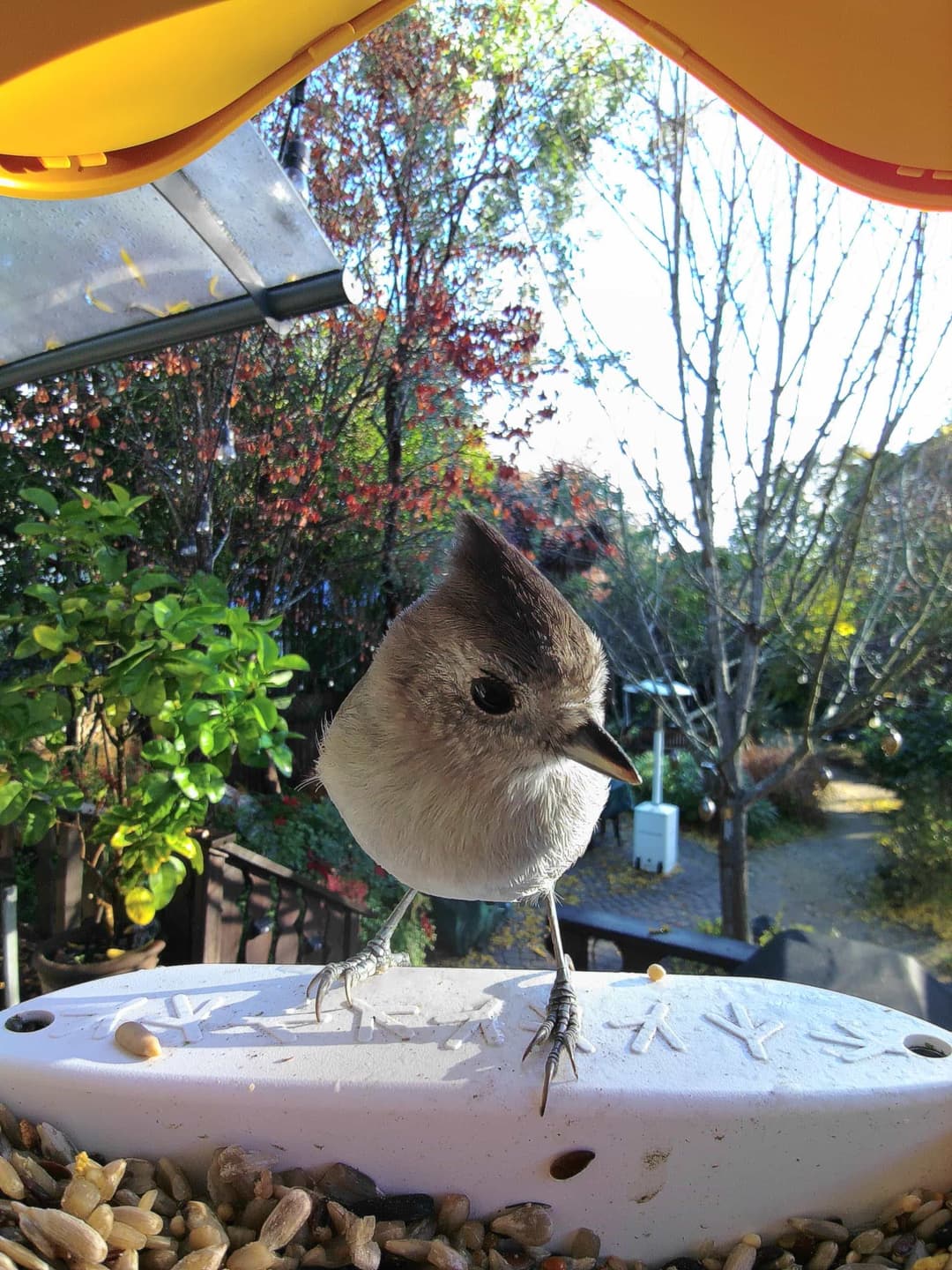
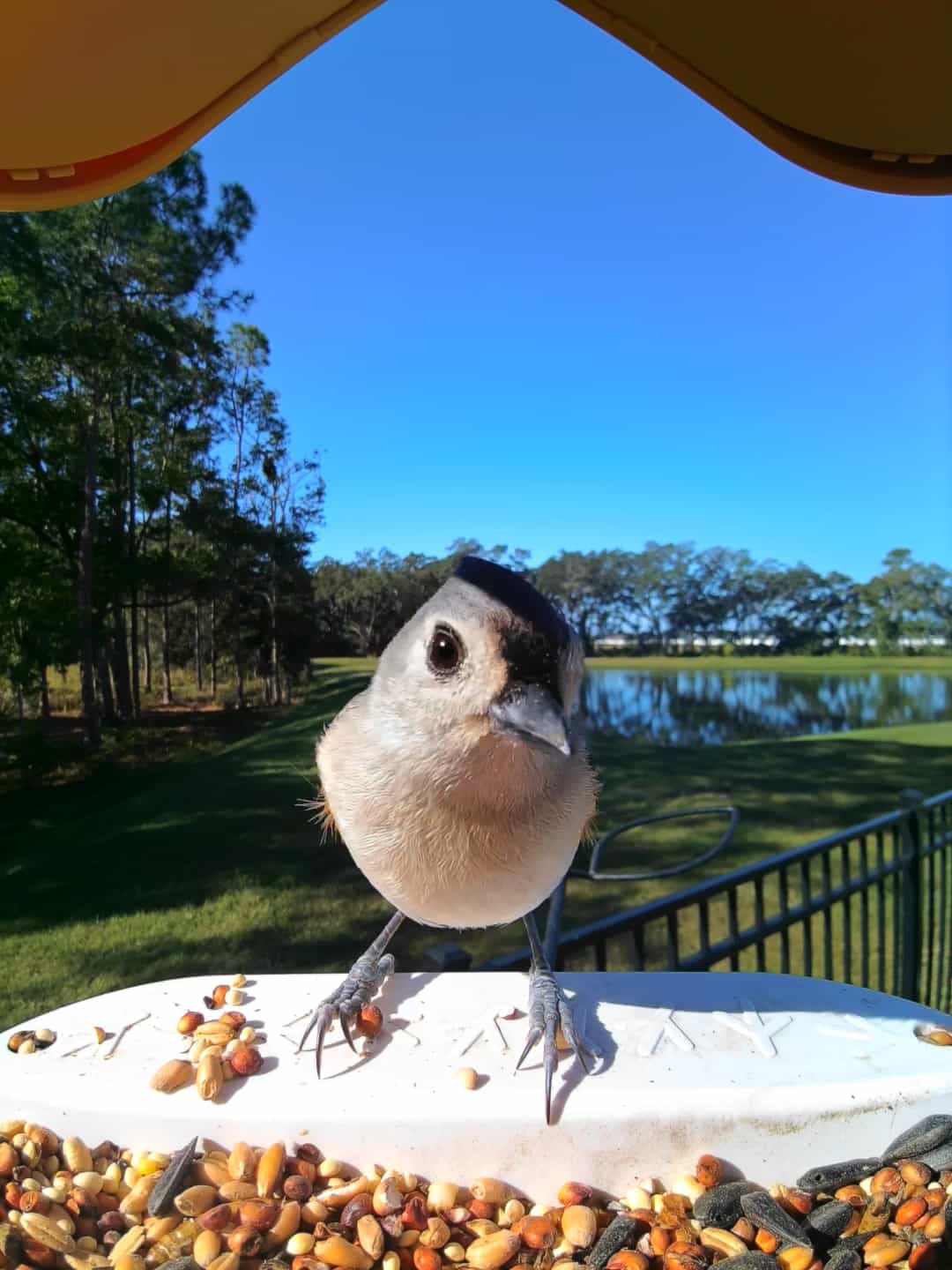
Oak Titmouse vs Tufted Titmouse
Wrentit vs [Select a bird]

[Select a bird]
Pick a bird to compare
Oak Titmouse vs [Select a bird]
[Select a bird]
Pick a bird to compare