Bewick’s Wren or Wrentit?
Here's how to tell the difference


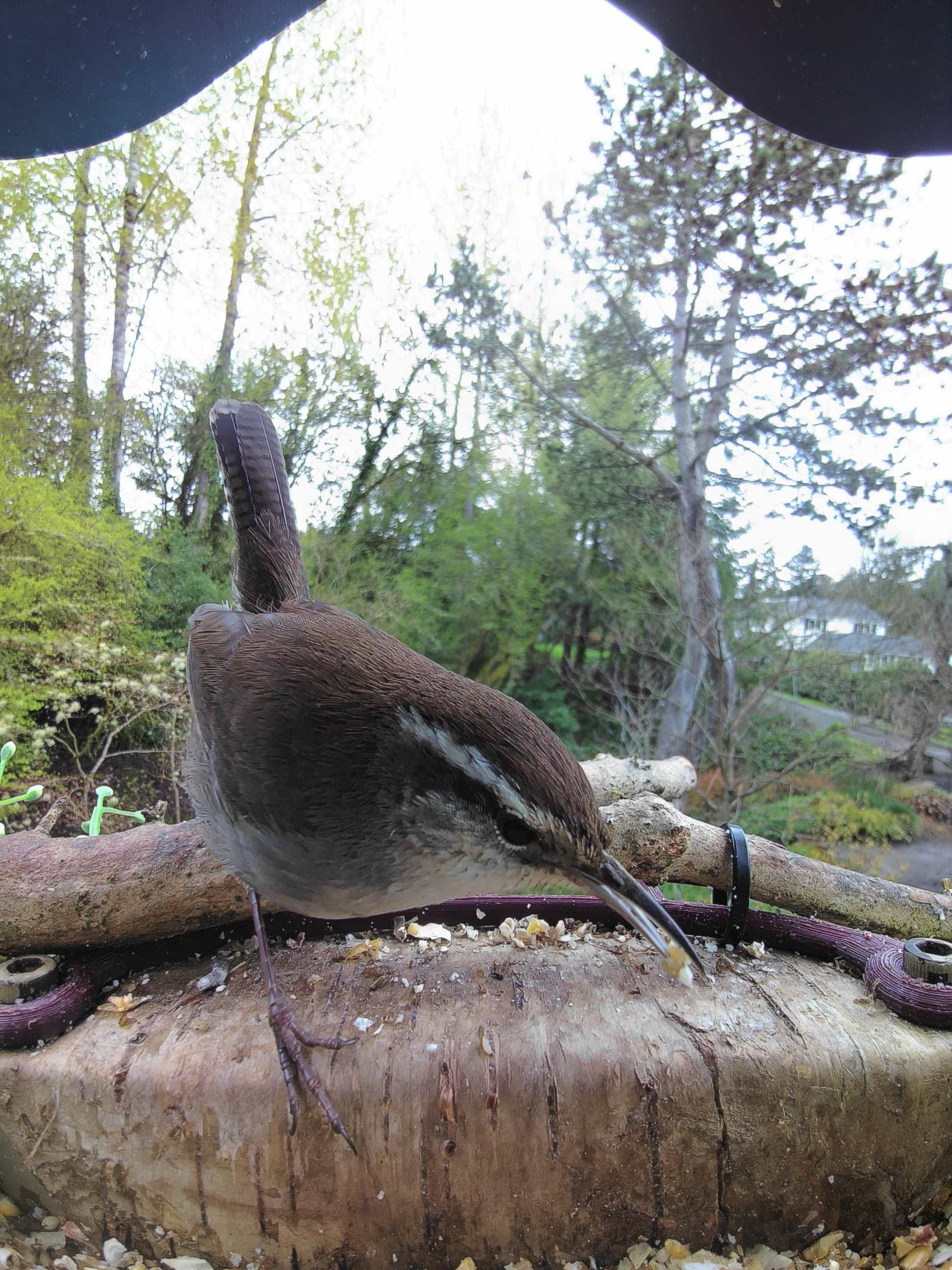


Bewick’s Wren


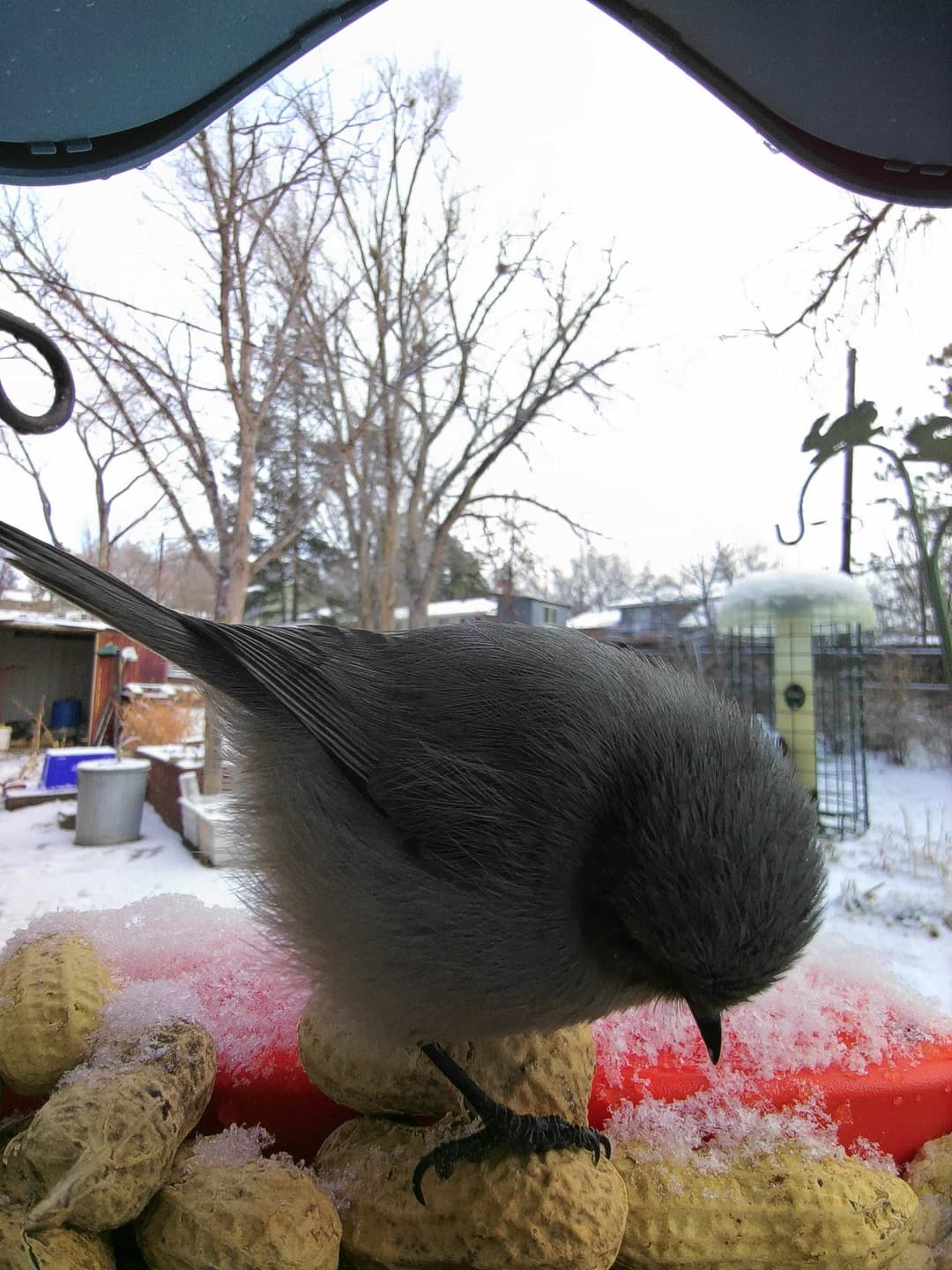
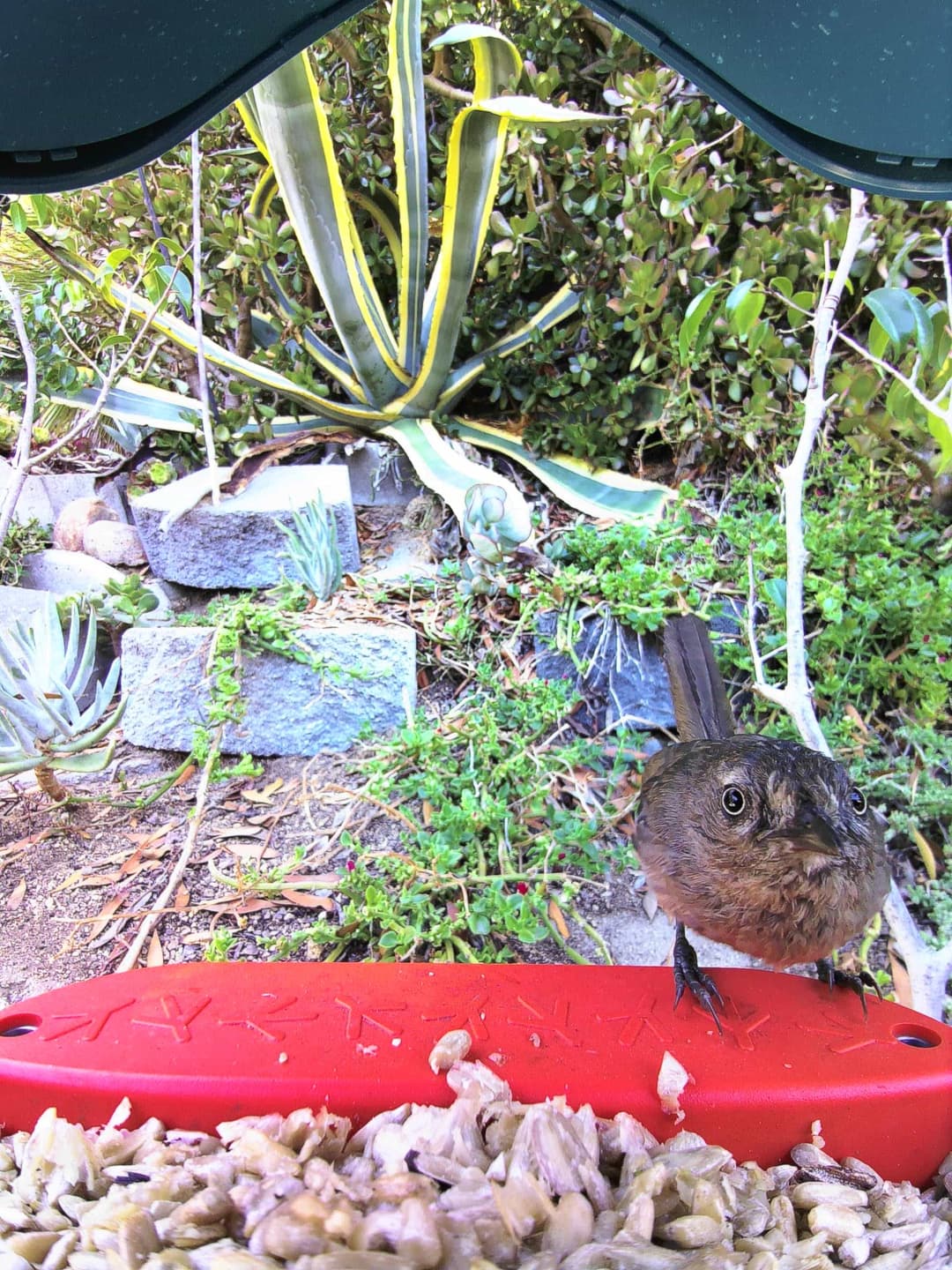
Wrentit
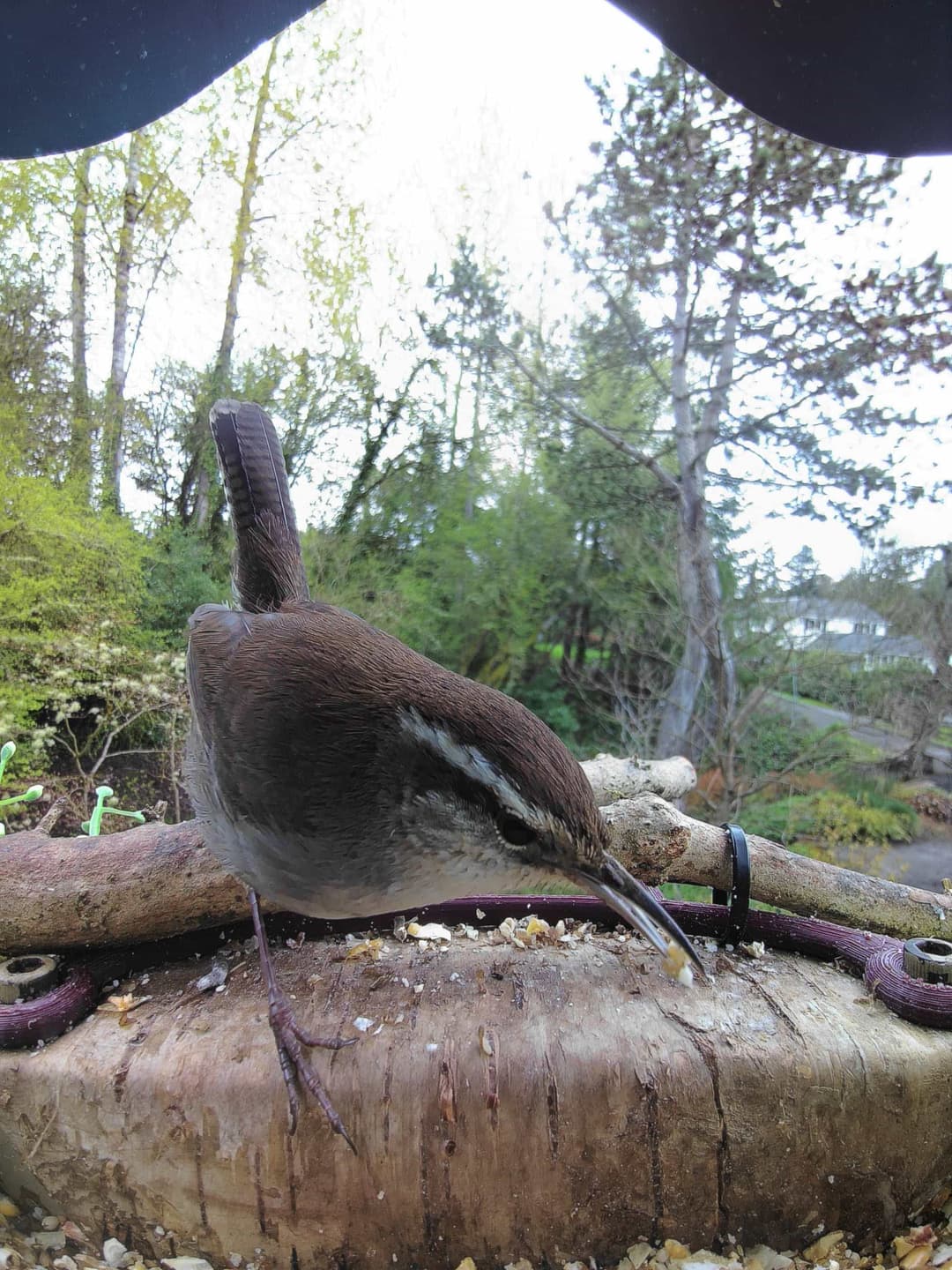
Bewick’s Wren
Thryomanes bewickii
General appearance
The Bewick's wren is a small bird that measures approximately 5 1/2 inches or 14cm in size. It is characterized by its white eyebrow and its long tail, which it often flips back and forth. The bird's back displays a dull brown color, while its underparts are of a pale gray hue. Notable features include white corners of the tail and eastern birds which are known to be more rich in color. The wren's overall size is akin to a Sparrow.
Male vs female
There are no significant differences in the outward physical appearance between male and female Bewick's wrens. Both the sexes exhibit the same coloration and size. However, the meticulous listener can distinguish between a male and female by their song, as vocalization in Bewick's wrens differs by gender.
Juvenile
Juvenile Bewick's wrens resemble adults but are somewhat paler in coloration. The white eyebrow characteristic of adults may not be prominently seen in young birds. As with many other bird species, juveniles mature over time and gradually acquire the definitive adult plumage.
Size
5.1 - 5.5 in/0.3 - 0.4 oz
There's more to learn about Bewick’s Wren
View full detailsWrentit
Chamaea fasciata
General appearance
The wrentit is a small bird, measuring between 6-6 1/2 inches (15-17 cm) in length, roughly the size of a robin or a sparrow. Its overall color ranges from gray-brown to reddish brown, featuring a pale eye that stands out. The bird also possesses blurry stripes on its chest, a long tail, and a short, stubby bill. Due to its elusive nature, spotting the wrentit in the wild can be quite challenging.
Male vs female
No significant physical differences have been documented between male and female wrentits. Both genders share similar sizes, colorations, and physical traits making them difficult to differentiate in the wild.
Juvenile
Juvenile wrentits share much of the same characteristics as adults. However, no explicit details are provided about possible variations in size, coloration or differences in physical traits. More detailed information might be necessary to accurately identify juvenile wrentits.
Size
5.5 - 5.9 in/0.4 - 0.6 oz
There's more to learn about Wrentit
View full detailsHow to tell the Bewick’s Wren from the Wrentit
Visual differences
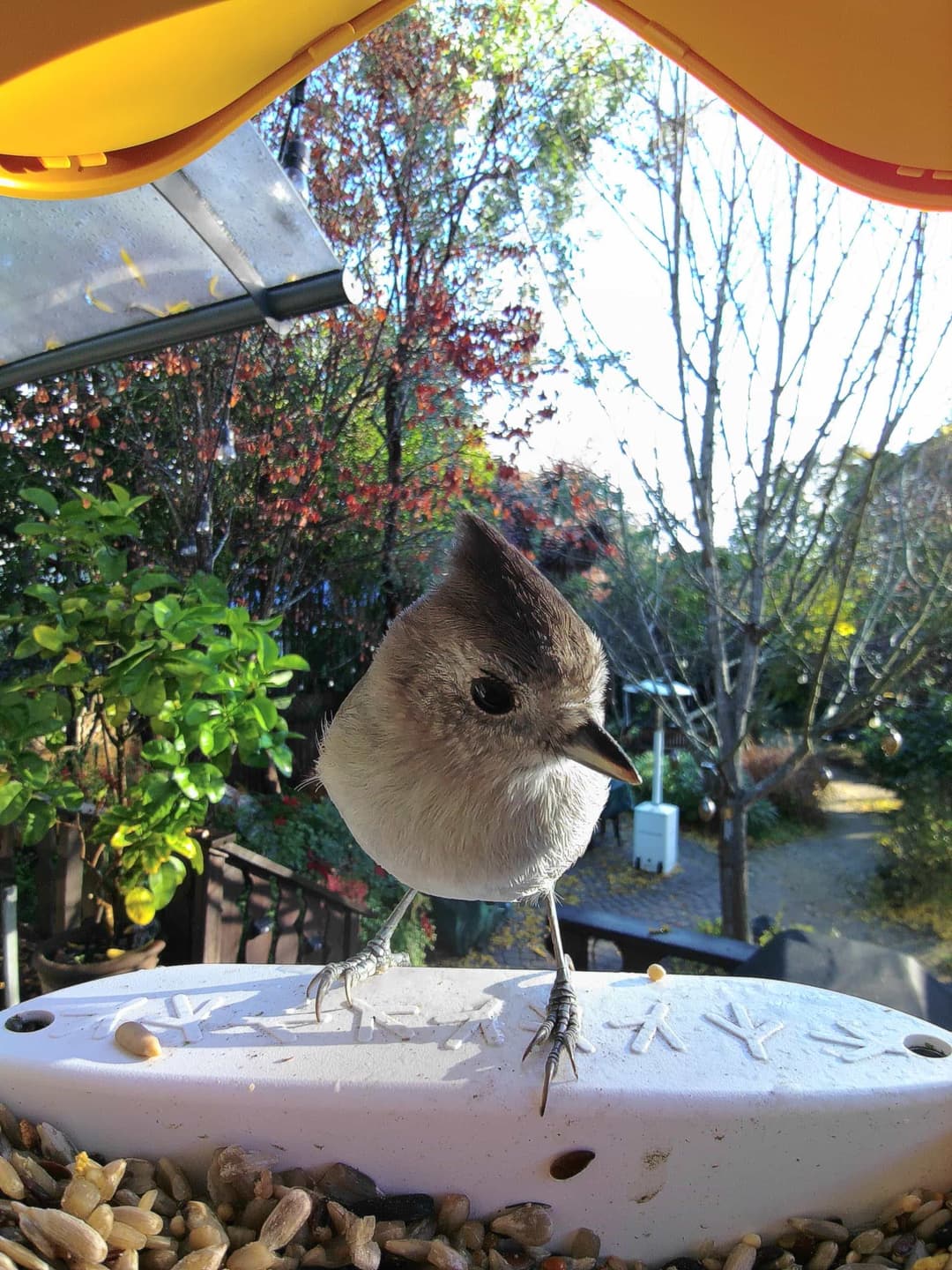
Bewick's Wren measures about 5.5 inches and shows a dull brown back, pale gray underparts, a prominent white eyebrow, and white tail corners. It has a slender bill. In contrast, Wrentit is larger at 6-6.5 inches, with a gray-brown to reddish-brown color, blurry chest stripes, a pale eye, and a short, stubby bill. Wrentit's long tail lacks distinct markings found in Bewick's Wren. The Bewick's Wren's more contrasting plumage and white eyebrow are key visual differentiators from the Wrentit's softer, uniform coloration.
Key differences and behavior
Bewick's Wren and Wrentit display distinct behavioral differences. Bewick's Wren males learn songs from neighbors, using them for territory defense and mate attraction, while both male and female Wrentits sing to protect their shared territory. Bewick's Wrens prefer wooded habitats and nest in higher cavities, while Wrentits inhabit dense low growth, building hidden nests under 10 feet. In terms of diet, Bewick's primarily insectivorous diet shifts to feeders in colder months, whereas Wrentits consume insects and berries more variably, using feeders occasionally. Additionally, Wrentits often form enduring pair bonds, sharing all parental duties, while Bewicks may engage in competitive egg niche behaviors. Both birds visit feeders but target different items.
Still not sure? Here are more lookalikes!
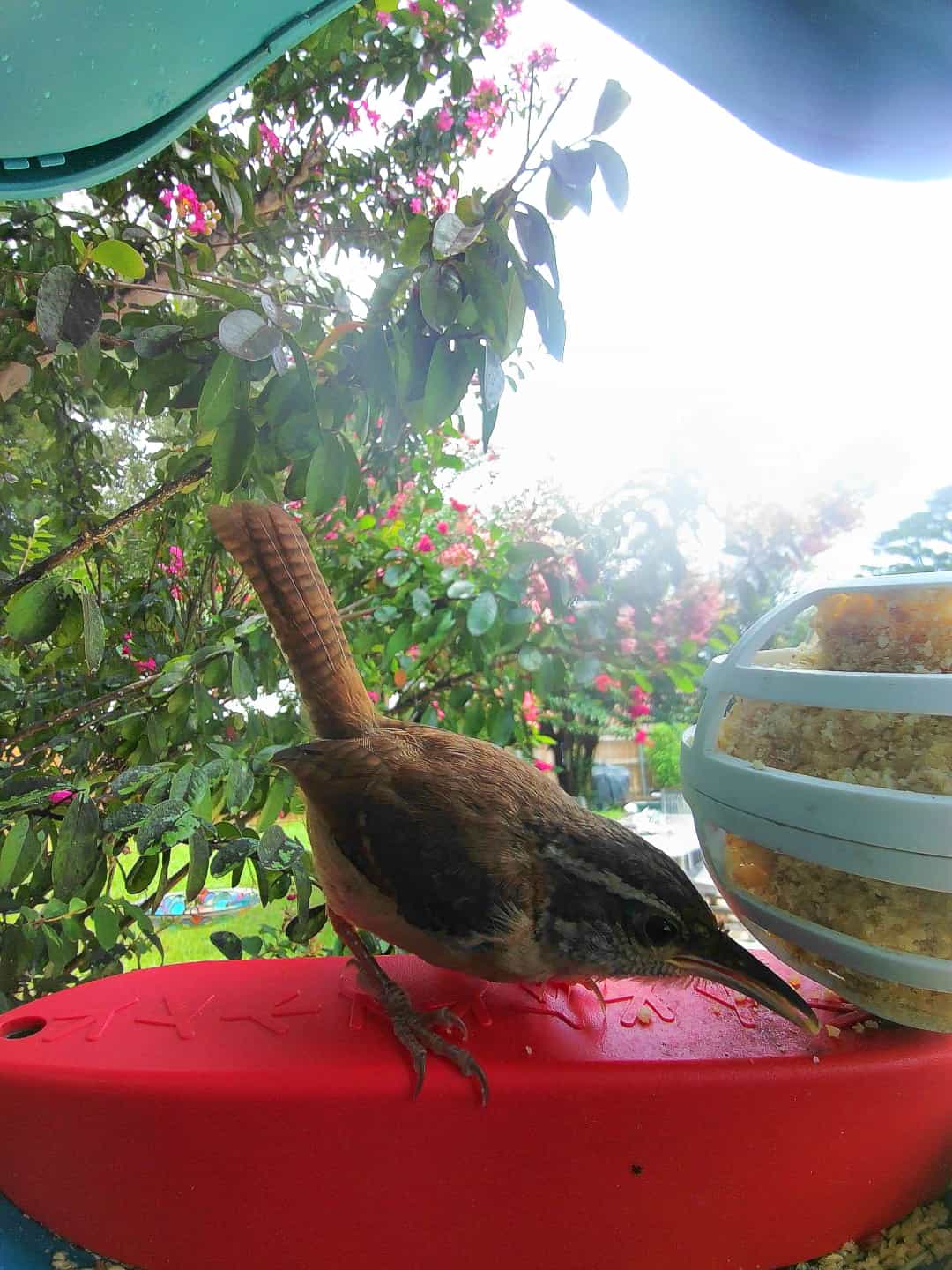
Bewick’s Wren vs Carolina Wren
Bewick’s Wren vs [Select a bird]

[Select a bird]
Pick a bird to compare
Wrentit vs [Select a bird]
[Select a bird]
Pick a bird to compare