Scott’s Oriole or Bullock’s Oriole?
Here's how to tell the difference



Scott’s Oriole


Bullock’s Oriole
Scott’s Oriole
Icterus parisorum
General appearance
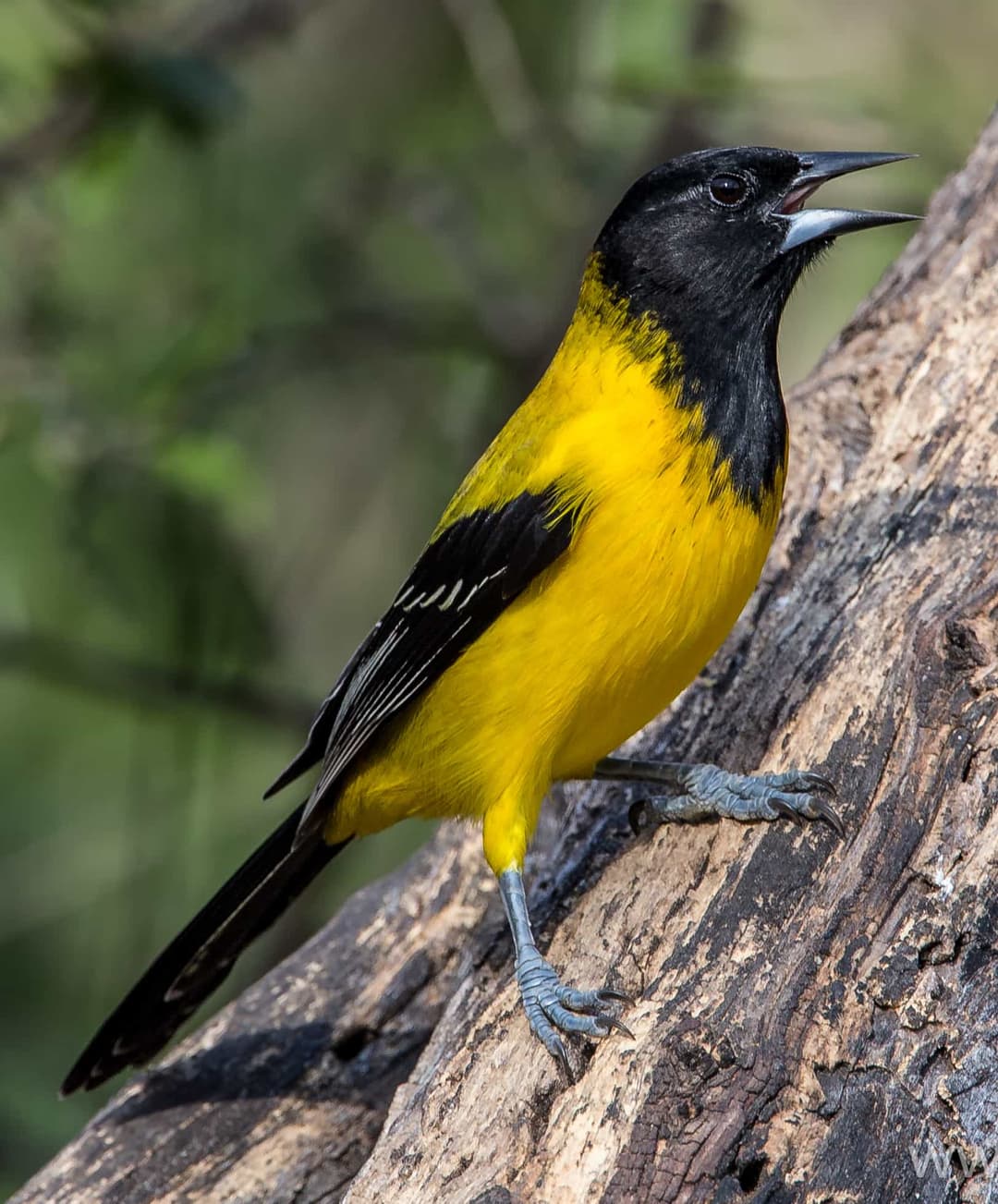
The Scott's oriole is a medium-sized bird, around 19-21 cm in length, comparable in size to a robin or sparrow. Its wings are rounded in shape, with a square-tipped tail. The bird has a striking black and yellow coloration, along with green and white shades.
Male vs female
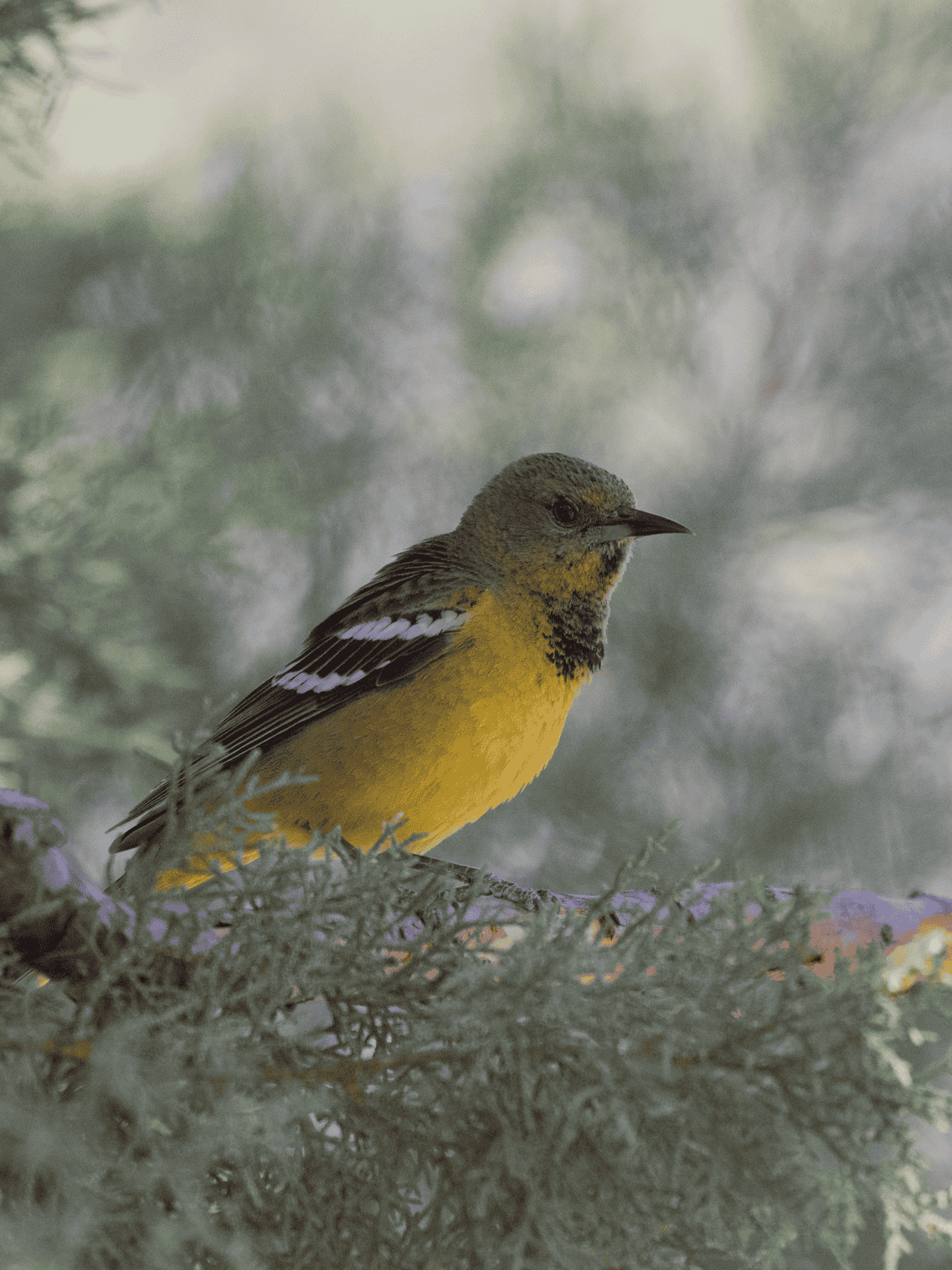
Sexual dimorphism is apparent in this species. The male Scott's oriole is unmistakable for its brilliant black-and-yellow plumage, featuring a black upper back with yellow on the rump and base of the tail. The female, on the other hand, is more of a dusky yellow-green color. She's darker and larger than the females of the Hooded or Orchard Oriole species.
Juvenile
Juvenile Scott’s Orioles and older females may have much black on their heads. This could potentially make it difficult to distinguish them from adult males in the wild without close inspection. The extent of the black on the head may also be representative of the bird's age.
Size
7.5 - 9.4 in/1.1 - 1.4 oz
There's more to learn about Scott’s Oriole
View full detailsBullock’s Oriole
Icterus bullockii
General appearance
Bullock's Oriole is a medium-sized songbird distinguished by its slender body and sharp, pointed bill. It typically displays vibrant colors with striking contrasts, making it easily recognizable in its natural habitat. Both genders possess a pointed beak, perfect for foraging insects and fruit.
Male vs female
Males are brightly colored with a vibrant orange face and underparts, contrasted by a black cap, throat, and eye-line. They also have a distinctive white patch on the wing. Females are more subdued, showcasing grayish-buff tones with a hint of pale orange on the underparts and lacking the stark black markings seen in males. Their wings are more mottled, featuring less contrast.
Juvenile
Juvenile Bullock's Orioles resemble females but generally exhibit even duller and more muted colors. Young males may begin showing hints of the brighter orange plumage as they mature. Observers can identify juveniles by the mix of adult female-like body coloration and gradually emerging adult male plumage patterns.
Size
6.7 - 7.5 in/1.0 - 1.5 oz
There's more to learn about Bullock’s Oriole
View full detailsHow to tell the Scott’s Oriole from the Bullock’s Oriole
Visual differences
Scott's Oriole is larger at 7.5-8.3 inches with square-tipped tails, displaying striking black and yellow plumage in males and dusky yellow-green in females. Bullock's Oriole is slightly smaller at 6.7-7.5 inches, featuring a slender body and sharp bill. Males have bright orange faces and underparts with black caps, while females are grayish-buff with pale orange tints. Scott's has a rounded wing shape; Bullock's has a more pointed beak. These distinct size, color patterns, and plumage differences aid in identification.
Key differences and behavior
Scott's Oriole and Bullock's Oriole can be distinguished in the field by several behavioral and ecological differences. Scott's Orioles are prominent singers, vocalizing from before sunrise through the day, while Bullock's Orioles are quieter. Scott's Orioles favor semi-arid environments like juniper, pinyon, and yucca habitats, whereas Bullock's Orioles prefer open woods and riverside groves with deciduous trees like cottonwoods. During courtship, Scott's males arrive first and sing to establish territory, while Bullock's males display by singing and quivering wings. Scott's nests are often placed in yuccas, while Bullock's are hung from deciduous trees. Both species feed on insects and fruit, but Bullock's rely more on cultivated fruits. At feeders, both consume sugar-water, but Bullock's may also take fruits. These habitat, vocal, and nesting habits collectively help distinguish the two orioles beyond their visual markers.
Still not sure? Here are more lookalikes!
Bullock’s Oriole vs Baltimore Oriole
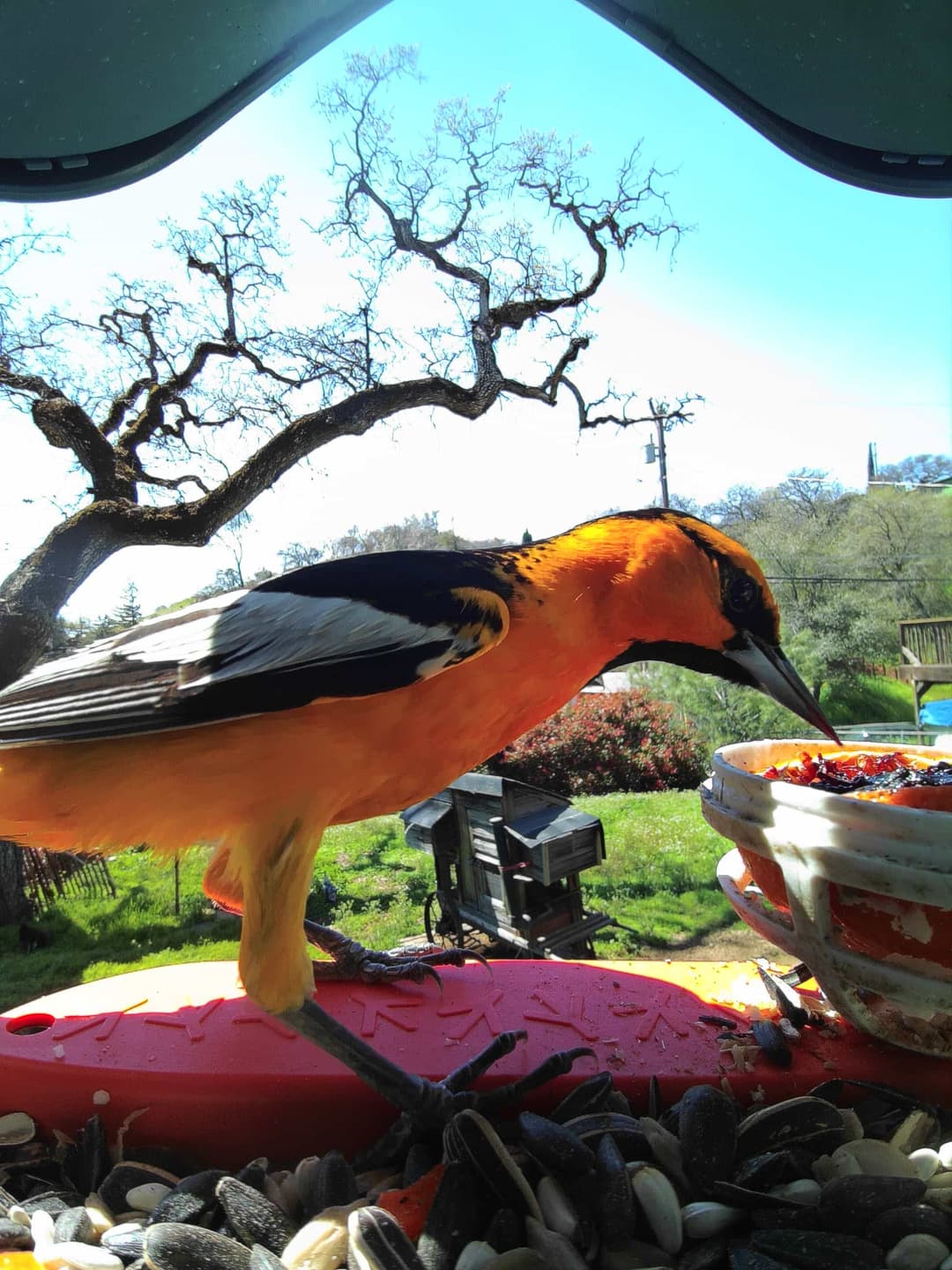
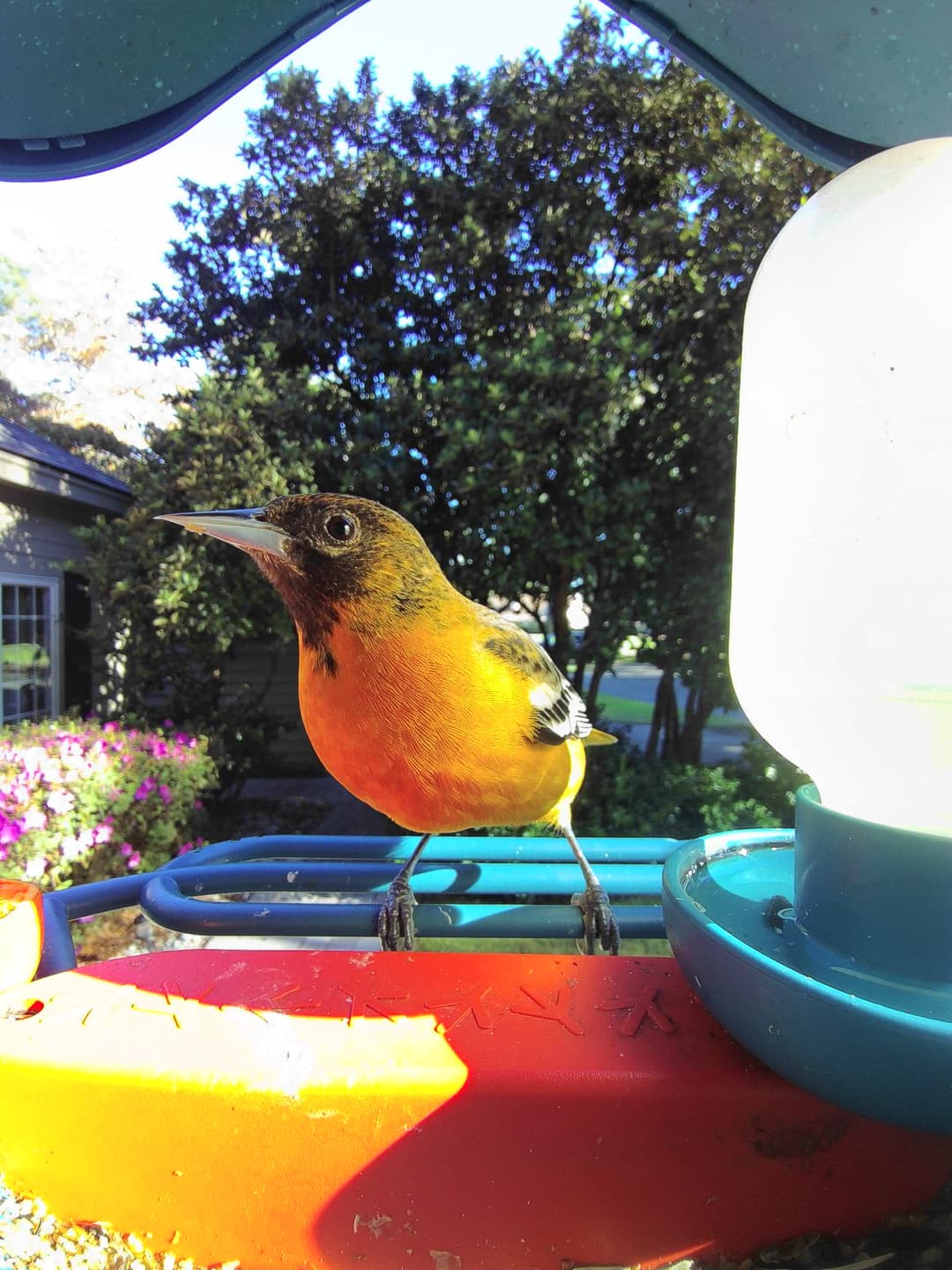
Scott’s Oriole vs [Select a bird]

[Select a bird]
Pick a bird to compare
Bullock’s Oriole vs [Select a bird]
[Select a bird]
Pick a bird to compare