Hooded Oriole or Scott’s Oriole?
Here's how to tell the difference
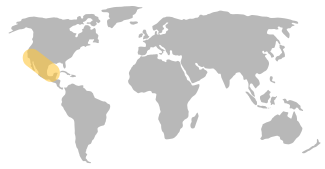

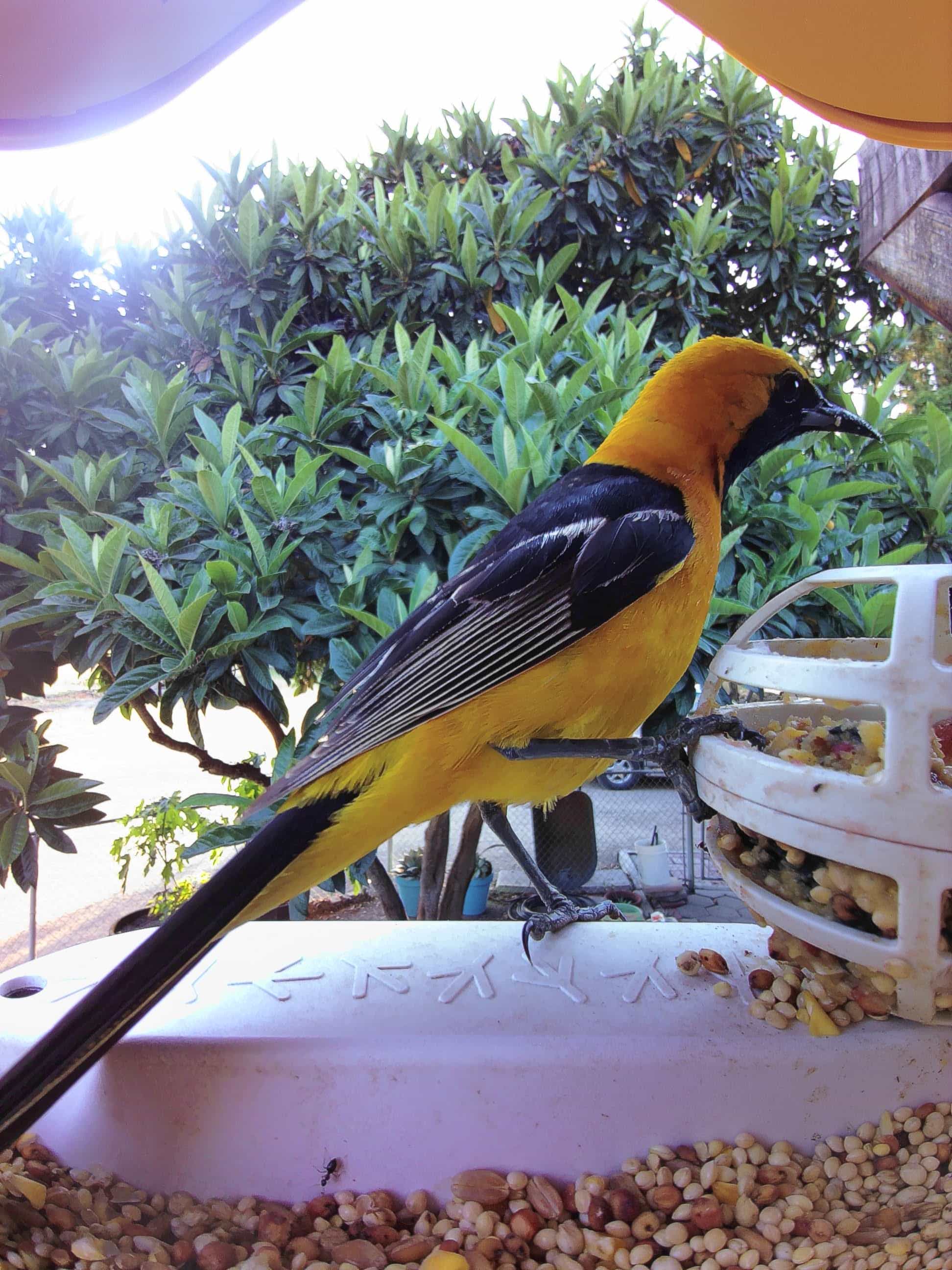


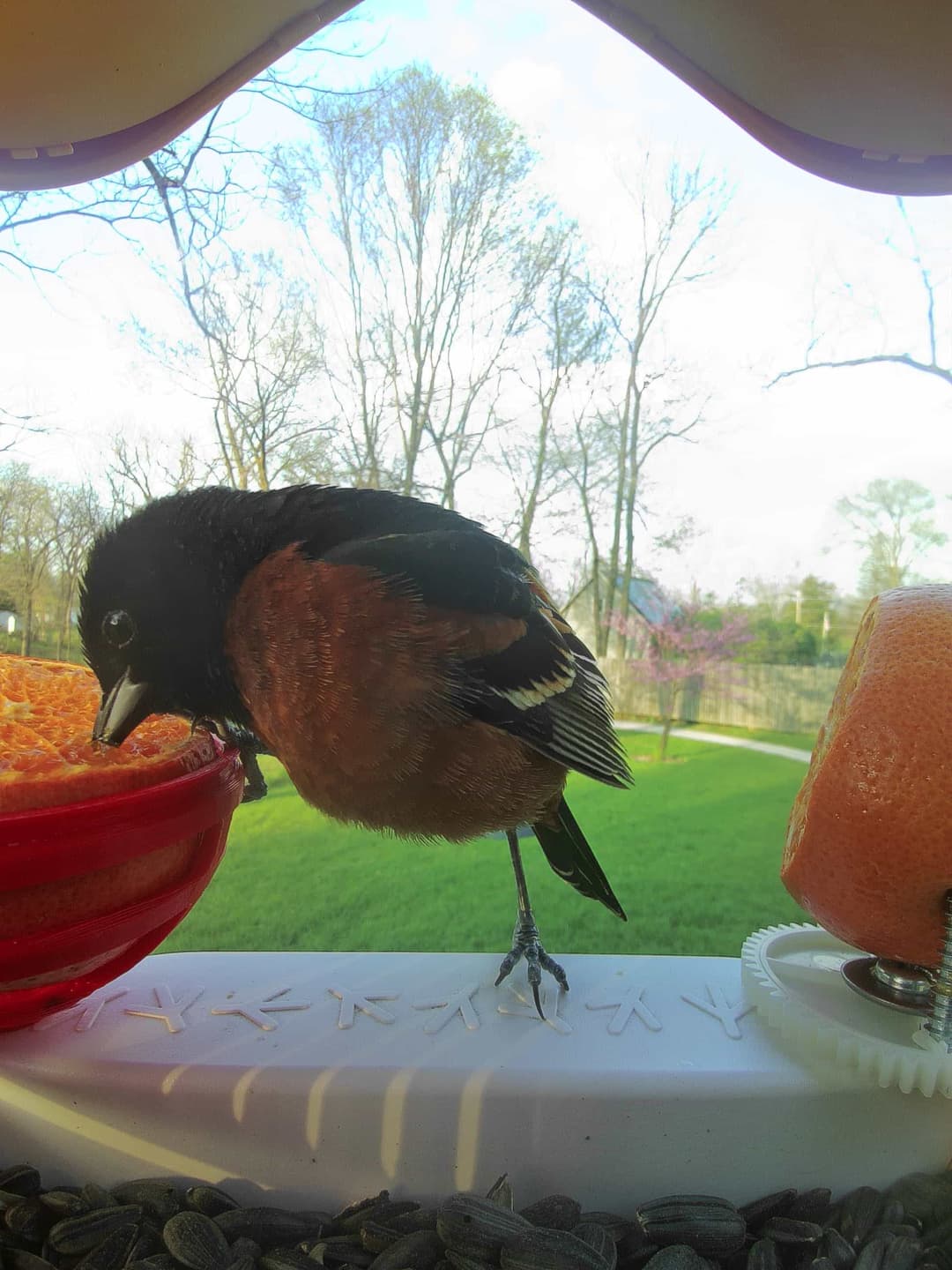
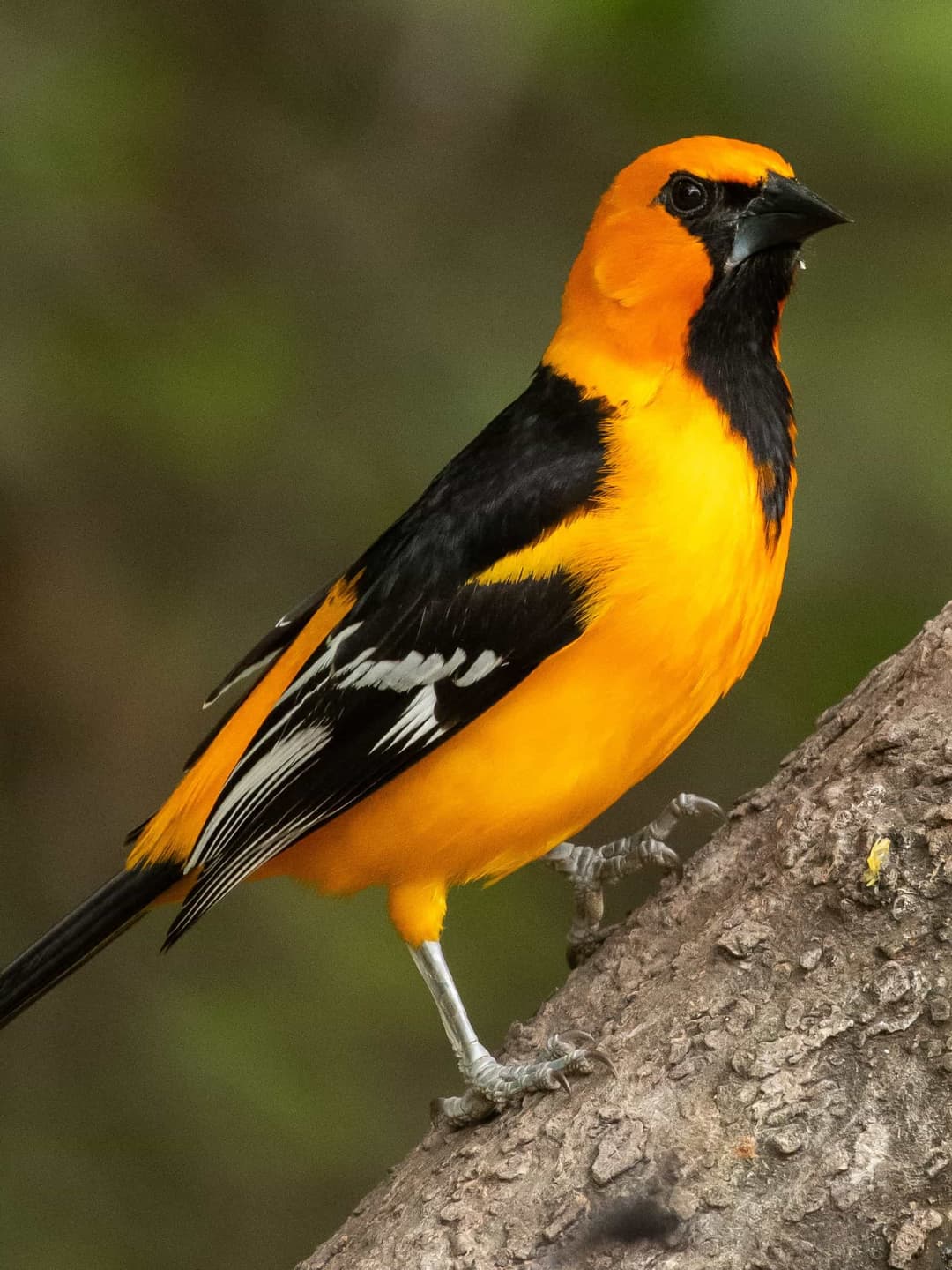
Hooded Oriole

Scott’s Oriole
Hooded Oriole
Icterus cucullatus
General appearance
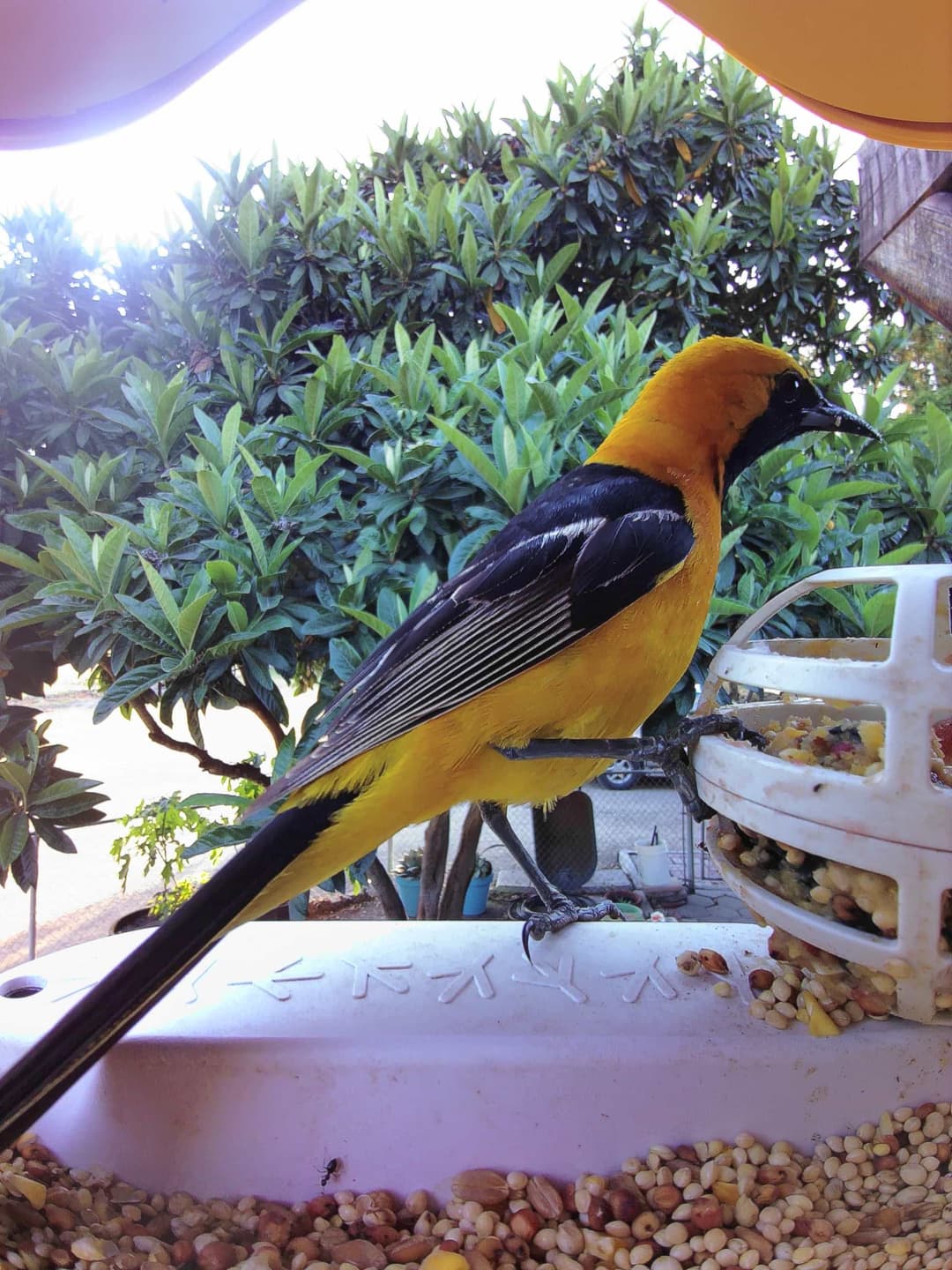
Hooded orioles are slender songbirds with long tails and slightly curved bills. They display a vibrant combination of orange-yellow and black, with distinctive hood-like coloring on the head and neck. The wings and back are predominantly black, creating a stark contrast with their bright bodies.
Male vs female
Male hooded orioles showcase a brighter orange-yellow color overall and have a more pronounced black cap and throat. Females are generally yellow to olive-yellow without the bold black markings found on males. They may exhibit some subtle grayish patterns on their wings, distinguishing them from juvenile males.
Juvenile
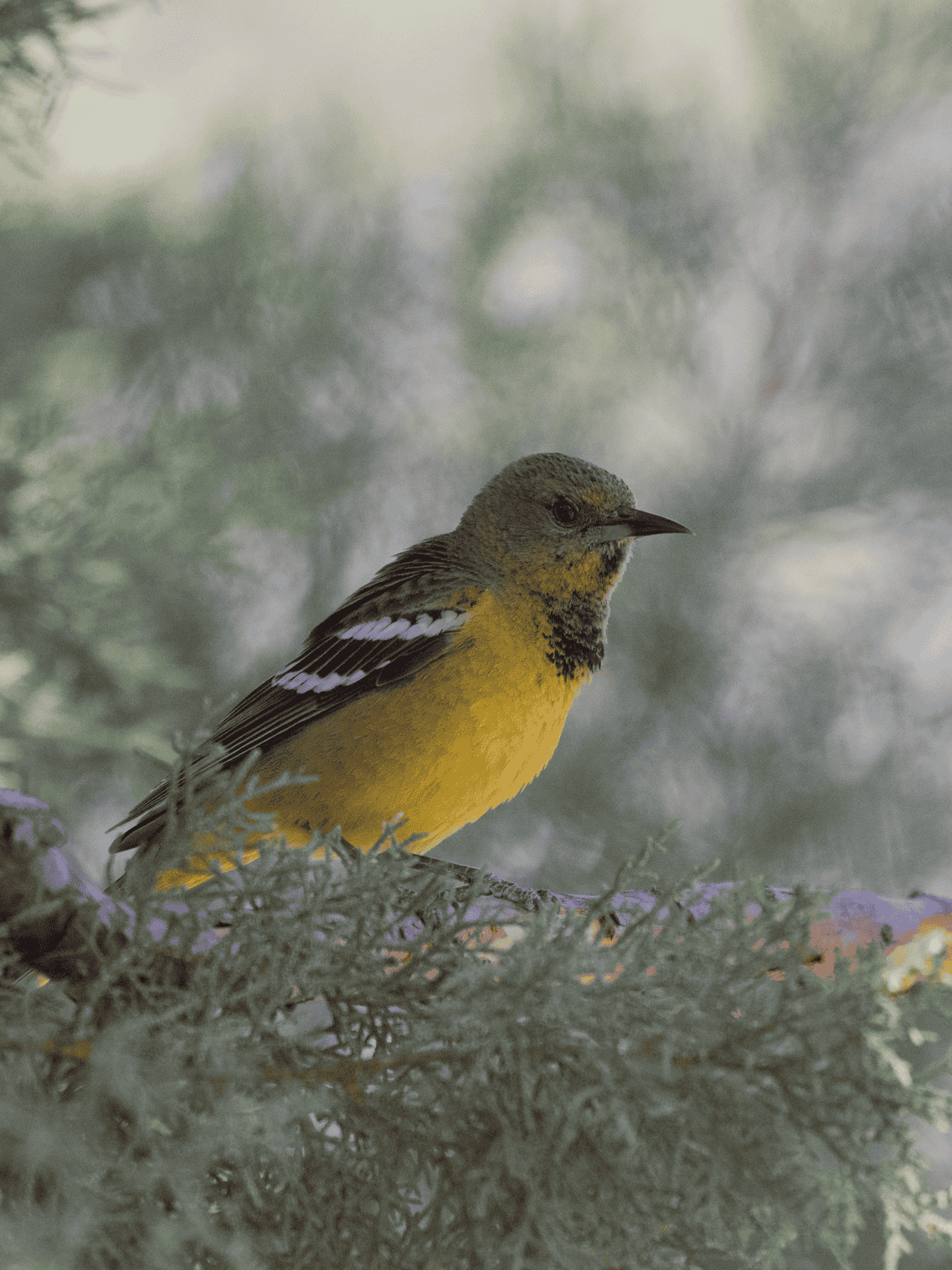
Juvenile hooded orioles resemble females in coloration with a yellowish-olive appearance. However, they can be distinguished by a slightly duller hue and inconsistently developed black facial markings. As they mature, young males gradually acquire brighter plumage and the distinctive black hood.
Size
7.1 - 7.9 in/0.7 - 1.2 oz
There's more to learn about Hooded Oriole
View full detailsScott’s Oriole
Icterus parisorum
General appearance
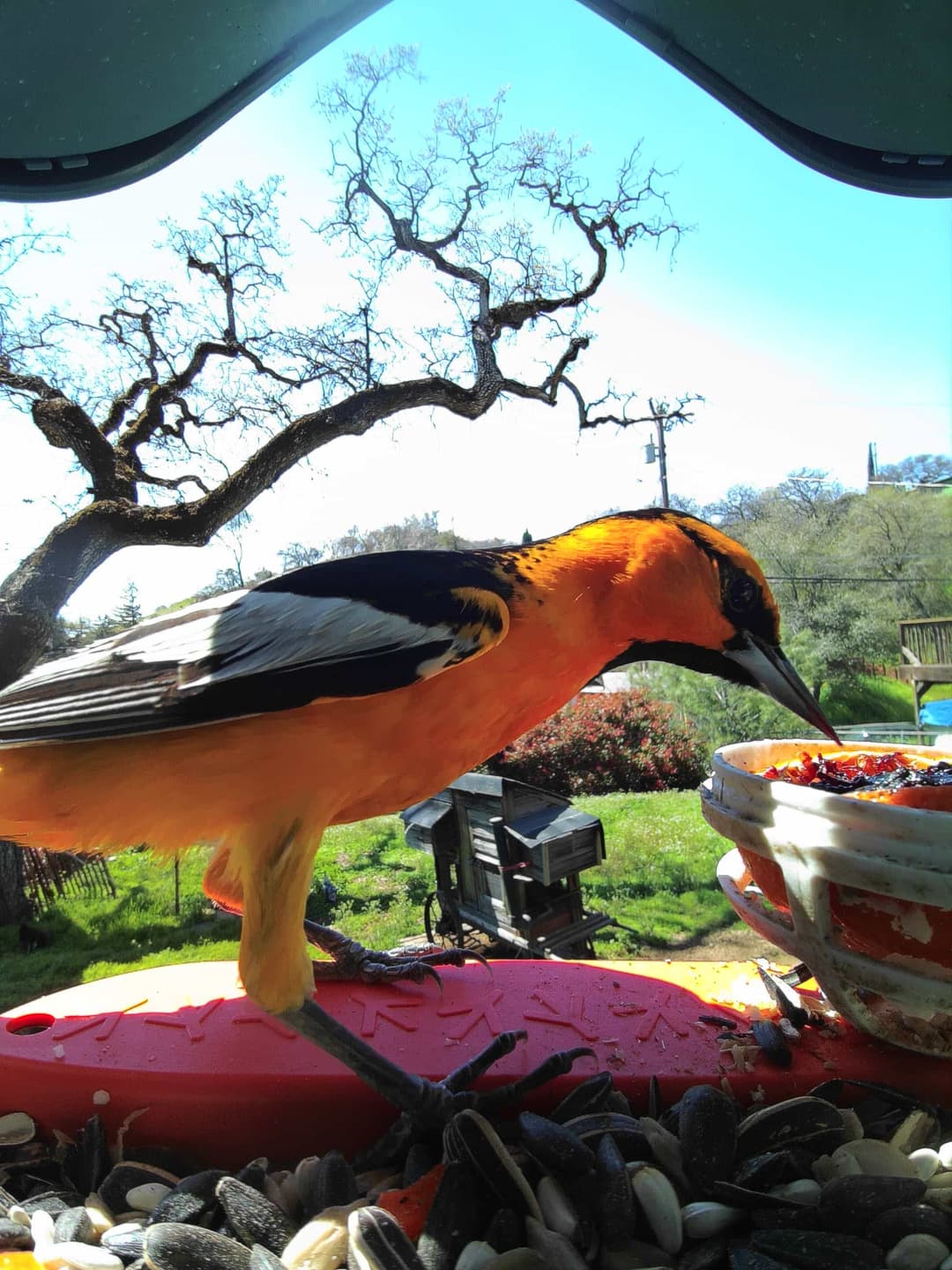
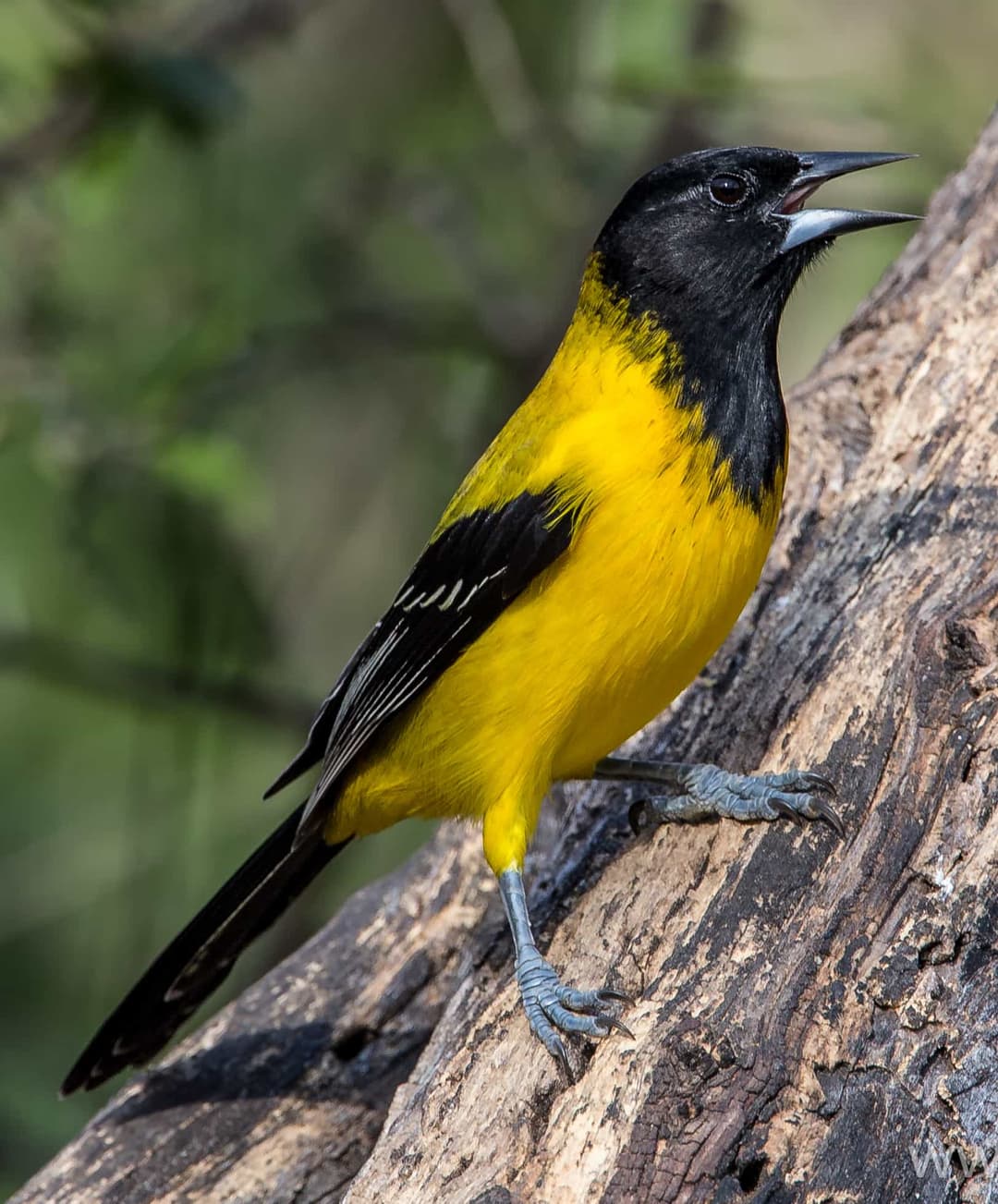
The Scott's oriole is a medium-sized bird, around 19-21 cm in length, comparable in size to a robin or sparrow. Its wings are rounded in shape, with a square-tipped tail. The bird has a striking black and yellow coloration, along with green and white shades.
Male vs female
Sexual dimorphism is apparent in this species. The male Scott's oriole is unmistakable for its brilliant black-and-yellow plumage, featuring a black upper back with yellow on the rump and base of the tail. The female, on the other hand, is more of a dusky yellow-green color. She's darker and larger than the females of the Hooded or Orchard Oriole species.
Juvenile
Juvenile Scott’s Orioles and older females may have much black on their heads. This could potentially make it difficult to distinguish them from adult males in the wild without close inspection. The extent of the black on the head may also be representative of the bird's age.
Size
7.5 - 9.4 in/1.1 - 1.4 oz
There's more to learn about Scott’s Oriole
View full detailsHow to tell the Hooded Oriole from the Scott’s Oriole
Visual differences
The Hooded Oriole is slender (7-8 inches) with a long tail and slightly curved bill, showcasing vibrant orange-yellow with a black hood and wings. In contrast, Scott's Oriole is larger (7.5-8.5 inches), with a more robust body, square-tipped tail, and a rounded bill. Males have striking black-and-yellow plumage, with black backs and yellow rumps. Females are dusky yellow-green. Juveniles of both species resemble females but may feature more black. Each species' distinct color patterns and size differentiate them easily.
Key differences and behavior
Behaviorally, Hooded Orioles are agile acrobats, adapting to urban areas by nesting ingeniously under palm fronds or high in trees, a habit coined by their "palm-leaf oriole" nickname. They breed actively with courtship displays and both genders care for young. They are versatile feeders, enjoying insects and nectar, and often visit feeders for sugar-water. Scott's Orioles, meanwhile, inhabit semi-arid regions like juniper and pinyon pine woods, often found singing continuously from dawn to dusk. They prefer yuccas or Joshua trees for nesting. Males establish territories vocally before females arrive. Their diet, similar to Hooded Orioles, includes insects, berries, and nectar, with feeder visitation for sugar-water. Although both species consume similar foods, Scott's Orioles are larger and more solitary in less-urban regions compared to the urban-friendly, collaborative Hooded Orioles.
Still not sure? Here are more lookalikes!
Hooded Oriole vs [Select a bird]

[Select a bird]
Pick a bird to compare
Scott’s Oriole vs [Select a bird]
[Select a bird]
Pick a bird to compare