Chestnut-Breasted Munia or Double-Barred Finch?
Here's how to tell the difference
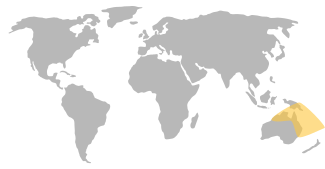


Chestnut-Breasted Munia


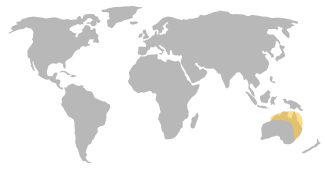
Double-Barred Finch
Chestnut-Breasted Munia
Lonchura castaneothorax
Also known as: Chestnut-Breasted Mannikin, Bully Bird
General appearance
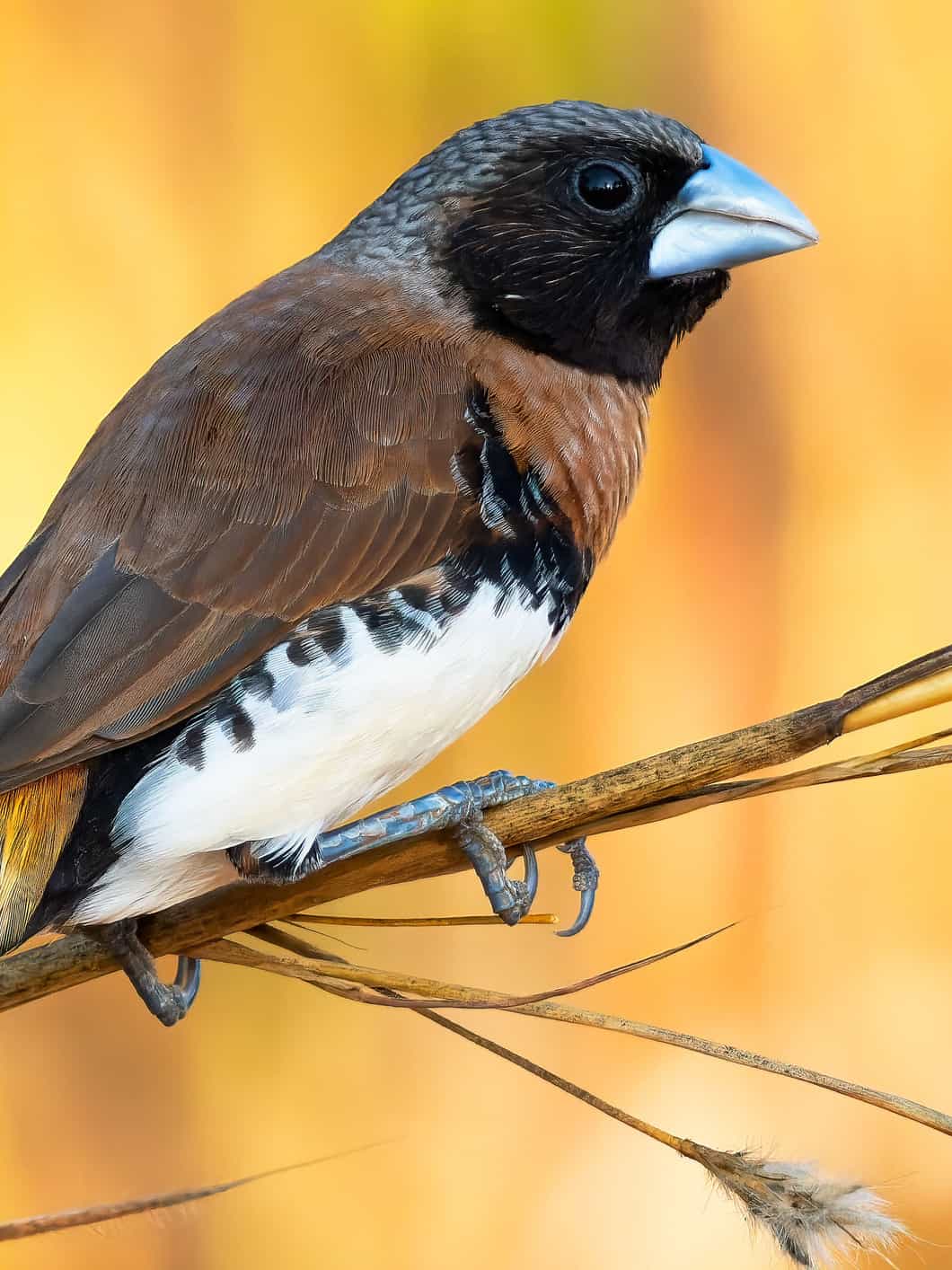
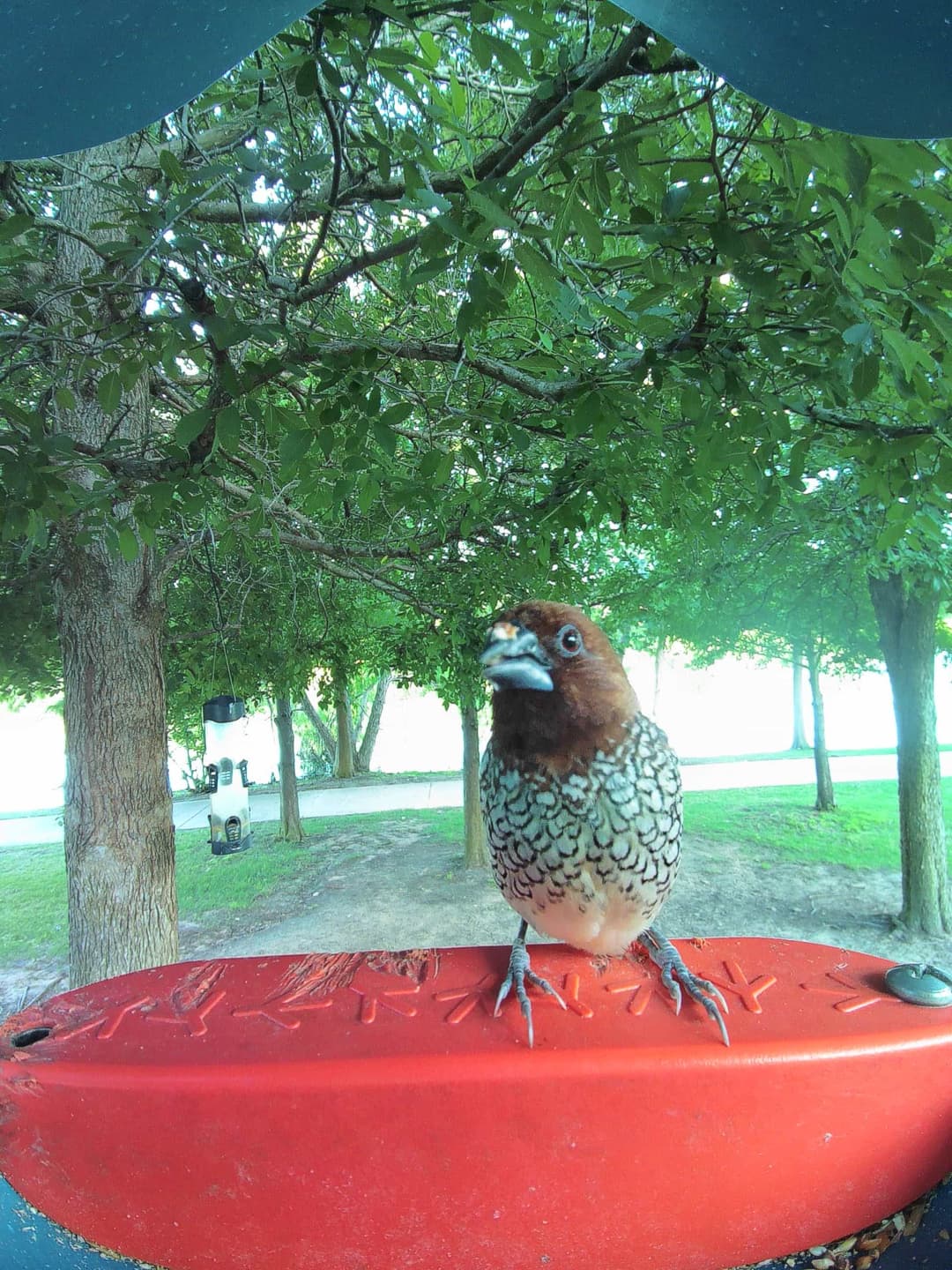
The chestnut-breasted munia is a small, finch-like bird roughly 11-12 cm long. It has a distinctive chestnut-colored breast and belly, contrasting sharply with its black head, tail, and back. Wings are brown and streaked subtly. The beak is blue-gray which adds to its distinctive appearance.
Male vs female
Both males and females display similar physical traits and coloration, making them nearly indistinguishable by appearance alone. Both sexes display the chestnut breast and black back and head. Females may have slightly less vibrant coloration but this is typically difficult to discern in the wild.
Juvenile
The juvenile chestnut-breasted munia has a distinctive appearance differing from adults. They are overall duller, with a pale brown body, grey-brown head, and a paler bill. The chestnut breast and vibrant black and brown coloration doesn't appear until they mature.
Size
3.9 - 4.3 in/0.4 - 0.5 oz
There's more to learn about Chestnut-Breasted Munia
View full detailsDouble-Barred Finch
Stizoptera bichenovii
Also known as: Bicheno's Finch, Owl Finch
General appearance
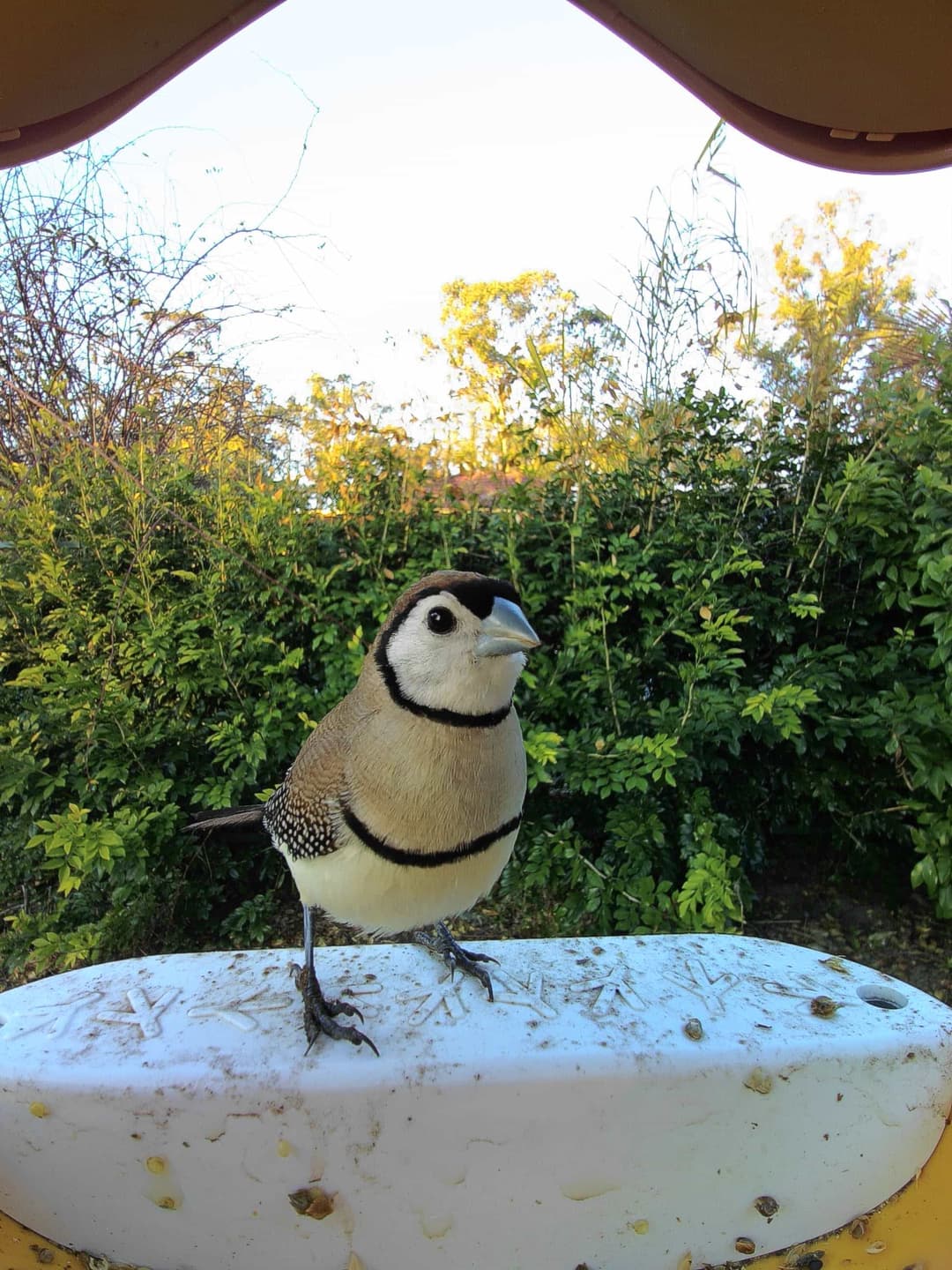
The double-barred finch is a small bird predominantly coloured black and white. Their common name comes from two distinctive chest bars. The face is black, the back, wings and tail are brownish, and their belly consists of white plumage. They have long, pointed conical bills and swift-looking wings.
Male vs female
Physically, males and females look similar, but males typically feature a more vibrant appearance. For instance, males have a bigger dark face mask extending across the eyes, and more intense white feathers on the belly. Females, on the other hand, tend to have a smaller face mask and paler under-parts.
Juvenile
Juvenile double-barred finches are similar to females but their plumage is duller. They show a less defined face mask and they have absence of double bars across their chest. Their coloration becomes vibrant as they mature.
Size
3.9 - 4.3 in/0.2 - 0.4 oz
There's more to learn about Double-Barred Finch
View full detailsHow to tell the Chestnut-Breasted Munia from the Double-Barred Finch
Visual differences
The Chestnut-Breasted Munia is roughly 4.3-4.7 inches long, distinguished by its chestnut breast, a black head, tail, and back, along with brown wings and a blue-gray beak. In contrast, the Double-Barred Finch measures 4-4.3 inches with distinctive black and white plumage, marked by dual chest bars, a black face, and a conical bill. The Munia's chestnut color contrasts with the Finch's predominantly brown back and white belly. Both species exhibit similar size but differ significantly in their plumage patterns and beak shapes.
Key differences and behavior
The Chestnut-Breasted Munia and Double-Barred Finch exhibit distinct behaviors that aid in distinguishing them. Munias, often called barley birds due to their seed diet, frequent grasslands and wetlands and adapt well to human-altered areas. Known for their elaborate courtship dance, both parents share nesting duties. Their diet includes seeds, insects, and occasional fruits, particularly during breeding. In contrast, the sociable Double-Barred Finch, or owl finch, prefers woodlands and open environments, thriving in gardens and parks. They perform simpler courtship displays, involving males presenting nesting materials. Their diet is similar, focusing primarily on seeds and some insects during breeding. Munias, slightly heavier, weigh about 0.5-0.6 ounces, while finches weigh 0.25-0.4 ounces. Both engage in mutual contribution to nesting and chick rearing.
Still not sure? Here are more lookalikes!
Chestnut-Breasted Munia vs White-Rumped Munia
Chestnut-Breasted Munia vs Scaly-Breasted Munia

Chestnut-Breasted Munia vs [Select a bird]

[Select a bird]
Pick a bird to compare
Double-Barred Finch vs [Select a bird]
[Select a bird]
Pick a bird to compare