Chestnut-Breasted Munia or White-Rumped Munia?
Here's how to tell the difference

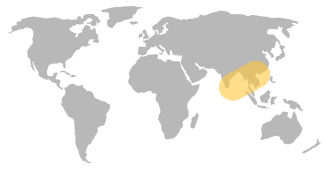


Chestnut-Breasted Munia

White-Rumped Munia
Chestnut-Breasted Munia
Lonchura castaneothorax
Also known as: Chestnut-Breasted Mannikin, Bully Bird
General appearance
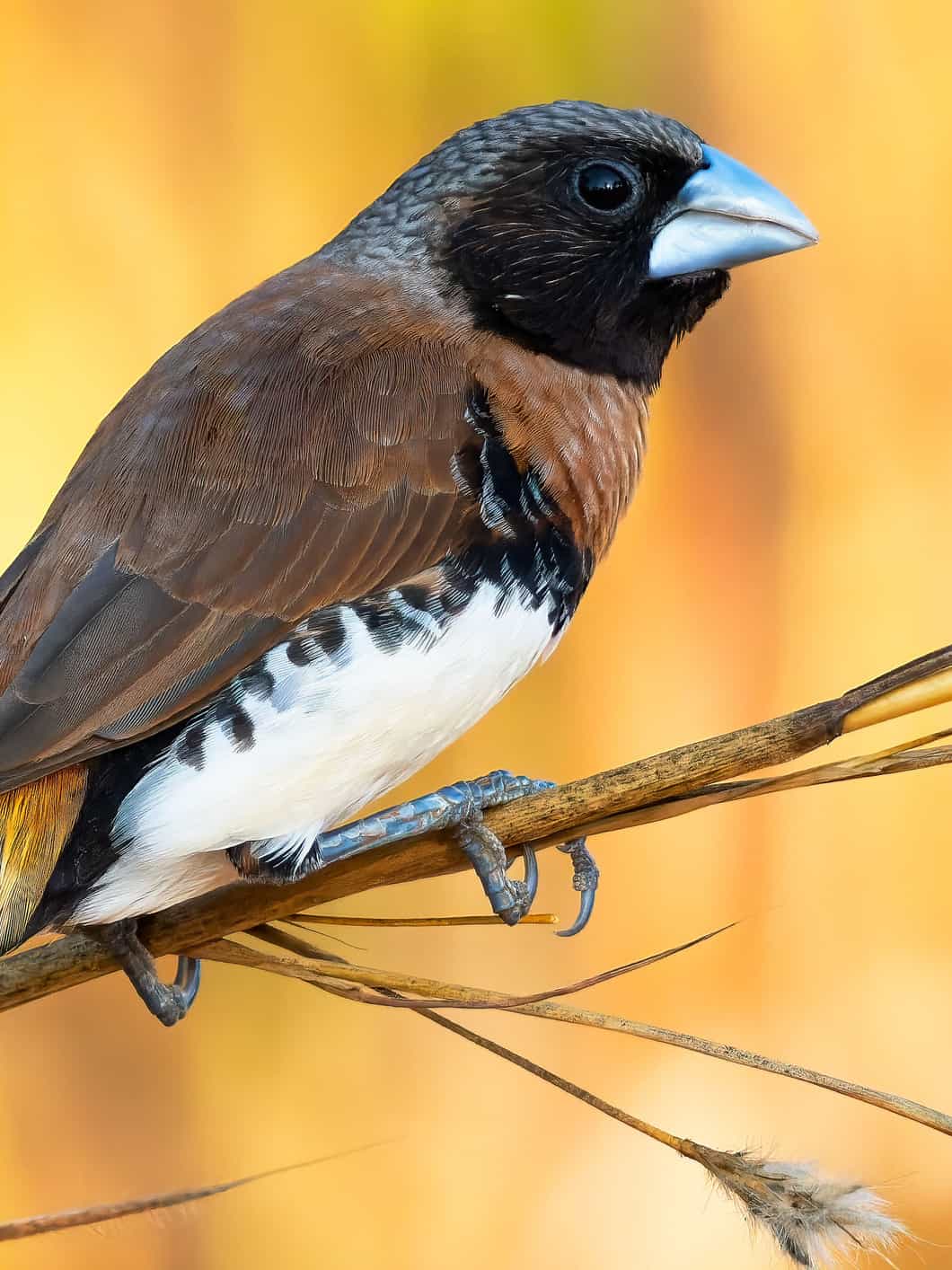
The chestnut-breasted munia is a small, finch-like bird roughly 11-12 cm long. It has a distinctive chestnut-colored breast and belly, contrasting sharply with its black head, tail, and back. Wings are brown and streaked subtly. The beak is blue-gray which adds to its distinctive appearance.
Male vs female
Both males and females display similar physical traits and coloration, making them nearly indistinguishable by appearance alone. Both sexes display the chestnut breast and black back and head. Females may have slightly less vibrant coloration but this is typically difficult to discern in the wild.
Juvenile
The juvenile chestnut-breasted munia has a distinctive appearance differing from adults. They are overall duller, with a pale brown body, grey-brown head, and a paler bill. The chestnut breast and vibrant black and brown coloration doesn't appear until they mature.
Size
3.9 - 4.3 in/0.4 - 0.5 oz
There's more to learn about Chestnut-Breasted Munia
View full detailsWhite-Rumped Munia
Lonchura striata
Also known as: White-Rumped Mannikin, Striated Finch
General appearance
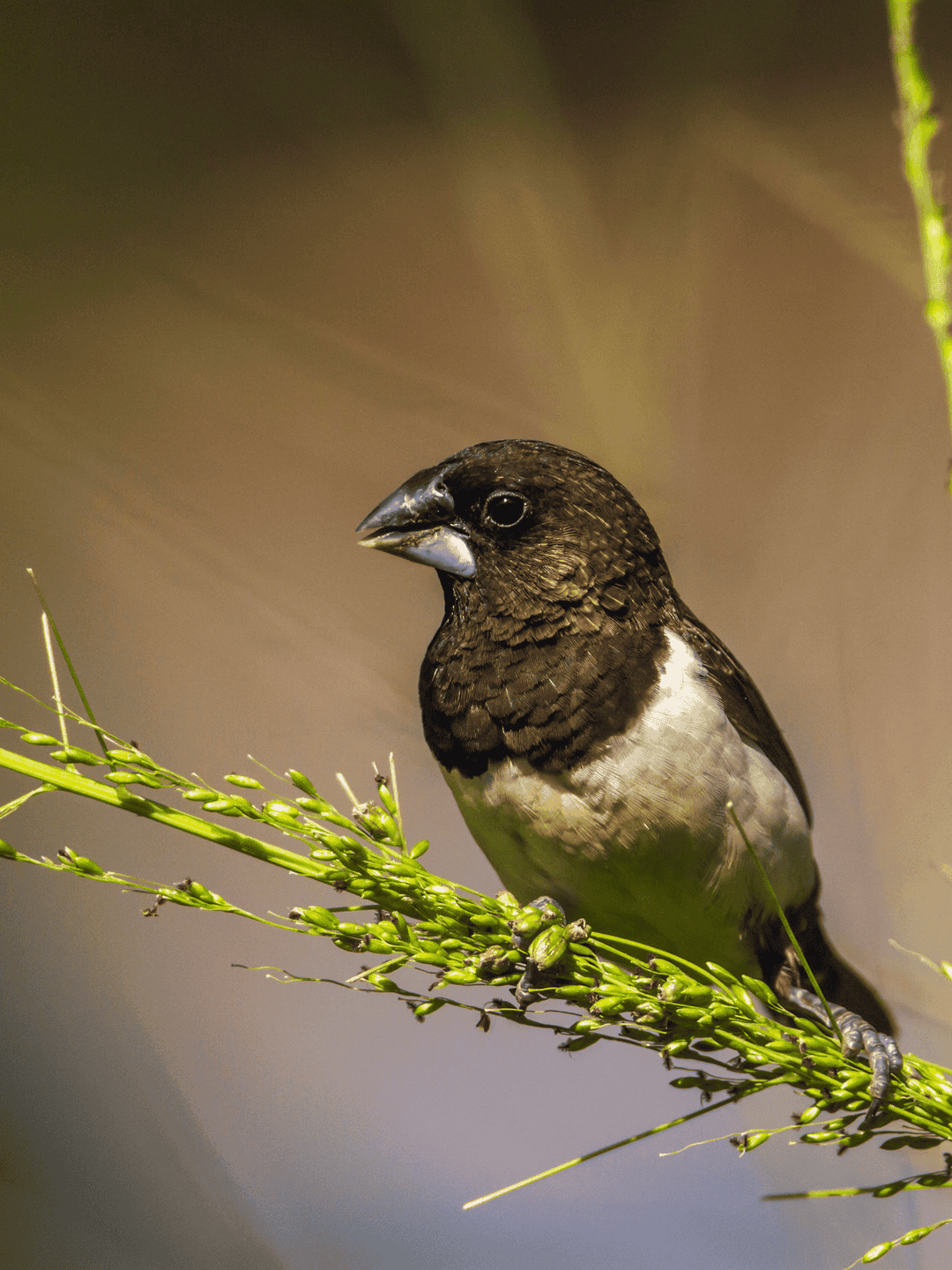
The white-rumped munia is a small bird native to tropical regions in Asia. Adults have characteristic black plumage with a sharp contrast to their white rump and belly. Their compact, stout bodies feature a strong, conical beak designed for seed-eating, while their short and pointed wings facilitate rapid flight.
Male vs female
In terms of physical appearance, there is minimal sexual dimorphism in white-rumped munias. Both males and females share the same colour patterns and size. However, during the breeding season, the male can be identified by its song and display rituals, which include puffing up their feathers, posturing, and an audible, musical call, actions not performed by the female.
Juvenile
Juvenile white-rumped munias have a noticeably different appearance from adults. They possess a dull, brown colouration overall, as opposed to the distinctive black and white seen in adults. This aids in camouflage from predators. The juvenile's beak is also paler than the adults'. As they mature, they gradually acquire the adult's striking coloration and characteristics.
Size
4.3 - 4.7 in/0.3 - 0.5 oz
There's more to learn about White-Rumped Munia
View full detailsHow to tell the Chestnut-Breasted Munia from the White-Rumped Munia
Visual differences
The Chestnut-Breasted Munia is about 4.3-4.7 inches long, featuring a chestnut breast and belly with a black head, back, and tail, complemented by a blue-gray beak. In contrast, the White-Rumped Munia is 4.3-4.7 inches long, characterized by black plumage with a distinct white rump and belly, and a strong, conical beak. While the Chestnut-Breasted Munia has streaked brown wings, the White-Rumped has sleek black. Juveniles of both species are duller but differ, with Chestnut-Breasted juveniles in pale brown and White-Rumped juveniles in dull brown with paler beaks.
Key differences and behavior
The Chestnut-Breasted Munia (C-B Munia) and White-Rumped Munia (W-R Munia) both thrive in grasslands and adaptable to human-altered environments, yet C-B Munia are primarily found in Australia and nearby regions, while W-R Munias inhabit South and Southeast Asia. C-B Munia's courtship is characterized by elaborate dances, while W-R Munia males sing and display feather posturing. Both species share monogamous bonds and participate equally in nesting duties, although C-B Munias tend to nest in tall grasses and reeds, compared to the dense foliage favored by W-R Munias. Their diets consist primarily of grass seeds, but C-B Munias complement it with insects more pronouncedly during breeding. C-B Munias weigh slightly more (0.42-0.55 oz.), compared to W-R Munias (0.34-0.46 oz.). Despite preferring warmer climates, both species integrate well into urban environments, showcasing adaptability.
Still not sure? Here are more lookalikes!
Chestnut-Breasted Munia vs Double-Barred Finch
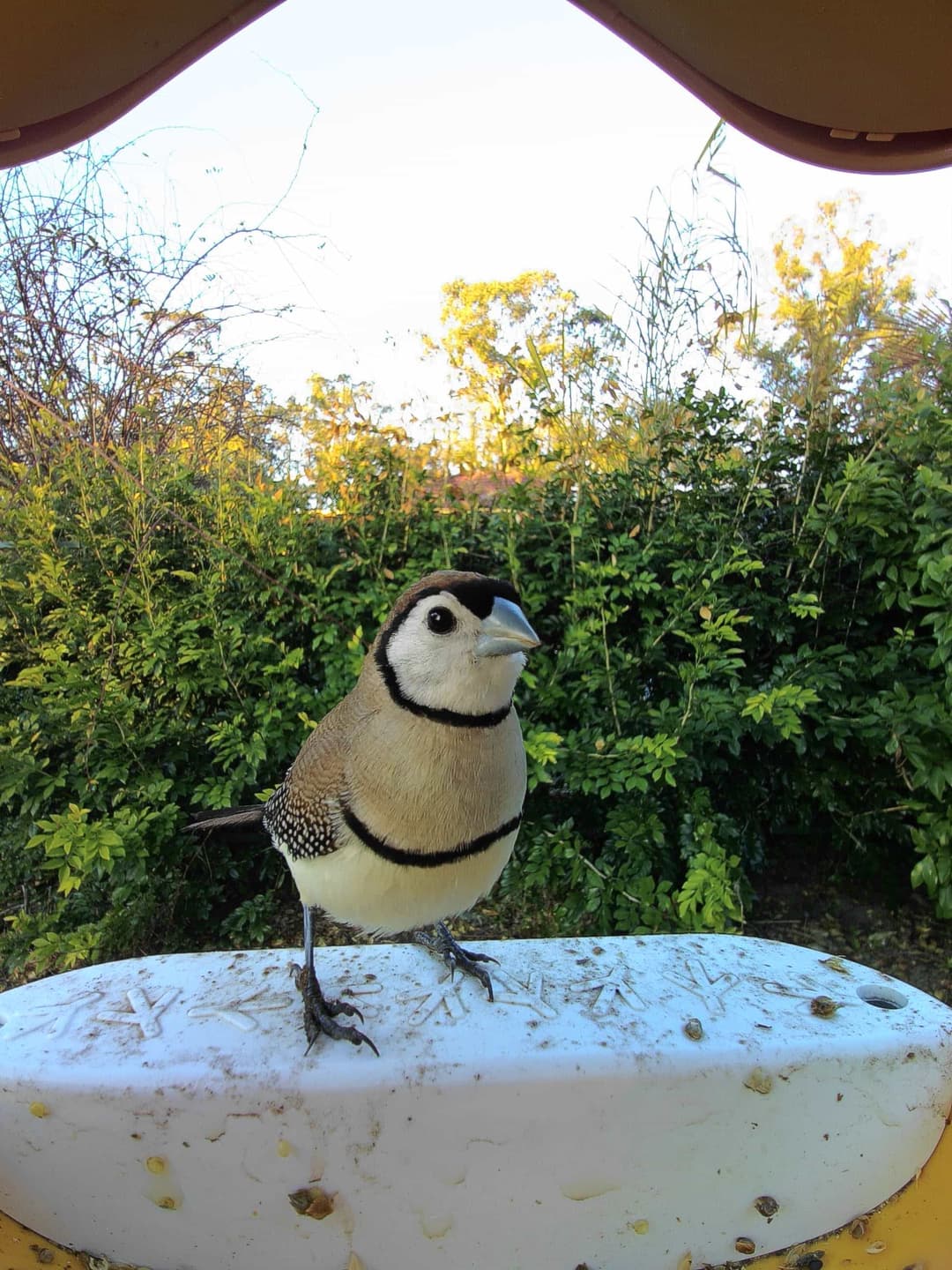
Chestnut-Breasted Munia vs Scaly-Breasted Munia
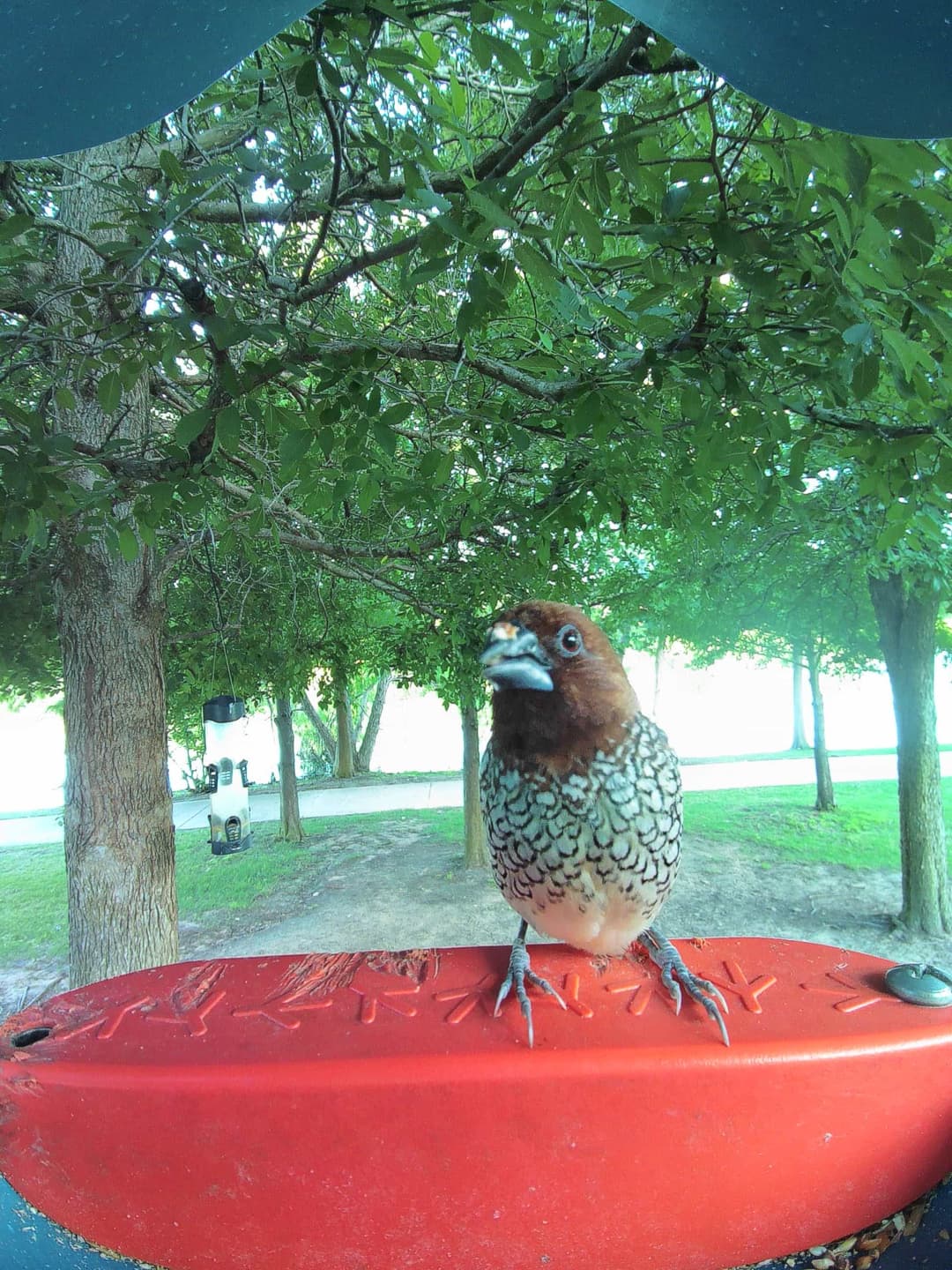

White-Rumped Munia vs Scaly-Breasted Munia
Chestnut-Breasted Munia vs [Select a bird]

[Select a bird]
Pick a bird to compare
White-Rumped Munia vs [Select a bird]
[Select a bird]
Pick a bird to compare