
Mistle Thrush
Mistle Thrush
Also known as: Stormcock
Turdus viscivorus


Quick Identification guide
Quick Identification guide
Male
- •
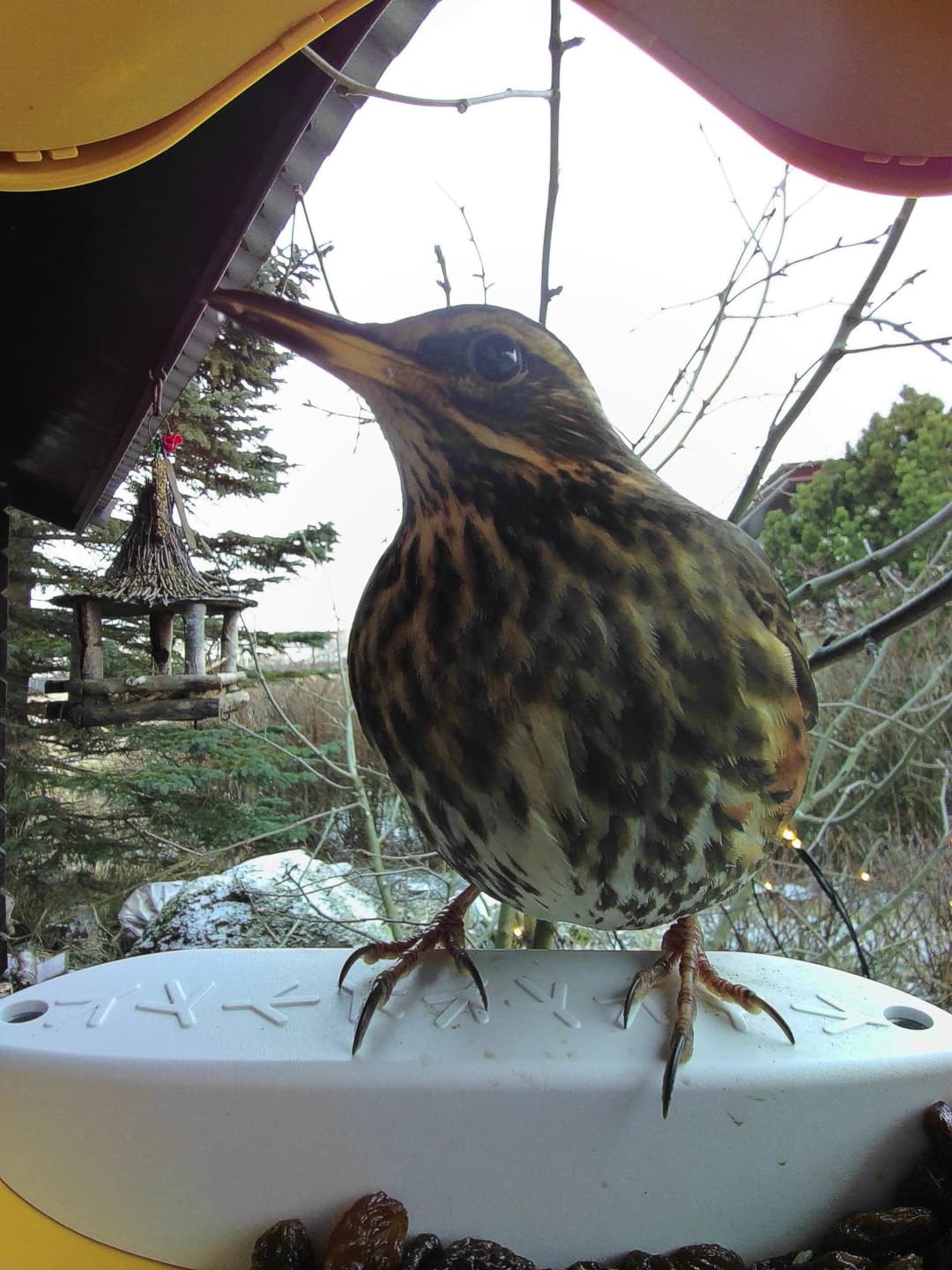
pale grey-brown upperparts and whitish underparts with distinctive black spots
- •
A long tail edged with white outer feathers
- •
The pale face contrasts with a darker eye stripe above the eye
Female
- •
similar coloration to male with pale grey-brown upperparts
- •
bold black spots on the whitish underparts are also present
- •
Features a long tail and white outer tail feathers, matching eye stripe
What does a mistle thrush sound like?
The mistle thrush (Turdus viscivorus) is known for its loud, far-reaching songs, typically consisting of repetitive, fluty notes that often vary in pitch. Its song is distinctive for being delivered even in wet and windy weather. Its typical calls include sharp "tuk" or "tsip" sounds, and its alarm call is a rattling "seep-seep-seep". Its vocalizations, often described as "wild", are commonly heard in forests and parks.


Description
Mistle thrushes and the mistletoe plant have a mutually beneficial relationship! This berry-loving bird poos out the seeds of this parasitic plant onto the branches of other trees. How helpful! When they are excited, they flick their wings and tail! Just don't anger them or get near their nest; they will defend it no matter who you are: a human, a cat or even a bird of prey!
The mistle thrush can weigh between 93to167grams and be from27to29centimeters tall.
The mistle thrush typically lives up to seven years, with the oldest recorded living to 21 years. This lifespan is slightly longer compared to its closest relative, the song thrush, which generally lives up to three or four years. However, many mistle and song thrushes don't survive their first year due to various environmental threats.
Did you know?
Most popular questions about mistle thrush
How to recognise a mistle thrush?
General appearance
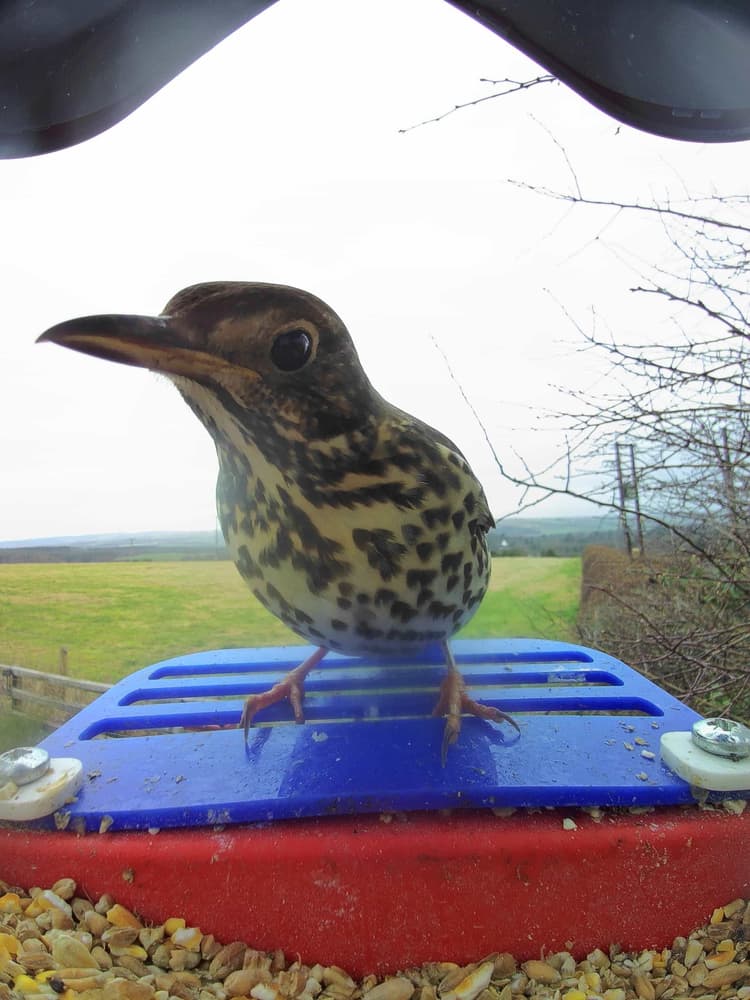
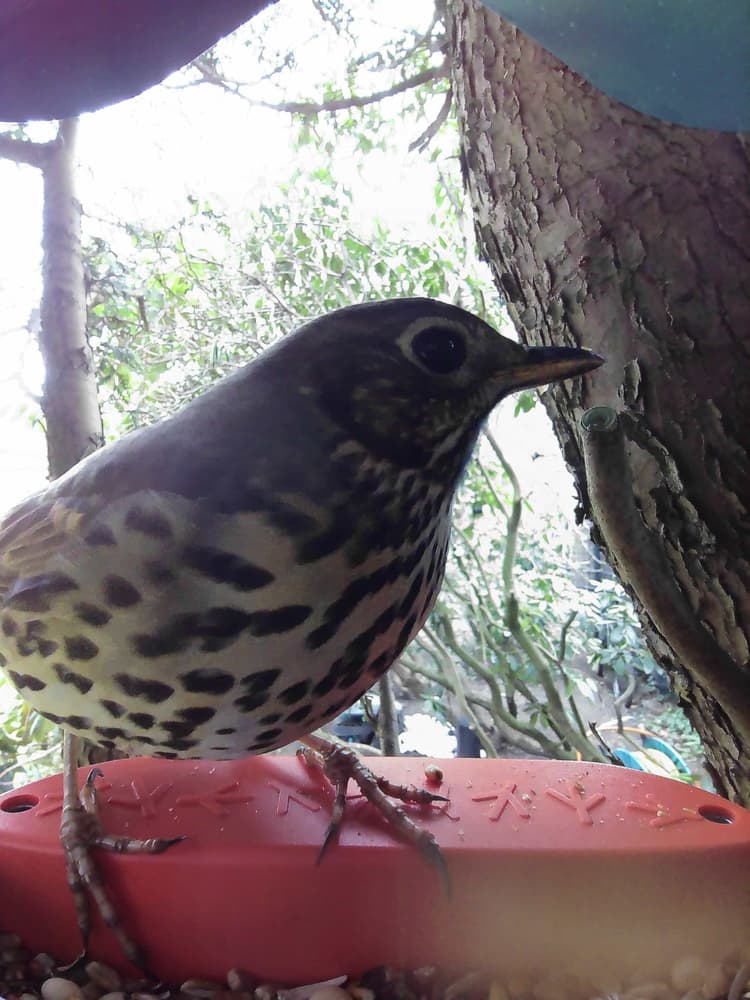
The mistle thrush is a large, robust bird, measuring around 10-11 inches long. It has a pale, cream-colored underside adorned with round, dark spots. It has a distinct greyish-brown back and wings, a creamy-white belly and chest peppered with round dark spots and, is known for its long, thin legs and sizable, yellow bill. It features a white marking under the wing, visible in flight.
Male vs female
Male and female mistle thrushes are similar in size and coloration. Both sexes show a speckled chest and belly, pale underparts contrasted with a darker back, and long legs. There is no discernable sexual dimorphism in plumage color or patterns making it difficult to differentiate between the sexes.
Juvenile
Juvenile mistle thrushes bear a similar resemblance to adults but are slightly smaller. Their plumage features more dull colors compared to adults and spots on the underparts are more blurred, giving them a scaly appearance. These differences fade as they reach maturity after their first molt which happens in late summer.
Often mistaken for
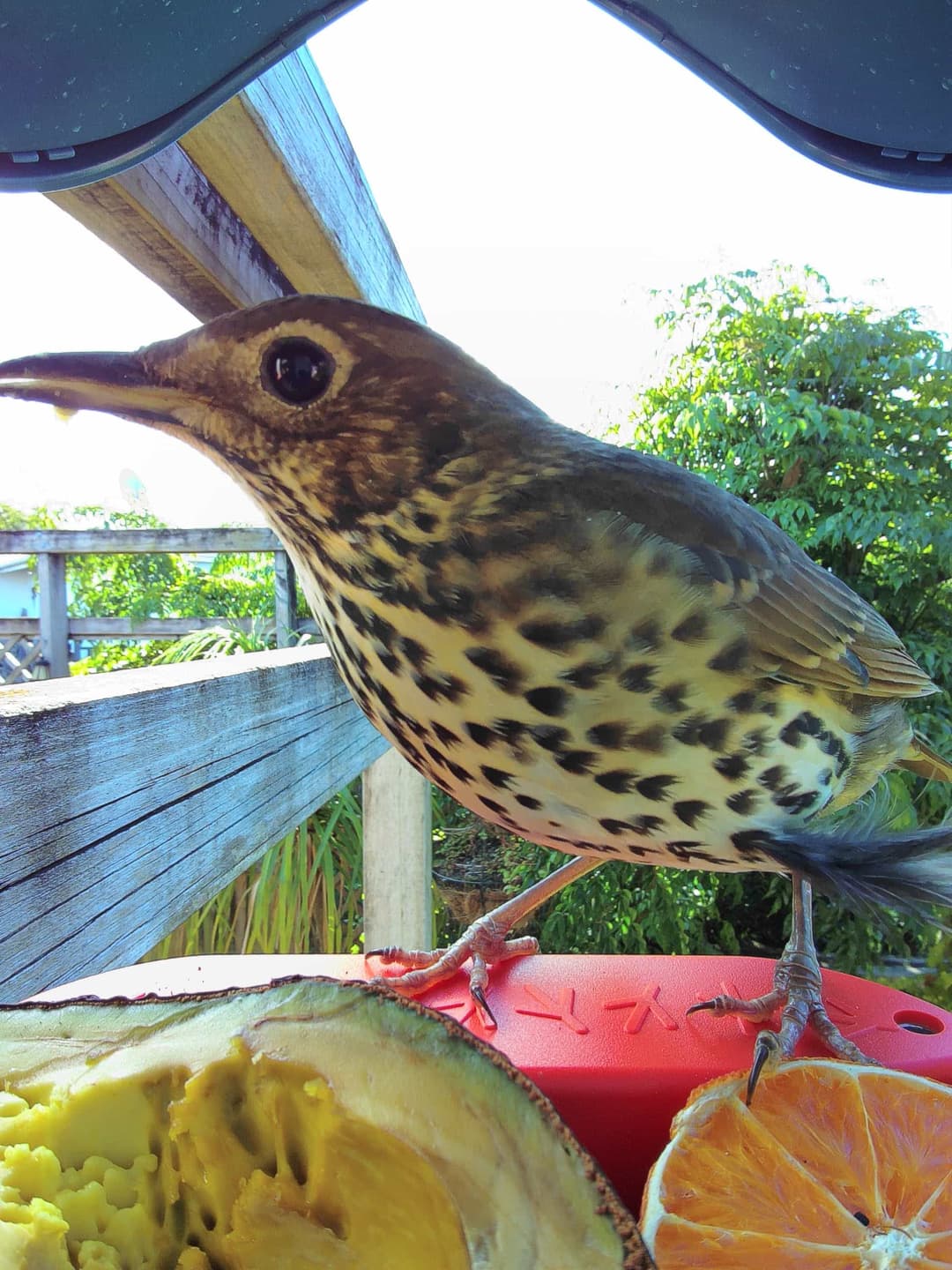
Song Thrush vs Mistle Thrush
The Song Thrush is smaller than the Mistle Thrush and has warmer brown plumage. Its spots are larger and more pronounced on its chest compared to the Mistle Thrush.
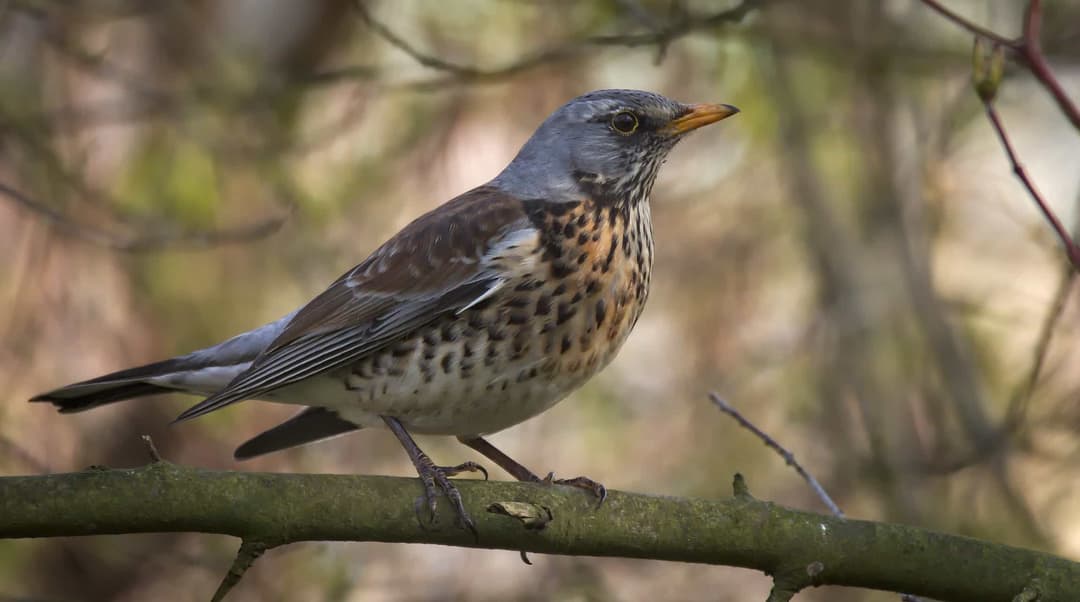
Fieldfare vs Mistle Thrush
The Fieldfare is larger with a grey head and rump, distinguishing it from the Mistle Thrush. It has a more varied plumage with reddish-brown back and wings.
Redwing vs Mistle Thrush
The Redwing is smaller and has a distinctive rusty-red patch on its flank. It also features a white supercilium, which the Mistle Thrush lacks.
Breeding and nesting habits of the mistle thrush
Mating behaviors
Mistle thrushes are monogamous, with males performing singing displays to attract a mate and establish territory. Singing often occurs from prominent perches.
Nesting details
They build nests in trees or shrubs, typically 2-10 meters above ground, using twigs, grass, and mud. Nests are often placed near the trunk for stability and are sometimes located in gardens, where dense foliage is preferred.
Eggs and chick-rearing
Females lay 3-5 eggs per clutch. Both parents feed the chicks, which fledge after about 15 days. To support garden nesting, provide native shrubs and trees for cover, and avoid using pesticides.
What does a mistle thrush like to eat?
Berries
Bird eggs
Flowers
Fruits
Fungi
Insects
Plants
Seeds
Snails
Spiders
Worms
Natural diet
The mistle thrush primarily feeds on a variety of natural food sources. It has a strong preference for berries and fruits, particularly mistletoe, hence its name. It also consumes other fruits like rowan, holly, and hawthorn. In addition to fruits, the mistle thrush eats invertebrates such as earthworms, snails, and insects. During the winter months, when fruits are less abundant, it relies more on seeds and invertebrates.
Bird feeders
At bird feeders, the mistle thrush is less commonly seen compared to other thrush species, but it may occasionally visit. Common foods it consumes at feeders include suet, peanuts, and a variety of seeds. It may also feed on bread and fruits like apple slices if available. Though it is not a frequent feeder visitor, its adaptable diet allows it to exploit these resources when natural foods are scarce.
Attract mistle thrush with favorite snacks
Mistle Thrushes enjoy a variety of fruits, insects, and seeds, so diversify their intake for the best chance of attracting them. Apples and berries might do the trick, but to amp up your game, consider offering a mix of Bird Buddy seeds. Chosen by experts for the season, these seeds have shown promising results in attracting Mistle Thrushes.
Ideal feeder types to draw in mistle thrush
Mistle Thrushes prefer feeders that are easy to perch upon. Opt for a platform or tray feeder and keep it clean to maintain a hygienic environment. Leave the feeder in a somewhat open and safe spot, this lets the bird scan for predators while they feast. Also, ensure it is filled regularly with the Bird Buddy seeds.
Fun tricks to keep mistle thrush visiting
Mistle Thrushes are attracted to areas where there's plenty of food, water, and shelter, setting up a bird bath or a shallowly filled container with clean water can be an excellent way to attract them. Provide nest boxes for them to encourage a longer stay. What's more interesting about Mistle Thrushes is their love for singing, especially when it's raining, so get ready for some amazing sing-along sessions!
Where can you find mistle thrushes?

Primary habitat
The mistle thrush primarily lives in forests, parks, and gardens throughout Europe and parts of Asia.
Additional range
It can adapt to a variety of climates, from colder northern regions to warmer southern areas. Unexpectedly, the mistle thrush also occupies urban areas.
Do they migrate?
The mistle thrush exhibits both migratory and resident behavior depending on its geographical location. In general, mistle thrushes in the milder climates of Western Europe, including the UK, often remain in their territories throughout the year. However, populations in Northern and Eastern Europe are more migratory. Migratory mistle thrushes typically begin their southward journey in late September to October. They move from breeding grounds in Scandinavia, Finland, and Russia towards southern parts of Europe, including the Iberian Peninsula, southern France, and northern Italy. Some may continue as far south as North Africa. During migration, these birds often travel in small flocks, utilizing a broad front migration strategy. Key stopover locations might include woodlands, open fields, and hedgerows where food resources like berries are plentiful. By March to April, the mistle thrushes make their return journey to their breeding territories. The timing and extent of migration can be influenced by factors such as food availability and weather conditions. Overall, mistle thrushes show considerable flexibility in their migratory behavior, adapting to local environmental conditions.
What is the role of mistle thrushes in nature and how to protect them?
Conservation status
The mistle thrush is generally classified as "Least Concern" and is relatively common across its range. It inhabits open woods and gardens across Europe and parts of Asia. While it faces threats from habitat loss, climate change, and changes in agricultural practices, its wide distribution helps mitigate immediate risks. Conservation efforts focus on habitat preservation and monitoring population trends. In some regions, particularly at the edges of its range, local populations may face more significant threats, necessitating targeted conservation strategies to ensure the species remains stable.
Ecological role of mistle thrushes
Its role in the ecosystem
The Mistle Thrush plays important roles in ecological balance and biodiversity. Primarily, it acts a natural pest controller by feeding on insects, worms, slugs, and snails which can be destructive to vegetation and crops. This bird is a welcome sight for farmers and gardeners as it can control the population of these pests which would otherwise multiply without check and ravage food crops. Mistle Thrush is also a significant agent of seed dispersal in environments where they inhabit, contributing to the growth and propagation of plants. They usually feed on a wide variety of fruits and small berries, in the process, they distribute plant seeds in their droppings as they move from one location to another, facilitating the reproduction and increased range of these plants. This action consequently aids in maintaining overall forest health and resilience. This bird's nesting habits also enhance the ecosystem by providing spaces for other fauna to thrive.
How to help protect mistle thrushes
Preservation tips
Habitat preservation strategies
To help conserve the mistle thrush, maintain large Tuscan trees in your local habitats, these trees provide suitable feeding and nesting grounds. Preserve open grassy areas for foraging. Encourage municipal authorities to safeguard existing thrush habitats and integrate these into new parkland developments. Plant native fruits to provide winter nourishment. Avoid usage of pesticides as they diminish the bird's food sources.
Community science initiatives
Participate in citizen science projects like the 'Garden BirdWatch' and 'Breeding Bird Survey' to help monitor mistle thrush numbers. Use community platforms to raise awareness about the decline of thrush populations and promote habitat conservation. Support and volunteer in local Audubon societies or wildlife conservation organizations to help uphold preservation efforts. Consider installing mistle thrush nest boxes in your backyard to provide secure breeding sites.