Mistle Thrush or Fieldfare?
Here's how to tell the difference
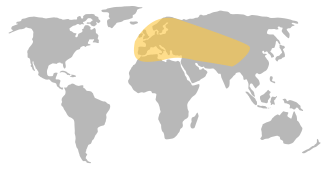


Mistle Thrush

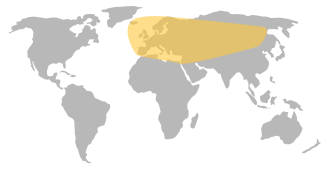
Fieldfare
Mistle Thrush
Turdus viscivorus
Also known as: Stormcock
General appearance
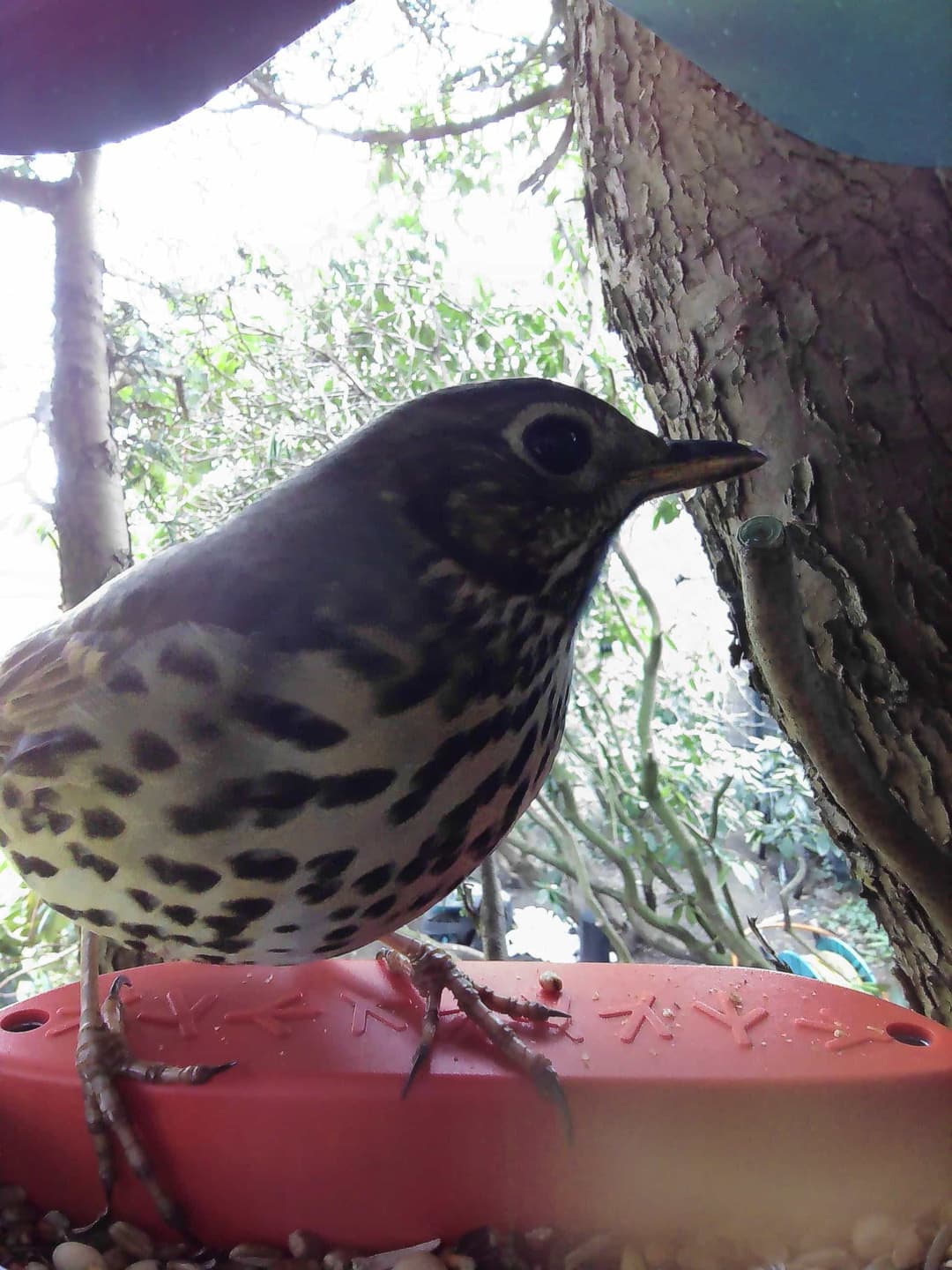
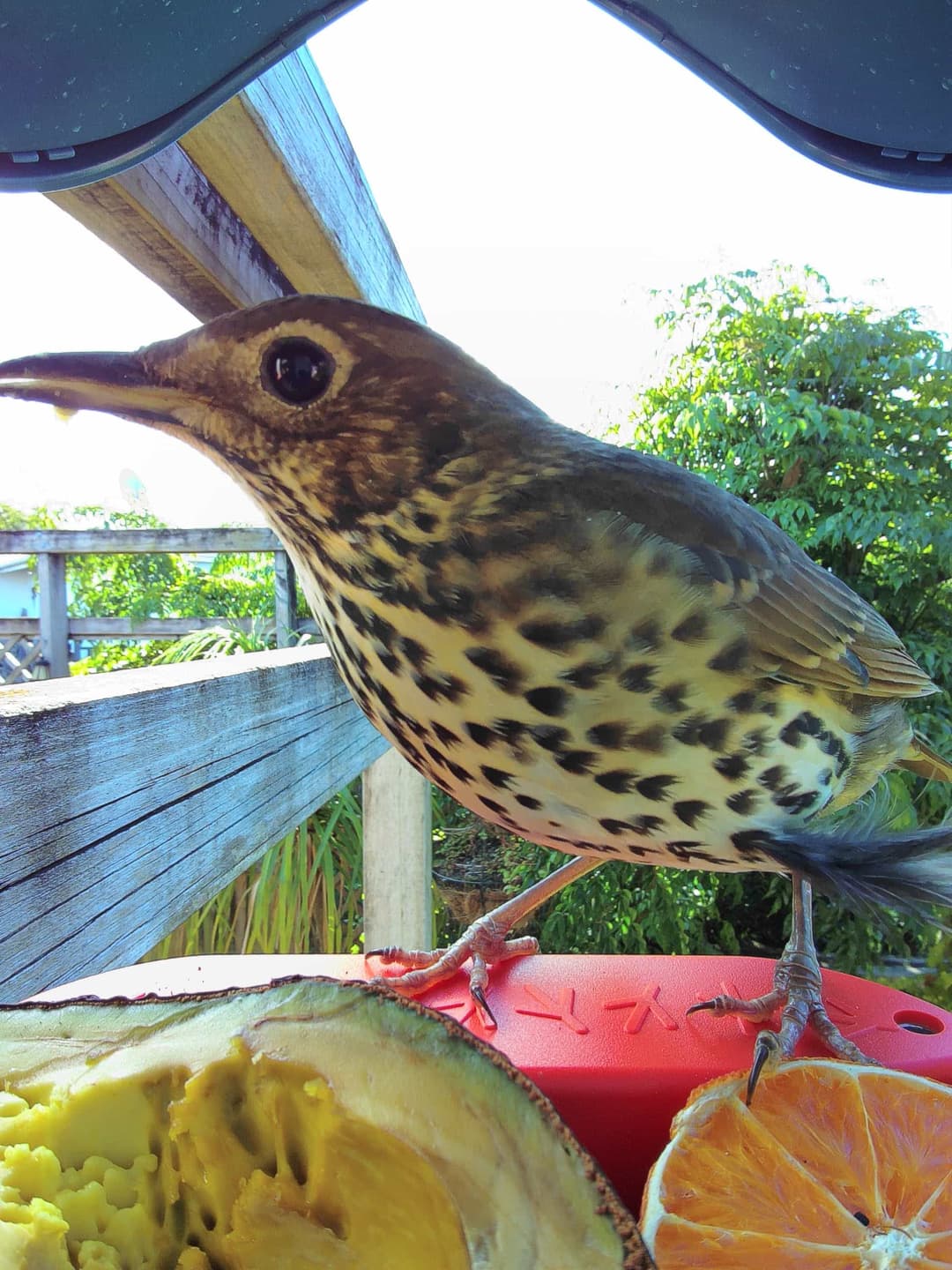
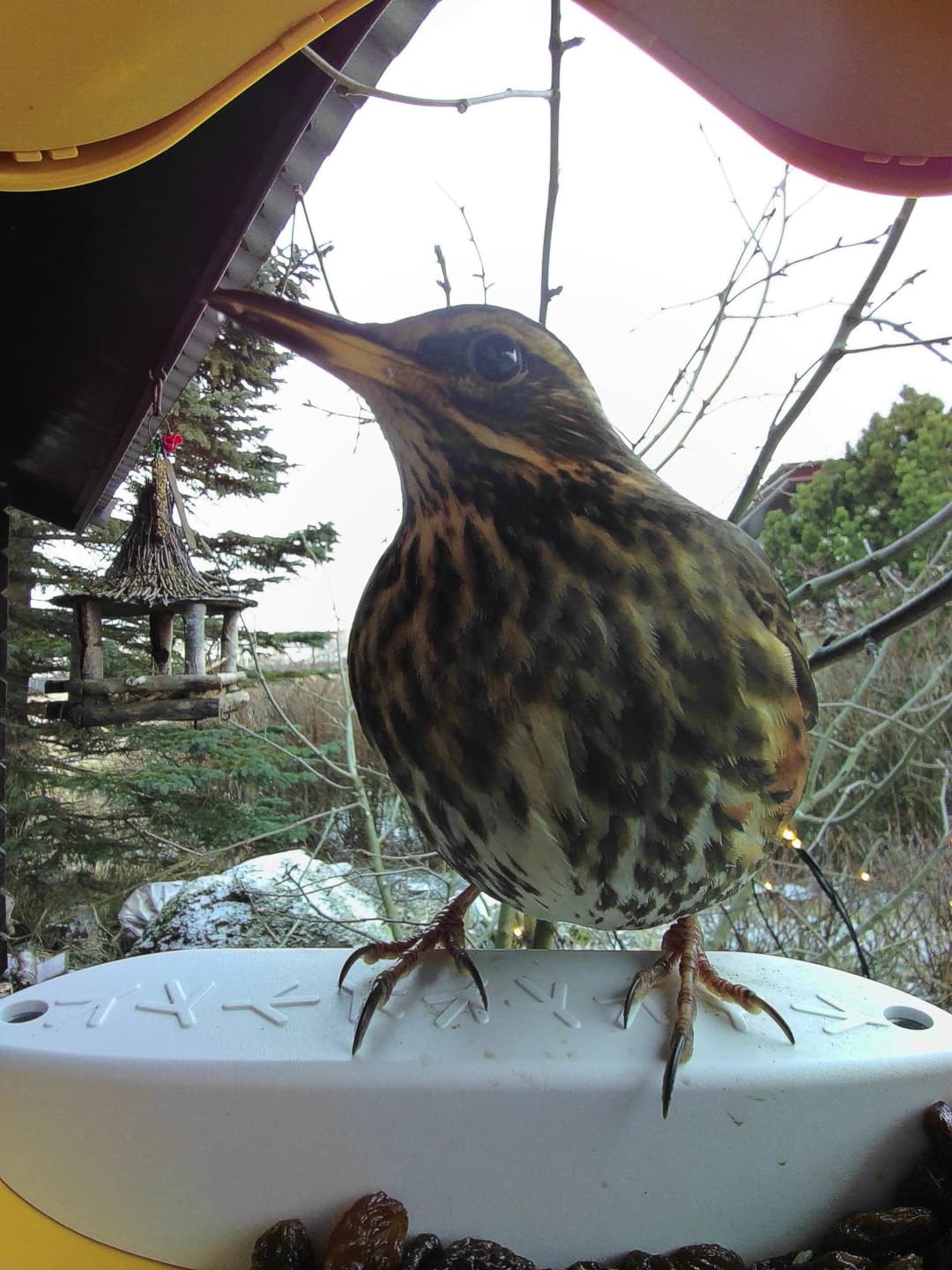
The mistle thrush is a large, robust bird, measuring around 10-11 inches long. It has a pale, cream-colored underside adorned with round, dark spots. It has a distinct greyish-brown back and wings, a creamy-white belly and chest peppered with round dark spots and, is known for its long, thin legs and sizable, yellow bill. It features a white marking under the wing, visible in flight.
Male vs female
Male and female mistle thrushes are similar in size and coloration. Both sexes show a speckled chest and belly, pale underparts contrasted with a darker back, and long legs. There is no discernable sexual dimorphism in plumage color or patterns making it difficult to differentiate between the sexes.
Juvenile
Juvenile mistle thrushes bear a similar resemblance to adults but are slightly smaller. Their plumage features more dull colors compared to adults and spots on the underparts are more blurred, giving them a scaly appearance. These differences fade as they reach maturity after their first molt which happens in late summer.
Size
10.6 - 11.4 in/3.3 - 5.9 oz
There's more to learn about Mistle Thrush
View full detailsFieldfare
Turdus pilaris
General appearance
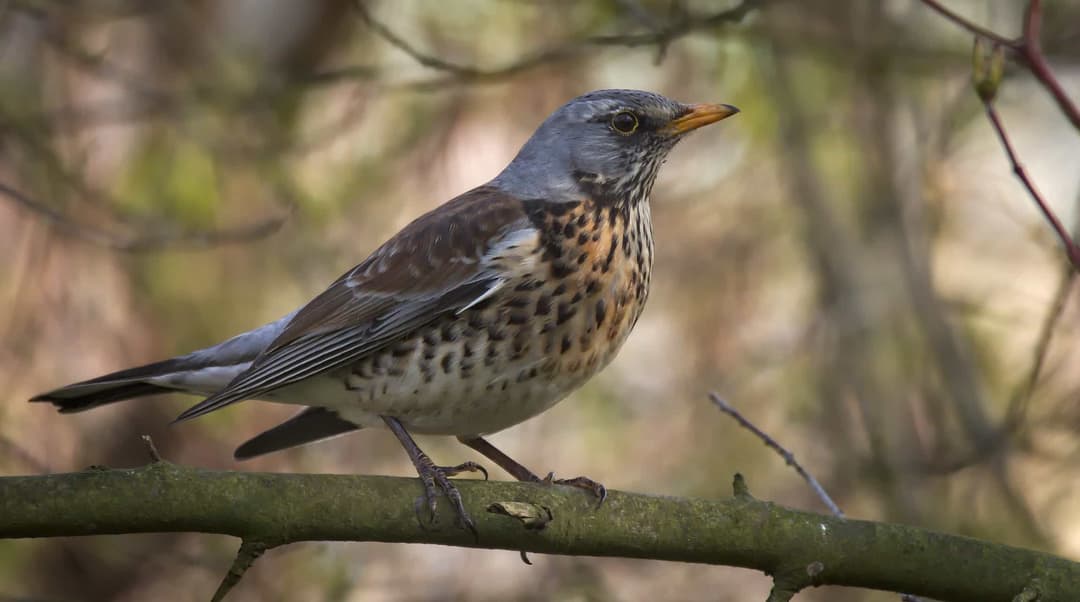
The Fieldfare is a large, colorful thrush, with a prominent grey crown and nape, brown back, and rufous rump. It displays a distinctive black tail, speckled breast, and a bold off-white belly. Their wings are strikingly blackish-brown. The throat and sides of neck are grey, standing out against the darker colors. Their bill is dark and their legs are brown.
Male vs female
Males and females are similarly colored with no obvious differences. Both have the same pattern and share the distinguishing feature of fieldfares, which is their unique combination of colors - gray, brown, rose and white. Males might be slightly larger than females but it's usually not noticeable.
Juvenile
Young fieldfares have spotted, rather than speckled, underparts, which distinguishes them from adults. They also have a rudder and wing coverts edged with rusty orange. The overall color is more dull, lacking the bright mixture of grays and russets found in the adult plumage.
Size
8.7 - 11.0 in/2.9 - 5.0 oz
There's more to learn about Fieldfare
View full detailsHow to tell the Mistle Thrush from the Fieldfare
Visual differences
The Mistle Thrush is larger (10-11 inches) with a greyish-brown back, creamy-white, spotted underbelly, and yellow bill. It features white markings under the wings. In contrast, the Fieldfare (8.7-11 inches) has a distinctive grey crown, brown back, rufous rump, black tail, grey throat, and off-white belly. Its bill is dark, and legs are brown. The Fieldfare's plumage is more colorful with gray, brown, rose, and white, while the Mistle Thrush has a more uniform greyish-brown coloration.
Key differences and behavior
Mistle Thrushes and Fieldfares both inhabit forests but display distinct behaviors. Mistle Thrushes are known for their aggressive nest defense and monogamous nature, often seen flicking wings when excited, while Fieldfares are vocal during flight, emphasizing their strong, fast-flying capabilities. Mistle Thrushes consume berries like mistletoe and occasionally visit feeders, whereas Fieldfares shift from insects in breeding seasons to fruits in winter, less frequently visiting bird feeders. Nesting habits differ with Mistle Thrushes parenting 3-5 chicks in dense foliage and Fieldfares tending 5-6 eggs in cup-shaped nests. Mistle Thrushes (10-11 inches, 3.3-5.9 oz) are larger and more robust compared to Fieldfares (8.7-11 inches, 2.9-4.9 oz), which are known as "travelers," reflecting their migratory adaptability across varied climates.
Still not sure? Here are more lookalikes!
Mistle Thrush vs [Select a bird]

[Select a bird]
Pick a bird to compare
Fieldfare vs [Select a bird]
[Select a bird]
Pick a bird to compare