Mistle Thrush or Redwing?
Here's how to tell the difference
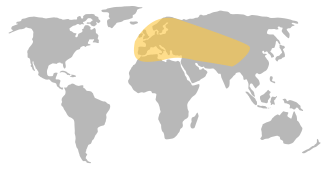


Mistle Thrush


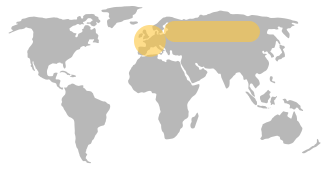
Redwing
Mistle Thrush
Turdus viscivorus
Also known as: Stormcock
General appearance
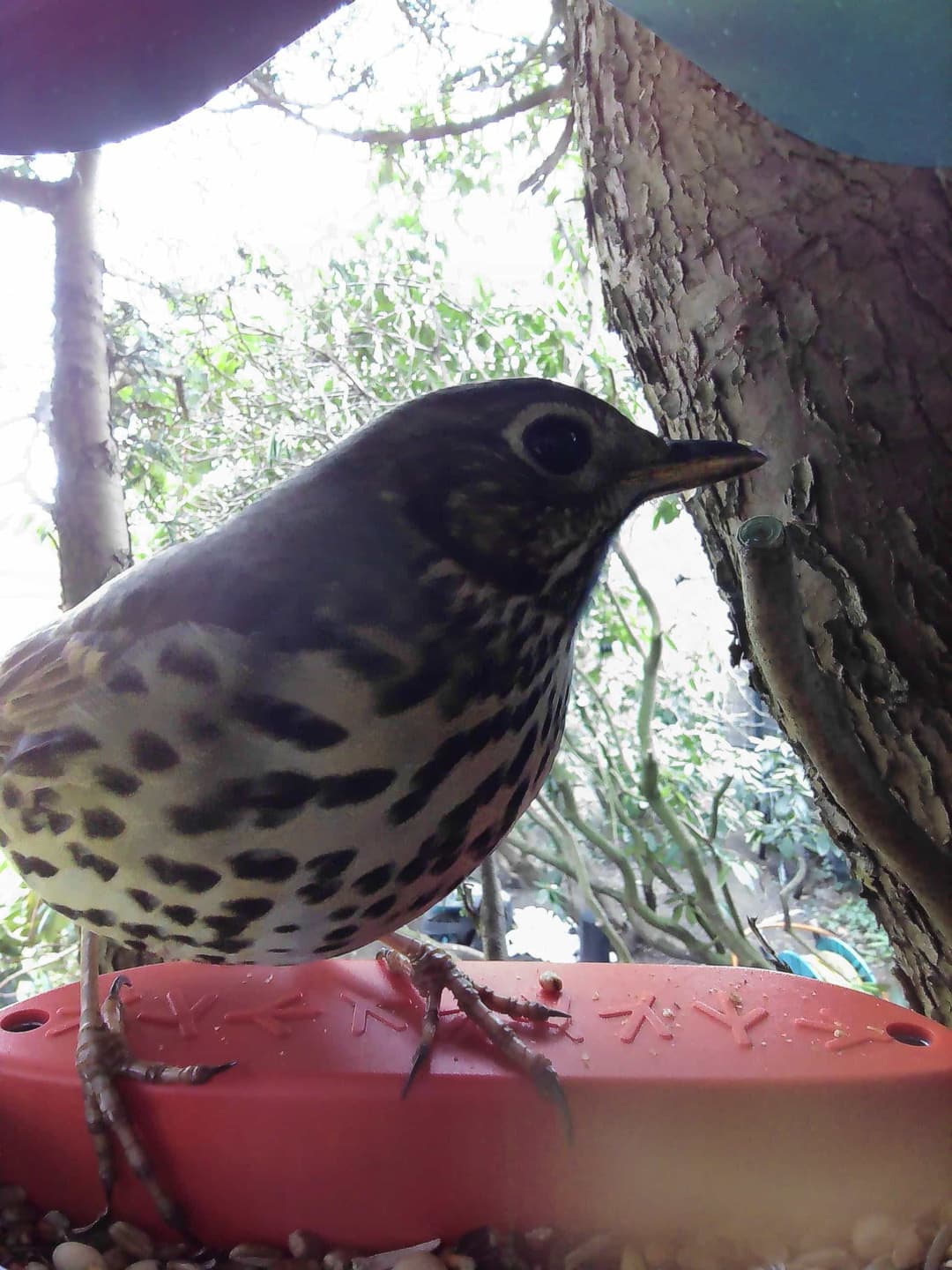
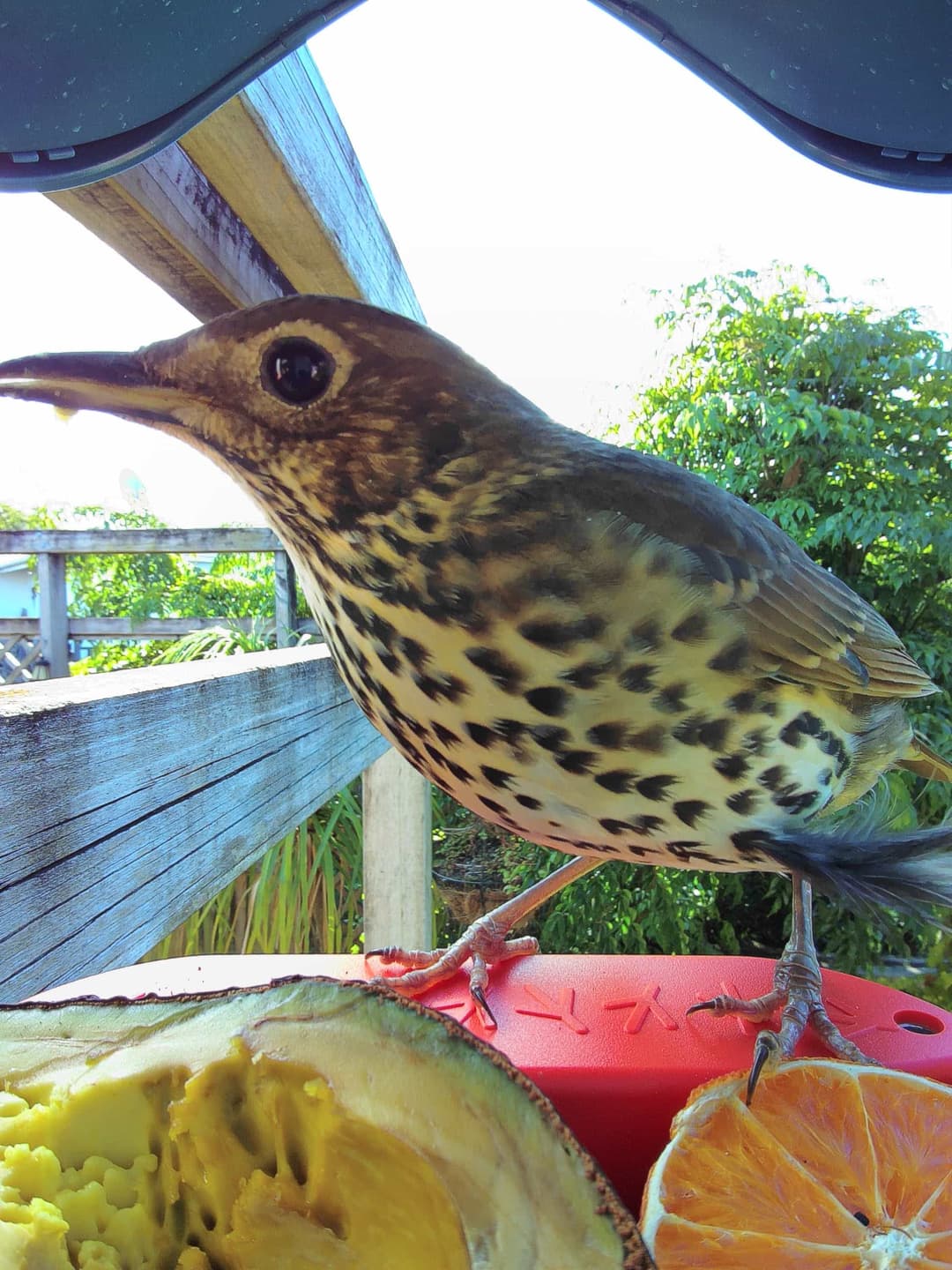
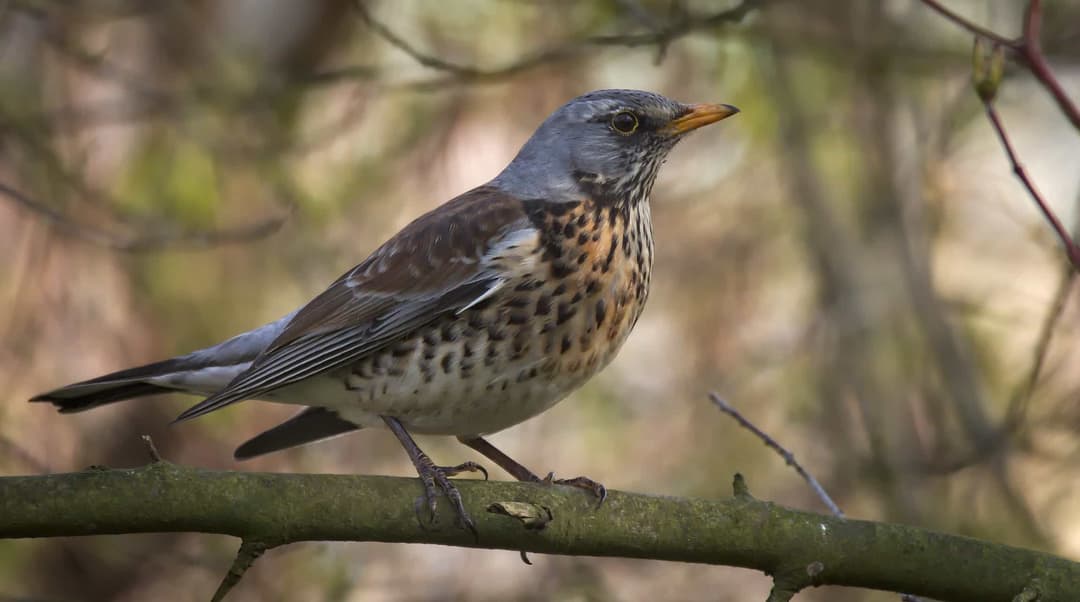
The mistle thrush is a large, robust bird, measuring around 10-11 inches long. It has a pale, cream-colored underside adorned with round, dark spots. It has a distinct greyish-brown back and wings, a creamy-white belly and chest peppered with round dark spots and, is known for its long, thin legs and sizable, yellow bill. It features a white marking under the wing, visible in flight.
Male vs female
Male and female mistle thrushes are similar in size and coloration. Both sexes show a speckled chest and belly, pale underparts contrasted with a darker back, and long legs. There is no discernable sexual dimorphism in plumage color or patterns making it difficult to differentiate between the sexes.
Juvenile
Juvenile mistle thrushes bear a similar resemblance to adults but are slightly smaller. Their plumage features more dull colors compared to adults and spots on the underparts are more blurred, giving them a scaly appearance. These differences fade as they reach maturity after their first molt which happens in late summer.
Size
10.6 - 11.4 in/3.3 - 5.9 oz
There's more to learn about Mistle Thrush
View full detailsRedwing
Turdus iliacus
General appearance
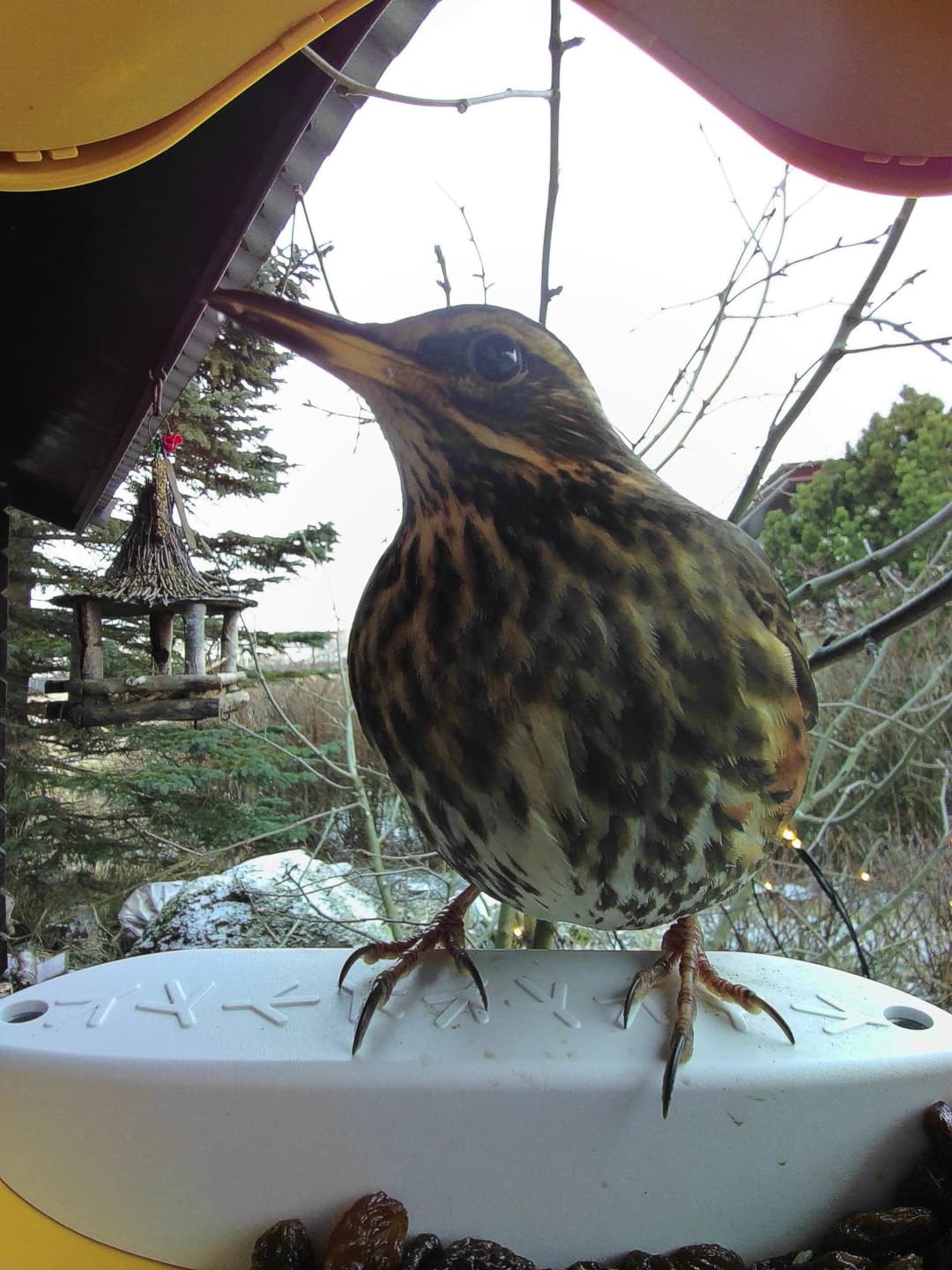
Redwings are small thrushes, measuring about 20-24 cm in length. They have a distinctive brownish upper body with pale spots and a striking white eye stripe. Their underwings flash reddish-orange in flight, contrasting against a cream or buff breast with varying spots. This contrast aids identification, especially in flight during migration or winter months.
Male vs female
Male and female redwings closely resemble each other, with no significant differences in plumage. Both sexes share the same coloration, making it difficult to distinguish between them by appearance alone. Observing behavior during breeding seasons may be more indicative of gender.
Juvenile
Juvenile redwings appear mottled, often less vibrant than adults, with a duller, less defined eye stripe. Their plumage contains more brown and less defined spots, lacking the bright coloration seen in adults. Juveniles gradually develop adult plumage before their first winter.
Size
7.9 - 9.4 in/1.6 - 2.8 oz
There's more to learn about Redwing
View full detailsHow to tell the Mistle Thrush from the Redwing
Visual differences
The Mistle Thrush, larger at 10-11 inches, features a pale cream underside with round dark spots, a greyish-brown back, white underwings, and a yellow bill. The Redwing, smaller at 8-9.5 inches, has a brown upper body, striking white eye stripe, reddish-orange underwings, and a cream breast with spots. Unlike the mistle thrush, Redwings show a more vibrant eye stripe and the distinctive reddish-orange underwings visible in flight. Both species lack significant sexual dimorphism, making gender identification by appearance alone challenging.
Key differences and behavior
The Mistle Thrush, a robust bird measuring 10.6-11.4 inches, exhibits territorial aggression, especially near its nest, whereas the 7.9-9.4 inch Redwing is more sociable, often seen in mixed flocks foraging with other thrush species. Mistle Thrushes prefer forests and urban areas year-round, while Redwings are migrators, breeding in northern woodlands and wintering in warmer regions. Both are monogamous, but Mistle Thrushes favor trees for nesting, while Redwings use dense shrubs. Mistle Thrush diets are fruit-heavy, notably mistletoe, whereas Redwings switch seasonally from invertebrates to berries. Both occasionally visit feeders but are less common than other thrushes.
Still not sure? Here are more lookalikes!
Mistle Thrush vs [Select a bird]

[Select a bird]
Pick a bird to compare
Redwing vs [Select a bird]
[Select a bird]
Pick a bird to compare