Song Thrush or Fieldfare?
Here's how to tell the difference


Song Thrush

Fieldfare
Song Thrush
Turdus philomelos
General appearance
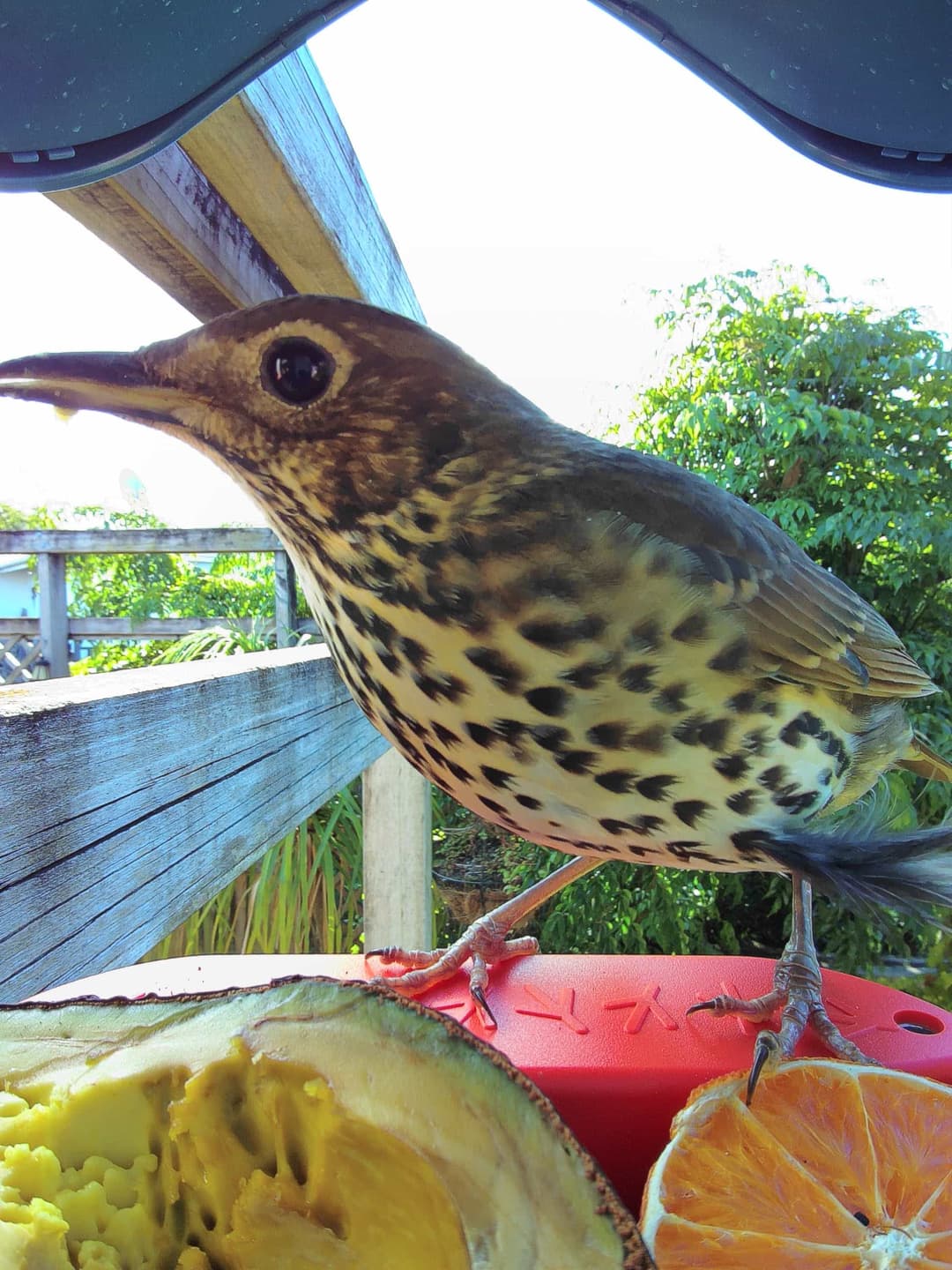
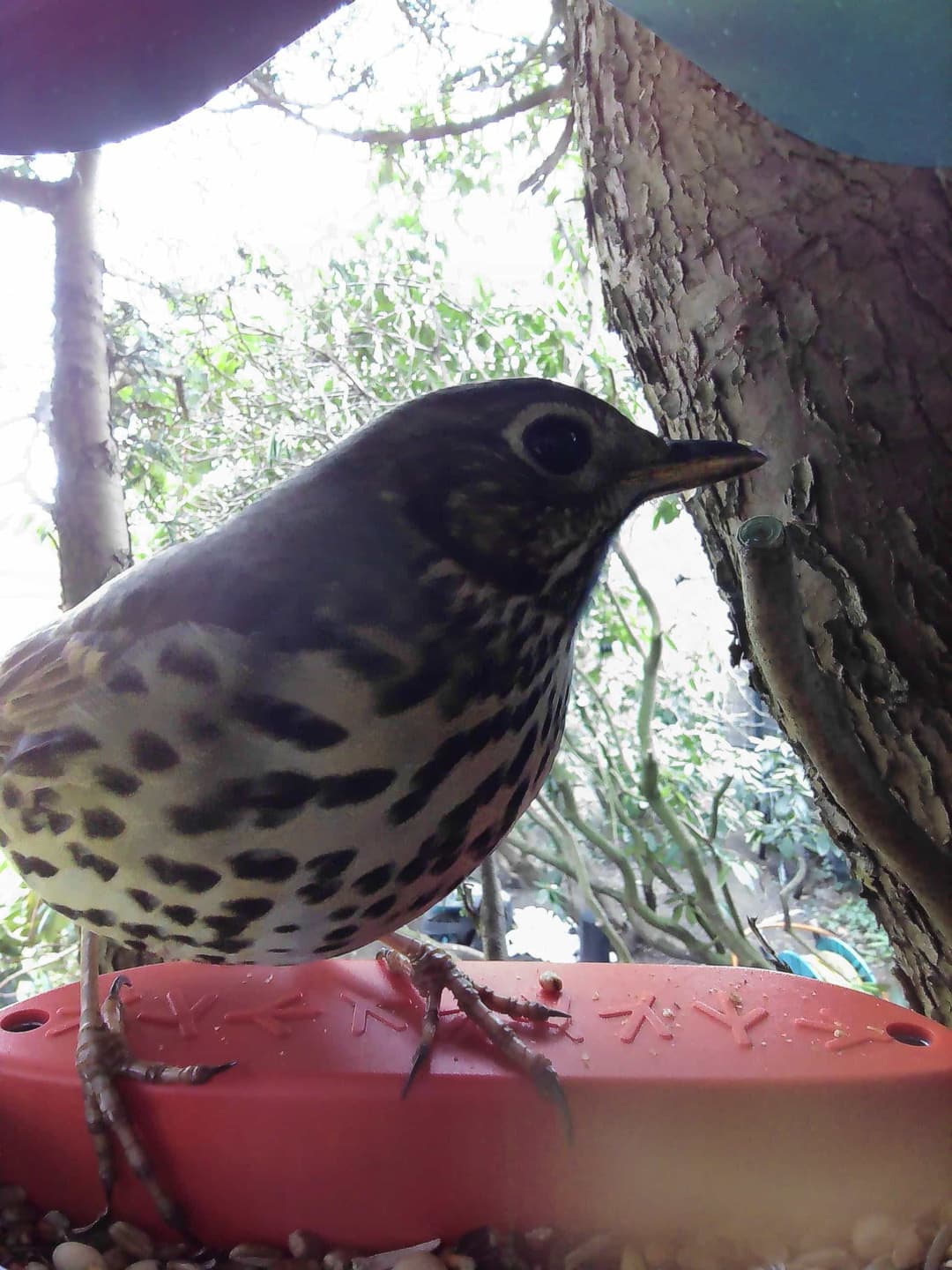
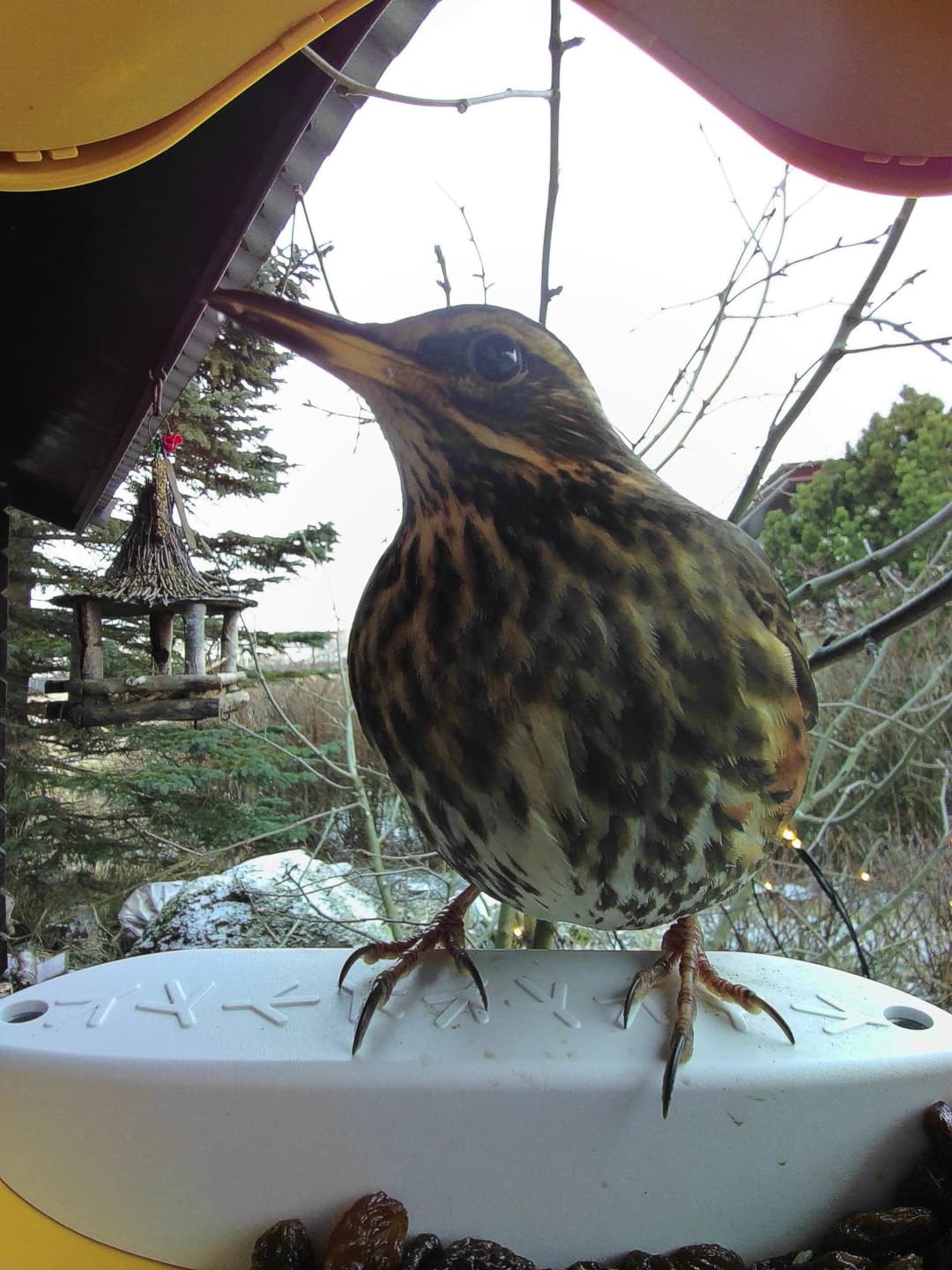
The Song Thrush is a bird recognizable with its warm brown upperparts and buff white chest and belly covered in black, kidney-shaped spots. Adults exhibit a speckled underbody and exquisite brown crown, while their underwings show a yellow hue during flight. Its distinctive coloration allows it to blend in woodland surroundings effectively. There are no significant seasonal variations in their appearance.
Male vs female
Males and females are quite similar in appearance with no distinctive differences. Both share the brown upperparts and speckled underparts. However, usually the male has a slightly larger size than the female.
Juvenile
Juvenile Song Thrushes are similar to the adults but their spotting is restricted to the underparts and their back is more uniformly brown. They exhibit a darker, almost black coloration on their beak, compared to the yellow of an adult. The juvenile's feather also have pale tips which are molted by the winter, resulting in a first-winter bird similar to the adult.
Size
7.9 - 9.1 in/1.8 - 3.8 oz
There's more to learn about Song Thrush
View full detailsFieldfare
Turdus pilaris
General appearance
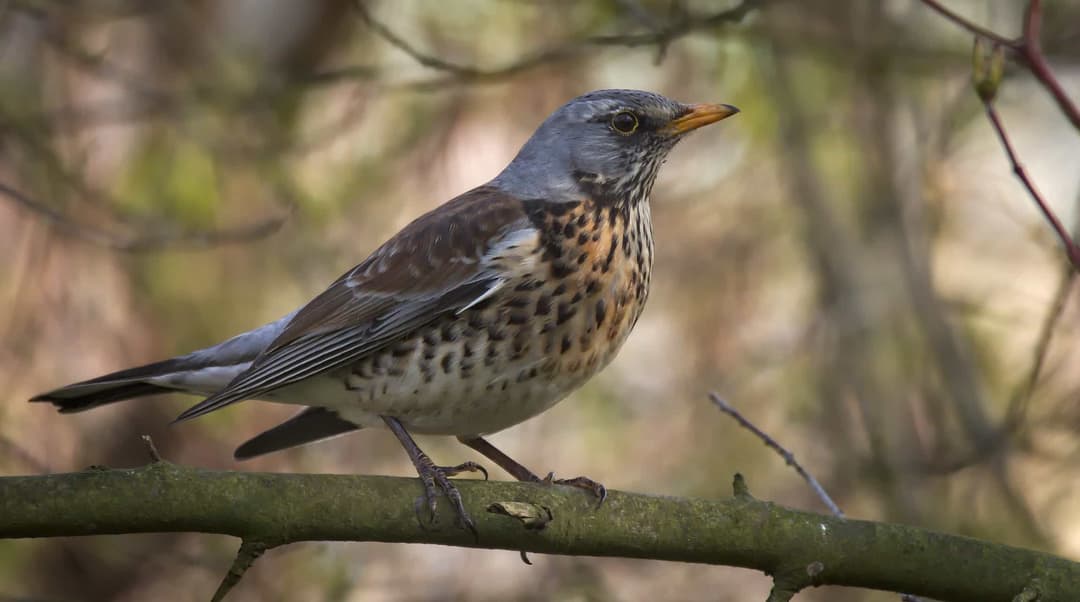
The Fieldfare is a large, colorful thrush, with a prominent grey crown and nape, brown back, and rufous rump. It displays a distinctive black tail, speckled breast, and a bold off-white belly. Their wings are strikingly blackish-brown. The throat and sides of neck are grey, standing out against the darker colors. Their bill is dark and their legs are brown.
Male vs female
Males and females are similarly colored with no obvious differences. Both have the same pattern and share the distinguishing feature of fieldfares, which is their unique combination of colors - gray, brown, rose and white. Males might be slightly larger than females but it's usually not noticeable.
Juvenile
Young fieldfares have spotted, rather than speckled, underparts, which distinguishes them from adults. They also have a rudder and wing coverts edged with rusty orange. The overall color is more dull, lacking the bright mixture of grays and russets found in the adult plumage.
Size
8.7 - 11.0 in/2.9 - 5.0 oz
There's more to learn about Fieldfare
View full detailsHow to tell the Song Thrush from the Fieldfare
Visual differences
The Song Thrush (8-9 in, 1.8-3.8 oz) has warm brown upperparts, buff white chest with black kidney-shaped spots, and yellow-hued underwings. Its beak is yellowish in adults. The Fieldfare (9-11 in, 2.8-5 oz) is larger with a grey crown and nape, brown back, rufous rump, speckled breast, bold off-white belly, and black tail. Their wings are dark, and the beak is dark. The Song Thrush blends into woodlands, while the Fieldfare's striking color contrasts make it more distinctive.
Key differences and behavior
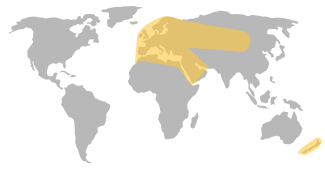
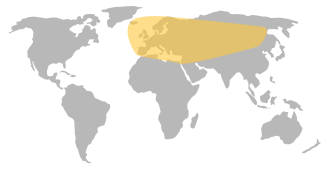
Song Thrushes (Turdus philomelos) and Fieldfares (Turdus pilaris) both exhibit unique behaviors that help distinguish them. Song Thrushes are known for their diverse singing ability, using over 100 different song phrases and mimicking sounds, while Fieldfares communicate through a series of calls, particularly during flight. In habitat, Song Thrushes favor forests, gardens, and urban areas with mild climates, while Fieldfares inhabit more diverse locations, including deciduous forests and even arctic regions during migration. Song Thrushes use stones as anvils to access snails, while Fieldfares are more opportunistic foragers, shifting from insects in summer to berries in winter. Both species engage in courtship singing, but Fieldfares also display aerial agility. In nesting, Song Thrushes traditionally nest in dense foliage, while Fieldfares prefer trees and shrubs. Song Thrushes weigh around 1.8 to 3.8 ounces and measure about 8 to 9 inches, while Fieldfares are larger, weighing 2.9 to 5 ounces and reaching 9 to 11 inches.
Still not sure? Here are more lookalikes!
Song Thrush vs [Select a bird]

[Select a bird]
Pick a bird to compare
Fieldfare vs [Select a bird]
[Select a bird]
Pick a bird to compare