Song Thrush or Redwing?
Here's how to tell the difference
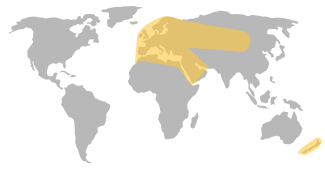


Song Thrush


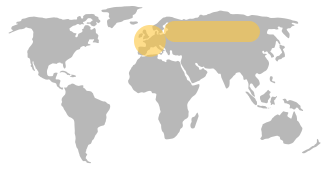
Redwing
Song Thrush
Turdus philomelos
General appearance
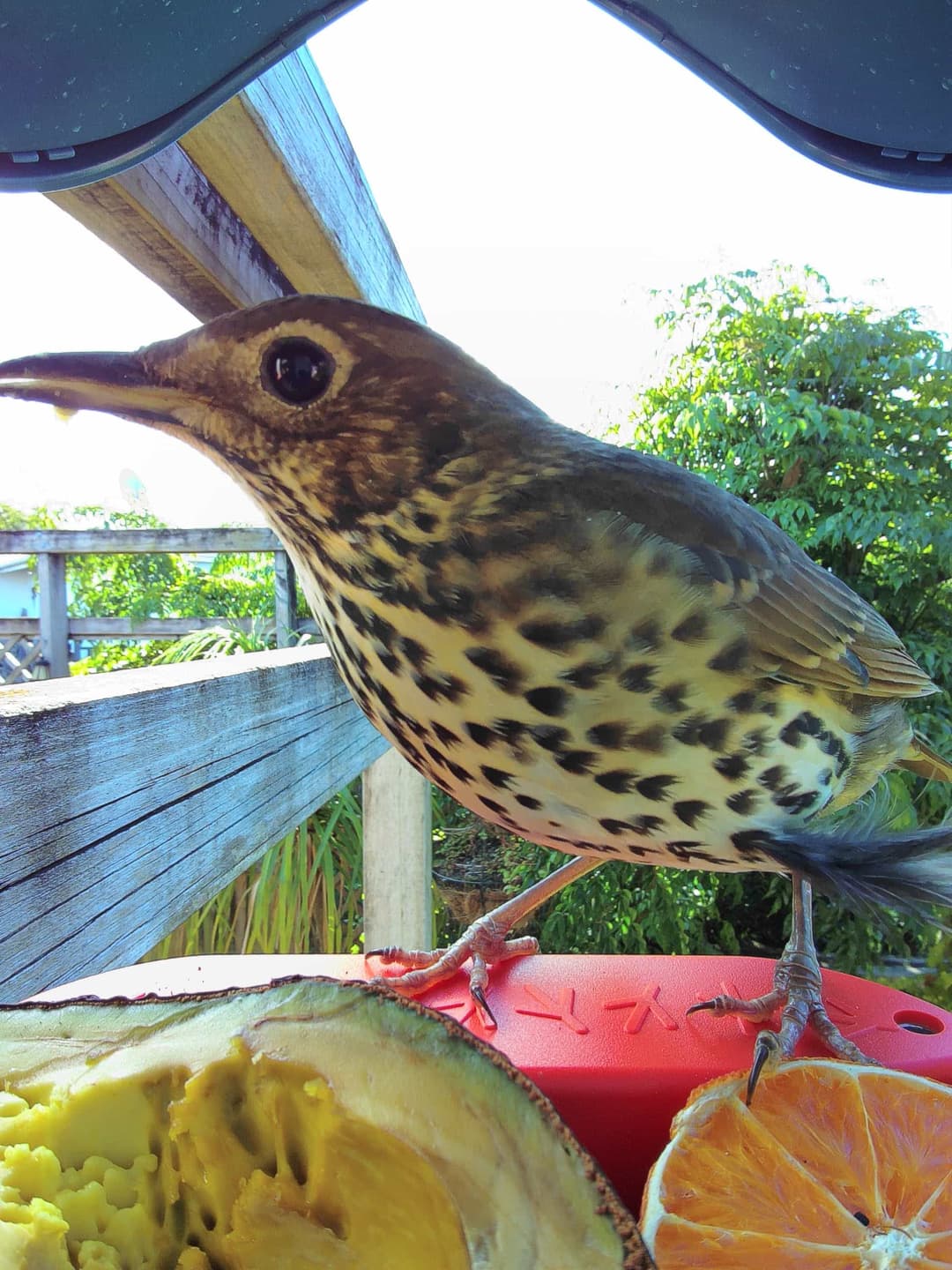
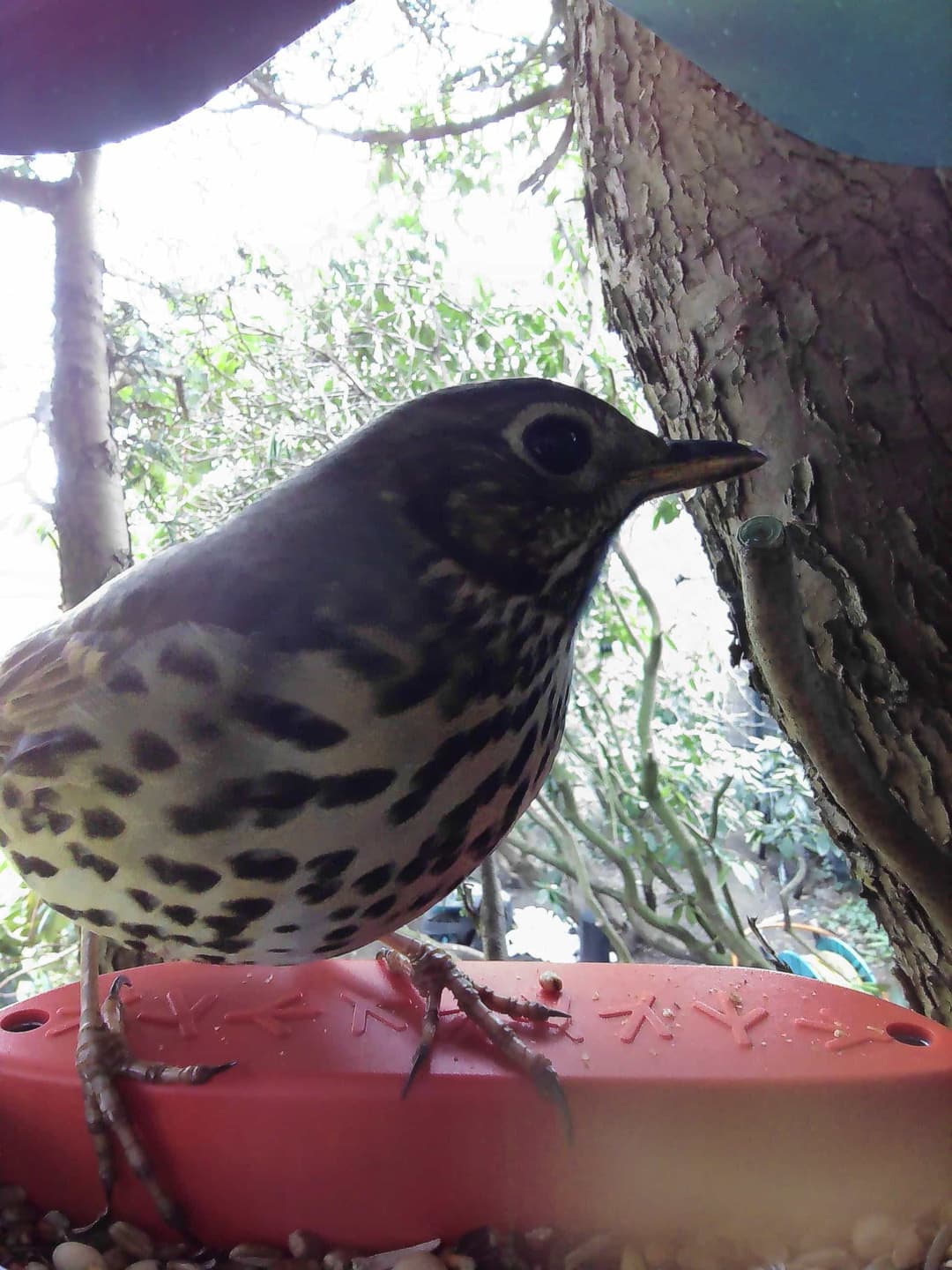
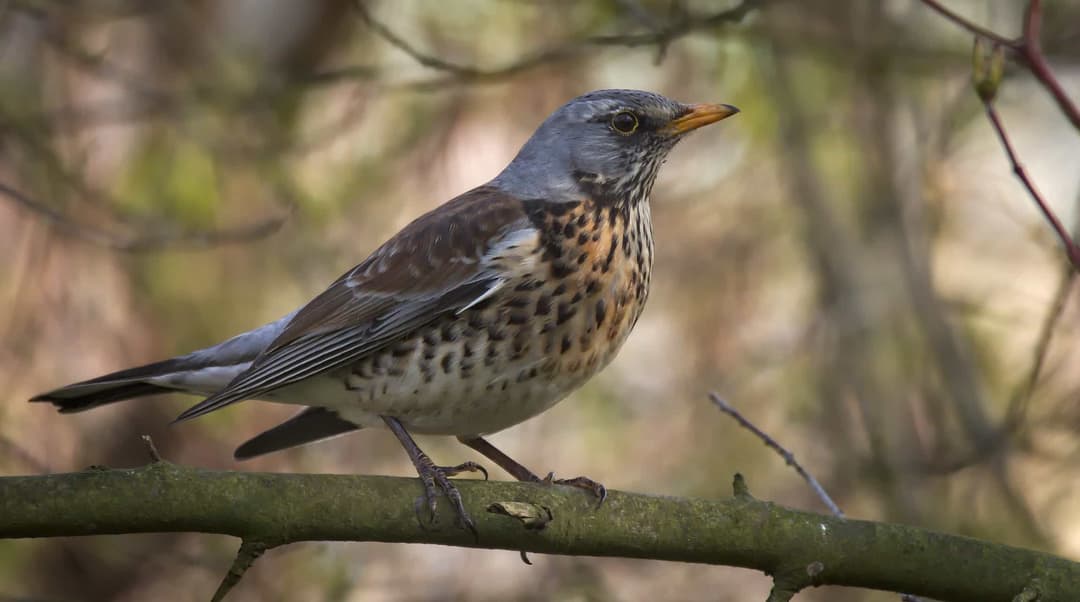
The Song Thrush is a bird recognizable with its warm brown upperparts and buff white chest and belly covered in black, kidney-shaped spots. Adults exhibit a speckled underbody and exquisite brown crown, while their underwings show a yellow hue during flight. Its distinctive coloration allows it to blend in woodland surroundings effectively. There are no significant seasonal variations in their appearance.
Male vs female
Males and females are quite similar in appearance with no distinctive differences. Both share the brown upperparts and speckled underparts. However, usually the male has a slightly larger size than the female.
Juvenile
Juvenile Song Thrushes are similar to the adults but their spotting is restricted to the underparts and their back is more uniformly brown. They exhibit a darker, almost black coloration on their beak, compared to the yellow of an adult. The juvenile's feather also have pale tips which are molted by the winter, resulting in a first-winter bird similar to the adult.
Size
7.9 - 9.1 in/1.8 - 3.8 oz
There's more to learn about Song Thrush
View full detailsRedwing
Turdus iliacus
General appearance
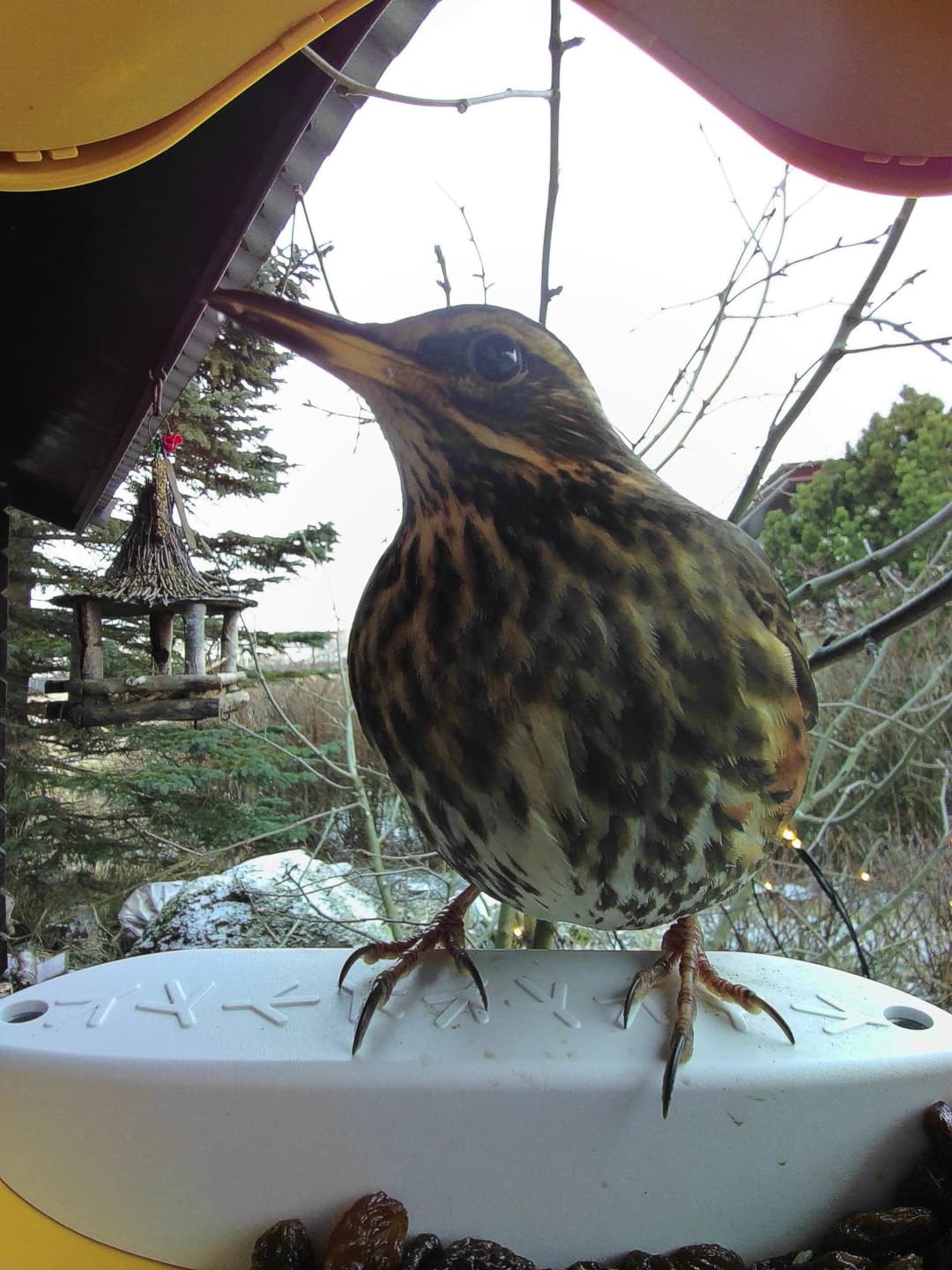
Redwings are small thrushes, measuring about 20-24 cm in length. They have a distinctive brownish upper body with pale spots and a striking white eye stripe. Their underwings flash reddish-orange in flight, contrasting against a cream or buff breast with varying spots. This contrast aids identification, especially in flight during migration or winter months.
Male vs female
Male and female redwings closely resemble each other, with no significant differences in plumage. Both sexes share the same coloration, making it difficult to distinguish between them by appearance alone. Observing behavior during breeding seasons may be more indicative of gender.
Juvenile
Juvenile redwings appear mottled, often less vibrant than adults, with a duller, less defined eye stripe. Their plumage contains more brown and less defined spots, lacking the bright coloration seen in adults. Juveniles gradually develop adult plumage before their first winter.
Size
7.9 - 9.4 in/1.6 - 2.8 oz
There's more to learn about Redwing
View full detailsHow to tell the Song Thrush from the Redwing
Visual differences
The Song Thrush (7.9-9.1 inches, 1.8-3.8 ounces) features warm brown upperparts and buff white underparts with black spots. In contrast, the Redwing (7.9-9.4 inches, 1.6-2.8 ounces) has a distinctive white eye stripe and reddish-orange underwings visible in flight. Both are similar in length, but the Song Thrush displays more rounded, darker, kidney-shaped spots on the chest. Redwings have a more pronounced contrast in their brown upperparts and pale, spotted cream breast, with juveniles sporting a duller appearance and less defined eye stripe.
Key differences and behavior
Song Thrushes and Redwings exhibit distinct behaviors that aid field identification. Song Thrushes are renowned for their varied singing and mimicry, often using stones as anvils to break snail shells. They inhabit forests, gardens, and urban areas in moderate climates. Conversely, Redwings are often seen in flocks, associating with other birds while feeding, primarily inhabiting woodlands and farmlands in high latitudes, migrating south in winter. Both species sing for courtship and establish territories, but Redwings include aerial displays. Song Thrush nests are in dense foliage, while Redwings prefer shrubbery near wetlands. Their diets overlap, consisting of insects, earthworms, berries, and fruits, though Song Thrushes may visit feeders more than Redwings. Redwings' migratory habits contrast with Song Thrushes' urban adaptability, marking a key distinction in their behavioral ecology.
Still not sure? Here are more lookalikes!
Song Thrush vs [Select a bird]

[Select a bird]
Pick a bird to compare
Redwing vs [Select a bird]
[Select a bird]
Pick a bird to compare