Cactus Wren or Bewick’s Wren?
Here's how to tell the difference


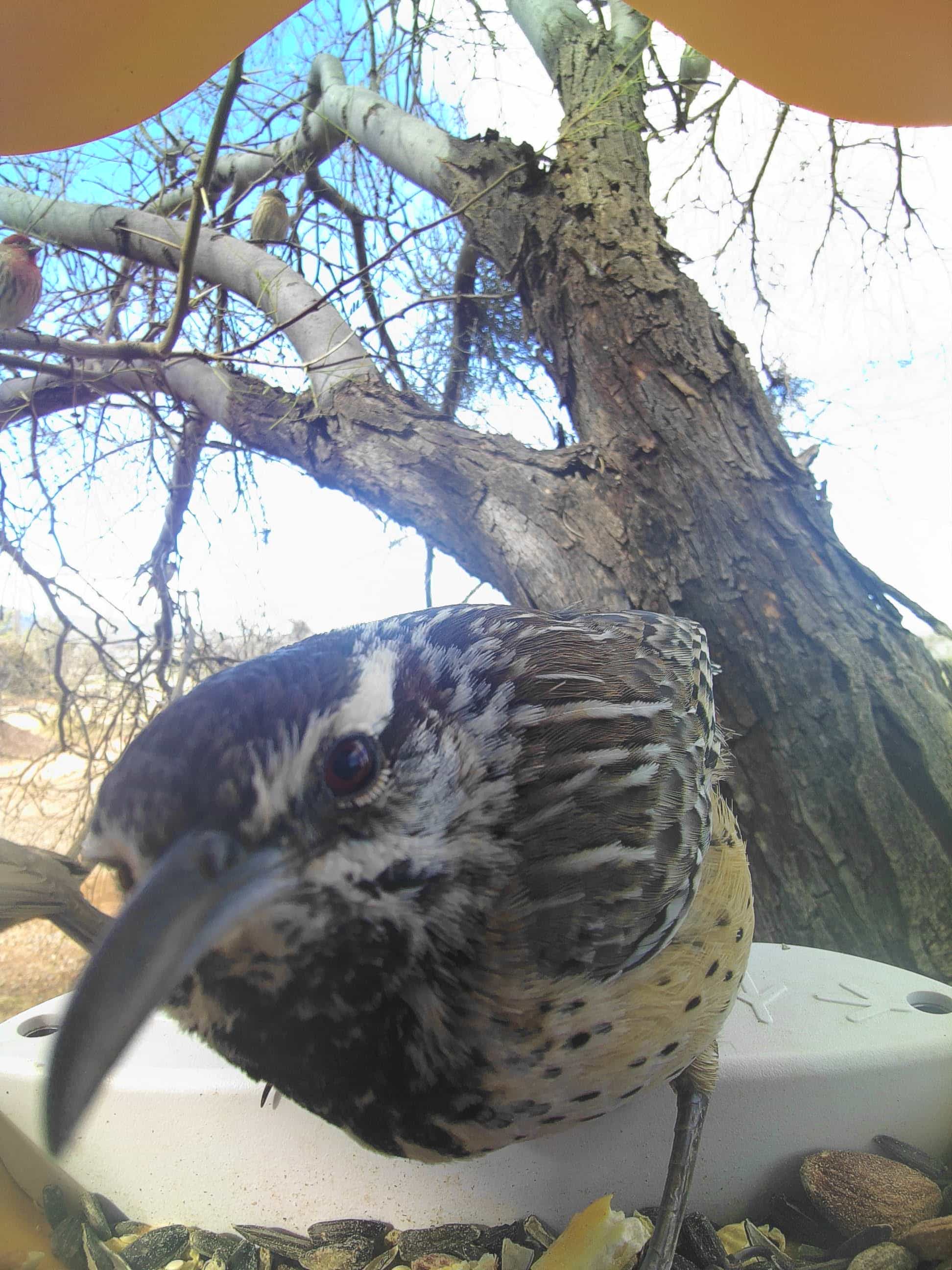


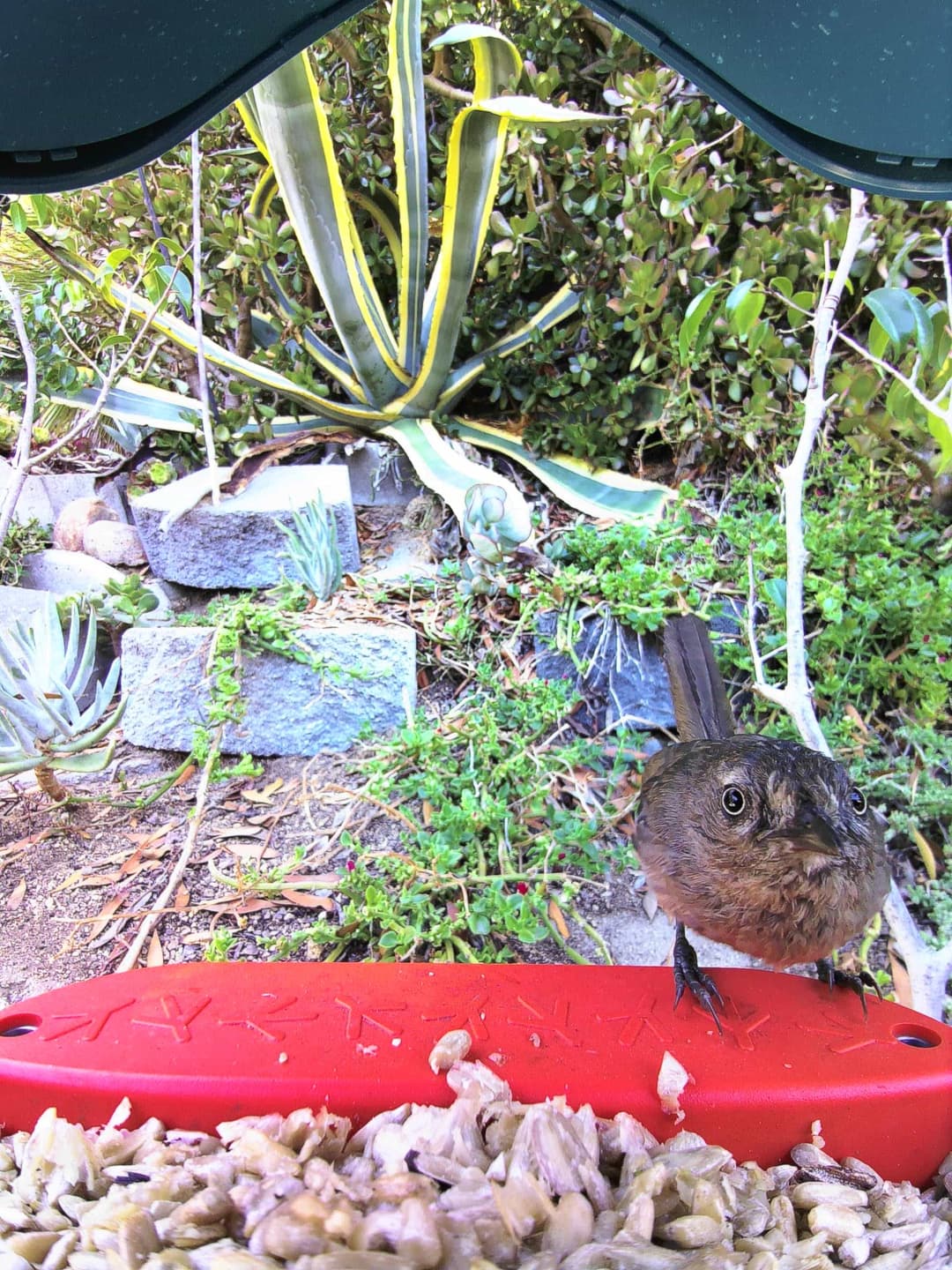
Cactus Wren
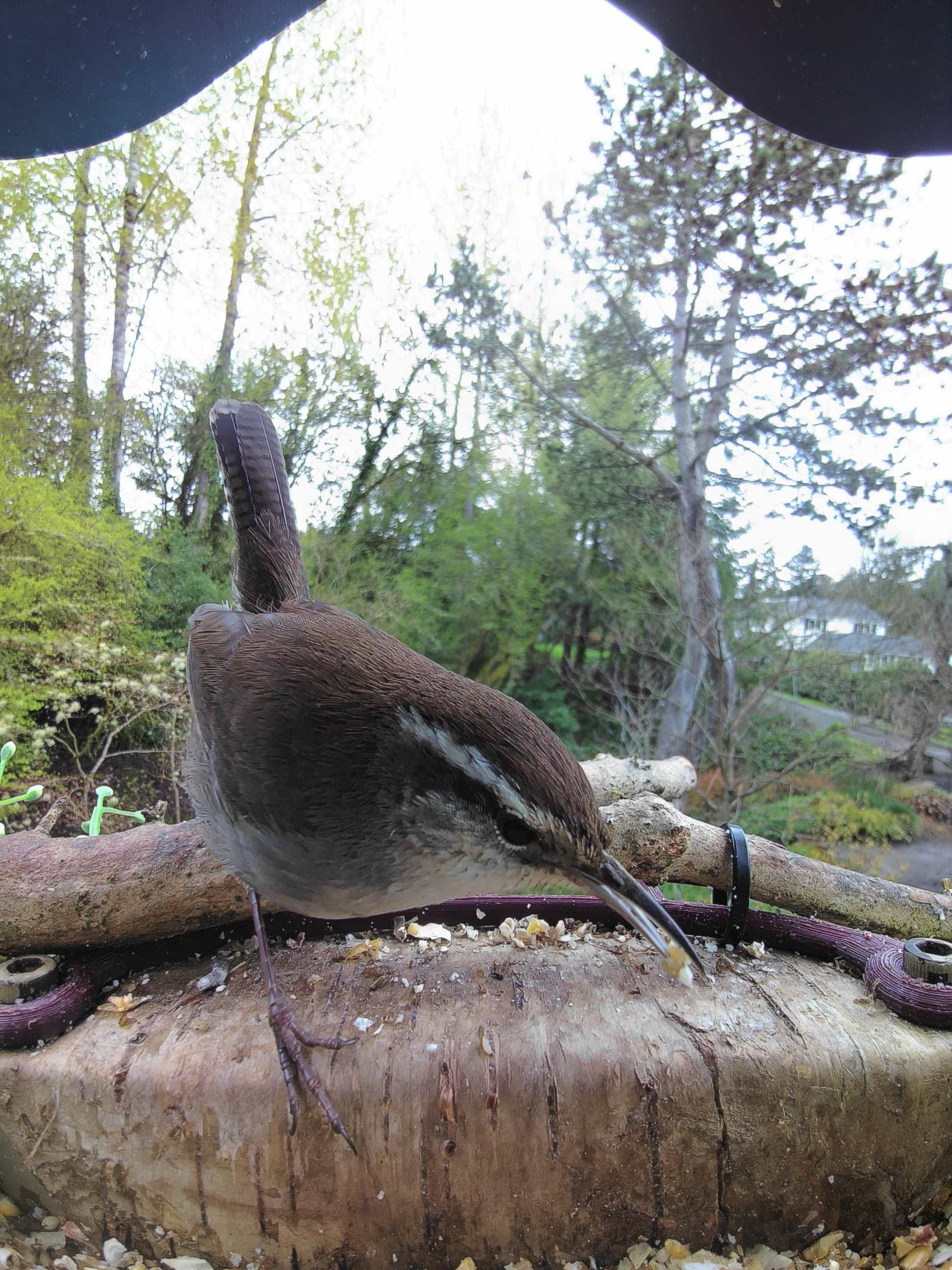


Bewick’s Wren
Cactus Wren
Campylorhynchus brunneicapillus
General appearance
The cactus wren is a desert bird with a distinctive appearance. It is more boldly barred, striped, and spotted than other desert birds, with a sharp white eyebrow for contrast. The bird is predominantly black, brown, tan, and white. It measures roughly 8 1/4 inches (21 cm), making it about the size of a sparrow or a robin. It has rounded wings and a long tail that could be either rounded or wedge-shaped.
Male vs female
There isn't any specific information provided about Male and Female differentiation or defining characteristics in terms of appearance. Any difference in size, color, or markings isn't specified.
Juvenile
Juvenile cactus wrens have less spotting on their chests compared to adults. While it isn't specified, they might also be smaller in size than adults. More specific attributes or variations in coloration and markings from adult birds are not provided.
Size
7.1 - 8.7 in/1.1 - 1.7 oz
There's more to learn about Cactus Wren
View full detailsBewick’s Wren
Thryomanes bewickii
General appearance
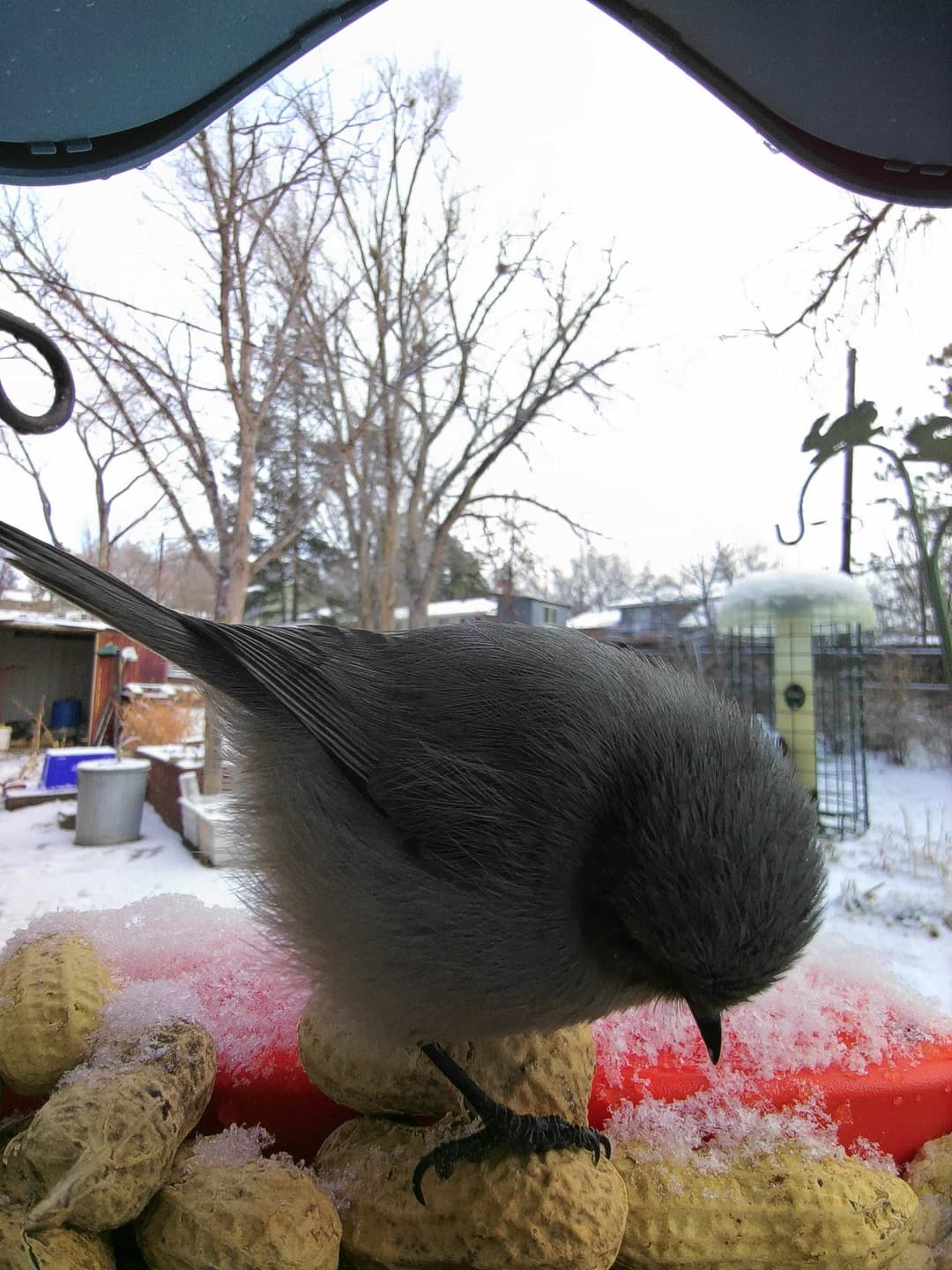
The Bewick's wren is a small bird that measures approximately 5 1/2 inches or 14cm in size. It is characterized by its white eyebrow and its long tail, which it often flips back and forth. The bird's back displays a dull brown color, while its underparts are of a pale gray hue. Notable features include white corners of the tail and eastern birds which are known to be more rich in color. The wren's overall size is akin to a Sparrow.
Male vs female
There are no significant differences in the outward physical appearance between male and female Bewick's wrens. Both the sexes exhibit the same coloration and size. However, the meticulous listener can distinguish between a male and female by their song, as vocalization in Bewick's wrens differs by gender.
Juvenile
Juvenile Bewick's wrens resemble adults but are somewhat paler in coloration. The white eyebrow characteristic of adults may not be prominently seen in young birds. As with many other bird species, juveniles mature over time and gradually acquire the definitive adult plumage.
Size
5.1 - 5.5 in/0.3 - 0.4 oz
There's more to learn about Bewick’s Wren
View full detailsHow to tell the Cactus Wren from the Bewick’s Wren
Visual differences
The Cactus Wren is notably larger, about 8 1/4 inches, compared to the smaller 5 1/2 inches of the Bewick's Wren. Cactus Wrens have a bolder appearance with distinct black, brown, tan, and white patterns and a sharp white eyebrow, while Bewick's Wrens are characterized by dull brown backs, pale gray underparts, and a long tail often flipped back and forth. Both species have white eyebrows, but Cactus Wrens are more spotted and barred, whereas Bewick's Wrens have a simpler color palette with white tail corners.
Key differences and behavior
Cactus Wrens and Bewick's Wrens exhibit distinct behavioral differences that aid in distinguishing them in the field. Cactus Wrens, residing chiefly in desert areas, are known for their unconventional hydration, deriving moisture from insects and fruits, and for constructing multiple dome-shaped nests in cacti for year-round use. In contrast, Bewick's Wrens, found in diverse habitats, including woodlands and suburban areas, excel in song variations for territory defense and mate attraction. Whereas Cactus Wrens focus on insects and plant material, Bewick's Wrens favor insects, spiders, and occasionally seeds. Both engage in elaborate courtship, but Cactus Wren pairs cooperate in chick feeding, whereas Bewick's Wrens have a distinct nesting strategy, sometimes using unique materials like snakeskin. Overall, Cactus Wrens are larger, at about 8 1/4 inches and 1.1-1.7 ounces, while Bewick's Wrens measure around 5 1/2 inches and weigh 0.28-0.42 ounces.
Still not sure? Here are more lookalikes!

Bewick’s Wren vs Carolina Wren

Cactus Wren vs [Select a bird]

[Select a bird]
Pick a bird to compare
Bewick’s Wren vs [Select a bird]
[Select a bird]
Pick a bird to compare