Southern House Wren or Pacific Wren?
Here's how to tell the difference



Southern House Wren

Pacific Wren
Southern House Wren
Troglodytes musculus
General appearance
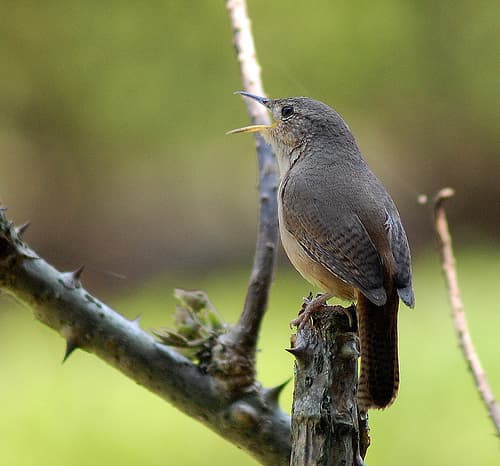
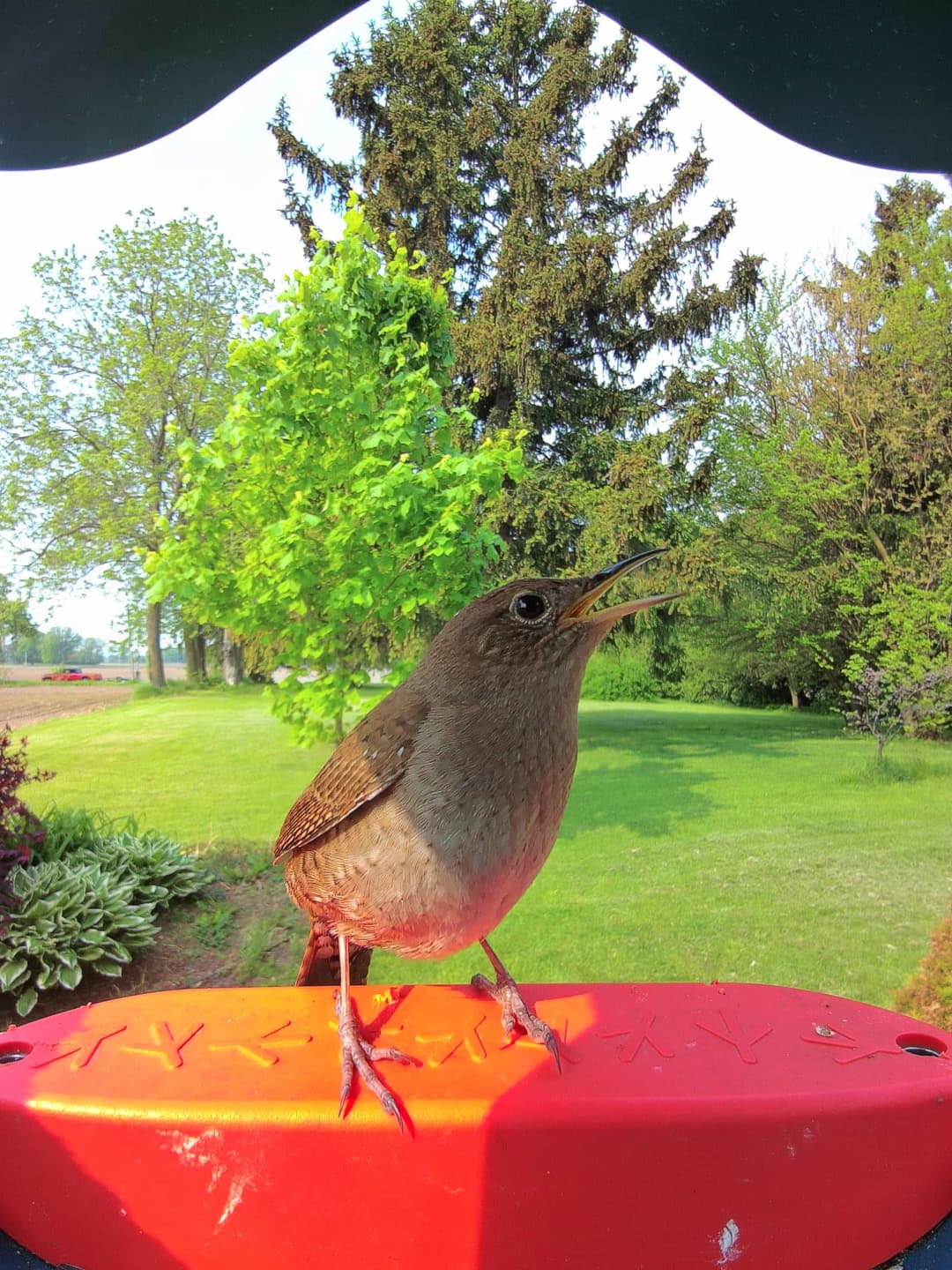
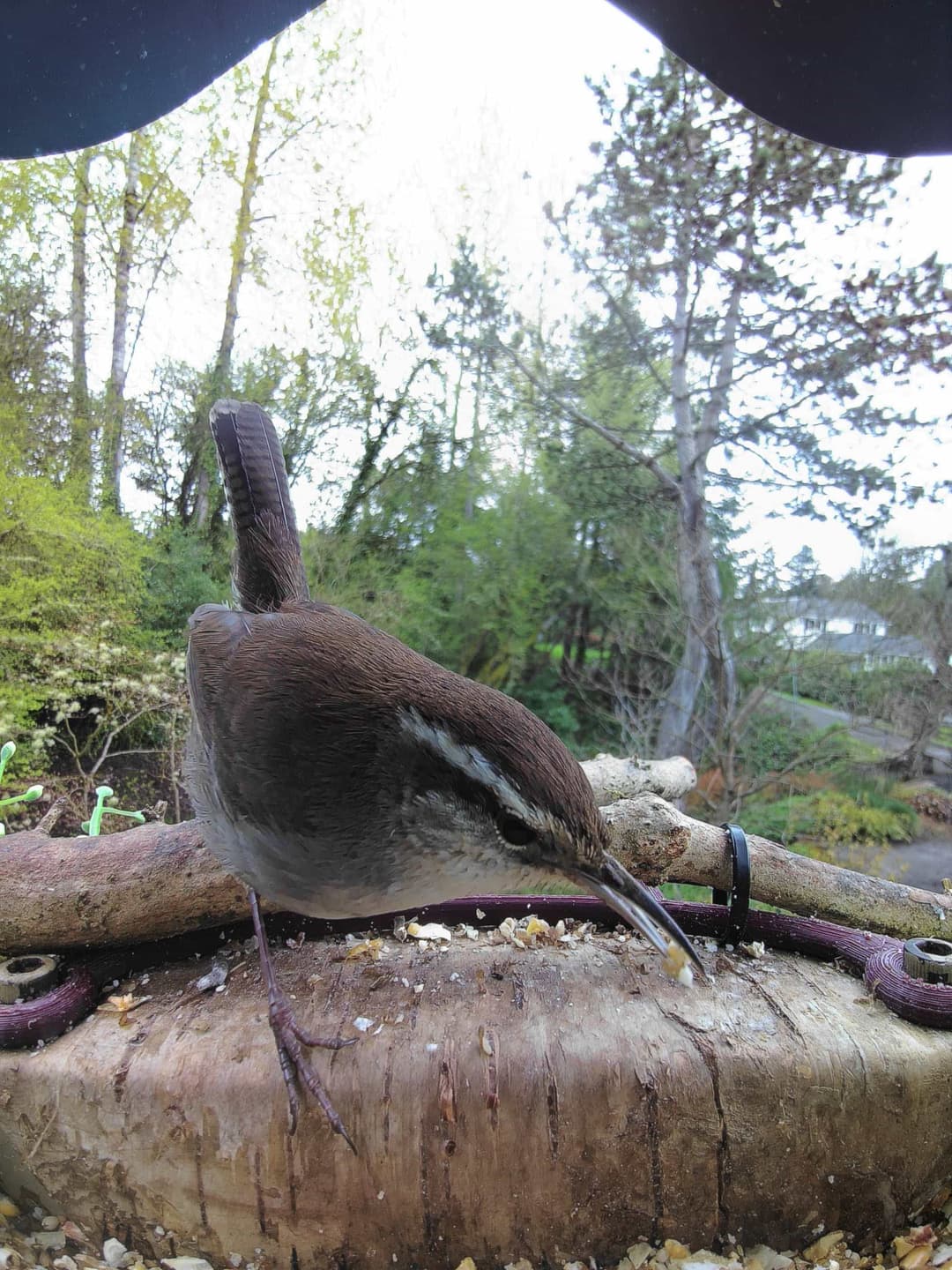
The Southern House Wren is a small, sturdy bird, measuring about 11 cm in length. It has brown plumage overall with a darker barring on the wings and tail. The abdomen is lighter with fine, dark barring. Its beak is long, thin, and slightly curved, with a pointed tip.
Male vs female
Sexes of the Southern House Wren are similar in plumage color and pattern. Both have brown bodies with dark barring, and a light belly. However, male wrens often appear slightly larger and may have a slightly brighter eye-ring.
Juvenile
Juvenile Southern House Wrens resemble adults but have softer, fluffier plumage, and their barring may be less distinct. They also have a faint eye-ring.
Size
3.9 - 4.7 in/0.4 oz
There's more to learn about Southern House Wren
View full detailsPacific Wren
Troglodytes pacificus
General appearance
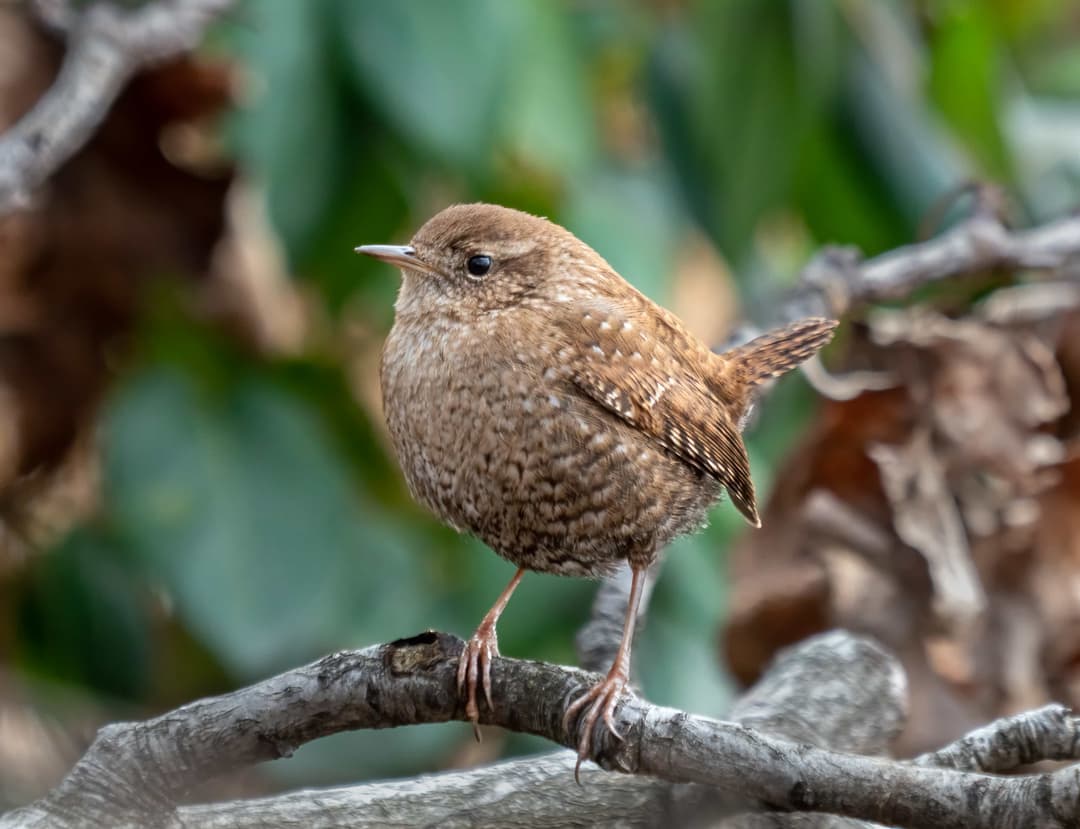
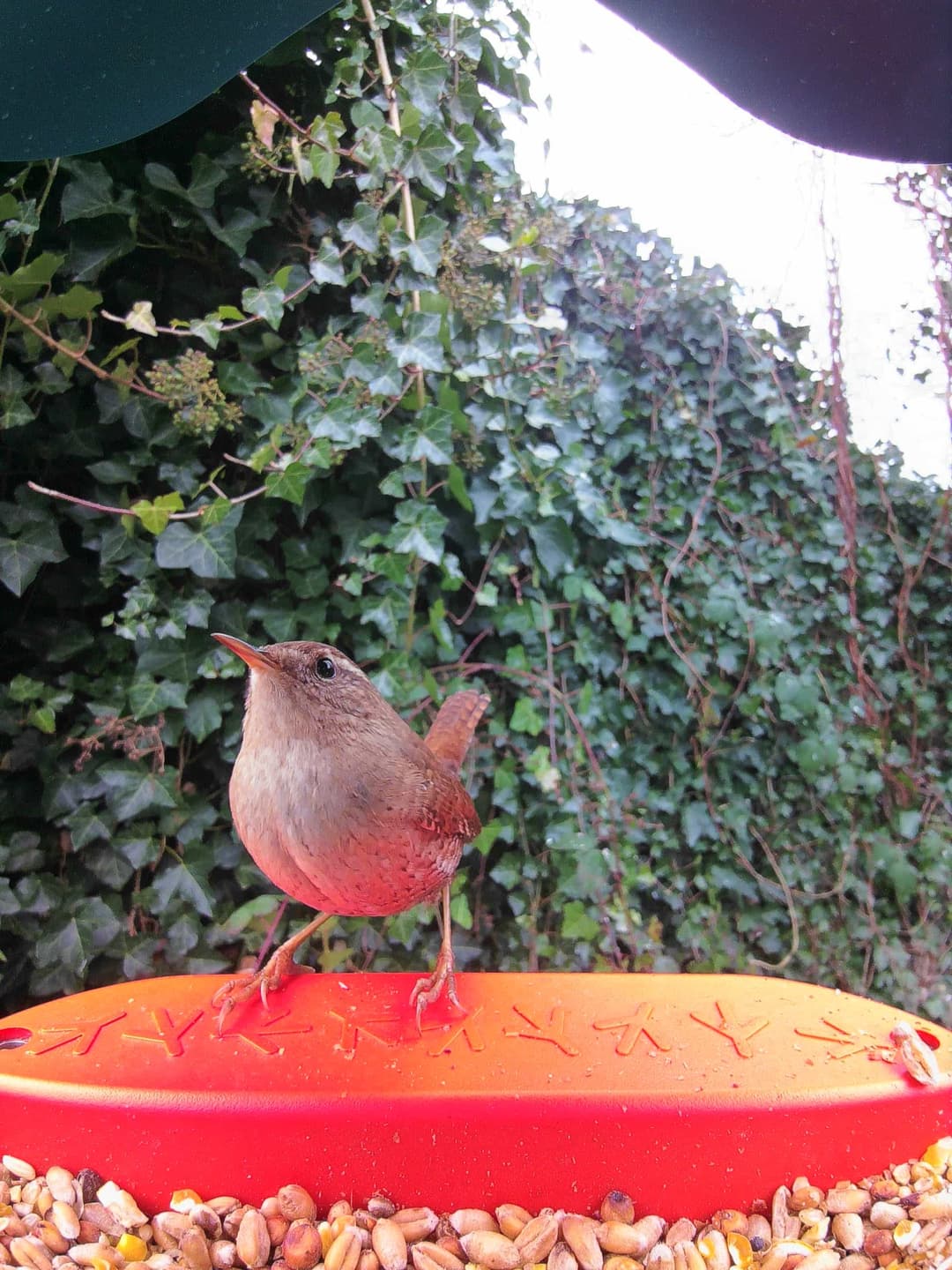
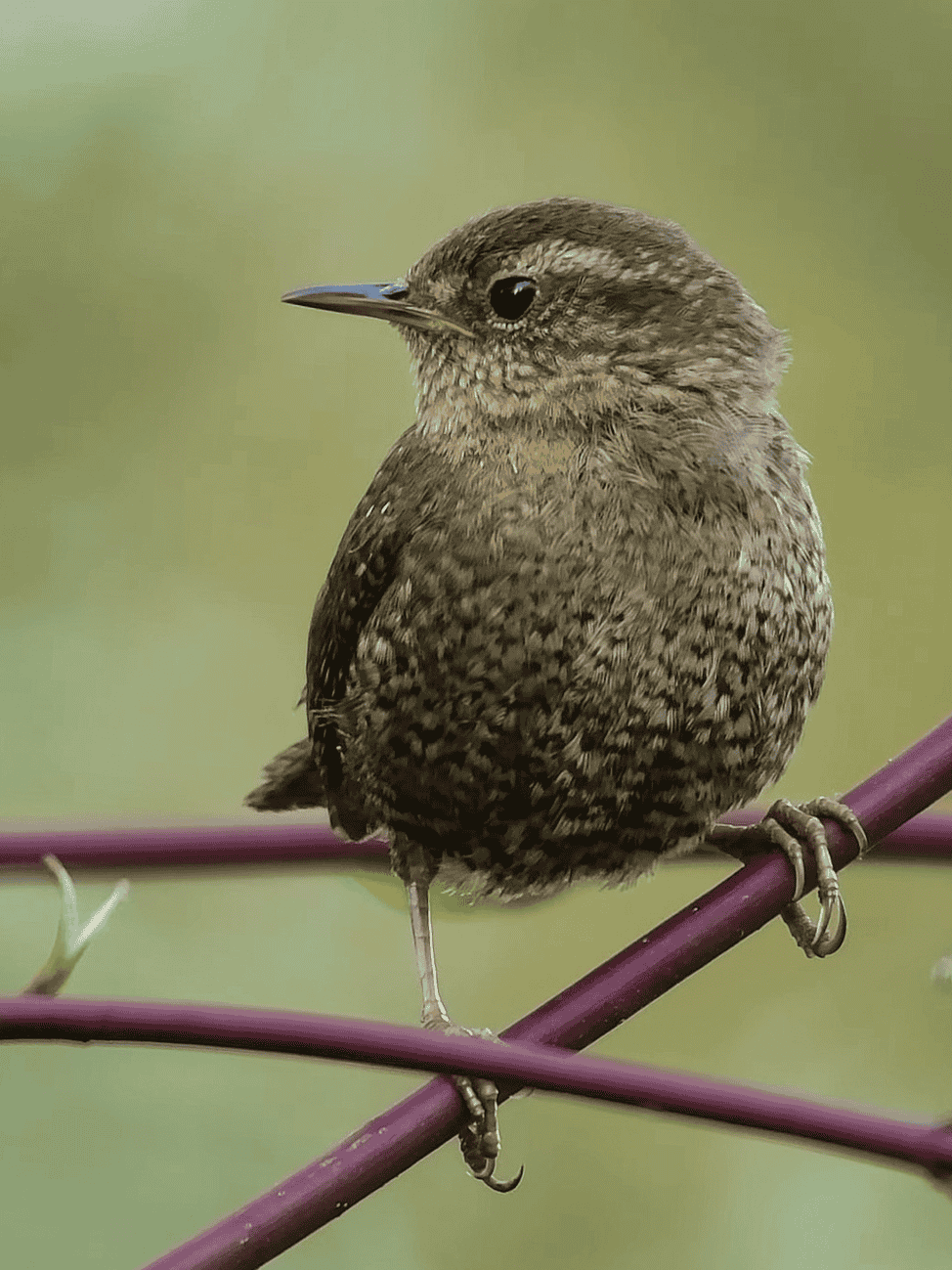
The Pacific Wren is a small bird of around 4-4 1/2 inches (10-11cm) in size with a shortened stubby tail. Its coloration is generally dark, contrasting with a warmer golden brown chest. The bird's flanks feature strong dark barring. It can often be mistaken for a House Wren due to its similar size, but it differentiates itself with its much shorter tail and unique voice. Rounds wings and small size makes it similar to a Sparrow.
Male vs female
There are not significant physical differences in appearance between males and females. Both genders share the same size, dark coloring and strong dark barring on their flanks. Identification between genders primarily comes down to the difference in their voices or during actions such as nesting.
Juvenile
Juvenile Pacific Wrens resemble the adults in overall appearance, but differences can be noted in subtler aspects of their coloring. Juvenile birds typically lack the richer golden-brown coloring on the chest seen in adults, displaying instead a duller shade of brown. Also, their callnote might vary slightly from adults.
Size
3.1 - 4.7 in/0.3 - 0.4 oz
There's more to learn about Pacific Wren
View full detailsHow to tell the Southern House Wren from the Pacific Wren
Visual differences
The Southern House Wren measures around 4.3-4.7 inches, generally with a long, thin curved beak and overall brown plumage with darker barring. Conversely, the Pacific Wren is smaller, measuring 4-4.5 inches, with a notably stubby tail and darker coloration with a warm golden-brown chest. Both have dark barring, but the Pacific Wren's smaller size and shorter tail are distinctive, as is the Southern House Wren's lighter abdomen.
Key differences and behavior
The Southern House Wren and Pacific Wren, though similar in size, exhibit distinct behaviors and habitat preferences. Southern House Wrens thrive in urban areas and gardens, are bold nesters using unconventional sites, and are highly vocal during courtship and territory defense. They feed mainly on insects and occasional plant materials. Conversely, Pacific Wrens prefer dense, moist coniferous forests, utilizing ground-level cavities for nesting. Their courtship involves unique wing-fluttering displays, and they too share parenting duties. While both wrens favor insects, Pacific Wrens sometimes include berries. Although both species might visit feeders for suet or mealworms, the Southern House Wren is more adaptable to human-altered environments. Notably, Pacific Wrens exhibit communal roosting in winter, which sets them apart behaviorally.
Still not sure? Here are more lookalikes!
Southern House Wren vs [Select a bird]

[Select a bird]
Pick a bird to compare
Pacific Wren vs [Select a bird]
[Select a bird]
Pick a bird to compare