Eurasian Wren or Winter Wren?
Here's how to tell the difference
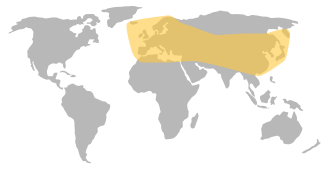



Eurasian Wren
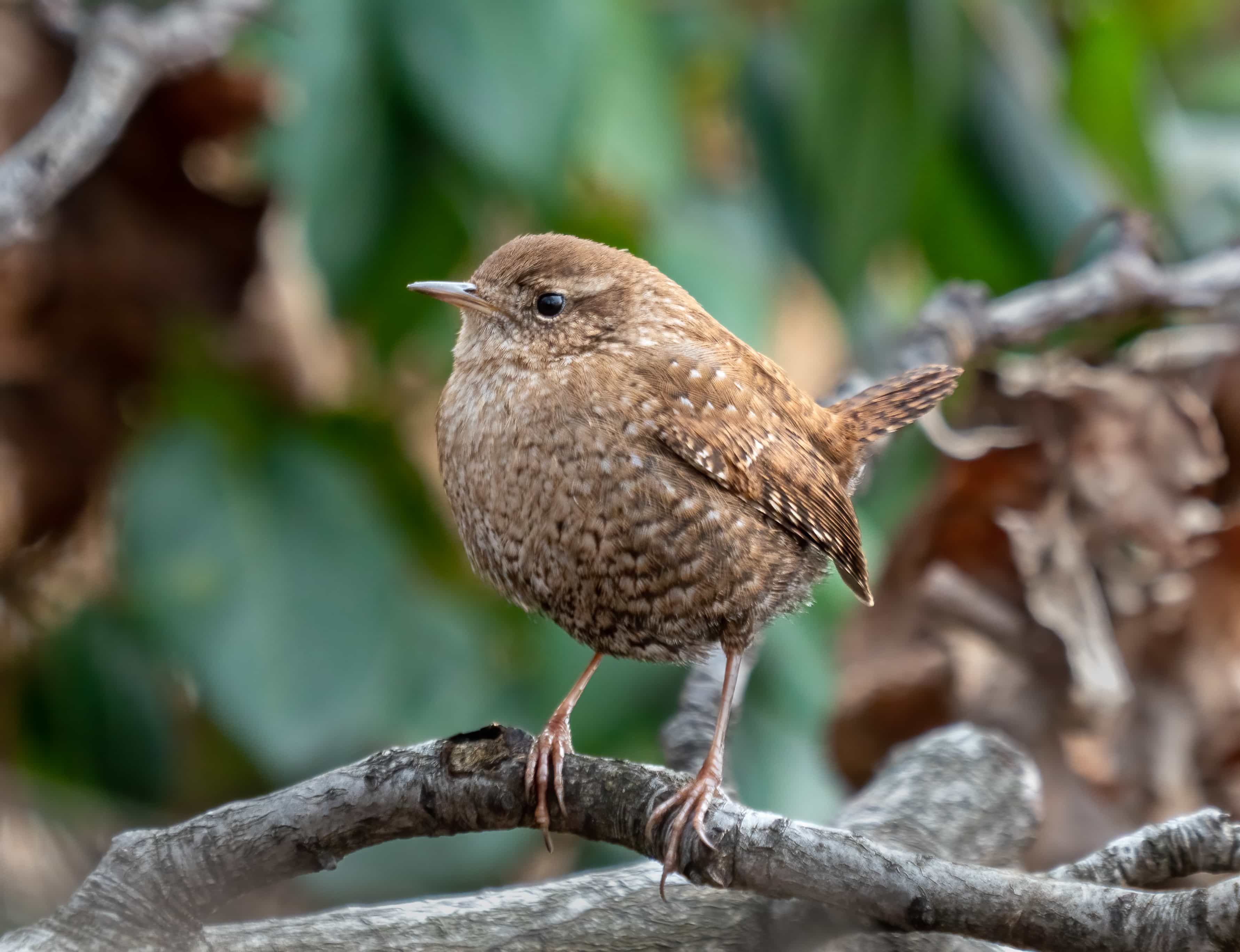
Winter Wren
Eurasian Wren
Troglodytes troglodytes
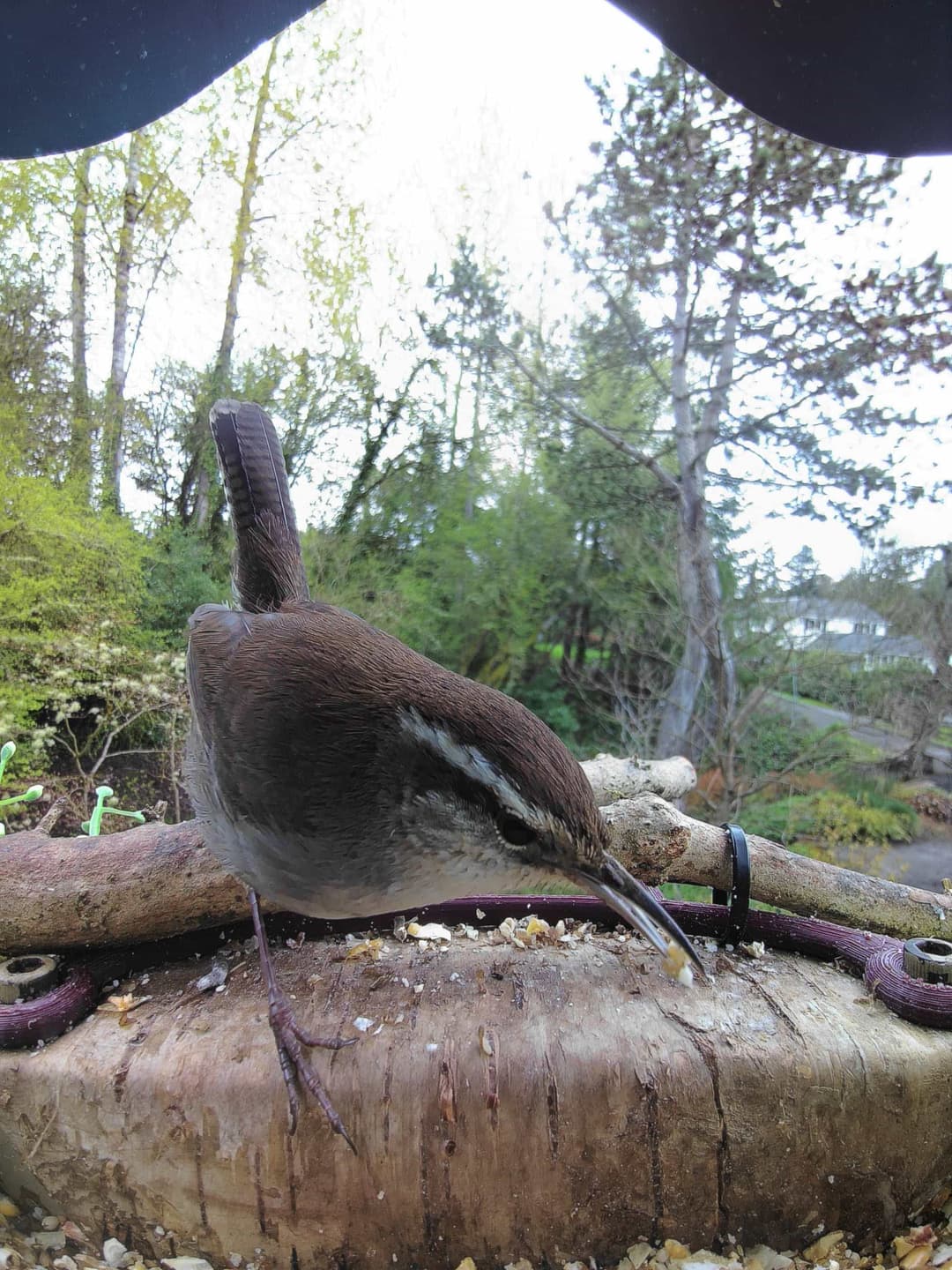
General appearance
The Eurasian wren is a small, compact bird with a rounded body and short tail often held upright. Its plumage is predominantly brown with darker barring and a pale underbelly. The bird has a fine, pointed bill and a distinctive supercilium stripe above the eyes.
Male vs female
Males and females of the Eurasian wren are similar in appearance, with no significant differences in size or coloration. Both sexes share the same brown plumage and markings.
Juvenile
Juvenile Eurasian wrens resemble adults but are slightly duller with less distinct barring. They may also have a less pronounced supercilium stripe. Juveniles develop the adult plumage as they mature.
Size
3.5 - 3.9 in/0.3 - 0.5 oz
There's more to learn about Eurasian Wren
View full detailsWinter Wren
Troglodytes hiemalis
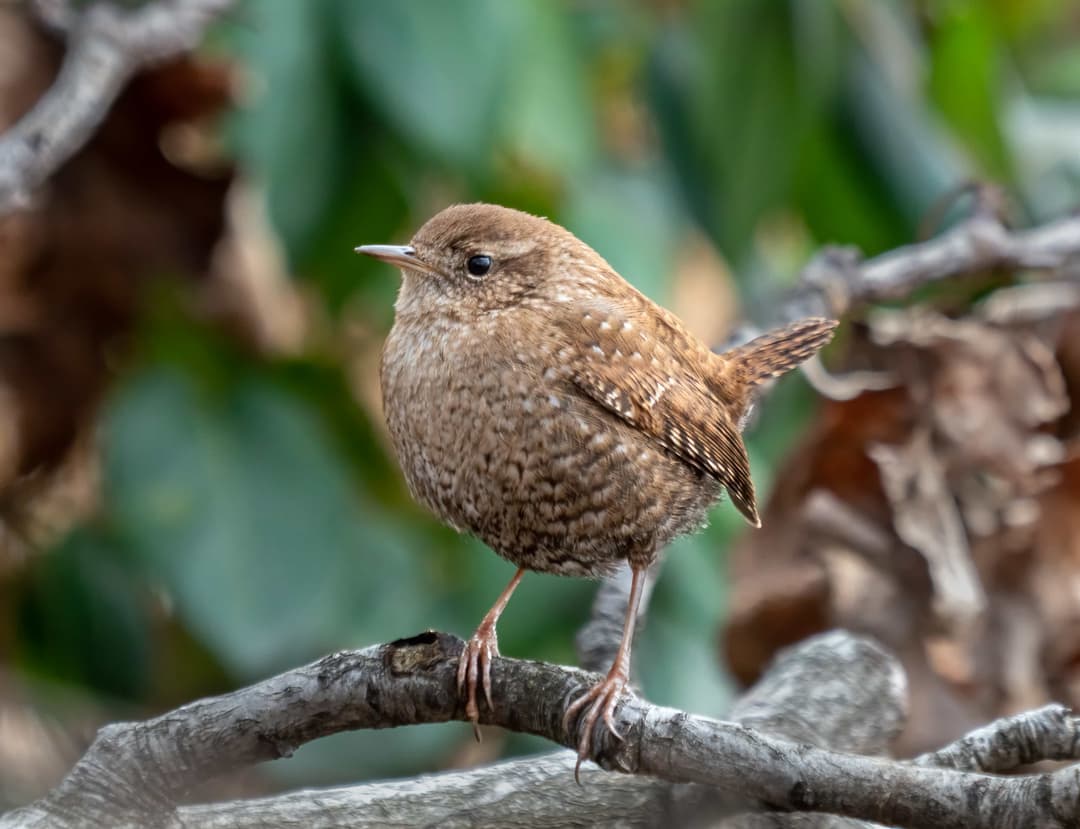
General appearance
The Winter Wren is a small bird, about 10 cm in length and like a Sparrow in size. It possesses a brown and tan coloration, with stronger dark barring flanks. Its tail is short, and it has a robust, rounded-wing shape. It is generally darker than the Pacific Wren but possesses a contrasting pale throat.
Male vs female
There is little to no sexual dimorphism observed in Winter Wrens, meaning males and females appear similar. Both genders exhibit the same coloration and tail length. They're usually recognized by their distinctive callnotes.
Juvenile
Juvenile Winter Wrens also bear resemblance to adults, possessing similar coloration. Their dark barring on the flanks might appear less defined. As the little birds mature, they will develop the characteristic throat paleness and distinct call notes of the adults.
Size
3.1 - 4.7 in/0.3 - 0.4 oz
There's more to learn about Winter Wren
View full detailsHow to tell the Eurasian Wren from the Winter Wren
Visual differences
The Eurasian Wren (3.5-4 inches, 0.3-0.46 oz) and Winter Wren (approx. 4 inches, 0.3-0.42 oz) have similar compact sizes and short tails. Key visual differences include the Eurasian Wren's more uniform brown plumage with a distinctive supercilium stripe above the eyes, compared to the Winter Wren's darker brown coloration with stronger barring on flanks and a contrasting pale throat. Both possess short, fine bills and lack significant sexual dimorphism.
Key differences and behavior
Eurasian and Winter Wrens share many similarities, yet exhibit distinct behavioral and habitat preferences. Both species are notable for their powerful songs relative to size, with males singing vigorously to establish territories and attract mates. In terms of habitat, Eurasian Wrens are versatile, thriving in deciduous, mixed, and coniferous forests across a broad range, including urban areas, while Winter Wrens favor moist coniferous forests often near water. During courtship, both males construct multiple nests, but Winter Wrens may have more than one mate. Diet-wise, Eurasian Wrens forage on or near the ground for insects and occasionally visit feeders, whereas Winter Wrens primarily rely on natural food sources, particularly insects and spiders, sometimes consuming berries in the off-season. Their nesting habits differ slightly; Eurasian Wrens use domed nests in diverse locations, whereas Winter Wrens choose natural cavities. Both species involve both parents in chick-rearing.
Still not sure? Here are more lookalikes!
Eurasian Wren vs Dunnock
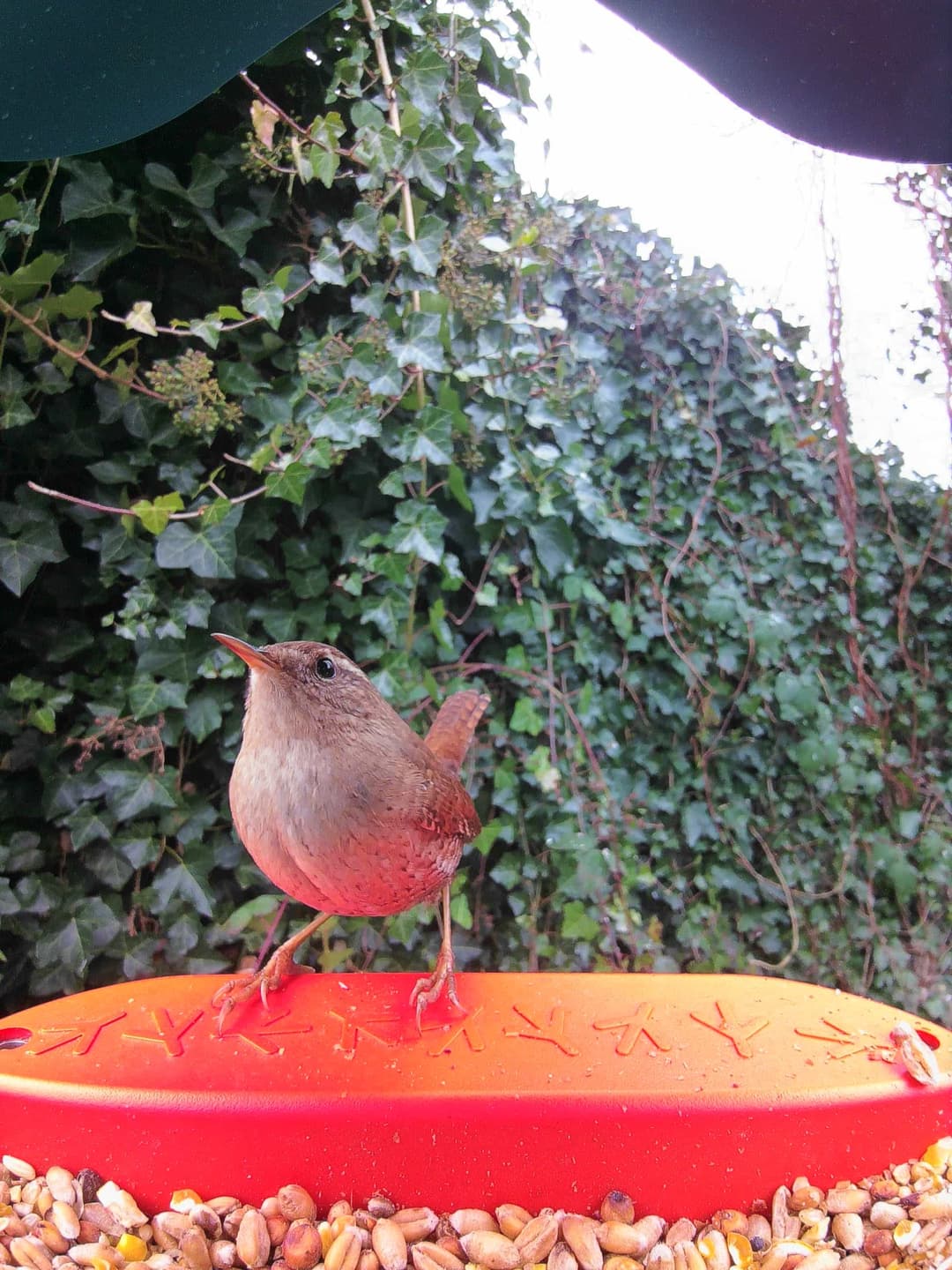
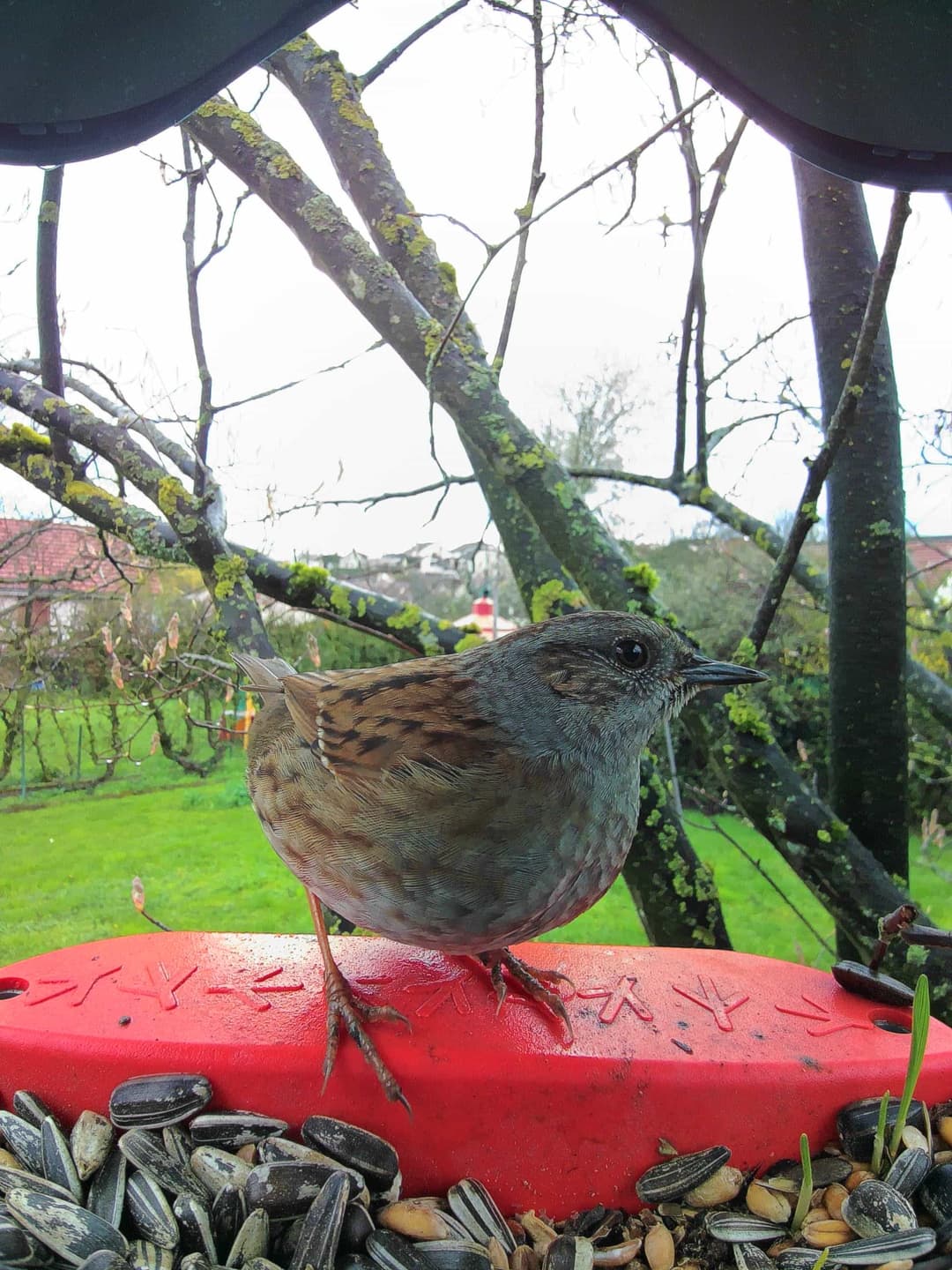

Eurasian Wren vs [Select a bird]

[Select a bird]
Pick a bird to compare
Winter Wren vs [Select a bird]
[Select a bird]
Pick a bird to compare